


I think there’s a big problem with the way in which more imaginative solutions are somehow banished from the Overton Window simply by being … well, imaginative. So I was naturally drawn to a series of Substack posts titled “The Austerity of the imagination”. But I disagreed with the diagnosis of what the problem was (financial austerity has produced austerity of the imagination) and on what to do about it (I think it makes no sense to be ‘more utopian’). Having put these views on two posts, I contacted the author to chat about the issues. We agreed we’d record a second discussion, which I hope you find interesting. The audio file is here.
Professional plutocracy

A characteristically insightful post from Steve Randy Waldman, whom I commented on way back in 2008.
Class Neurosis and the Fiduciary Bargain
Samantha Hancox-Li has argued that the Democrats are becoming the party of the professional-managerial class, and that the PMC “instead of achieving class consciousness has achieved ‘class neuroticism’”—devoting life’s effort to becoming PMC while in denial that this is their aspiration. ...
I’m a person very much of the educated professional class. I encourage people to become educated and cultivated. Education and cultivation should embarrass no one.
Nevertheless, I do think that “we” — by which I mean the professional class — fucked up. We are embarrassed about something, but not so clear about what, so it comes through as neurosis. I’ll suggest what we should, in fact, be embarrassed about — not in order to prescribe hairshirts, but so that we can just not do that anymore and then stand proud again.
In 2019, I offered the following tweet. I am unduly fond of it.
From the middle 1970s through the 2008 financial crisis, the professional class made a catastrophic error in judgment. The consensus — which I shared! — was that neoliberalism was correct: a heavily marketized society would maximize our prosperity, and our generous remuneration reflected genuine social virtue. One did well by doing good.
This was never accurate. But those willing to advance this self-flattering perspective could count on career success. “Liberal professionals” had been recruited into what John Kenneth Galbraith describes as the role of the modern conservative: “engaged...in one of man’s oldest, best financed, most applauded, and, on the whole, least successful exercises in moral philosophy. That is the search for a superior moral justification for selfishness.”
All of this was bullshit. Even within our own class, our fates became stratified — lotteries most of us would lose. ...
There is nothing wrong with wanting to be prosperous. But there is the fractal definition of prosperity implicit in the behavior of the very rich, under which no amount of wealth is sufficient — either you continually accumulate, or you fall behind. Professionals increasingly adopted plutocrats’ version of prosperity: “more” rather than “enough”. ...
We aligned ourselves with the plutocrats. The result immiserated the less-educated, but those in our own ranks who failed or opted out too. Plutocrats coopted the working class via Donald Trump. The result of a working class + plutocrat alignment has been and is fascism. People with advanced educations are unlikely to constitute a majority, and plutocrats will always be able to divide us. ...
We do have a weapon. What Trumpists seek to undermine above all else is the capacity for any form of authority whose pronouncements resist being bought. The liberal professions are institutions whose core purpose is to distinguish virtues from falsehoods — and when we do that well, a broader public might find our views persuasive.
During the neoliberal era, we let our standards lapse. The medical profession went along with the pretense that oxycontin was not-so-addictive. Our vulnerability to anti-vaccine conspiracism is not unrelated. We betrayed the bargain that must bind a democratic society to its experts:
We, the broad public, generally defer to your authority. You, the professionals, exercise that authority competently, in the interests of the public, in a manner structured to maximize rather than override the scope for individual and democratic choice under the actual objective constraints.
The word “professional” contains a contradiction we must resolve. Do we define ourselves as inheritors of great bodies of knowledge, bound by ethical and epistemological standards refined over generations? Or as people who do stuff for money, careerists essentially? During the neoliberal era we pretended there was little contradiction in those two roles. That’s about as clever an idea as the safety of oxycontin.
I propose that the class formerly known as professional adopt the word “fiduciary” as its defining characteristic — applying expert skills in the public interest, which we have an obligation to put before our own. That must go beyond aspiration. We must reshape our professions so it becomes plausible that our obligations to the public interest override our own — compressing the potential scale of compensation, and dramatically reducing the role of outside incentive providers in shaping how professionals behave.

Assuming a can opener: The NDIS’s original sin
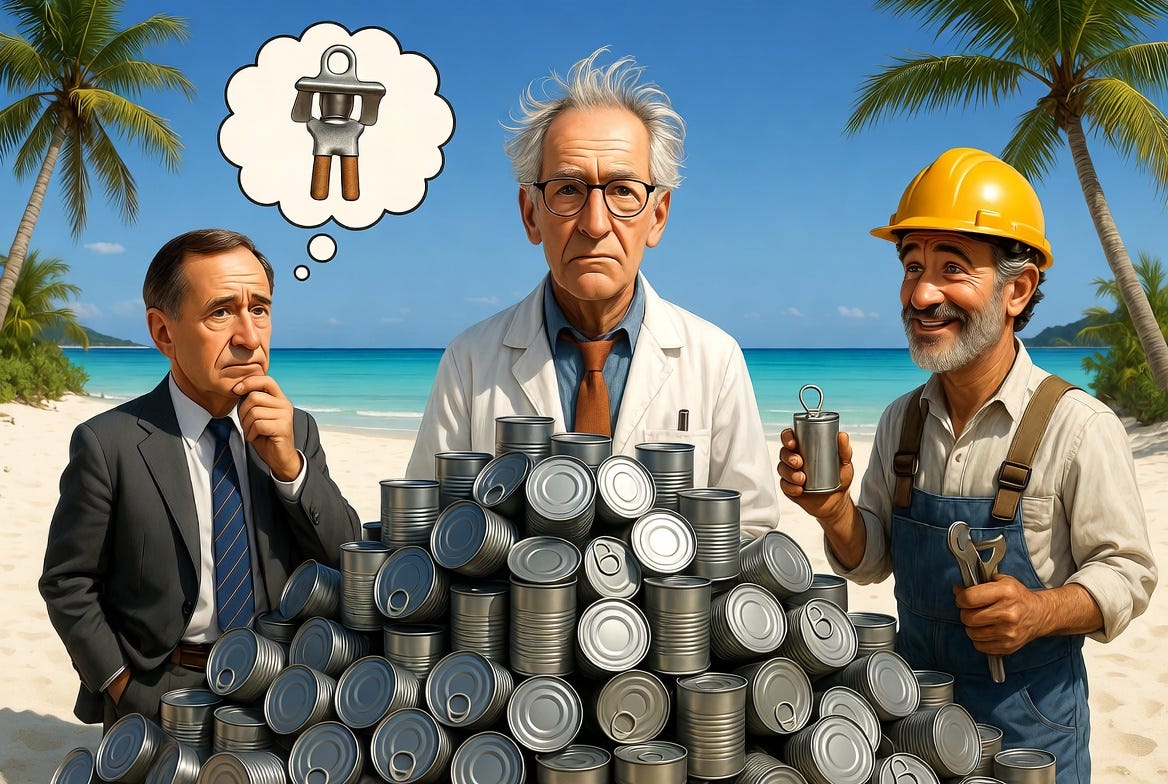
A good piece from Inside Story.
For a number of years I worked on a project developing ways of analysing the market structure of the National Disability Insurance Scheme...
Inspired by a US military study, the project’s central idea was that a market can be understood and visualised like an ecology inhabited by predators and prey — service providers of different sizes and appetites on the one hand, customers with different service needs on the other.
...I began working my way through the Productivity Commission’s two-volume blueprint for the National Disability Insurance Scheme. I very quickly realised the scheme was deficient in one vital respect: nobody had made any attempt — anywhere in the design or implementation of the scheme — to specify what an individual episode of each service type needed to include, and nor had they attempted to benchmark the price providers could charge.
...But it would have been a big job, and the scheme’s planners seem to have decided to let the market sort it out instead.
I call this the original sin of the NDIS scheme design.
...when I went looking for the market theory that underpinned the design of the scheme, I found only a single reference. In a subsequent journal article I drew on my analysis to criticise what I called the “magical thinking about markets” that underpins the design of the scheme.
According to conventional market theory, efficiencies usually emerge because price rises are constrained — preferably by limits on what consumers are willing to pay — in a dynamic interplay of supply and demand. But in a scheme like the NDIS, the consumer and the payer are separate entities, so the consumer has no incentive to economise...
The neoclassical theory of markets proposes that we impose budgets on consumers of public goods to school them in economic rationality. This thinking underpins an obsession among politically conservative economists — Milton Friedman being the best known — with voucher schemes and lower welfare payments...
By contrast, the neoliberal theory of markets proposes that efficiencies emerge from superior use of local knowledge by market participants best left to their own devices...
Although the Productivity Commission reports are effectively silent on which theory of markets underpins the design of the NDIS, the design itself gives it away. Scheme participants are allocated personal budgets they use themselves to purchase different supports. This is Friedman’s approach on steroids. No attempt is made to constrain prices; instead, consumers are left to pressure service providers to deliver more for less.
...The only way for participants to exert pressure on providers is the threat of changing providers. But many local markets only have two or three providers (if that!) to choose from, and if those providers offer similar services and pricing, consumers are powerless to exert any pressure on the service mix, the approach to service provision or the pricing of services...
When markets “fail” — when dynamic market forces don’t emerge to self-organise the pricing and allocation of services — there is said to be a case for market intervention by government...
First, governments can step in and deliver programs themselves to ensure scheme participants are not left without services. The NDIA has shown little appetite for this approach, and it would constitute a public acknowledgement that the market-based design of the scheme is flawed...
Second, if we adopt the neoliberal theory of markets as self-organising networks whose dynamic function is enabled via flows of knowledge and consumer empowerment, then we might advocate evaluation and information sharing to enable participants to make better-informed choices based on differences in approaches to service delivery...
Finally, there is the blunt instrument of market theory: constrain budgets to force the consumer of public goods to make “hard choices” and economise on their service use. This, predictably, is the strategy the Labor government has chosen to pursue...
[T]his approach is politically convenient. It doesn’t require any admission that an earlier Labor government made a grave error when it commissioned the economists of the Productivity Commission to design a market-based scheme for human service provision...
What this approach fails to consider is the brutal reality of living with disability: no matter how much it costs, you still need help to shower. Without effective constraints on pricing, there is no guarantee participants can afford to pay for the supports they need.

Housing and the Budget

Jonathan O’Brien of YIMBY Australia thinks the $2 billion Local Infrastructure Fund is a big deal, though, as he admits, it depends on how hard the Feds push in administering the incentives they’ve budgeted for. What has been observed before now and seems to be a pretty dependable law of Australian politics is how hard Premiers will work to remove any obstacles between themselves and a bucket of money.
It’s been a long time coming, but in 2026 the Albanese Government is actually taking housing affordability seriously.
But despite all the bluster about negative gearing and capital gains, they’re actually the least important part of the budget’s housing reform story. All available research tells us these policies explain less than 5% of house prices.
The real answer to bringing down house prices lies in planning and construction reform. Some states have already been doing it since before it was cool—especially in my home state of Victoria, where massive planning reforms have made more homes legal in more places, and enabled them to get built faster.
It has also been Chris Minns’s personal crusade to keep Sydney from becoming a “city with no grandchildren”. But the anti-housing lobby in Sydney is well-funded and deeply ingrained...
Frankly, poor Chris Minns needs the Commonwealth’s help.
Enter Albo, Jimbo, and Clare O, finally bringing a serious policy to the table: a $2 billion carrot, dangled in front of states and councils, available on the condition that they reform their byzantine planning systems—and get rid of the unjust and unjustifiable rules that make it illegal to build homes across our nation’s towns and cities alike.
This policy, called the Local Infrastructure Fund, is a big deal. Mainly because it gives leverage to reformers in their fight against the old guard, who by nature and tenure tend to be less enthusiastic about change...
Of course, this policy will only be as good as the change it incentivises. The Commonwealth has to make sure they actually get bang for their buck, and avoid letting states and councils bamboozle them by pretending to do something meaningful while just rearranging the deck chairs.
This is why the Feds must demand states remove bans, like low-density zoning that makes it illegal to build apartments or townhouses—rather than tinkering around the edges with approval timeline targets. It’s important to remember that the fastest possible timeline is an instant NO.
As much as I love large-scale towers around train stations, broad upzoning is the Commonwealth’s best answer here. That means getting all states to sign up to a National Townhouse Code, as introduced at the 2025 election by the YIMBY movement and later backed by the Grattan Institute.
The Code would require states to set a minimum allowable density of at least three storeys, enabling townhouses and low-rise apartments to be built nation-wide, by-right. This one simple policy would solve a large number of our nation’s planning problems, especially in smaller capitals like Adelaide and Perth, and regional centres, where home prices have recently skyrocketed.
By making it easy to build townhouses... the Federal Government would enable Australia’s most popular housing product to flourish. And we know this sort of policy works. Not just in the legendary Auckland, but on our own shores: just over a year ago, Victoria introduced its own townhouse code, and permit applications jumped 40%.
But we can’t just leave the hard work to the states. In a twenty-first century economy, the Commonwealth has to take a stronger interest in our cities, and this policy is the first sign that they might finally be doing so.
As Keating said, Australia is no longer a quarry or a sheep run. It is in fact an extraordinarily urbanised nation: a full 80% of our economic activity takes place on less than 1% of our total landmass...
It seems that Albo, Jimbo, and Clare O are finally wise to the importance of the Great Australian City... Let’s just hope they have the chops to execute this generational opportunity to remake our nation for the better.


Saul Eslake’s take
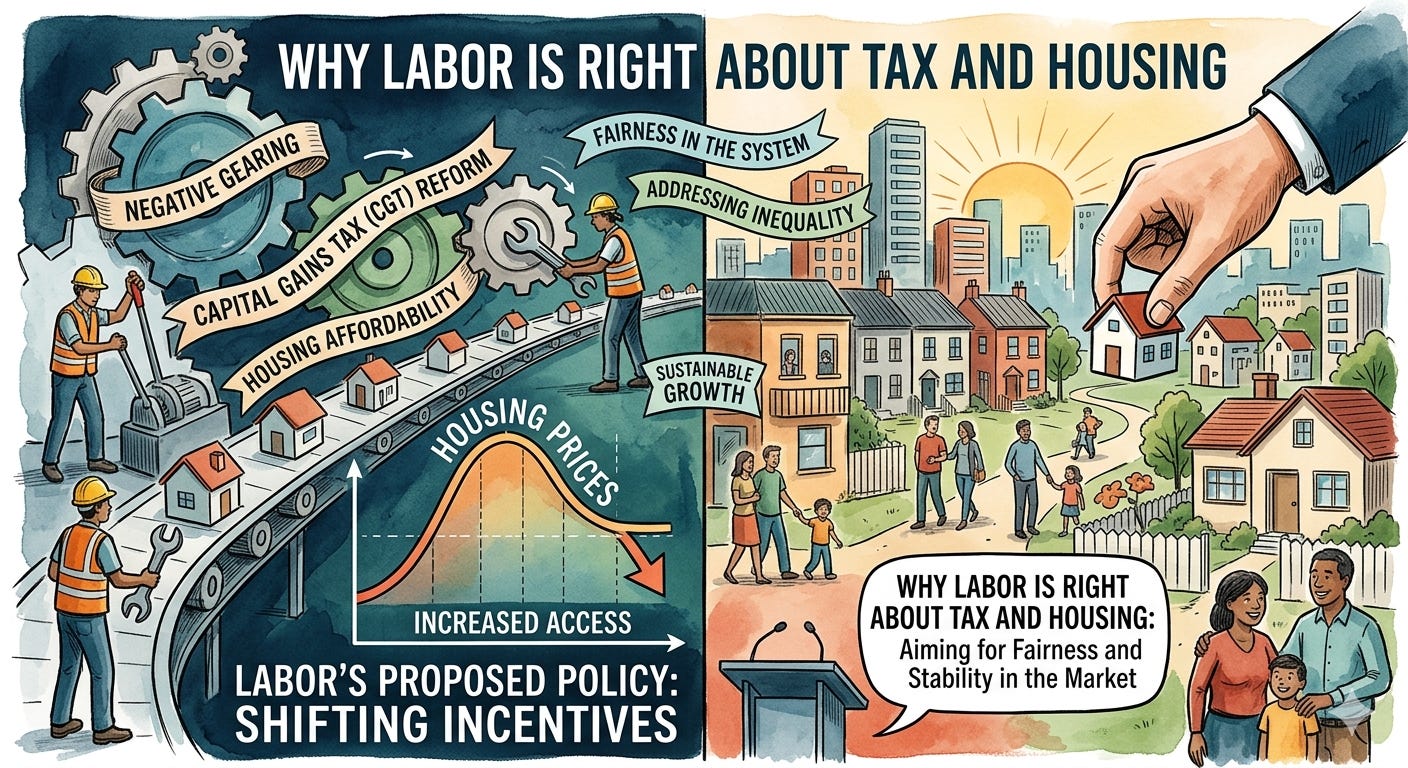
Here’s Saul Eslake’s two cheers for the budget. And yes, we should stop bribing WA.
Treasurer Jim Chalmers’s fifth budget is certainly the most ambitious of the Albanese government’s budgets so far — ... the most consequential since the Abbott government’s first in 2014.
Chalmers’s centrepiece tax reforms ... represent the most adventurous set of tax reforms seen so far this century. ...
The most attention-grabbing elements were the changes to income tax. The government will prevent purchasers of established residential properties from offsetting net losses against other income after 1 July next year. Negative gearing will be retained for new dwellings (and for shares and other assets), and existing property investments will be grandfathered.
Capital gains accruing after 1 July next year will no longer be taxed at half the applicable marginal rate (as has been the case since 1999) but at the full marginal rate less an allowance for CPI-measured inflation — the system that applied between 1985 and 1999. ... [The change applies to existing investments but] only to capital gains accruing from July 2027. Investors in new residential properties will still be able to access the 50 per cent discount if they prefer.
Capital gains will also be subject to a minimum rate of 30 per cent to prevent investors from reducing their liability by crystallising gains in low-income years. ...
The government says these measures will improve the prospects of younger Australians seeking to own their own home — a goal that has become significantly more difficult over the past thirty years as prices have increased at multiples of income growth.
Treasury modelling suggests these measures will slow house price increases by around two percentage points a year and enable around 75,000 more Australians to buy their own home over the next decade. But it also suggests 35,000 fewer homes will be built — offset, it asserts, by additional budget funding for infrastructure in new housing estates.
The opposition will no doubt seize on this to support its assertion that “if you tax something more you will get less of it.” In one sense they’re right. But getting less investment in established properties would be a good thing: such investments (over 80 per cent of money lent to property investors) do nothing to increase housing supply — they only add upward pressure on prices and out-bid would-be home buyers. ...
[Although it’s not guaranteed,] restricting tax breaks for investors in established housing while retaining them for new housing will likely encourage new builds. And I’m not persuaded that slower price rises will dampen demand from owner-occupiers — who account for almost 60 per cent of lending for new builds — in the way Treasury seems to assume.
So the budget’s tax changes won’t solve Australia’s housing crisis on their own, but over time they will make a meaningful contribution. ...
The tax changes also have an inter-generational dimension. According to the latest available statistics from the Australian Taxation Office, only 4.4 per cent of taxpayers under thirty-five report capital gains, compared with 14.3 per cent of those aged sixty-five or over — a group that accounts for 62 per cent of all capital gains. ... Just 3 per cent of under thirty-fives are negatively geared, compared with 10 per cent of those aged between forty-five and sixty-four.
The budget also introduces two small tax breaks for wage and salary earners: the working Australians tax offset and the $1000 instant tax deduction in lieu of documented claims for work-related expenses. ... [These are not a substitute for threshold indexation, but they] represent an attempt to narrow the differences between the taxation of labour and capital income.
The government may pay a political price for breaking its promise on negative gearing and capital gains tax. But if it can convincingly articulate the strong arguments for these changes — as it did when it re-jigged the Morrison government’s “stage three” tax cuts despite having promised to “deliver them in full” — that price may turn out to be both small and ephemeral.
If this turns out to be the case, I’d like to think the government will feel emboldened to break another promise it should never have made — to keep giving Western Australia up to $7 billion a year of GST revenue more than it needs to provide average public services. That’s something a government professing a commitment to equity and responsible fiscal management shouldn’t be doing.




Who will defend Western culture?

A long - too long - piece, making a simple and devastating point. In just six years, we went from a functioning culture to the locusts of cultural Maoism. Even though the piece takes the side of the argument I would, it reduces culture and the most sublime achievements in art down to what Woody Allen’s mother says to his father in a scene from Annie Hall. “Have it your own way. The Atlantic Ocean’s a better ocean than the Pacific Ocean.”
Here are the opening two and final paragraphs.
The utopian dream of any marginal sect is to bureaucratise itself across the whole of society. Despite their sense of individual powerlessness, sect adherents long to see their particular viewpoints generalised in the form of policies and procedures that will lay down new universal norms, new blueprints for living and thinking, new templates for the endless reproduction of themselves. In British academia, a set of “sectarian” critical social justice or identitarian visions for the humanities that even 6 or 7 years ago seemed thoroughly marginal have since been institutionalised, both in higher education and in the cultural heritage bodies whose task it has been to preserve and communicate the cultural past.
These trends are now percolating into even the most established and formerly uncontroversial hinterlands of the English heritage industry. In 2025, the Sunday Telegraph reported that the Shakespeare Birthplace Trust is implementing an ambitious new decolonisation agenda. Responding to the findings of Birmingham City University researcher Helen Hopkins, who wrote her 2021 PhD thesis on the Trust’s collections, management have since vowed to “purge the Shakespeare Birthplace Trust’s interpretative policies and brand narratives of Anglocentric and colonialist thought.” More generally, as the Telegraph reported, Hopkins found that “the narrative of Shakespeare’s greatness has caused harm” through “epistemic violence,” that the idea of Shakespeare’s genius “benefits the ideology of white European supremacy,” and that all of these ways of thinking about Shakespeare are associated with “white Anglo-centric, Eurocentric, and increasingly ‘West-centric’ worldviews that continue to do harm in the world today.”…
After the Telegraph reported on the Trust’s decolonisation plans in March 2025, its then-interim CEO Rachael North admitted that she had been “really shocked” at the intensity of public anger directed at her organisation in the ensuing days and weeks. But she really should not have been that surprised. Many people continue to retain a relatively uncomplicated allegiance to the old symbols of cultural authority, no matter how reactionary this might seem in some parts of the academy, while many of the tenets of progressive activism remain unpopular with large portions of the British public. These clashes about the value of historical symbolism in turn suggest how divided British society is becoming along the axes of class, education, age, region, and race. For many Britons (and particularly older Britons), the pantheon of national heroes (Shakespeare, Newton, Churchill) are straightforward sources of identity and pride. They can express confusion and betrayal when cultural elites seem not to recognise these forms of value. For those whose understanding of the role of museum workers and the academy is in a sense “pre-critical”—who see our task as one of venerating and preserving national “ancestral goods”—it can seem as though we are simply no longer doing our jobs when we critique or problematise the canon. Because it has long functioned as a stand-in for the nation itself and its people, cultural heritage has is the terrain on which these battles about the future of identity and place-making in Britain will continue to play out.


What money is not: hint: it’s a relation, not a thing

Robert Gillies gives a great introduction to what money is and isn’t. It ends up in Modern Monetary Theory land. In principle, have no problem with that. MMT is basically right about how it conceives of money. But it then gets ahead of itself by pronouncing that most economists have been running national economies as if they were households. Most economists know very well that nations in charge of their own currencies are not households and that’s been the case for a very long time. That’s not to say that they’ve not run overtight monetary or fiscal policy. They have. And you can also argue that a misunderstanding of money - failing to understand it as a two-sided entry in a balance sheet - has led to some of that. But for a long time in lots of countries, inflation has been the constraint and as Cameron Murray quotes Jason Furman saying, “MMT often brings you back to the same trade-offs”. It certainly brings you back to similar trade-offs when there’s inflation as there is now.
Paul Krugman’s recent column on the international role of the US dollar is an accomplished piece of applied economics... What I take issue with is the foundation on which the analysis rests: an account of what money is that economics has been repeating, with remarkable fidelity, since Adam Smith. It is a story that is elegant, internally coherent, and, in all the ways that matter, wrong.
The three-functions account of money is inseparable from a specific origin story: the myth of barter... no economist, explorer, or archaeologist has ever found the fabled barter economy from which money is supposed to have emerged... The barter-origin myth does not describe a historical sequence. It describes a logical structure...
The Agricultural Empire and the Invention of the Stranger
The decisive transition in economic history took place roughly five thousand years ago, in the agricultural empires of Mesopotamia... transactions occurred between people who did not know one another...
Markets, in this account, are not a natural phenomenon that the state subsequently regulates. They are a creature of the state... The second instrument... was debt... Hudson and his colleagues have documented the economic organisation of the Mesopotamian temple economies of the third millennium BC... The picture that emerges is one in which debt, not exchange, is the primary economic institution.
The Mesopotamian temple economy was organised around the palace and the temple as central administrative institutions. Farmers and craftsmen received inputs — seed, tools, draught animals — from the temple on credit... The critical point is that money in this system was not a medium of exchange that emerged from barter. It was, fundamentally, a medium for the settlement of debt...
This insight radically inverts the standard account. In the standard story, exchange comes first, money solves the problems of exchange, and credit develops later... In the historical record, the sequence runs in precisely the opposite direction. Debt comes first; money emerges as a means of denominating and settling debt; and spot exchange between strangers... comes last...
Debt Cancellation and the Sovereignty of the State
One of the most striking features of the Mesopotamian temple economy... was the institution of the royal debt cancellation. Hudson documents dozens of such cancellations across the period from approximately 2400 to 1600 BC. When a new king was inaugurated, one of the central ceremonies was the smashing of the cuneiform tablets on which outstanding debts were recorded...
The debt cancellation was not... a gesture of generosity. It was an act of economic sovereignty — a recognition that the state, as the ultimate creator of the debt system, retained the authority to reset it when the accumulation of obligations had become incompatible with the continued functioning of the economy.
We Live in a Temple Economy and Have Not Noticed
The central argument... is this: since 1971, the monetary system of every major economy in the world has been, in its fundamental structure, more similar to the Mesopotamian temple economy than to the gold standard. We have, collectively, recreated fiat money — money whose value rests not on any physical commodity but on the institutional authority of the state — without fully absorbing the implications of having done so.
The central chartalist insight... is that fiat money is a creature of the state. Its value... derives from the fact that the state accepts it in payment of taxes... A currency is, in this sense, a unit of account and a standard for the settlement of obligations to the state — precisely what barley was in the Mesopotamian system.
...The Mesopotamian temple administrators who kept the accounts on their cuneiform tablets, and the Babylonian kings who periodically smashed them, understood something about the nature of money that has been largely absent from mainstream economics for the past two centuries. It would be, I think, worth recovering that understanding.


Slavery and the bad guys

Henry Ergas weighs in on how the West is blamed for slavery. Of course it should be blamed for slavery, like every other civilisation that engaged in it. And it might get some credit for being the only civilisation to put up a strong fight against slavery.
That the African slave trade was a monstrosity... is beyond dispute. But the resolution the UN General Assembly passed... marking the trade’s commemoration, is nothing less than an appalling falsification of history. Formally, the resolution condemns the African slave trade as a whole. Substantively, every concrete reference targets the transatlantic trade... to brand the trade a distinctively Western crime. To sustain that impression, the resolution parades a sequence of decrees... which it casts as the founding charters of the enslavement... that still unjustly impoverishes Africa...
Yet, having been forensically specific about blame, the text turns conspicuously evasive when it confronts the forces that brought the Atlantic trade to an end. The Enlightenment... are, it appears, unmentionable. While the offending decrees are named... the tide of opposition to slavery... is dismissed as “certain legal challenges and judicial developments”... to particularise the guilt while diluting the credit...
What is especially striking... are the omissions. [The resolution avoids] an obvious and crucial comparator: the long history of slavery under Islamic rule... From the Arab conquests to the early 20th century, some 14 million black slaves were transported into the lands of Islam... Add to these more than a million white slaves, and the total comfortably exceeds the 10 million to 12 million who landed in the Americas.
Yet the numbers are not what is most significant. The salient fact is the absence of any sustained doctrinal or institutional challenge to the morality and legality of the slave trade within the Islamic world... As Bruce Hall shows... the operative presumption among Maliki jurists was that black Africans... were enslavable by default... There were individuals who objected... but no Muslim opponent of slavery ever forged those concerns into a mass movement...
It is therefore unsurprising that Islam’s leading theologians, far from championing abolition, actively resisted it... Nor is it surprising that Saudi Arabia and Yemen abolished slavery only in 1962... and Mauritania... in 2007...
But the resolution does not merely distort history by pretending Islamic slavery didn’t exist. It declares the slave trade “the greatest” crime against humanity ever committed... to relativise the Holocaust. It is frankly obscene to degrade moral evaluation into a body count...
Yet even in so repulsive a spectacle, realities should have been allowed to intrude. Death rates in the Holocaust... were close to or above 90 per cent. In contrast... “the whole benefit of the voyage lyes in your care of preserving negroes’ lives.” As a result, strenuous efforts were made to ensure slaves remained alive... by the late 18th century, death rates for black slaves on the “middle passage” had declined dramatically... To pretend otherwise is to erase the distinction between exploitation and extermination: for there was nothing in the slave trade even remotely comparable to the systematic mass murder at the heart of the Holocaust.
But to acknowledge those facts... might have eroded the overwhelming support the resolution secured. And the composition of that support says everything... every one of the 20 countries that have the highest incidence of modern slavery... cynically voted in its favour...
Yet that is not the real tragedy. Rather, it is that only three Western countries - the US, Israel and Argentina had the decency to vote against the falsification of history, instead of abstaining, as Australia and the European Union did. Those three were willing to oppose this charade. Why weren’t we?


Well worth the full read



Henry Oliver on the Devil wears Prada
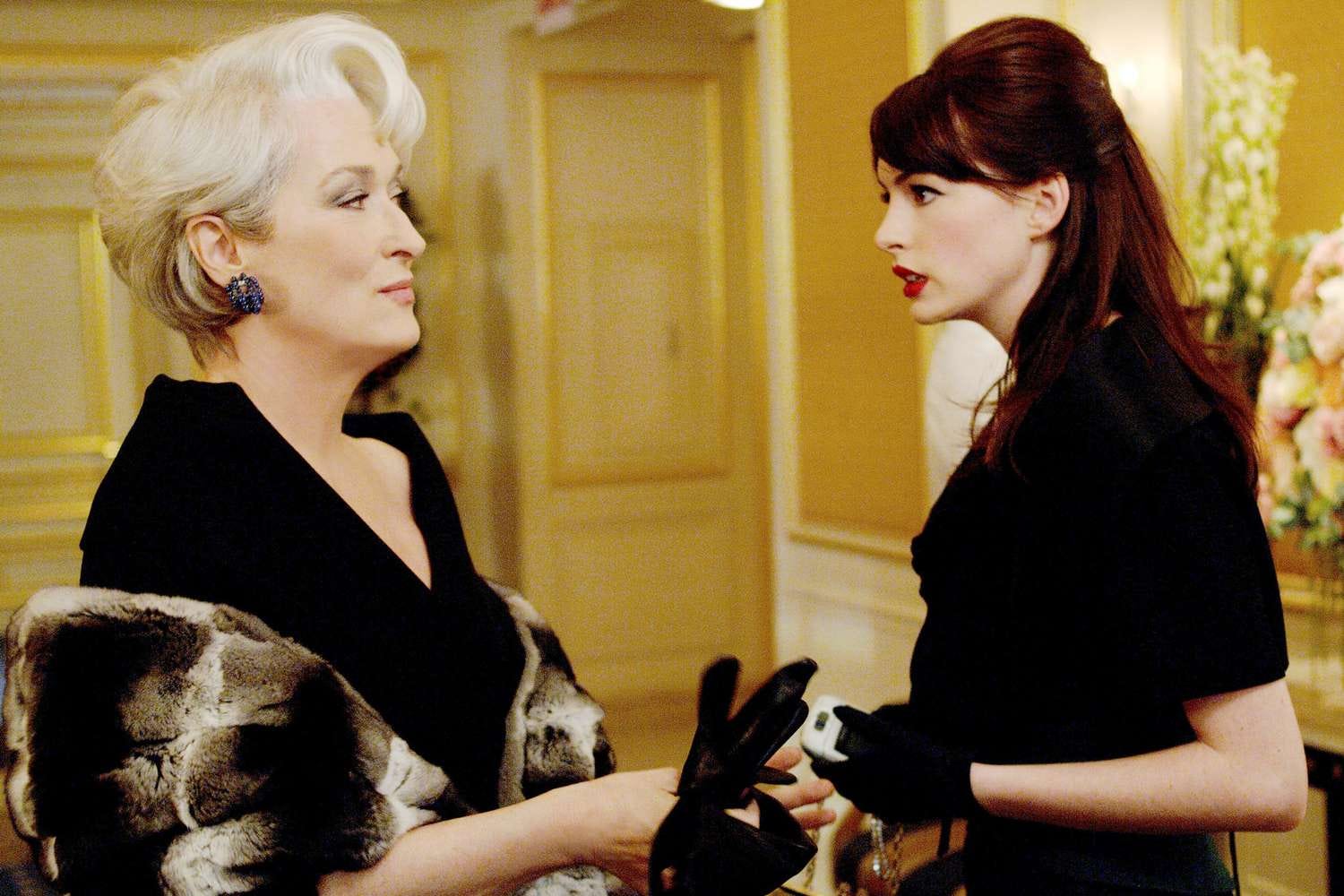
The newspaper where Andy accepts a job at the end of The Devil Wears Prada is called ‘The New York Mirror’. They mirror the reality of unions and labour, real work. After she leaves the interview, she walks past the offices of Runway. ... They report on a shadow world, a fake world, a world of shoes and bags and scarves.
There is another mirror. Standing across from Runway, Andy sees her old boss, Miranda, the Anna Wintour character. The last thing Miranda told Andy was “I see a lot of myself in you.” Andy denied it. Still denies it. Neither woman will be told what to do. ... Her quest has changed her.
In the opening scenes, Andy wears dowdy, worthy, lumpy sweaters. ... Within a few weeks she is ambitious, ruthless even. She sold her soul the day Stanley Tucci gave her a pair of Jimmy Choo shoes. Soon enough, she goes to Paris, having taken Emily’s place.
Naturally, the usual concessions are made to the supposed strictures of common morality. To admit that Miranda Priestly is not the devil but a respectable person of high integrity would be like breaching the old Hollywood code. ... The movie-goers of the Millennial generation were not supposed to accept that Miranda Priestly is an unproblematic heroine, a great mentor, and a true artist. She is a priest of her art.
But by the end of the film, Andy sees herself in a different mirror. ... It is when she and Miranda meet on the street that the film’s resolution arrives. Andy is more confident now, and it is no thanks to her sulky, selfish boyfriend. It is Miranda who Andy loves; it is Miranda who she seeks to emulate.
Some people are scared of ambition. ... Andy’s friends are such people. ... The Devil Wears Prada is The Godfather for the millennial generation: Andy is an innocent who learns her inner steel, but in this film Andy and Miranda represent the virtues. They are self-controlled, judicious, and make prudent decisions.
What they do not do is make kindness the virtue above all others. It is a peculiar obsession of modern culture that “kindness costs nothing.” ... Sometimes kindness is a cost in itself—not being excellent, not being judicious. What Andy’s friends do not realise is that they live in a world they take for granted because of people like Miranda. ... The real moral heart of the film is the scene when Andy goes to Stanley Tucci in tears because Miranda was mean to her.
You want me to say poor you, Miranda is picking on you? She’s just doing her job. Wake up, Six. You’re working at the place that first published some of the major artists of the century — Halston, De La Renta, Lagerfeld. And what they made is cooler than art, because you live your life in it... This is not just a magazine. It’s a shining beacon of hope for, oh, I don’t know, say a young boy growing up in Rhode Island with six brothers, pretending to go to soccer practice when he was actually at sewing class and reading Runway at night under the covers with a flashlight. You have no idea how many legends have walked these halls and what’s worse, you don’t care. Because this is a “stepping stone” for you. This place, that people would die to work, you deign to work. And you want to know why she doesn’t give you a kiss on the forehead and put a gold star on your homework?
Each of her friends has principles like this. ... Fashion is too lowly for them—but all art is a little world, into which the initiates must be trained. ... Lily is a concession to the code. Andy closes the door on her as surely as Michael does to Kay. Michael tells Kay he did not kill his sister’s husband; Andy tells her boyfriend she is going back to “real” journalism. Both dissimulate; both control. Michael has become the Godfather; Andy has become herself.
By the end of the film, Andy does know, and she does care. ... Andy realises that in her end is her new beginning. ... The audience must choose whether they prefer the security of the code or the allure of ambition, art, the halls where legends walk.
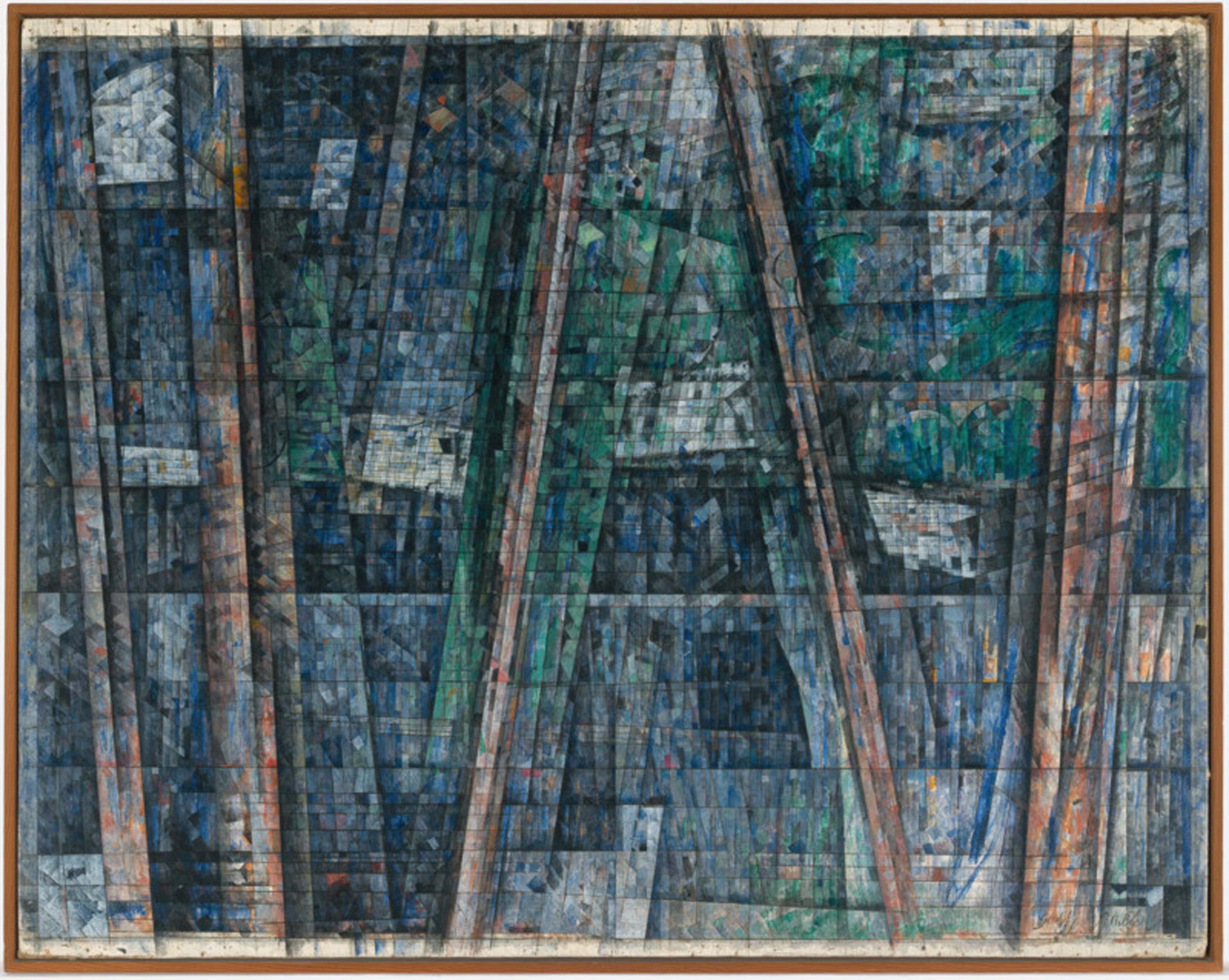
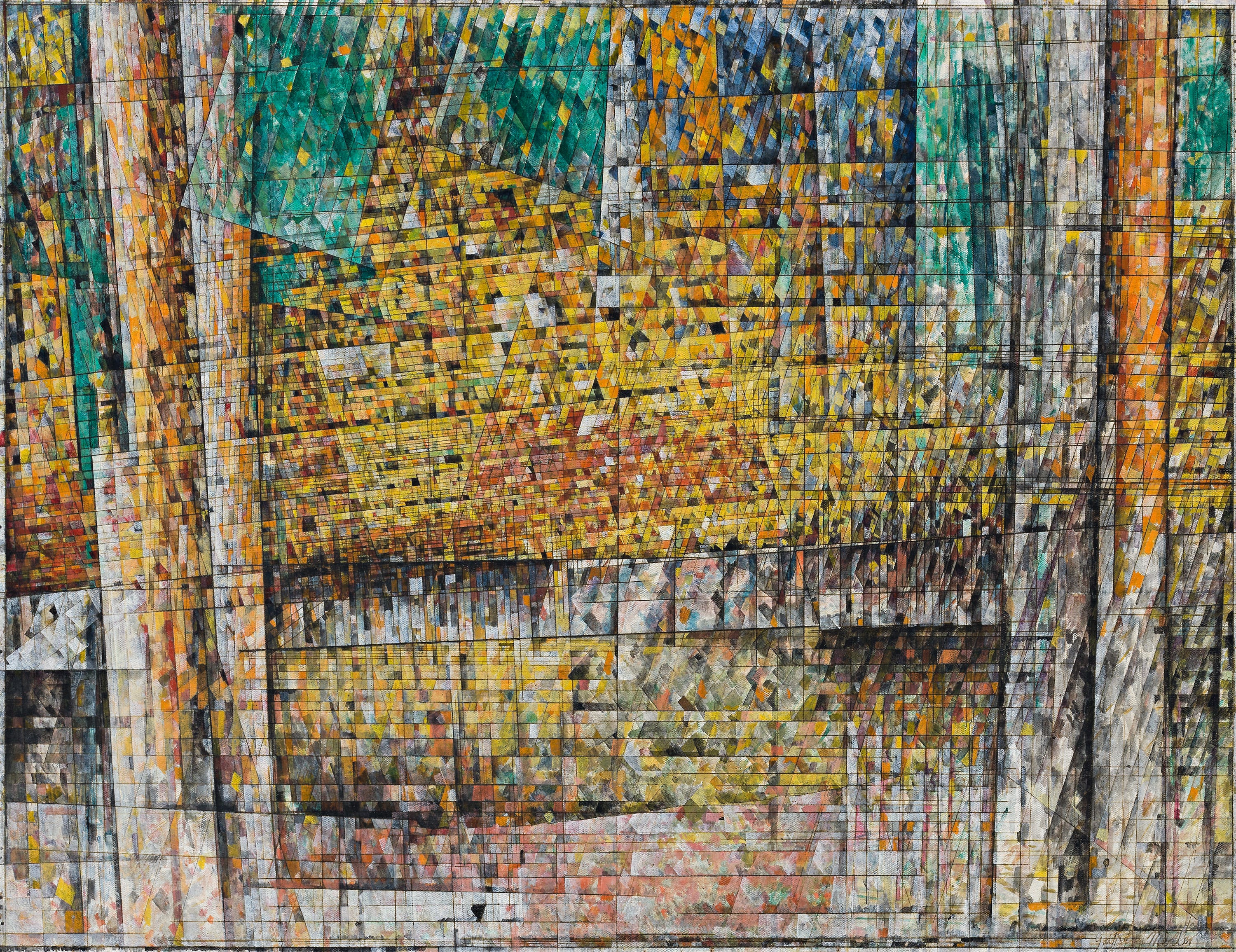
Godfrey Miller
Thanks to a reader for sending.

How big is a big tent?
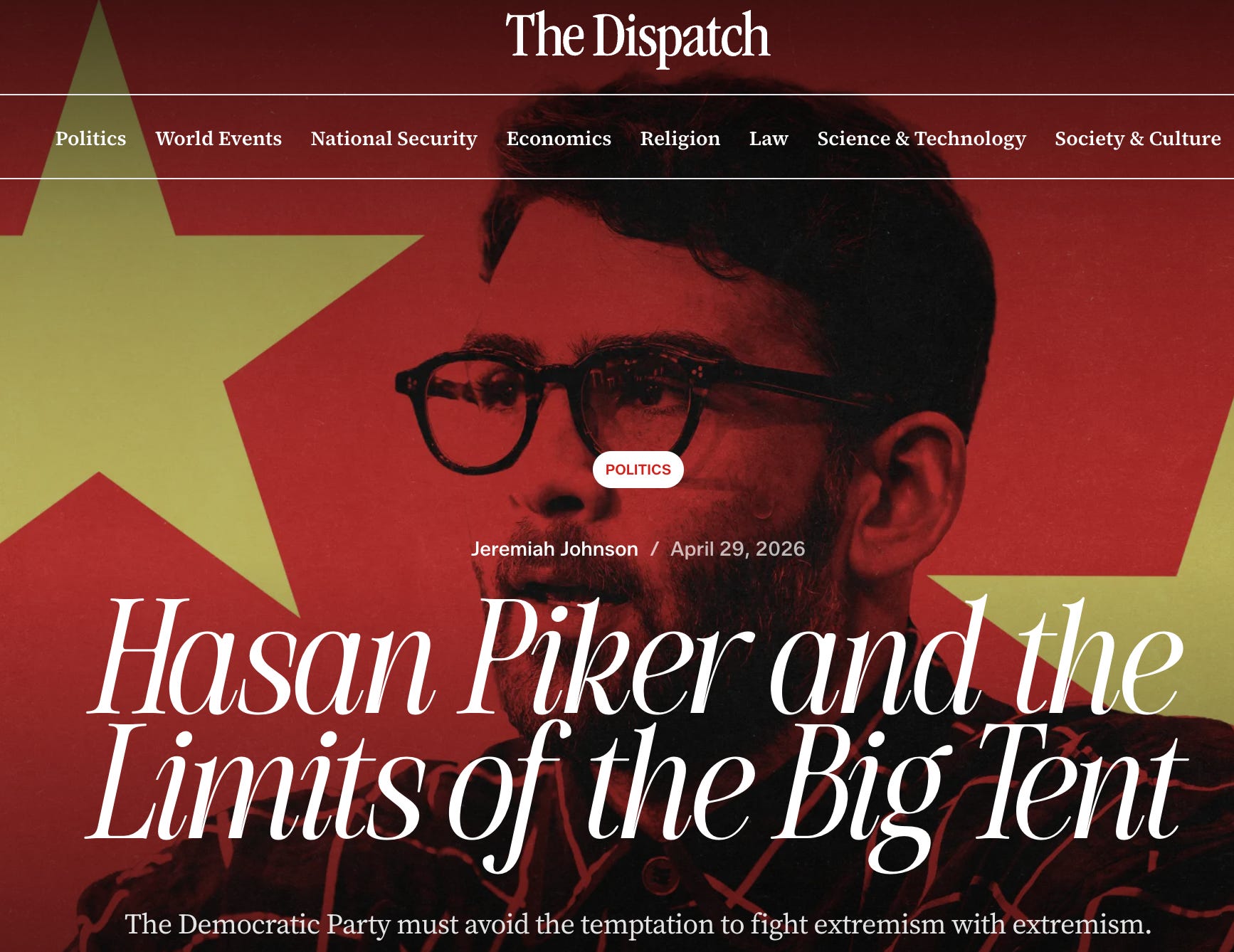
In the US at least, there are no effective gatekeepers on the right - it’s anything goes. Will the Dems go down the same path.
For the past few months, Democrats have been engaged in a strange and increasingly heated debate: Should the party be friendly with socialist livestreamer Hasan Piker?
Over the past few years, political livestreaming has grown rapidly in popularity, contributing to the ascent of figures like Piker, one of the largest political influencers across social media. He’s best known for near-daily live broadcasts expounding on the news from a leftist point of view, while frequently endorsing views on political violence and dictatorships. But Piker is becoming increasingly prominent in offline left-wing circles, too. He has campaigned alongside Democratic Senate candidates, appeared on CNN and NBC News, and received the tacit blessings of Democratic tastemakers like Ezra Klein and Jon Favreau. This is a miscalculation. Embracing Piker is a step toward a Democratic mirror of the GOP’s extremism problem....
Democrats trying to normalize Piker are making a mistake. He is not just a cool, edgy guy who wants universal health care. Nor is he disliked simply because he speaks up for Palestinians. The core problem with Hasan Piker is that he is, at the most basic level, an ideological authoritarian. He promotes violence and repression whenever that violence and repression have a socialist lean.
Perhaps the most concerning part of Piker’s growing popularity is his open embrace of authoritarian governments.
During a two-week trip to China last year, Piker offered nothing but praise for the country’s economic and political system.... A full-time political commentator might be expected to have something to say about China’s lack of basic rights, the Communist Party’s repression of Tibet, the Uyghur genocide, the crackdown on Hong Kong, or Beijing’s threats to Taiwan. Yet Piker either made excuses for these abuses or outright ignored them. He went on Chinese state television to rail against the “rumors” and “misunderstandings” about China peddled in the West. When asked about discrimination against LGBT people, Piker actively defended the ban on gay dating apps on the specious grounds that the ban was about ‘privacy’. He continued to champion the country even after his team was harassed by Chinese secret police for filming in Tiananmen Square; ... hours later he was already arguing that America is worse....
Piker ends up parroting the CCP because he genuinely admires authoritarian governments. When asked which country does socialism in a way he approves of, he doesn’t point to social democracies like Sweden or Norway. He says China is closest to his vision of socialism—and that he would “never make fun of Mao Zedong, one of the great leaders of the world.”...
And his support for authoritarian systems isn’t limited to China. After a trip to Cuba last month, he called the Cuban government the “most moral” country in the world. Piker wishes the Soviet Union had won the Cold War, has “no issues” with Hezbollah, considers Hamas “a thousand times better” than Israel, promotes Houthi terrorists, and said that the U.S. deserved 9/11. ... He would happily take away your human rights, as long as the boot stamping on your face was made in a socialist factory....
In his recent column, Ezra Klein argued that Americans should be more willing to talk to people with whom we disagree politically.... The problem is that other Democrats aren’t inviting Piker to their events for tough debates. Bill Buckley versus Noam Chomsky, this is not. Nobody profiling Piker is grilling him on why he defends Chinese colonialism. They’re writing puff pieces and lusting over how physically attractive he is.
The Democratic Party needs a big tent.... In theory, if Piker showed signs of moderating and wanted to help Democrats defeat Trump, moderates should accept him. The issue is that Piker has no interest in changing or in helping Democrats. The only Democrats he promotes are far-left socialists running in primaries against moderates.... Even after attending the 2024 Democratic National Convention, he did not endorse Kamala Harris for president.
Democrats shouldn’t be afraid to talk with people who disagree with them. But there’s a difference between having a conversation and letting the extremists choose the direction of the party. Hasan Piker is an authoritarian socialist who openly disdains liberal democracy. His views should not be glossed over, he should not be coddled in friendly interviews, and he should not be considered a leader in the Democratic Party.


AI and policy
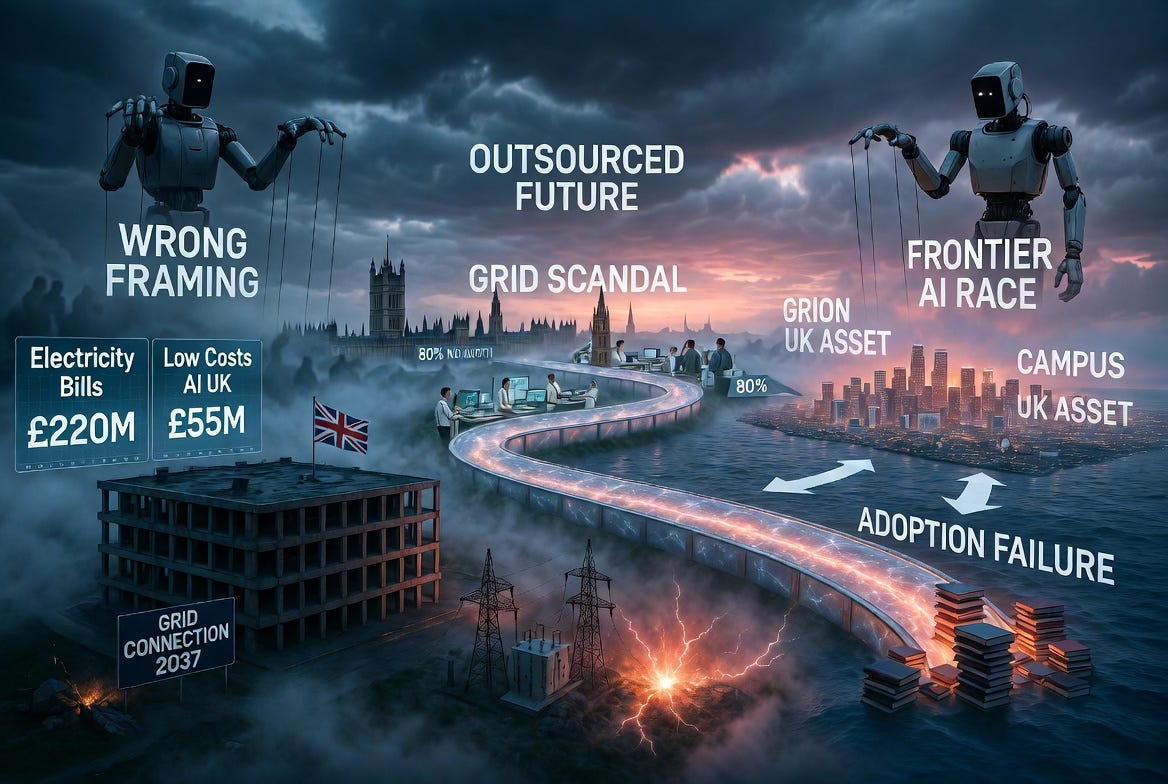
A good list from British MP Rt Hon Liam Byrne, Chair, House of Commons Business & Trade Committee.
The UK AI strategy | We’ve kicked off our AI inquiry - the first I suspect of many - and our first evidence session did not disappoint. A huge thanks to our brilliant witnesses Neil Lawrence Wendy Hall Hugh Milward Matthew Evans Clinton Hasell Karim Palant Simon Menashy Phill Robinson - Boardwave
Three panels. Eight witnesses. Seventy-four questions. Here are the ten things that struck me:
1. We are calling it the wrong thing. The “frontier AI race” framing is actively dangerous for Britain. A race implies one winner and a field of losers. It’s also a marketing construct amplified by companies who need you to believe the stakes are existential, so you’ll keep buying their products.
2. We have outsourced our AI future to private billionaires with no loyalty to Britain. Dan Aldridge asked the blunt question. Dame Wendy Hall’s answer was one word: Yes. We are announcing deals with hyper-scalers and calling it an AI strategy. It isn’t.
3. The real opportunity is adoption. 80% of mainstream British businesses have no plans to implement AI at all. That’s not a technology problem. It’s a leadership and incentive failure.
4. Campus UK is a genuine asset - we need to back it. The concentration of world-class research reachable by train within this island is second to none. But we reward academics for Nature magazine covers not for solving real world problems.
5. The grid is a national scandal. Microsoft is £2.5-£3 billion into a data centre project which faced shutdown at 20 minutes’ notice because a substation blew. One developer has recently been quoted 2037 for their next grid connection.
6. Our energy costs are a disaster. A 100MW data centre costs £220 million a year to run here. In the US: £55 million. Energy is 50% of customer costs in a British data centre. In America it’s 15%. We can’t go on like this.
7. Copyright uncertainty is a problem. As an author I have view on this. But the lack of legal certainty compared to EU, US, Japan, Singapore is itself a problem.
8. The scale-up gap is starving the future. Sixteen times more pension capital flows into UK venture from international funds than from UK funds. Once a company needs a cheque above £50 million, 95% comes from abroad. We are not building a flywheel. We are building a pipeline that ends in San Francisco.
9. The state isn’t helping. Tax incentives in the wrong places. Talent visas closed. There’s a long list.
10. We have no independent AI advice going into Government. Advice reaching ministers is supply-side, but we need demand side pull - citizens, SMEs, public services are almost entirely absent.
We’ve a few more weeks to run before we report. Keep watching. Keep feeding us your views. Please share this to spread the word!
Skyhooks were a lot of fun
And sui generis. Not a great interviewer, but a remarkable songwriter who played an outsized role in the cultural transformations of Australia’s 1970s.
Heaviosity half-hour
Public Opinion by Walter Lippmann (1922)
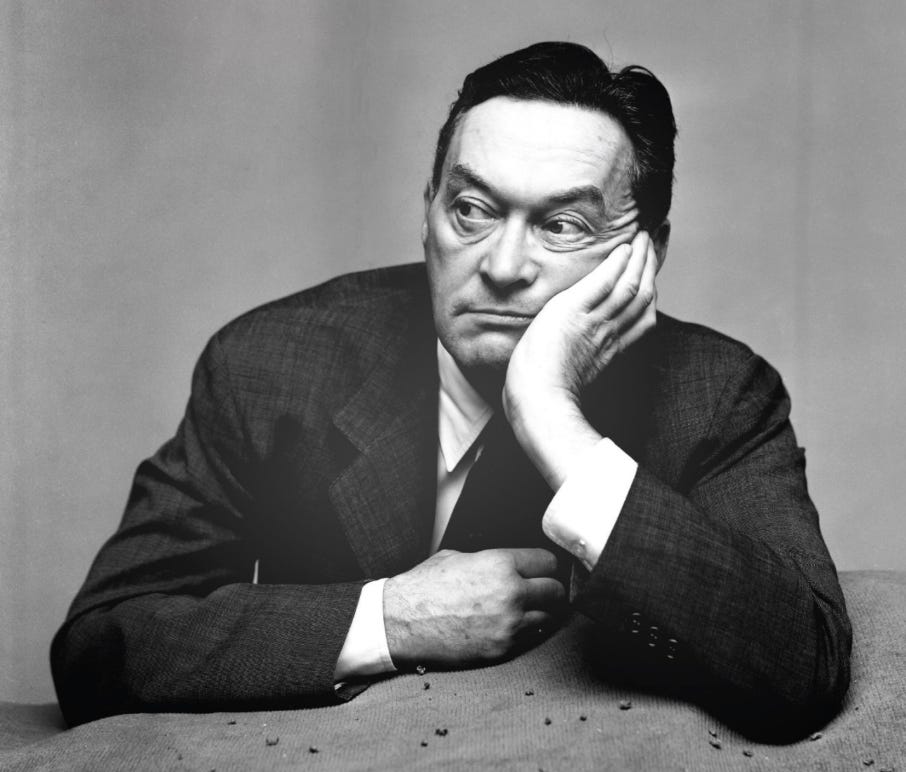
William James described political psychologist Graham Wallas’s book, Human Nature in Politics, as “real political philosophy.” It was grappling with the consequences of democracy in a mass society. Journalist Walter Lippmann’s writing was focused on the same thing. And his greatest work was Public Opinion. I’d known of it and of its famous argument that people can’t possibly know enough to be responsible voters. But I’d not read it closely. Even Claude’s summary of the book below makes it clear what an impressive achievement it was. And it offers a perfect way to decide where one might want to dive deeper into the book.
Contents
The Central Argument
Public Opinion is Lippmann’s sustained attack on a founding assumption of democratic government: that ordinary citizens, given freedom of speech and a free press, will naturally form sound opinions about public affairs and govern themselves wisely.
His counter-argument runs as follows. The modern world — what he calls “the Great Society” — is vastly too large, too complex, and too fast-moving for any individual to perceive directly. We therefore navigate by mental representations of the world rather than by the world itself. These representations are inevitably impoverished, distorted, and filtered through prejudice, social position, and propaganda. The “pictures in our heads” rarely correspond faithfully to the environment beyond our sight.
This is not, Lippmann insists, because people are stupid. It is because the problem is structurally insoluble without better institutions. The democratic tradition has refused to face this fact, instead imagining that the press — or some spontaneous civic virtue — would do what no human being or institution can actually do: furnish every citizen with a competent opinion on every public question.
The book’s final argument is that this impossible burden must be lifted from the ordinary citizen and placed where it belongs: on expert, independent intelligence organisations that can make the invisible world visible to those who must act on it. Democracy must be reformed, not abandoned — but reformed by acknowledging what citizens can and cannot reasonably be expected to know.
The World Outside and the Pictures in Our Heads
Lippmann opens with a striking image. In 1914, a small island in the ocean housed a community of English, French, and German settlers. Because the mail ship came only every sixty days, they had no cable, no news. For six weeks after the outbreak of war, they lived as friends — celebrating, trading, socialising — when in fact they were already enemies. They were acting in a world that no longer existed.
This, Lippmann says, is not so different from what happened everywhere. On the continent, the same lag — perhaps six days or six hours rather than six weeks — meant that men everywhere were making goods they could not ship, planning careers in an order that was about to dissolve, trusting a picture of Europe that Europe was already contradicting. “Men were writing books describing that world. They trusted the picture in their heads.”
The philosopher’s version of this predicament is Plato’s cave, and Lippmann quotes it at length as his epigraph. The political version, he argues, is universal.
He calls the gap between the world as it is and the world as we represent it the pseudo-environment. We respond not to the reality but to our picture of it. When the picture is wrong, our actions misfire — not in the pseudo-environment where they were stimulated, but in the real world where consequences accumulate. “Then comes the sensation of butting one’s head against a stone wall, of learning by experience.”
The word “fictions,” as Lippmann uses it, does not mean lies. It means any representation of the world — from complete hallucination to the scientist’s self-conscious theoretical model. “The range of fiction extends all the way from complete hallucination to the scientists’ perfectly self-conscious use of a schematic model.” The question is not whether we use fictions but whether our fictions are adequate — whether they can be checked, corrected, refined.
A single sentence captures the whole problem: “For the real environment is altogether too big, too complex, and too fleeting for direct acquaintance.”
The Barriers to Knowing
Lippmann spends several chapters cataloguing the obstacles between citizens and accurate information about the world. These fall into two categories: external and internal.
External Barriers
Censorship and propaganda. Lippmann draws extensively on his experience of the First World War. He describes in detail how the French High Command managed public perception of the Battle of Verdun, editing the official communiqués in dramatic sessions where generals debated nouns and adjectives. When Fort Douaumont fell to the Germans, French headquarters did not know how it had happened and simply “imagined, in the evening communiqué… a plan of the attack which certainly had a thousand to one chance of being true.” The communiqué described a battle that had not occurred.
This is propaganda in its purest form — not necessarily malicious, but structurally dishonest. “A group of men, who can prevent independent access to the event, arrange the news of it to suit their purpose.” The patriotic motivation does not alter the mechanism.
Without censorship, propaganda is impossible. “In order to conduct a propaganda there must be some barrier between the public and the event.” The military censorship is merely the most visible such barrier; privacy, cost, social distance, and simple geography are others.
Contact and opportunity. Even in peacetime, most people live in narrow grooves of experience. They encounter only a small range of people, read a limited selection of sources, and inhabit social sets that filter what information is admissible and credible. Lippmann is acute on how social hierarchy channels information: the cosmopolitan upper class has genuine contact with the wider world, while “Dr. Kennicott of Gopher Prairie” forms opinions that have trickled down through layers of social imitation, “transmuted on its passage through the provincial social sets.”
Time and attention. Surveys of American readers in the early 1920s suggested that most people gave less than fifteen minutes a day to newspaper reading. Only a small fraction of that was devoted to public affairs. The information that reaches citizens about the world beyond their experience is, on any honest reckoning, desperately thin.
Speed and language. International cables had to be encoded, decoded, and compressed. A correspondent might transmit in thirty words something a London editor would need to convey a multi-dimensional situation. Language itself is treacherous: “Words, like currency, are turned over and over again, to evoke one set of images to-day, another to-morrow.” When Lloyd George spoke, his words passed through French translation, foreign sensibilities, provincial idioms, different levels of literacy — emerging as a quite different thing at each stage.
Lippmann gives a charming illustration of linguistic devaluation. A neutral observer compared the French press to English: the French systematically “overpay” in language, using “great savant” where an Englishman would say “distinguished scholar.” The French franc was at the time trading at 46 to the pound rather than the peacetime 25. “There is a war fluctuation on word exchanges as well as on money exchanges.”
Internal Barriers
Industrial noise, fatigue, and the relentless pace of city life depress the quality of political judgment even when information is available. “The life of the city dweller lacks solitude, silence, ease… Under modern industrialism thought goes on in a bath of noise.” If a metronome can depress the accuracy of word association in a laboratory setting, what must twelve hours in a factory do to a man’s ability to weigh the claims of competing political programmes?
The cumulative effect of all these barriers — censorship, social isolation, limited attention, compressed language, noise, fatigue — is that citizens form their opinions on “a most inadequate picture of the Great Society.”
Stereotypes
The concept for which Lippmann is best remembered today. He uses the term to mean the pre-formed categories through which we organise unfamiliar experience.
“For the most part we do not first see, and then define, we define first and then see.” When Clemenceau looked at Germany in 1919, he was not looking at the Germans of 1919 — he was seeing through a pattern hardened by decades of experience since 1871. He selected as “authentic” the evidence that confirmed his picture, and dismissed contrary evidence as exceptional.
The experimental evidence Lippmann cites is still disturbing: at a congress of psychologists in Göttingen, a clown burst through the doors pursued by a man with a revolver. The whole episode lasted twenty seconds and had been staged and photographed in advance. Of the forty trained observers who wrote reports, only one had fewer than 20 per cent errors; more than half had errors exceeding 40 per cent; a quarter invented details that had not occurred at all. “Thus out of forty trained observers writing a responsible account of a scene that had just happened before their eyes, more than a majority saw a scene that had not taken place.”
They had seen their stereotype of such a brawl.
Stereotypes are not merely errors: they are cognitive economy. In a world of infinite complexity, we cannot attend freshly to everything. The attempt to “see all things freshly and in detail, rather than as types and generalities, is exhausting, and among busy affairs practically out of the question.” We pay a price for this economy, but we could not live without it.
The deeper problem is that stereotypes are not just cognitive shortcuts. They are the fortresses of our social identity. “They are the guarantee of our self-respect; it is the projection upon the world of our own sense of our own value, our own position and our own rights.” To challenge someone’s stereotypes is not merely to offer new information — it is to threaten their position in the social order, and they will resist accordingly.
Lippmann illustrates this with a brilliant reading of Aristotle’s defence of slavery. Aristotle needed to justify slavery at a time when Athenian slaves were indistinguishable in appearance from free citizens. His solution was to declare that those who are slaves are by nature intended to be slaves — a circular argument that is, logically, worthless. But its function is not logical. “It is a stereotype, or rather it is part of a stereotype. The rest follows almost immediately.” The stereotype of “the natural slave” immunised its holder against the disturbing evidence of actual human similarity. It “stamps itself upon the evidence in the very act of securing the evidence.”
Stereotypes also have genuine blind spots — zones where they economise on attention so aggressively that important facts simply cannot be seen. The American stereotype of “progress” — growth, speed, size, more — was extraordinarily effective at mobilising energy for economic expansion. But it had no place for what was sacrificed in the process: slums, resource depletion, unassimilated immigration, unpreparedness for international obligations. When the First World War came and the stereotype demanded a simple, annihilating victory, it had no capacity for the complex peace that followed. The people who cried for a Carthaginian peace in 1919 were, Lippmann suggests, the victims of their own mental template.
Interests and the Self
Lippmann is sharply critical of the determinist theories of his day — both the hedonic calculus (men pursue pleasure and avoid pain) and the Marxist theory of economic class interest. Both assume that people know what they want and act accordingly. Both assume a fixed, knowable self.
But the self is multiple and context-dependent. A man who is a brutal employer may be a tender father; a passionate advocate for international peace may conduct his business affairs with naked self-interest. “There is no one self always at work.” The question is not whether self-interest governs opinion, “but which self out of many selects and directs the interest so conceived.”
Marxist determinism failed precisely here. It predicted that economic position would automatically generate class consciousness, that workers would see their interests clearly and act on them. Lenin himself abandoned this position when he seized power — Russia had not reached the stage of capitalist development that Marxist theory prescribed, so he simply tried to create it by force of will. “This dissolves the impact of economic determinism. For if our economic interests are made up of our variable concepts of those interests, then as the master key to social processes the theory fails.”
How Public Opinion Is Manufactured
How does any common opinion emerge from the chaotic variety of individual perspectives? This is the question Lippmann addresses in his chapters on the making of a common will.
The answer, he argues, is symbols. Political leaders create coalition by finding words, images, or figures that different groups can each invest with their own meaning. The symbol does not mean the same thing to all who rally to it; it means something slightly different to each, but the shared label creates the impression of agreement.
Lippmann demonstrates this with a close reading of a Hughes campaign speech from 1916. Hughes had to unite Bull Moose progressives and old-guard Republicans, pro-Germans and pro-Allies, interventionists and non-interventionists in Mexico. He did it through a kind of strategic vagueness: where there was genuine conflict, he found language that could mean all things to all factions. The word “Lincoln” in such a speech, Lippmann notes, “has of course no relation to Abraham Lincoln. It is merely a stereotype by which the piety which surrounds that name can be transferred to the Republican candidate.”
He applies the same analysis to Wilson’s Fourteen Points — a document of extraordinary diplomatic and psychological sophistication. Each clause was calibrated to meet the expectations of different audiences (Allied peoples, the German left, subject nationalities of Austria-Hungary, wavering neutrals) without conceding anything irrevocably to any of them. The phrase about Alsace-Lorraine, for instance, said that “the wrong done to France by Prussia in 1871… should be righted” — not that Alsace-Lorraine should be restored. “Righted” covered both a plebiscite and outright annexation. “1871” quietly excluded the Saar Valley, which French officials were planning to claim under an expansive reading of “Alsace-Lorraine.” Every word was chosen; nothing was random.
The tragic consequence is visible in what followed. “As the public appeal becomes more and more all things to all men, as the emotion is stirred while the meaning is dispersed, their very private meanings are given a universal application… everybody expected everything.” When the Paris Peace Conference began, each nation’s statesmen retreated to the expectations of their domestic constituencies, and the vast balloon of shared symbolism burst.
The mechanics of opinion manufacture also include the role of machines, hierarchies, and the inner circle. Lippmann is bracingly unsentimental about democratic romanticism. “Distance alone lends enchantment to the view that masses of human beings ever cooperate in any complex affair without a central machine managed by a very few people.” No political party, trade union, or revolutionary movement actually governs itself by the will of its members. There is always an inner circle in direct contact with the environment, making real decisions; and a broader membership that can, at best, say yes or no.
The public, taken as a whole, is not omnicompetent. It can ratify or repudiate; it cannot design, negotiate, administer. “The limit of direct action is for all practical purposes the power to say Yes or No on an issue presented to the mass.”
The Failure of Democratic Theory
The democratic tradition, Lippmann argues, never faced the problem it was supposed to solve. The great theorists of democracy assumed — without examination — that citizens naturally possessed the information and judgment required for self-government. They focused their ingenuity on the mechanics of voting and representation, assuming that if the machinery were correct, the wisdom would flow.
This assumption was plausible, barely, in small self-contained communities where citizens could directly observe the affairs that concerned them. Aristotle understood this: his ideal polity was one small enough that every citizen could see every other. But the theorists of modern democracy carried the small-community assumption into an era of states, empires, and international markets — a world that Aristotle’s citizens could not have conceived.
The guild socialists — Lippmann devotes several chapters to G.D.H. Cole’s programme — represent the most sophisticated attempt to preserve the democratic ideal in a complex society by reorganising it on a functional basis. But they, too, fail to face the central problem. Their scheme of functional representation assumes that people already know what functions they are part of, what interests they share, what common purposes they serve. It inserts into its premise exactly what it is supposed to derive. “If we could allow Mr. Cole his scheme of functions we could allow him almost everything. Unfortunately he has inserted in his premise what he wishes a guild society to deduce.”
The deeper flaw in democratic theory is its obsession with the origin of power rather than its exercise. Democrats assumed that if power derived from the right source — the people — it would be beneficent. But “no amount of regulation at the source of a river will completely control its behavior.” What matters is not where power comes from but how it is used, and how its use can be made visible and accountable.
The real cost of the democratic fiction is that it makes “all the vital decisions invisible. For since there is no instinct which automatically makes political decisions that produce a good life, the men who actually exercise power not only fail to express the will of the people, because on most questions no will exists, but they exercise power according to opinions which are hidden from the electorate.”
The Press: What It Can and Cannot Do
The press has been loaded with the democratic theory’s impossible burden. If citizens cannot see the world directly, the press is supposed to see it for them. Every criticism of the press, and every defence, implicitly holds newspapers to this standard: they should provide every citizen with a true picture of all public affairs.
This is not possible. Lippmann explains why with his crucial distinction: news and truth are not the same thing.
“The function of news is to signalize an event, the function of truth is to bring to light the hidden facts, to set them into relation with each other, and make a picture of reality on which men can act.”
News is not a mirror of reality. It is a report of those aspects of reality that have become overt, measurable, and nameable. A reporter stationed at the County Clerk’s office will know when John Smith has filed for bankruptcy — this is news. What he will not know, and cannot report in any systematic way, is the months of reckless risk-taking, the deteriorating relationships, the structural vulnerability of Smith’s business model that led to the bankruptcy. The underlying conditions are only news when they erupt into a visible event.
This explains what Lippmann regards as the systematic distortion in press coverage of industrial disputes. Bad working conditions are not news until workers strike. The strike itself — an overt act — generates a headline, typically framed around the inconvenience to readers (shortage, disruption, disorder) rather than the underlying grievance. The worker’s experience — the exhausting foreman, the monotony of the machine, the inadequate wage — is invisible until it becomes an act. “The bulletin from the scene of action will note the trouble that arose from the assertion, rather than the reasons which led to it. The reasons are intangible.”
It is not, Lippmann insists, primarily a matter of class bias or the Brass Check of capitalist ownership — though these exist. Radical papers suffer from the same structural problems: they can only report what is overt, measurable, and capable of being “pegged” to a fact. The quality of news, he says, “is an index of its social organization.” Where institutions are transparent, well-run, and produce precise records, news is good. Where institutions are opaque, disorganised, or deliberately hidden, news is poor — whatever the political sympathies of the newspaper.
The press is “like the beam of a searchlight that moves restlessly about, bringing one episode and then another out of darkness into vision. Men cannot do the work of the world by this light alone. They cannot govern society by episodes, incidents, and eruptions.”
He is equally penetrating on the economics of newspapers. The press is nominally free, but it is in fact paid for by advertisers, who pay to reach readers with purchasing power. This creates a structural alignment between newspapers and their most valuable customers — the urban middle class. It is not that publishers are corrupt; it is that the institution as a whole is oriented to an audience, and that orientation shapes what is covered, how it is framed, and whose perspective is foregrounded.
Upton Sinclair had argued, in The Brass Check, that all the failures of the American press could be traced to capitalist ownership. Lippmann demolishes this by pointing out that Sinclair conspicuously does not recommend that readers switch to radical papers. If the problem were ownership, the solution would be obvious. But radical papers are no more accurate, no more complete — they have simply different biases. The real problem runs deeper than ownership.
The Remedy: Organised Intelligence
The final section of the book proposes a solution. It is modest, institutional, and easy to underestimate — which is perhaps why it has rarely been celebrated as the culmination of a brilliant argument.
The core proposal: every major institution of government and industry should have an independent intelligence staff — researchers, statisticians, analysts — whose job is to create an accurate picture of the institution’s actual environment. These staffs would be independent of both the politicians who make decisions and the bureaucrats who execute them. They would have secure tenure, independent funding, access to all files, and a professional obligation to the facts rather than to any policy outcome.
The model already existed in embryonic form. The Bureau of the Census, the Geological Survey, the Department of Agriculture all did something like this — making aspects of the environment visible that no individual citizen could perceive. The Children’s Bureau published statistics on infant mortality; when people could see the numbers, death rates went down. “The statistics made them visible, as visible as if the babies had elected an alderman to air their grievances.”
The key distinction is between the function of assembling knowledge and the function of making decisions. These must be rigorously separated. Lippmann illustrates with diplomatic intelligence: the best diplomatic services are those in which the intelligence function is most completely divorced from policy. The moment the intelligence officer begins to care what decision is reached, he begins to see what he wishes to see, and ceases to be useful. “He represents the unseen. He represents people who are not voters, functions of voters that are not evident, events that are out of sight, mute people, unborn people, relations between things and people.”
The expert does not replace the democratic process; he informs it. By making the invisible visible, by confronting decision-makers with facts they cannot simply wish away, the intelligence function changes the conditions under which decisions are made. “Men cannot long act in a way that they know is a contradiction of the environment as they conceive it.”
Lippmann imagines what such a system would look like in a major labour dispute. Instead of Judge Gary asserting that his workers are “well paid” and Foster asserting they are “exploited” — both terms carrying freight-trains of political association — a neutral chairman backed by expert analysis would replace these slogans with a table showing what specific grades of workers actually earn, compared against an official cost-of-living calculation. This does not end the dispute, but it changes its character. It shifts the argument from the realm of mythology to the realm of fact. “The value of expert mediation is not that it sets up opinion to coerce the partisans, but that it disintegrates partisanship.”
This is not technocracy — Lippmann does not imagine experts replacing politicians. It is a proposal to give politicians and citizens something they currently lack: a reliable picture of the world they are governing.
Why It Matters
Public Opinion is a book written about 1922 that feels, in many respects, as if it were written last week.
Several of its specific contributions deserve emphasis.
The pseudo-environment is not a pathology. Lippmann’s account is not a lament about human stupidity. It is a structural analysis. The problem is not that people are irrational; it is that any mind, however excellent, is limited in what it can directly perceive. We all navigate by mental models. The question is whether our models are roughly adequate to reality, and whether they can be corrected when they fail. This makes the book a friend of democracy even as it criticises democratic naivety.
Stereotypes are not mere prejudice. Lippmann invented the modern use of this term, and his treatment remains more sophisticated than most of what has followed it. Stereotypes are cognitive economy (we cannot attend freshly to everything), social identity (our picture of the world is our picture of ourselves), and blind spots (they screen out what would disturb them). All three dimensions must be grasped together. To attack stereotypes with moral disapproval alone is to miss most of what is going on.
News and truth are distinct. This is perhaps the most durable contribution of the book. The press reports events; it does not map conditions. It can tell you when a strike begins, not why labour relations were deteriorating for years. This is a structural feature of journalism, not a failure of individual reporters or editors. The implication is that good institutions must generate good records — because without records, there is no news; and without news, there is no accountability.
The omnicompetent citizen is a fiction. The most radical claim in the book, and the one most resisted. Democratic theory cannot survive, Lippmann argues, if it continues to require that every citizen form competent opinions on every question. The solution is not less democracy but better-designed institutions: ones that create expert knowledge, make it available to decision-makers, and make those decisions visible and auditable in turn. “There is no prospect, in any time which we can conceive, that the whole invisible environment will be so clear to all men that they will spontaneously arrive at sound public opinions on the whole business of government.”
What remains is the modest, stubborn residue of democratic faith: that institutions can be made more transparent; that expertise can be organised in the public interest; that citizens can hold their own stereotypes more lightly if they are educated to recognise them; and that the long run of history belongs, as Lippmann put it in his final pages, not to frightfulness and fanaticism, but to “intelligence, courage and effort.”
Lippmann does not promise a world where reason governs. He argues, more carefully, that we can make reason one of our prejudices — can institutionalise the habit of looking for facts before forming opinions — and that this, slowly, across generations, changes the character of public life.
It is a modest conclusion for so ambitious a book. But it is also, a century on, the only conclusion that honest observation permits.
Summarised from the 1922 text. Lippmann’s subsequent books — especially The Phantom Public (1925) — extended and in some respects modified these arguments.


This week I am taking the bait. (I did not agree 100% with the Israel portion of last week but I gave up even trying to articulate it.) Transatlantic and Islamic slavery should be equally condemned if your purpose is to condemn slavery. However it is against Islamic law to enslave a fellow Muslim and a very few Muslims who were sold into the transatlantic trade were able to get their relatives to ransom them. (Some of the wars that fed the transatlantic trade were Muslims vs. pagans and the ensuing captives might have gone to another slave trade.) American slave societies turned themselves into pretzels to convince themselves that it was OK to enslave a fellow Christian and that what they were doing was paternal care that ensured the slaves remained in a Christian environment no matter what was done to them. The very good book, "Abolition in Sierra Leone", which I finished in the last month or so showed explicitly that the purpose of British freeing slaves and sending them to Sierra Leone was to establish a beachhead for this Christian environment in Africa. * Certainly in the English-speaking world most people who thought about slavery would readily tell you that it was an evil and it needed to clearly become a capitalist business enterprise for people to argue that it was either an unbearable evil or any kind of good. So the charge to be laid against the West is that they knew better from the beginning and chose to say that there were worse evils.
On heaviosity half-hour it is probably the best practice to say that a general-interest paper can tell you where it is important to get more information. The preferred narrative and audience of the general-interest paper may blot out providing information that you need to make real decisions or to evaluate what candidates in a 20-person cattle call debate are saying especially when the paper has to state the narrative outright for less-than-subtle readers.
*It is currently Hugo time and the nominators did a fabulous job. "The Everlasting" is just not a Hugo winner in the view of someone who has never voted for Alix E. Harrow for anything but there are valid arguments for every one of the other 5. And I am stuck with only 1.5 seasons of TV.
Gödel, Escher, Bach -I bought the Penguin version of Hofstadter's book in the 1980s and managed to read some of it and perhaps gain a rough understanding of his thesis. Ali Ihtesham notes that "Most people who buy it never finish it. That is fine." Which is good to hear ....