


In the second of three talks at John Allsopp’s Web Directions Dec 2024 NEXT conference, I dig into a question modern life has taught us to overlook: how do we decide what's truly good?
We’ve built a civilisation where merit is often confused with ambition, where leadership is predicated on self-promotion, and where institutions reward ambition and playing the game (instead of service) and ‘smartness’ (instead of good judgement).
Enter what I call “bottom-up meritocracy”, as practised in medieval Venice and on modern Wikipedia, I explore how “bottom-up meritocracy” once thrived—and could again.
We’ll look at how the American Founders tried (and failed) to build a system of bottom-up meritocracy inspired by Venice's constitution (among others), how our institutions have become increasingly hollowed out, and why Charlie Munger summed it all up when he described what we should be aiming for: a “seamless web of deserved trust”.
If you prefer the audio file, it’s here.
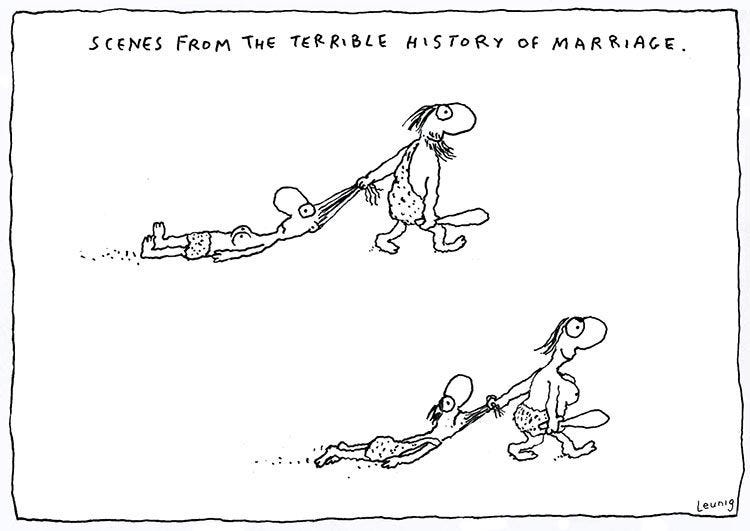
Oh for a self-deprecatory political leader?
Hilarious punch line!
The collapse in conscientiousness
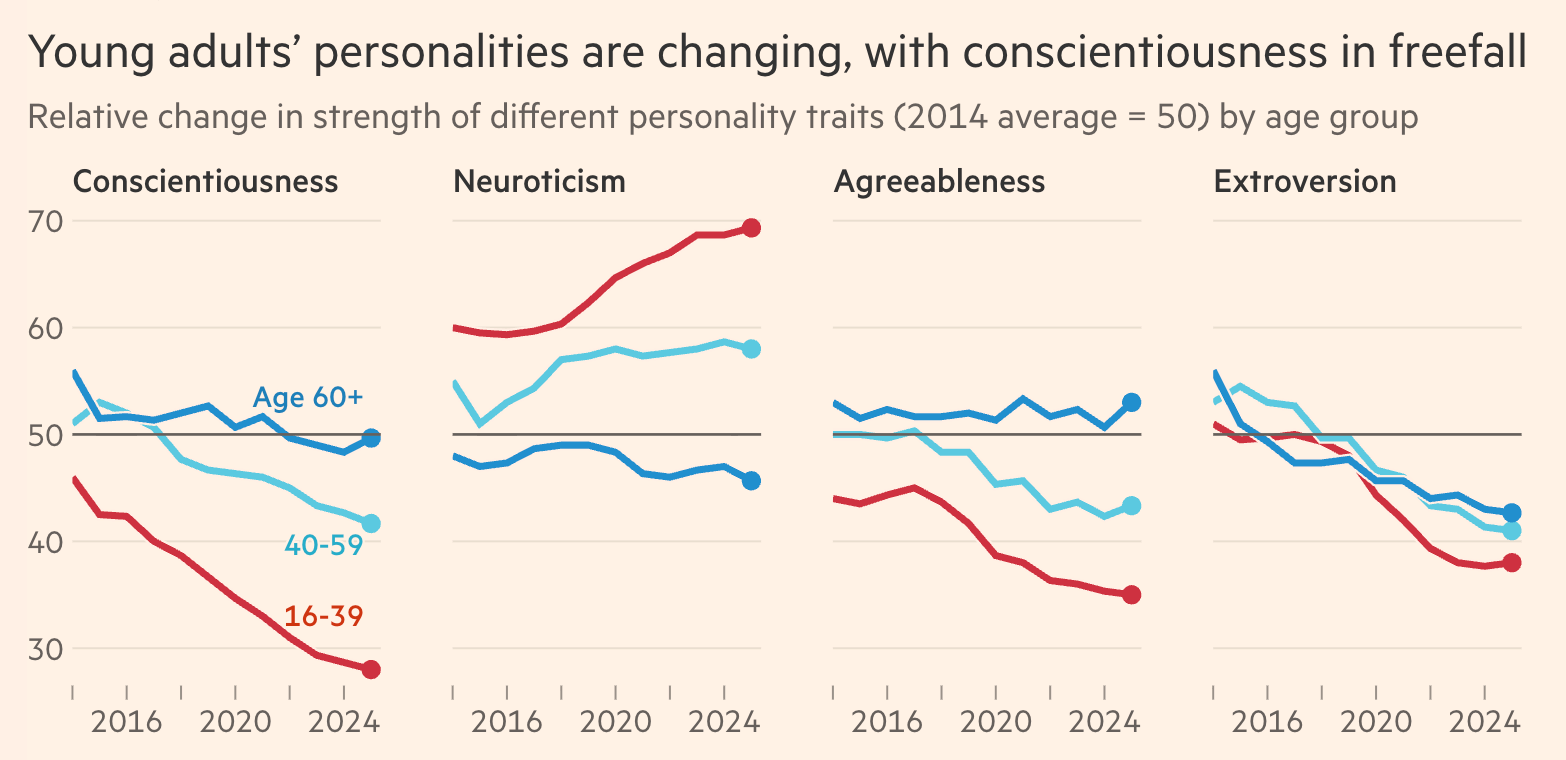
Conscientiousness is of course a public good of immense significance. It underpins our ability to cooperate, and even if we’re not well managed (who is?) where conscientiousness is high, we all look out to play our role. That’s why these developments in conscientiousness, and its corollary, the rise in careerism is at the heart of the productivity summit about which we’ve heard so much in Canberra. Only kidding.
Anyway, these are amazing numbers and another key to the misery of the young. In the words of the proverb, the giving hand receives. Psychologically that’s usually true as those Brady Bunch kids kept finding out.
A critical life skill is fading out — especially fast among young adults
What are the key attributes that shape the length and quality of our careers, relationships and lives more broadly? The socio-economic environment we grow up in certainly has a substantial influence... Cognitive abilities are another obvious one: they enable better decision-making in all aspects of life. But another factor often gets less credit despite being just as important: personality.
In fact, studies consistently find that traits such as conscientiousness (the quality of being dependable and disciplined), emotional stability or agreeableness have a stronger link with professional success, relationship durability and longevity than the links between those outcomes and someone's intelligence or socio-economic background.
Of all personality types, conscientious people tend to fare best on a number of key measures. They live the longest, have the most career success and are less likely to go through divorce... Being motivated and persistent is a huge help.
Some studies suggest the advantage of conscientiousness is growing over time... the ability to ignore it all and put long-term wellbeing ahead of short-term kicks becomes a superpower.
Generative artificial intelligence could supercharge this dynamic. An industrious student who is not deterred by a challenge might use a large language model as a personal tutor to strengthen their knowledge of a concept; their less conscientious counterpart might task the same LLM with writing their essay, foregoing knowledge acquisition altogether.
All this makes it disconcerting that levels of conscientiousness in the population appear to be in decline... I found a sustained erosion of conscientiousness, with the fall especially pronounced among young adults.
Digging deeper into the data... people in their twenties and thirties in particular report feeling increasingly easily distracted and careless, less tenacious and less likely to make and deliver on commitments...
Collapsing conscientiousness is not the only personality shift visible in the data. Neuroticism — a function of the much-discussed increase in anxiety — has risen almost as much... In fact, long the most extroverted group in society, young adults are now the most introverted.
While the terminology of personality can feel vague, the science is solid. Decades of research consistently finds that all these shifts are in the direction associated with negative outcomes down the line. Life is full of challenges. A less committed, less connected and more easily distressed cohort will navigate them less well.
But while the trends are undoubtedly troubling, we shouldn't be fatalistic. Unlike parental background and genetic make-up, there is a wealth of evidence that personality is malleable — what has been eroded can be rebuilt. Conscientiousness will separate those who just survive from those who thrive in the 21st century. We can each decide which half of that divide we fall on — but ironically that will take some dedication.
Posted by Michael Nielsen
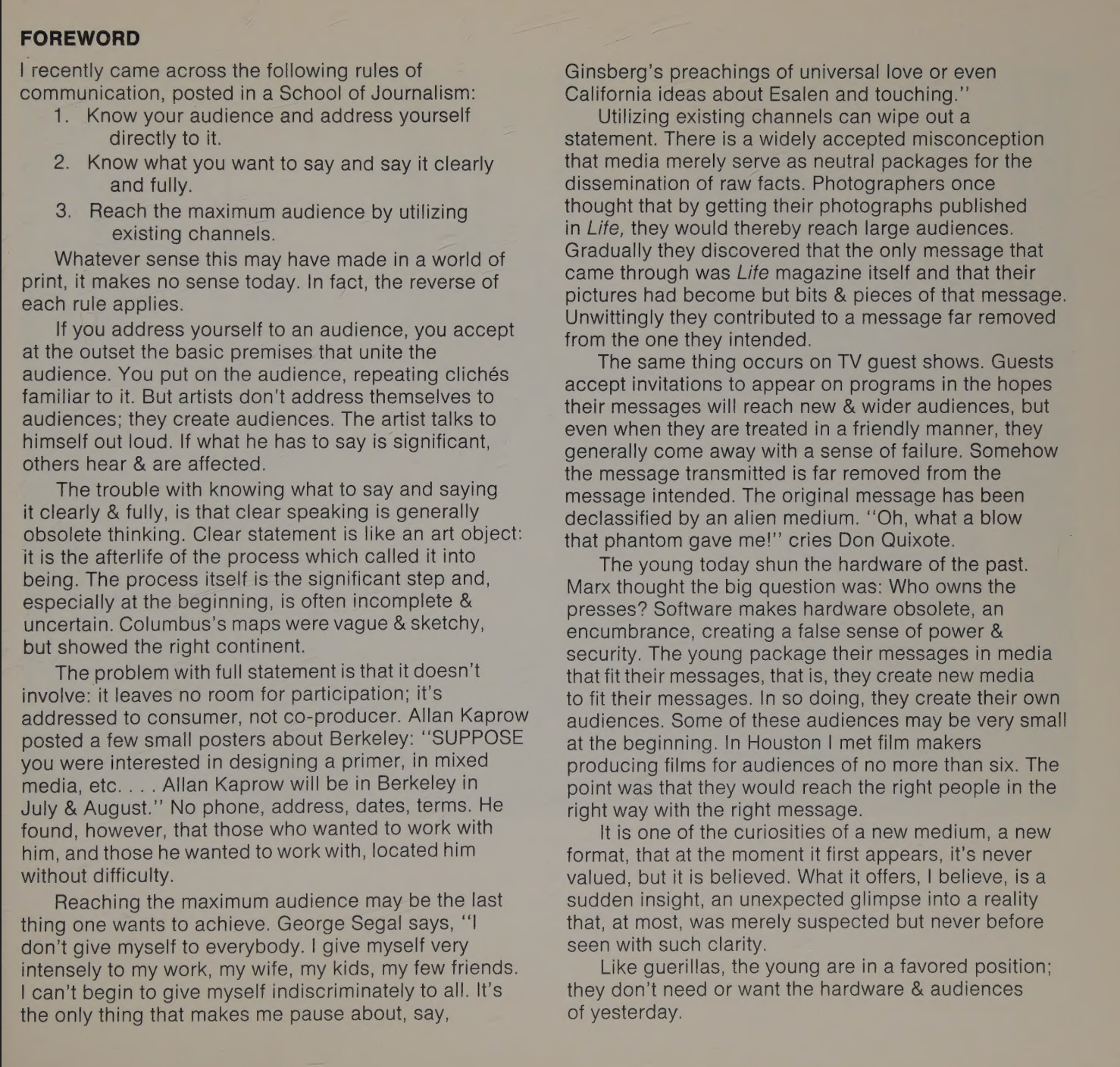

The great hollowing out in political manners
There’s been a bit of a literature about the hollowing out of politics. You know, a couple of generations ago the political parties commanded a membership base of over 1 percent of the population. They had deep roots into the community. Now they’re brand management operations run by apparatchiks doing their apprenticeship before seeking a seat in parliament.
There’s been another kind of hollowing out. I first noticed this when I attended a Business for Labor function about twenty odd years ago. I had naïvely taken this to be an outfit which managed relationships and perhaps raised some funds from businesses with proprietors who were friendly to Labor. Silly me. It was a simple access selling operation. (Not that I’m censorious of the folks doing it. Those are the incentives in the game they’re trying to win, so while I might hate the game, I accept that that’s the way folks feel obliged to play it - lest their opponents get the advantage over them.)
In any event the evening was addressed by a Labor State minister. And the thing that jarred with me was that the speech we got was indistinguishable from a stump speech or a TV interview. And simply hitting your talking points - with all their stock evasions and sloganeering - is kind of insulting to the audience. It’s also good technique on political media.
Back when I’d worked for John Button and John Dawkins, even at a function like this, they’d have crafted a speech which had a little candour in it. Nothing too risque in case its contents were leaked, but something that didn’t treat the audience as idiots.
Anyway, that style is kind of dead now. And part of that world also involved retired politicians speaking in that kind of register. A little candour. They’d do it out of courtesy and self-respect. But I remember watching Tony Abbott trying to set up Anthony Albanese for visiting China and not getting a meeting with Trump as if he were still hitting his talking points. Complete nonsense, but perhaps the frame-up for the day. Anyway, you can say that Malcolm Turnbull has various motives for speaking candidly in this interview. But I expect a fair bit of it is self-respect. And respect for his audience. Just like Johns Button and Dawkins when they weren’t on the telly (and John Button sometimes when he was!)
And here’s Crikey’s Bernard Keane on another kind of hollowing out.
As if conscious of the contrast between Penny Wong primly censuring a placard [held up in the Senate by NSW Greens Senator Mehreen Faruqi] and pictures of babies being starved to death in Gaza, the government tried some spin in the aftermath of the vote. A staffer from a senior minister’s office sent out an email at 5.20pm yesterday, with the line for “background use only”, which read:
A bit went down in the Senate this afternoon which has a few people unclear about what actually happened. Here’s a bit of an explainer to help in your efforts to file.
Such emails began a few years back as an effort from Labor media advisers to keep press gallery journalists abreast of what was happening on the floor of parliament and at estimates, recognising that few journalists could pay full attention to what was happening on busy days, and the rules of the Senate, in particular, are complex even for people in the building. The emails were on background and not intended for publication, to allow staffers to comment freely, and they both imparted genuinely useful information and provided the Labor view on what was happening.
More recently, however, both sides took to providing such emails, and they increasingly became mainly about spin, in the same way that the post-caucus/joint partyroom meetings off-the-record briefings for the press gallery became just another semi-official vehicle for messaging. The emails are unsolicited, and Crikey does not feel beholden to the demands that they be for “background use only”, because Labor’s attempts to shape the story coming out of Canberra in response to a genocide are firmly in the public interest.
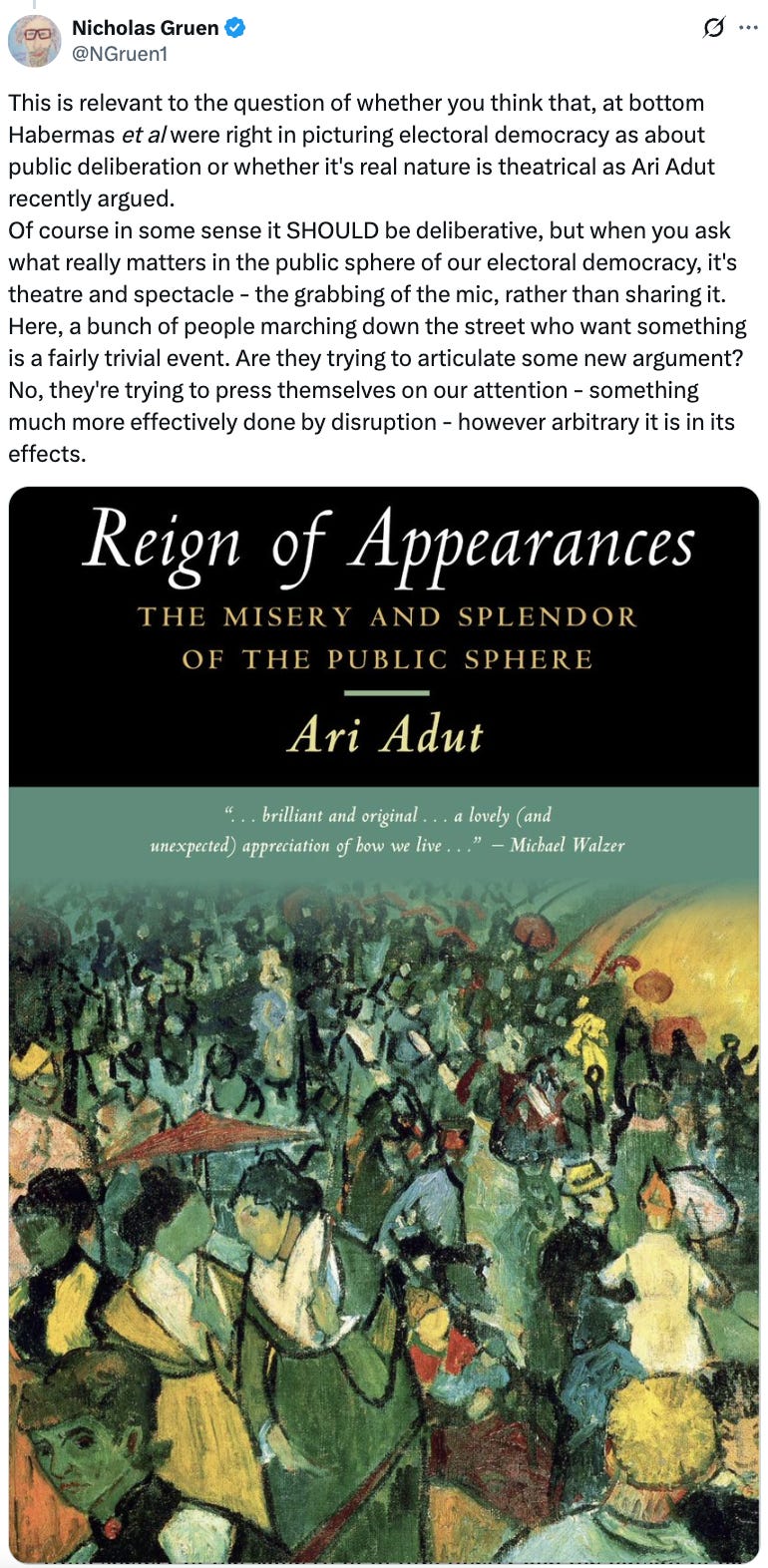
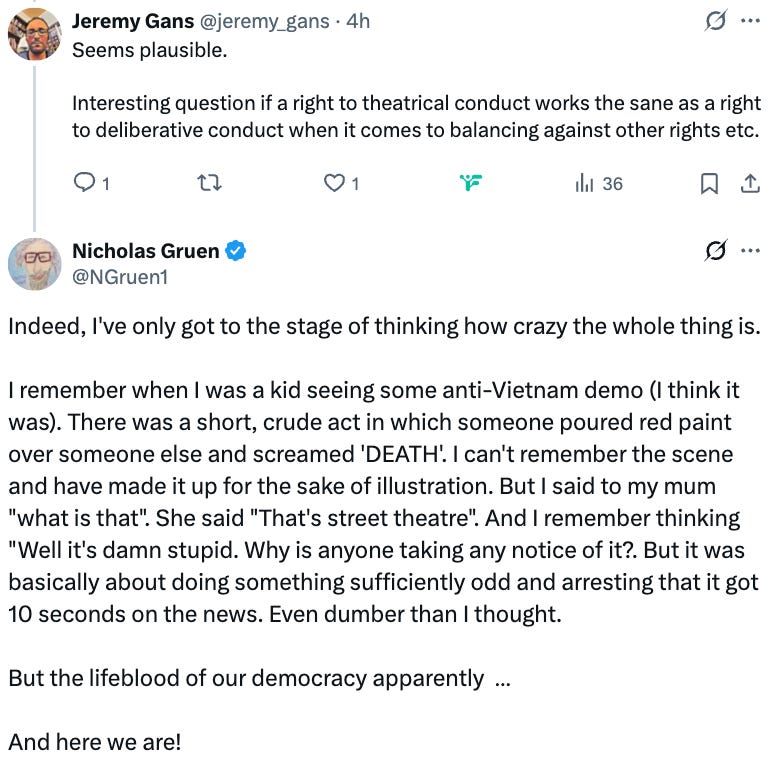
A conversation on X

100 years of Art Deco: a movement comes of age






IP and AI: Mariana Mazzucato makes good sense
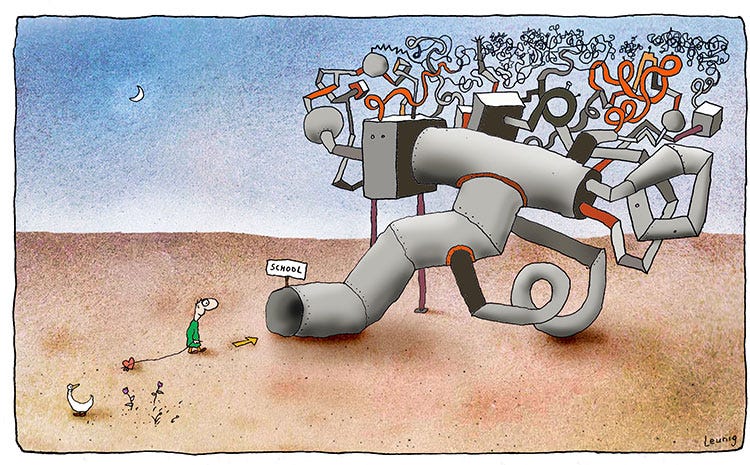
If our electoral democracy really was deliberative, ideas like what follows would be serious contenders. Alas, it’s special interests at twenty paces. Anyway, perhaps something sensible will tumble out of the battle between big tech and big copyright. (But I’m not holding my breath.)
Generative AI models are trained on publicly accessible creative content yet offer little to the artists, journalists, coders, and others who produce it. A levy on AI firms' revenues could help fund the arts, promote open access, and ensure that human ingenuity doesn't become collateral damage in the quest for profit.
Generative AI models are built on the collective work of countless people. Behind every AI-generated response lurks a vast, invisible workforce – writers, singers, journalists, poets, coders, illustrators, photographers, and filmmakers – whose creations have been used without permission or compensation...
In October 2024, more than 10,000 actors, musicians, and authors signed a public statement warning that unlicensed use of their work to train generative AI poses a "major, unjust threat" to their livelihoods... Within months, the number of signatories had risen to 50,000.
Instead of tightening copyright protections, as many propose, we should treat creative knowledge as a public good and collectively fund its production.
The opaque, black-box nature of AI models makes it virtually impossible to trace specific outputs back to individual inputs, complicating efforts to enforce copyright laws... Compounding the problem, AI content now competes directly with the original creators whose work was used to train the models... Many content creators are pushing back. The New York Times is suing OpenAI for ingesting its archives; prominent writers, led by the Authors Guild, have launched a class-action lawsuit...
McKinsey estimates that generative AI could contribute up to $4.4 trillion annually to the global economy. OpenAI alone is projected to generate more than $12.7 billion in revenue this year.
At the same time, the very journalists, illustrators, and musicians whose work powers AI models are left scraping by... The US National Endowment for the Arts, for example, will receive just $210 million in government funding in fiscal year 2025...
AI Is Eating the Commons
There are two main ways to address this issue: try to "fix" the market or design a public-oriented alternative...
Moreover, applying the licensing approach to the entire universe of material on which LLMs rely is simply unfeasible... But when the potential rights-holders include millions of scattered writers, photographers, coders, and hobbyists, transaction costs balloon...
The Public Alternative
Rather than patching up a market ill-suited to managing public goods, governments should actively nurture the cultural commons... Just as we pool taxes to fund streetlights, law enforcement, and basic research, the production of creative content in the era of generative AI should be publicly supported.
Because generative AI models are trained on human-created content, the value of art to society takes on a new dimension... AI has expanded the art multiplier: each dollar spent on the arts now yields its usual social return, as well as additional value derived from its incorporation into AI systems.
Yet, despite the value of their contributions, public funding for artists and creators has steadily declined...
One way to achieve this would be to impose a levy on the gross revenues of the largest AI providers, collected by a national or multilateral agency... These resources could then be distributed by independent grant councils on multiyear cycles, ensuring that support reaches a wide range of disciplines and regions.
Such an arrangement would align incentives across the board. Model developers would retain frictionless access to the vast pool of publicly available knowledge and art without the legal morass of micro-licensing. Creators would gain a stable income stream... Perhaps most importantly, the public would benefit from a growing cultural commons and open access to culture – both sustained by collective investment.
Every time we ask ChatGPT to draft a speech or proofread an email, we are quietly drawing on the labor of millions. In this sense, cultural production has already become a kind of planetary cooperative; updating its funding model to reflect that reality is long overdue.


The Buchenwald Ball (Srsly!)

Well this was unexpected! The Dunera Boys didn’t have regular celebrations till the 1980s. Not so Australia’s Buchenwald Boys! And extraordinarily, the first such ball was in 1949. Normally it takes far longer for such things to be commemorated - at least judging by how long it took WWI memoirs to emerge. And the Dunera Boys didn’t start regular reunions till the late 1960s!
Standing on the polished wooden floorboards of St Kilda Town Hall's grand auditorium, 94-year-old Buchenwald concentration camp survivor, Joe Szwarcberg, is at the centre of concentric horra circles made up of around 200 family and friends.
As the last remaining survivor from a contingency of about 65 men known as the 'Buchenwald Boys', he was, so to speak, the belle of Melbourne's 65th 'Buchenwald Ball'. And this year's Ball, held on 6 April 2025, was particularly momentous as it marked the 80th anniversary of the liberation of Buchenwald...
One of the Ball's organisers, Sandi Rapoport, daughter of Buchenwald Boy Szaja Chaskiel, said this year's event was a return to the joyous party that momentarily lapsed after October 7.
"The last one was a really hard one, after October 7... it was more of a sombre event," Rapoport explained. "This year, the realisation that there's just one survivor left, we felt we just really had to celebrate him and let him know how special he is to all of us."...
The legendary Buchenwald Ball began in Melbourne in 1949, after the teenage survivors travelled from orphanages and processing camps in Europe to settle across Melbourne and Sydney.
While there are elements of commemoration – the day always starts with recitation of the Kaddish at Springvale Cemetery's shtibel – the Ball resembles more of a birthday party. And for many of the Boys it is just that, as they elected April 11 – the date of their liberation – as their 'rebirth' in place of their unknown birthdates, further cementing their brotherly bond...
For photographer Andrew Harris, the question of how the community should continue to honour the Boys' legacy, despite the diminishing number of survivors, is central to his exhibition at the Jewish Museum of Australia (JMA).
"The exhibition asks the question, what do we do now? What do we do in the future? What do we do when Joe can no longer attend?" Harris said.
"It's a question that I think is more poignant than ever before at this time of rampant antisemitism and Melbourne feeling unfamiliar to so many of us. How do we take this message of rebirth, celebration, community, multiculturalism, contribution, and use it to tell our story into the future without the cohort of survivors who have told the story until now?"...
Harris remembers attending his first event in 2015 at Szaja Chaskiel's house, the night before the formal commemoration.
"It really struck me how youthful and vibrant they were. They were in their 80s, [but] it was like a group of teenagers getting together," he continued. "It was really extraordinary, the energy and gusto with which they lived."...
Anita Frayman, co-curator of the JMA's Buchenwald Ball – 80 years Dancing in Freedom exhibition and daughter of Buchenwald Boy Joe Kaufman, believes the Boys' legacy can help guide the Jewish community to navigate the recent rise in antisemitism.
"When we realise that we're living in a time of violence in our neighbourhoods against us as Jews, I draw a lot of comfort and inspiration from the Buchenwald Boys who came here after the worst of the violence against Jews," said Frayman...
The Ball has had many iterations, from black-tie night galas, to family picnics at the Dandenong Ranges, and larger luncheons at synagogues and bowls clubs. But they have always retained the same characteristics – aptly mixing the grief, resilience and joy that marred the lives of the Buchenwald Boys.
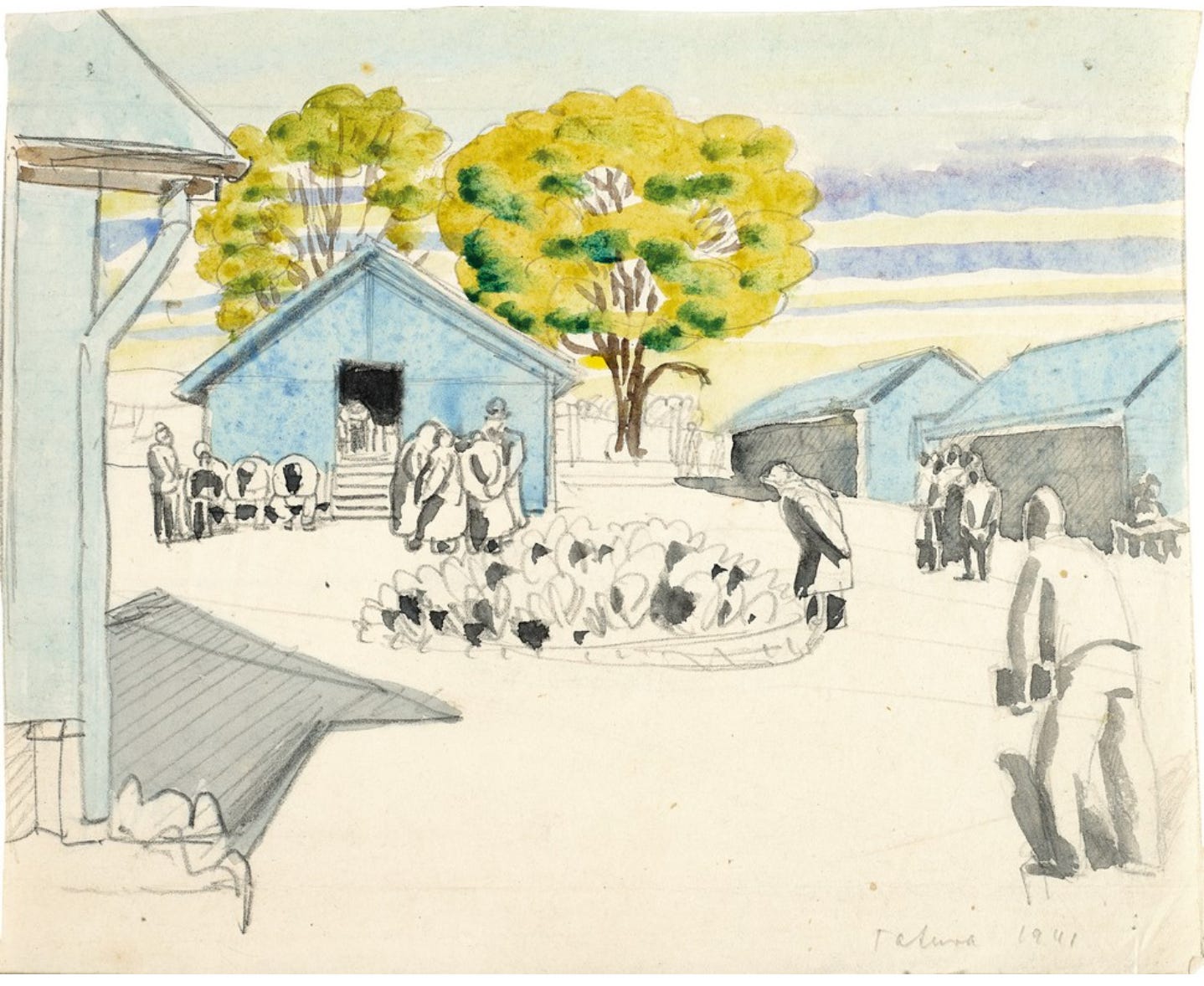
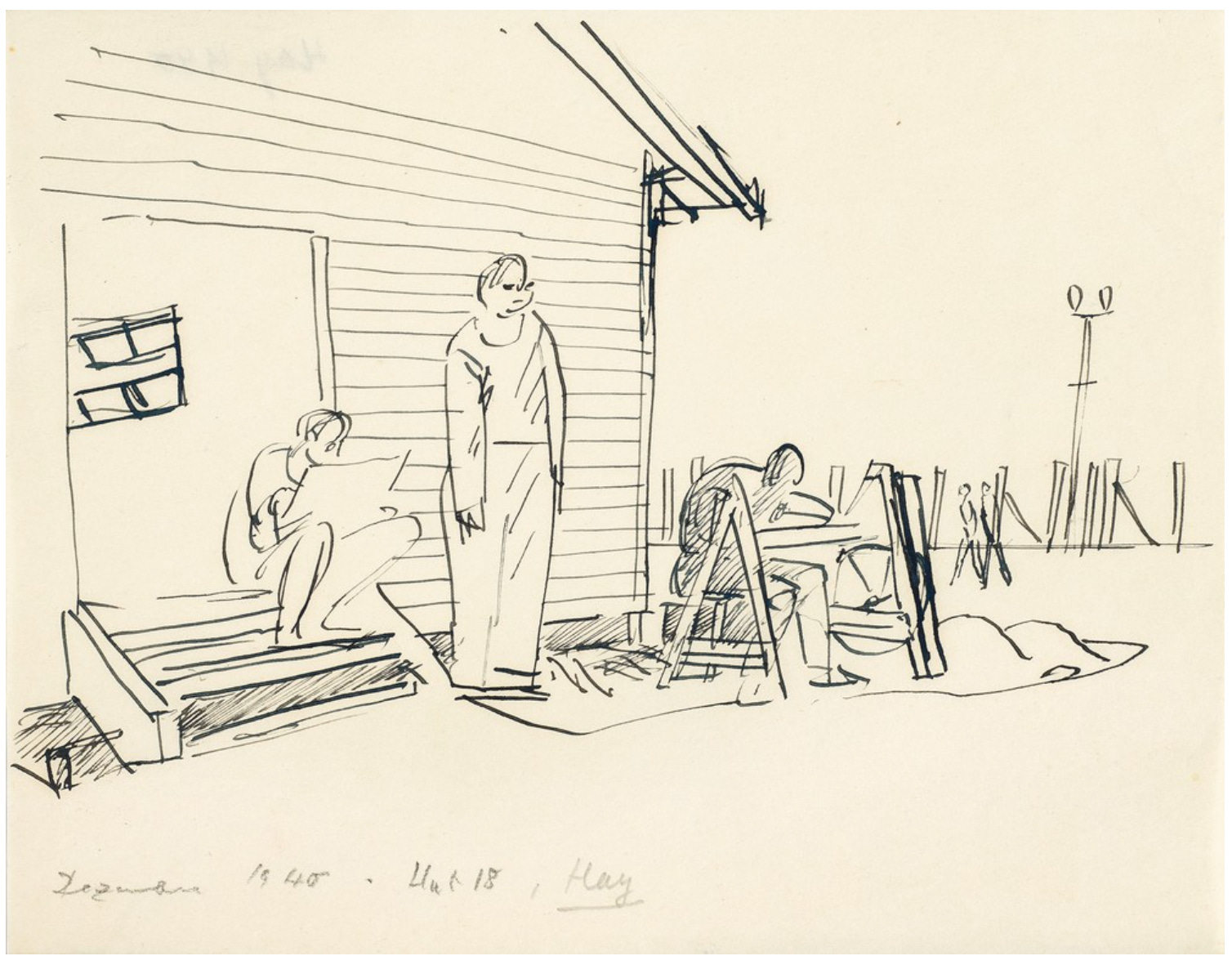
Tatura internment camp
The ethics of ambition: but where are the institutions?

Perhaps David Brooks is Norman Rockwell reincarnated. Rockwell was a leftie and Brooks is not. But both are Burkean conservatives in their celebration of the decency of the lifeworld of everyman (or woman if you are one - to quote Colin Hay.) And Brooks is a moralist I guess, but far from a thundering one. He moralises from a place of humility and curiosity. That’s why his appreciation of the passing of Alasdair MacIntyre was one of the best in the mainstream press.
And here he discourses on ambition in a way that is timely, simple and insightful. But here’s the thing. We should be thinking, firstly about how our incumbent institutions have helped foment the institutional and cultural collapse we see all around us, and how they might be improved. This is a real blindspot, particularly among Burkean conservatives. As I’ve argued, representation by sampling (sortition) provides some huge resources to improve things. But on that ambition thing? Well there are things we could do there - starting with this. I’ve now taken to calling it “bottom-up meritocracy” and you’ll be hearing more from me about it in coming months.
Anyway, over to David Brooks.
When you cover politics as I do, you find yourself around a lot of highly ambitious people. I like ambitious people. They're energetic, trying to achieve big things, taking a big bite out of life...
But ambition is both a blessing and a curse. Ambitious people are also more likely to be ruthless, manipulative, status-obsessed and so focused on worldly success that they become hollow inside...
So the million-dollar questions are: How can you marshal ambition's energies without being consumed by its insatiable demands? How do you live a driven life, seeking to achieve great things, without becoming a jerk?
Some sages say: Don't even try... Unfortunately, many of us can't achieve that. If I'm going to get through the arduous work of writing a book, I need to put my egotistic desires at the service of my loftier desires. I start the book hoping it will be helpful to people, but to propel me to work on it for years, I also need my name on the cover and the possibility that readers might think I'm clever. In other words, if I'm going to be really driven, I need to harness both selfless and selfish motivations.
Abraham Lincoln is the patron saint for those of us who hope to live well, even in the grip of ambition. Lincoln's law partner reported that "his ambition was a little engine that knew no rest."... Lincoln rode to the White House on that drive, but at every step along the way, you see him wrestling with his ambition, as if he were wrestling with a dangerous dragon...
I find I can better understand this struggle with the dragon of ambition if I break it down into five constituent struggles:
The struggle between craft and reward.
How much are you driven by the intrinsic desire to be good at what you do? How much are you driven by the desire for extrinsic rewards like money and fame? I'd say if your intrinsic commitment to the craft isn't dominant, by say 70-30, you're on morally perilous ground.
The struggle between gift love and need love.
C.S. Lewis observes that some of our loves emerge from a fullness and some emerge from a void... Gift love is essentially delighted with the world; need love is voracious, insatiable and laced with a fear of failure. If you're wrestling with your ambition, ask: From where does my ambition flow, from a sense of abundance or a sense of hollowness?
The struggle between excellence and superiority.
Some people's longings are noncomparative. If they are good at something, that satisfaction is its own reward. Other people's longings are primarily competitive... The world of noncomparative striving can be a world of mutual respect. A desire for superiority is zero-sum, nasty and drenched in envy.d the striving for superiority. The world of noncomparative striving can be a world of mutual respect. On the other hand, a desire for superiority is zero-sum, nasty and drenched in envy.
The struggle between high and low desires.
If you hunger for power you will always feel powerless; if you hunger for approval you will always have to be people pleasing; if you hunger for money you will never have enough; but if you hunger for understanding, your world will always be filled with wonders...
Be careful what you love, St. Augustine warned, because you end up turning into what you love. Moral life is about getting your loves in the right order.
[The struggle] between ambition and aspiration.
Ambition is the desire to rise higher in the world. Aspiration is the desire to become a better person in the world. The former is about social mobility, and the latter is about inner transformation.
I applaud ambition, but aspiration sounds more important... Professional success often comes from being wholehearted, from moving unreservedly after one goal. But the people we admire are often divided against themselves, burning hot with some ambition while trying to transcend the flames.
Ian Leslie on Starmer’s ‘reality avoidance field’

A good piece, but one which had me champing at the bit to say that whatever personal qualities that Starmer might bring to intensify the phenomenon, reality avoidance is a core competency in electoral politics (as I argued in a recent discussion with Bernard Keane). Most of the things you should be focusing squarely on are discomforting. And that leads to gotcha questions. And if you’re a politician, gotcha questions require evasive answers - reality avoidant answers no less.
So I’d have liked this discussed. In fact Leslie does get round to implying just that, but in a roundabout way. But, as he notes the UK has suffered a string of bad PMs. I think he’d argue they were all reality avoidant. Then there’s the question of what institutional changes might help us focus on reality. And it probably won’t surprise you, dear reader, that the institutions I’d recommend in response to the issues David Brooks raises, are the same institutions I’d propose to address reality avoidance.
One year and one week ago Keir Starmer became the first Labour Prime Minister in 14 years. This is what I wrote back then:
As someone at the conference put it to me, as soon as Starmer enters Number 10 he will have to drop the Ming vase and run like hell... They are now in a constant battle to govern the system rather than allowing the system to govern them.
Starmer didn't change. He and his team were even less prepared for government than I imagined... Labour's team seem to have assumed they were getting their hands on the levers of a machine and that all they had to do was pull different levers to the last lot... But every bureaucratic system is a conspiracy for inertia and Britain's civil service, which has become more bloated and less capable over the last five years, is no exception...
Starmer never made a serious effort to imagine how his government would actually function and what it would actually do. He tried to outsource all that to Sue Gray, who, as it turned out, didn't want to think about it either.
This was partly his route to the job: he had never worked in government before becoming Prime Minister, and had only been in parliament for five years... But it's also down to his personality. Starmer is prone to what psychologists call "cognitive avoidance": the habit of inhibiting the processing of threatening information by directing attention to something safer.
If Steve Jobs had a reality distortion field, Starmer has a reality avoidance field... Time is running out.
Starmer has largely squandered his first year golden period. It's as if he's at the end of twelve years in government already, weary and aimless, unpopular with voters and his own MPs.
Starmer can see the country's problems one by one, but he can't put them together into an analysis; a model of the whole; a map. I like Jonn Elledge's analogy: "a man who moves through politics like a Roomba moves through your living room: without a plan, capable of mapping the territory only when he bangs into things and has to reverse."...
Starmer is not a stupid man, so why has he been acting like one?... He is fearful of his own mind - of thinking and arguing his way to a contentious, vulnerable position and then planting his flag on it.
You can hear his repressed panic in the constrained voice, the hurried dismissal of challenging questions... That's not pragmatism, and it's certainly not leadership. It's cowardice, rooted in fear.
It is not too late to change... But for things to go better he has to make the kind of mindset shift I outlined last year. He has to confront the predicament - his own and the country's - and go on the offensive... It means generating conflict and courting controversy - intentionally rather than accidentally.
It also means accepting the truth about Britain: that its decline cannot be reversed, nor future threats averted, by way of managerial fixes... our problems are too deep and knotty for mere "competence". Progress will require a swathe of risky, complex reforms which the Prime Minister will have to commit to ferociously...
The country has its own reality avoidance problem, after all... In a sense we got the Prime Minister we want: an ordinary guy with no pretensions who cares about individuals and hates politics - and doesn't want to face up to the truth. Unfortunately, that's not the Prime Minister we need.
Leaders can discover volition and purpose on the job, and Starmer still might... Perhaps only an urgent threat to his position will force a mental reset: a leadership challenge or an imminent fiscal crisis. Sometimes the only cure for fear is fear.

Heaviosity half hour
How the US got a strong central government
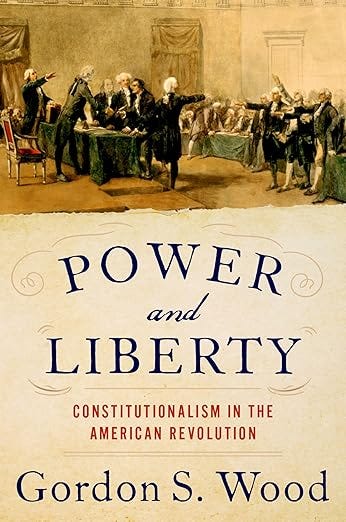
Most readers will be familiar with the bare outlines of how the US constitution came about. The 13 states entered a confederation to fight the British in 1776. But the confederation left the 13 states with lots of headaches, not least the inability to bear much of a financial burden because they relied on contributions from the states. This put the United States bonds that had been issued to fund the war of independence under a cloud. Would they be repaid? Indeed, as I read this chapter, it took me back to all those ways electoral politics avoids realities - and so, over time, sinks deeper into debt.
Still, as this chapter by Graham S. Wood on the lead up to the Philadelphia constitutional convention in 1787 makes clear, there was another, far more dominant reason. Democracy itself. The founding fathers were not at all happy that, since the revolution it seemed to be breaking out all over the place. If only government could be, well stronger, more centralised and more, ahem, mixed - with aristocracy and monarchy mixed in with the voice of the people as it was in the mother country.
The Crisis of the 1780s
It is difficult to explain the move for a new Constitution in the 1780s. In 1776 no one in his wildest dreams even imagined the kind of strong, far-removed, federal government that would be created a mere decade later. After all, the Americans had just thrown off a powerful distant government to preserve their liberty and scarcely seemed in any mood to think of creating another. If they had learned anything under the empire, it was that the closer the government was to the people, the safer and less tyrannical it was likely to be.
Besides, the best minds of the eighteenth century, including Montesquieu (whose Spirit of the Laws was in more libraries of the founders than any other work) had repeatedly told the world that republics necessarily had to be small in territory and homogeneous in population. Monarchies with their centralized authority and their hierarchical social structures and their standing armies could maintain themselves over large territories and diverse societies. But republics, which depended on the consent of the people, had none of the adhesives that held large monarchies together—force, kinship, patronage, and dependencies of various sorts. If republics became too large and composed of too many diverse interests, they were apt to fly apart.
Thus, people in a republic needed to rely on other sorts of social bonds—on their virtue, their affection for one another, and their willingness to sacrifice their selfish interests for the benefit of the whole. This is why republics were traditionally considered to be so vulnerable, so fragile, so likely to splinter into pieces.
For these reasons, the thirteen new independent republican states in 1776 had no intention of creating anything more than an alliance among themselves. The Articles of Confederation proposed by the Continental Congress in 1777 and ratified by all the states only in March 1781, six months before the battle of Yorktown, was about as far as most Americans at the outset were willing to go in creating a central government.
The Confederation was scarcely a formidable central government. The Articles of Confederation was a treaty among thirteen sovereign states, an alliance that was not all that different from the present-day European Union. Each state had separate and equal representation in the Confederation Congress, and this treaty or alliance could not be altered without the agreement of every state. Although the Confederation may have been one of the strongest such unions in history, for its Congress was granted some substantial powers concerning war and diplomacy, the borrowing of money, and the requisitioning of troops, it ultimately lacked the crucial authority to tax and to regulate the commerce of the United States...
The Articles of Confederation were not an early version of the later Constitution. The Confederation was an entirely different kind of union. It was not a government with a legislature, executive, and an independent judiciary similar to the governments of the individual states. It was intended to be and remained, as Article 3 declared, "a firm league of friendship," a treaty of alliance among thirteen states very jealous of their individual sovereignty.
Yet a brief ten years later, Americans ended up scrapping these Articles of Confederation and creating a totally new and powerful national government in its place. We are apt to assume that the transformation was inevitable, but we should not. It was a momentous change, and one not at all anticipated in 1776. The new government adopted in 1787–88 was not a stronger league of friendship with a few new powers added to the Congress. It was a radically new government altogether—one that utterly transformed the structure of central authority and greatly diminished the power of the several states. The Constitution of 1787 created a national republic in its own right, with a bicameral legislature, a single executive, and an independent supreme court—a government spanning half a continent that, unlike the Confederation, was designed to bypass the states and operate directly on individuals. It created in fact what a decade earlier had seemed theoretically impossible and virtually inconceivable.
Something awful had to have happened in the decade since independence for so many Americans to change their minds so dramatically about what kind of central government they would impose on themselves. What could have happened? What could have compelled Americans to put aside their earlier fears of far-removed political power and create such a strong national government? Today we take the Constitution and a powerful national government so much for granted that we can scarcely doubt its preordained creation. But perhaps we ought to wonder more why the Constitution needed to be created at all.
Nineteenth-century Americans tended to explain the Constitution in heroic terms. John Fiske, in a book published in 1888 for the centennial celebration of the Constitution, The Critical Period of American History, summed up this nineteenth-century thinking. "It is not to much to say," he wrote, "that the period of five years following the peace of 1783 was the most critical moment in all the history of the American people." And he made this extraordinary claim in the wake of the Civil War.
Fiske pictured the 1780s as a time of chaos and anarchy, with the country's finances near ruin...
The problem with this dominant nineteenth-century interpretation is that there does not appear to have been any near collapse of the economy or any breakdown in society. There was no anarchy, no serious financial crisis, and apparently no real "critical period" after all.
Historical studies of the twentieth century tended to minimize the critical nature of the 1780s. Things seem not to have been as bad as John Fiske and the supporters of the Constitution, or the Federalists, as they called themselves, pictured them... "Clearly," wrote Ferguson, "it was not the era of public bankruptcy and currency depreciation that historians used to depict."
Both the Confederation and the state governments had done much to stabilize finances in the aftermath of the Revolution... Contrary to Fiske's assessment, the 1780s were actually a time of great excitement and elevation of spirit. The country was bursting with energy and enterprise, and people were multiplying at a dizzying rate and were on the move in search of opportunities. They were spilling over the mountains into the newly acquired western territories with astonishing rapidity. Kentucky, which had virtually no white inhabitants at the time of independence, by 1780 already had 20,000 settlers.
Despite a slackening of immigration from abroad and the loss of tens of thousands of British loyalists, the population grew as never before or since. In fact, the 1780s experienced the fastest rate of demographic growth of any decade in all of American history... "There is not upon the face of the earth a body of people more happy or rising into consequence with more rapid stride, than the Inhabitants of the United States of America," secretary of the Congress Charles Thomson told Thomas Jefferson in 1786. "Population is encreasing, new houses building, new settlements forming, and new manufactures establishing with a rapidity beyond conception." Where did all the talk of crisis come from? "If we are undone," declared a bewildered South Carolinian, "we are the most splendidly ruined of any nation in the universe."
There were economic problems, of course, "but," wrote historian Merrill Jensen, "there is no evidence of stagnation and decay in the 1780s." In fact, said Jensen, "the period was one of extraordinary growth." It seems that the bulk of the society was seeking to fulfill the promise of the Revolution, and countless Americans were taking the pursuit of happiness seriously.
If all this is true, and the evidence is overwhelming that it is, then why did Americans create the Constitution? If the Confederation was not doing too bad a job of governing and commercial conditions in the 1780s were not actually desperate, why did something as extraordinary as the Constitution have to be created?
Answering these tough questions is no easy matter. The difficulty in explaining the creation of the Constitution led the twentieth-century Progressive and neo-Progressive historians to picture the move for a new national government as something of a conspiratorial fraud... Charles Beard's An Economic Interpretation of the Constitution (1913) was the foundation of the Progressive argument. Beard pictured the Constitution as something foisted on the country by a minority of men with particular property interests that needed protection from rampaging democratic state legislatures... We can't get away from the Progressive and neo-Progressive argument that something other than the obvious weaknesses of the Confederation accounts for the Constitution.
But perhaps these weaknesses of the Confederation are by themselves sufficient to explain the move for the new Constitution. They certainly were formidable, and they became evident early, even before the Articles were formally ratified by all the states. By 1780 the war was dragging on longer than anyone expected, and the Continental Army was smoldering with resentment at the lack of pay and falling apart with desertions and even outbreaks of mutiny. By early 1781 the Confederation Congress could not even afford the cost of printing its own proceedings.
The Confederation's lack of taxing authority was becoming unbearable. The Congress borrowed huge amount of money from French and Dutch lenders and from its fellow Americans, but its ability to pay back its creditors seemed increasingly in doubt. When the Congress stopped paying interest on the public debt in the early 1780s, foreign and domestic creditors naturally wondered if the principal of the debt would ever be paid. The states were ignoring congressional resolutions and were refusing to supply their allotted contributions to the Congress. Since the Confederation Congress had no authority to regulate trade, the states were passing their own navigation acts, which complicated interstate commerce. Massachusetts, for example, was commercially treating Connecticut and Rhode Island as foreign nations.
By the mid-1780s a number of interest groups were working to strengthen the Confederation government... Robert Morris, the wealthy Philadelphia merchant who had been appointed superintendent of finance in 1781, worked out a program of finance that anticipated Hamilton's a decade later... Despite the frustration, however, by 1786 momentum was building to give some sort of taxing power to the Confederation Congress.
In a like manner, pressure was mounting to grant the Congress power to regulate international trade... At a meeting at Mount Vernon in 1785 Virginia and Maryland resolved a number of disputes concerning the navigation of Chesapeake Bay and the Potomac River. This conference suggested the advantages of thinking about reforming the Confederation outside the walls of Congress. This led to Virginia's invitation to the states to meet at Annapolis in 1786 to consider and recommend a federal plan for regulating commerce. In just this manner did the problems of commerce move the country toward reforming the Articles.
At the same time a number of important leaders were becoming increasingly angry at the way various foreign powers were humiliating the new republic of the United States. Since American merchant ships lacked the protection of the British flag, many of them sailing in the Mediterranean were being seized by corsairs from the Muslim states of North Africa and their crews sold into slavery. The Congress had no money to pay for the necessary tribute and ransoms to these Barbary pirates.
In the late eighteenth-century world of hostile empires, it was difficult even for the new republican confederacy to maintain its territorial integrity. Britain refused to send a minister to the United States and was ignoring its treaty obligations to evacuate its military posts in the Northwest, claiming that the United States had not honored its own treaty commitments... When the states flouted these treaty obligations, the Congress could do nothing, and therefore British troops remained in Detroit, Niagara, Oswego, and other posts within American territory.
Britain was known to be plotting with the Indians and encouraging separatist movements in the Northwest and in the Vermont borderlands. Spain was doing the same in the Southwest and refused to recognize American claims to the territory between the Ohio River and Florida. In 1784, in an effort to influence American settlers moving into Kentucky and Tennessee, the Spanish government closed the Mississippi River to American trade. Many westerners were willing to deal with any government that could ensure access to the sea for their agricultural produce. They were "on a pivot," noted Washington in 1784. "The touch of a feather would turn them any way."
Thus began the so-called Spanish conspiracy that eventually involved Spanish payments of money to several high officials of the American government, including Senator William Blount of Tennessee and James Wilkinson, the eventual commander in chief of the American army... In 1785–86 John Jay, a New Yorker and the secretary of foreign affairs, negotiated a treaty with the Spanish minister to the United States, Diego de Gardoqui... But the willingness of seven states to sacrifice western interests for the sake of northern merchants aroused long-existing sectional jealousies and threatened to shatter the Union. In an address to the Congress in August 1786 Jay defended his treaty on the grounds that it was the best the United States could get from Spain, at least until the Confederation "shall become more really and truly a nation than it is at present."
All of these problems facing the Confederation in the 1780s were undoubtedly serious, but were they so serious that they couldn't have been remedied by amending the Articles of Confederation? Didn't the Constitution of 1787 go way beyond what the weaknesses of the Articles required and the various interest groups demanded?
Granting the Confederation Congress the authority to raise revenue, regulate trade, pay off its debts, and deal effectively in international affairs did not necessitate the total scrapping of the Articles and the formation of an extraordinarily powerful and distant national government the like of which was beyond anyone's imagination a decade earlier. Jefferson, who had been abroad since 1784, certainly thought that the Constitution of 1787 went much too far. It was not necessary, he told John Adams, to throw out the Articles of Confederation and replace it with an entirely new and stronger government. "Three or four new articles," he said, "might have been added to the good, old and venerable fabric" of the Confederation, and that would have been enough.
By 1786 or so, most of the political nation agreed with that assessment. With the addition of a few powers, especially the power to tax, the Confederation could even have created a financial program similar to the one Hamilton created, funded its debts, passed navigation acts, and strengthened the country's position internationally.
But there was a much more serious problem than the obvious and generally acknowledged difficulties of credit, commerce, and foreign policy facing the country. That problem was democracy, excessive democracy, in the states, and it was a problem the Confederation, however amended, however strengthened, could not handle. That problem of excessive democracy in the states created a sense of a genuine crisis among many leaders that required the scrapping of the Articles and the formation of the new Constitution.
The American Revolution turned out to be much more revolutionary and radical than many of the leaders expected. It released the aspirations and interests of tens upon tens of thousands of middling people—commercial farmers, petty merchants, small-time traders, and artisans of various sorts—all eager to buy and sell and get rich. Of course, they went into debt and urged the printing of paper money. But debt was not necessarily a sign of poverty; indeed, it was often a sign of ambitious aspirations. And paper money was not simply designed to relieve debt. It was capital, and it was necessary for buying more land or livestock or setting up a shop or fulfilling other dreams.
These aspiring and commercially minded middling people began electing to the greatly enlarged state legislatures ordinary middling men like themselves in increasing numbers, men like William Findley, a Scotch-Irish immigrant and ex-weaver from western Pennsylvania, and Abraham Yates, a former shoemaker from Albany. These middling legislators were shrewd and smart, but they had not gone to college and were not considered gentlemen by the standards of the time. And they were using the electoral process and the Revolutionary emphasis on equality to vault into power in the state legislatures and promote the economic interests of their middling constituents. The state legislatures, complained the aristocratic Robert R. Livingston of New York, have become full of men "unimproved by education and unreformed by honor." This was the excessive democracy that lay behind the creation of the Constitution.
No one in the 1780s saw what was happening more clearly than James Madison. He became the most important figure in the creation of the new federal government. Early in 1787 he put his ideas together in a working paper that he called "Vices of the Political System of the United States." In this paper, which was the most important document dealing with American constitutionalism between the Articles of Confederation and the Constitution, Madison spent very little time on the weaknesses of the Confederation. Instead, he concentrated on the deficiencies of the state governments, on what he called the "multiplicity," "mutability," and "injustice" of the laws the states were passing. Especially alarming in his eyes were the paper money emissions, stay laws, and other debtor relief legislation that hurt the minority of creditors and violated individual property rights.
Madison did not come to these ideas from all the books his friend Jefferson was sending him from Europe. He learned about the vices of state politics firsthand—from being a member of the Virginia state assembly from 1784 to 1787. This was a frustrating and disillusioning experience for Madison, for it revealed to him what democracy had come to mean in America.
Although Madison had some notable legislative achievements, namely his shepherding into enactment Jefferson's famous bill for religious freedom, he was continually exasperated by what Jefferson later called (no doubt following Madison's own account) "the endless quibbles, chicaneries, perversions, vexations, and delays of lawyers and demi-lawyers" in the assembly. The legislators seemed so narrow-minded, so parochial, and so illiberal; indeed, these were the code words that Madison always used to describe these deplorable middling legislators. Such men rarely had any concern for public honor or honesty and always seemed to have "a particular interest to serve" regardless of the needs of the whole state or the nation. They made a travesty of the legislative process and were reluctant to do anything that might appear unpopular with their constituents...
Most of his and Jefferson's plans for legal reform were undermined by the localism of these narrow-minded legislators. "Important bills prepared at leisure by skillful hands," he complained, were mauled and torn apart by "crudeness and tedious discussion." Madison repeatedly found himself having to beat back the "itch for paper money" and other measures "of a popular cast." Too often, he admitted, he could plan only on "moderating the fury," not defeating it.
This was not what republican lawmaking was supposed to be. Madison repeatedly had to make concessions to the "prevailing sentiments," whether or not such sentiments promoted the good of the state of the nation. He had to agree to bad laws for fear of getting worse ones, and he had to give up good bills "rather than pay such a price" as these small-minded, illiberal legislators wanted... By 1786 he knew that appealing to the people had none of the beneficial effects good republicans had expected. A bill having to do with court reform, for example, was "to be printed for the consideration of the public." But "instead of calling forth the sanction of the wise & judicious," this action, Madison feared, would only "be a signal to interested men to redouble their efforts to get into the Legislature." Democracy was no solution to the problem; democracy was the problem.
Madison realized that these state legislators were expressing only the narrow interests and parochial outlooks of their constituents. Too many American people could not see beyond their own pocketbooks or their own neighborhoods. "Individuals of extended views, and of national pride," said Madison, might be able to bring public proceedings to an enlightened cosmopolitan standard, but their example would never be followed by "the multitude." "Is it to be imagined," he asked, "that an ordinary citizen or even an assembly man of R. Island in estimating the policy of paper money, ever considered or cared in what light the measure would be viewed in France or Holland; or even in Massachusetts or Connecticut? It was a sufficient temptation to both that it was for their interest."
But Rhode Island was not the only state passing paper money emissions. Printing paper money and making it legal tender were the state laws that Madison considered most unjust to minorities, and nearly every state was abusing the practice. Since many members of the wealthy elites often acted as bankers in their communities and lived off the interest from their money out on loan, they found the inflation caused by the excessive printing of paper money devastating. "A depreciating Currency," warned John Adams at the outset in 1777, "will ruin us." Washington, who was both a planter and a banker, became furious with the way his debtors had used the deprecation of paper money to scam him while he was away fighting the British. These scoundrels, he complained, had "taken advantage of my absence and the tender laws, to discharge their debts with a shilling or a six pence to the pound." At the same time, he had "to pay in specie at the real value" to those British merchants in London to whom he owed money... No wonder then, said Robert Morris, that wealthy men, at least those who had survived the Revolution, had more or less ceased playing the role of bankers and had stopped taking up bonds and mortgages; they were naturally "deterred from lending money again by the dread of paper money and tender laws."
This shows that Madison's experience with the popular politics of the state legislatures was not unusual; otherwise, he could never have gained support for what he wanted to do. Others, too, were appalled by the chaos of middle-class lawmaking in the states. Laws, as the Vermont Council of Censors declared in 1786, were "altered—realtered—made better—made worse, and kept in such a fluctuating position that persons in civil commissions scarce know what is law." Indeed, said Madison in his "Vices" essay, more laws had been passed in the decade since independence than in the entire colonial period...
By the mid-1780s groups of "gentlemen" up and down the continents were horrified by the "private views and selfish principles" of the kind of men who had come to dominate the state legislatures. "Although there are no nobles in America," observed the French minister Louis Otto, "there is a class of men denominated 'gentlemen,' who by reason of their wealth, their talents, their education, or the offices they hold, aspire to a preeminence which the people refuse to grant them." Obviously, this is an exaggeration since the people, especially in the South, were more than willing to elect gentlemen to offices. But Otto had a point, as increasing numbers of middling men were challenging the gentlemen for leadership and unsettling the older social hierarchies.
These uneducated middling sorts, the gentry complained, were "men of narrow souls and no natural interest in the society." They were self-serving, ignorant, illiberal men who were bringing discredit upon popular government. They were promoting special interests at the expense of the whole, pandering "to the vulgar and sordid notions of the populace," and acting as judges in their own causes.
Everywhere localism was preventing legislators from looking after the general good of the states or the nation. The representatives in all the state assemblies, observed Ezra Stiles, president of Yale College, were concerned with only the special interests of their electors. Whenever a bill was read in the legislature, he noted, "every one instantly thinks how it will affect his constituents." This sort of extreme democracy was not what many American leaders had expected from the Revolution.
By the mid-1780s many American gentry were convinced that majority factions within the state legislatures had become the greatest source of tyranny in America. Although some Tory loyalists had warned at the outset that popularly elected institutions might become tyrannical, the patriots had dismissed such warnings out of hand. The people, who loved liberty, could never tyrannize themselves. The idea, said John Adams in 1775, was illogical; "a democratic despotism was a contradiction in terms."
But the experience since independence had changed many minds, including Adams's. The legislatures, however representative, however frequently elected, were quite capable of tyranny. It did not matter how many representatives there were. "173 despots," said Jefferson, "would surely be as oppressive as one." But, unlike his friend Madison, Jefferson always thought the abusive state assemblymen had drifted away from the people, whose virtue he never doubted. By contrast, Madison realized that the rampaging state legislatures were often only too representative of the people.
These legislative abuses, these "excesses of democracy," were not like the deficiencies of the Confederation; they were not easily remedied, for Madison and his colleagues knew only too well that there were no amendments to the Articles that could lessen these wild and unjust expressions of democracy. These legislature abuses were inherent in what the Revolution and republicanism were about. They "brought into question," said Madison, with about as much honesty and candor as one could expect, "the fundamental principle of republican Government, that the majority who rule in such Governments are the safest Guardians both of public Good and private rights."
Initially, leaders had responded to these problems of state legislative tyranny by proposing changes in the state governments and state constitutions... These reformers were most successful with the Massachusetts constitution of 1780, drawn up by a committee led by John Adams. This belatedly drafted constitution benefited from the woeful experiences of the earlier revolutionary constitutions and sought to redress the mistakes they had made. Unlike the earlier constitutions, the Massachusetts constitution gave the governor an extraordinary degree of power, including the power of appointment and a limited veto over all legislation. Such a conservative constitution formed a model for others of what state reformers should aim for.
Thus, when a rebellion of nearly two thousand debtor farmers led by a former militia captain Daniel Shays broke out in Massachusetts in late 1786, many leaders were surprised. The Massachusetts constitution had seemed so stable and so capable of handling things. But more alarming than the rebellion itself was the fact that Shays's sympathizers were seeking election to the Massachusetts legislature and enacting into law debtor relief legislation that they were unable to get by forcibly closing the courts. With "a total change of men" in the legislature said Noah Webster, a Yale graduate and the later creator of an American dictionary of the English language, "there will be, therefore, no further insurrection, because the Legislature will represent the sentiments of the people." This expression of democracy led some Americans to complain that "sedition itself will sometimes make law."
Shays's Rebellion convinced many that relief from the democratic excesses could not be found at the state level. If the model conservative constitution of Massachusetts couldn't contain the popular pressures, then no state could. But well before Shays's Rebellion, Madison and other leaders had already decided that reform of the state constitutions would not be enough to solve the problems of popular politics within the states. "In vain," said wealthy Massachusetts merchant Stephen Higginson, "must be all our exertions to brace up our own Government without we have a better federal system than at present." Something had to be done at the national level.
Because nearly everyone in the political nation was prepared by 1786 or so to grant the Confederation Congress taxing and trade regulatory powers, Madison and his colleagues saw an opening and they took it. The convention in Annapolis in September 1786 called to decide trade matters for the Congress was attended by only five states, but its participants used the opportunity to ask the Congress to authorize a meeting in Philadelphia in May 1787 of all the states "to devise such further provisions as should appear to them necessary to render the constitution of federal government adequate to the exigencies of the union."
Most people assumed that this May meeting in Philadelphia would finally add those amendments to the Articles that nearly everyone desired. In effect, Madison and his colleagues hijacked this reform effort and used it as a cover for an entirely different plan of reform.
Many of the delegates to the Philadelphia Convention in May 1787 were no longer interested in simply modifying the Articles of Confederation. They wanted to weaken, if not destroy, the states and the democratic excesses they had generated. "The vile State governments are the source of pollution, which will contaminate the American name for ages. . . . Smite them," Henry Knox urged Rufus King, who was attending the Convention, "Smite them in the name of God and the people."
The stakes involved in this Convention could not have been higher. The meeting in Philadelphia, said Madison, was meant to "decide forever the fate of republican government."
And, in case you’re interested, here’s a stoush between the author above and a fellow historian of the same period and champion of the 1619 project, Woody Holton.


Thank you in advance, this looks illuminating.
good stuff here though I'm always wary of "we" because there's so much happening outside that particular collective noun