


That looks like a YouTube video you may be thinking. Indeed it is. It’s the first of three on the culture of the internet as a public good. And here’s me and Colm talking about it.
I can also see you thinking “Hey isn’t that a YouTube video? And didn’t YouTube close down your channel?” The answers to those questions are ‘yes’ and ‘yes’.
Here’s how it all panned out.
After a week without any kind of response from YouTube, I contacted Vint Cerf – father of the internet – seriously. He’d taken an interest in my idea of bottom-up meritocracy and asked me to stay in touch.
He has a position as an éminence grise at Google, so I sent him an email pledging my undying gratitude if he could get my email explaining what had happened into the right hands.
I got an auto-respond back saying he was on leave for the next month :(
Two minutes later, he emailed me back saying ,“I am looking into it.”
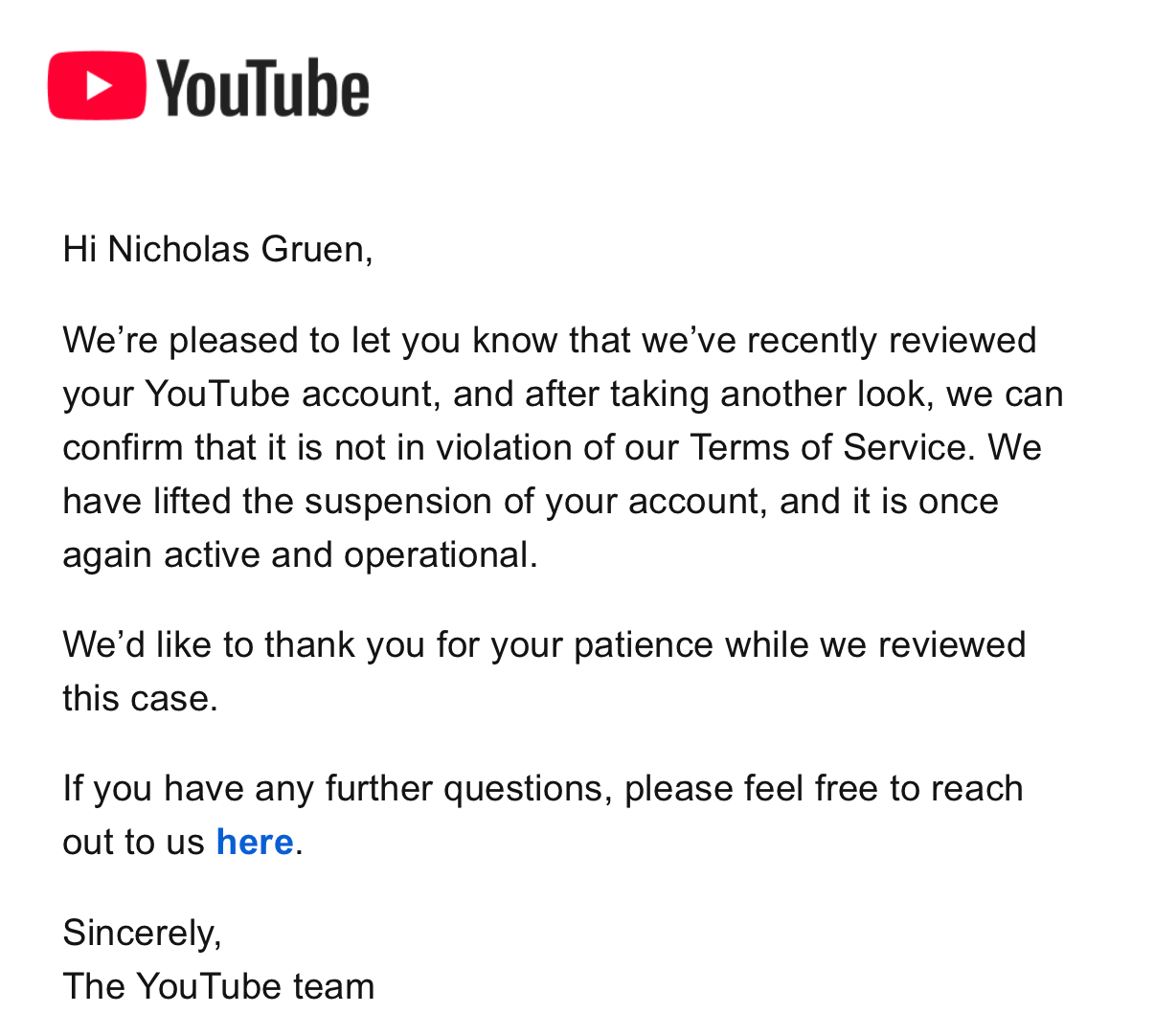
8 minutes later I got the email below, leaving me deeply relieved. And none the wiser as to what had happened.
We are living in a new feudal world where one needs to supplicate oneself to the court of whatever prince has taken against you, even if you’ll never know why!
Still it’s a relief! I am but a grain of sand. But I have a YouTube channel.
The F-word: are we nearly there yet?

Jonathan Rauch who’s avoided the word until now, says ‘yes’. I’ve got Claude to summarise a 3,500 word Atlantic essay in 500 words.
Why I Now Call Trump a Fascist
Summary of Jonathan Rauch’s Argument
The author long resisted the F-word for Trump. Fascism seemed too imprecise, too overused by the left, and too varied historically to apply cleanly. He accepted Biden’s “semi-fascist” characterisation and found John Bolton’s psychological explanation persuasive: Trump simply envied Putin and Xi’s freedom from institutional constraints—”Why can’t I have the same fun they have?”
A year ago, the best descriptor seemed to be “patrimonialism”—treating the state as the leader’s personal property and family business. But patrimonialism is a governing style, not an ideology. It lacks specific agenda beyond personal loyalty. Fascism, by contrast, is ideological, aggressive, and revolutionary.
Over the past year, something shifted. What looked like personal grift has drifted toward doctrinal and operational fascism. The author now finds the term unavoidable—not because of any single act but because of the totality. Fascism is a constellation of characteristics, and when you view the stars together, the pattern emerges.
The article catalogues these characteristics systematically:
Demolition of norms: Deliberately crashing through civility to unleash what William Galston calls the “dark passions” of fear, resentment, and domination.
Glorification of violence: ICE recruitment ads glamorising military-style raids; propaganda taking “childish delight” in civilian deaths; government camera crews filming aggressive enforcement.
Might is right: Stephen Miller’s chilling declaration to CNN: “We live in a world... governed by strength, that is governed by force... These are the iron laws of the world.”
Politicised law enforcement: Over 470 individuals and institutions targeted for retribution since January 2025—more than one per day. Direct presidential orders to investigate former officials.
Dehumanisation: Political opponents as “vermin,” immigrants as “garbage” and “poisoning the blood”—language straight from the Third Reich.
Police-state tactics: ICE now commands a budget larger than all other federal law-enforcement agencies combined, and larger than the military budgets of all but 15 countries.
Undermining elections: The author warns bluntly that we should not expect Trump and MAGA loyalists to voluntarily hand over the White House in 2029 regardless of what voters say.
Attacks on media: Threatened broadcast licenses, manipulated ownership deals, searched a reporter’s home—running the Orbán playbook.
Territorial aggression: Explicitly predatory military threats to seize Venezuela’s oil and take Greenland “the easy way or the hard way.”
Blood-and-soil nationalism: Vance calling to prioritise “the people whose ancestors fought in the Civil War”—some Americans more volkish than others.
Leader aggrandizement: From “I alone can fix it” to telling the New York Times that his own mind and morality are the only limits on his global power.
Politics as war: The Schmittian conception that politics is existential combat where only one side can win, not Madisonian negotiation.
Yet the author draws a crucial distinction: Trump is a fascist president, but America is not a fascist country. Courts, states, and media remain independent. The Constitution cannot be rewritten by executive fiat.
Why use the word at all? Because Americans who support liberal democracy need to recognise what they’re dealing with. To recognise something, one must name it.


Why are intelligent people more (left) liberal
Aporia magazine sometimes gives me the willies - but its contrarianism is often intriguing and/or enlightening, as here.
In an 1866 debate in the House of Commons, Sir John Pakington called out John Stuart Mill over a statement in his book Representative Government. Mill replied to the charge that “stupid persons are generally Conservative” by saying: “I believe that to be so obvious and undeniable a fact that I hardly think any Honourable Gentleman will question it.”
Mill was onto something. Studies consistently find that intelligent people are more socially liberal. They are less racist, sexist and homophobic, less religious and less nationalistic. They’re more likely to support free speech, immigration, sexual freedom, abortion rights, gay marriage and legalisation of marijuana.
It’s important to note that “socially liberal” does not mean “woke”. A sizeable minority of Republicans — the pro-business or libertarian types — do hold such views.
In 2015, Emma Onraet and colleagues meta-analysed 67 studies with a mean effect size of r = .20. A more recent study by Tobias Edwards and colleagues reported r = .38. The association appears globally: a Danish study reported an IQ gap of nearly 14 points between supporters of the Social Liberal Party and supporters of the Danish People’s Party. A poll of American Jews found that those with a postgraduate degree were much more likely to disapprove of Israel’s military action in Gaza than those without a college degree...
The question is why. I believe there are two broad reasons: one flattering to those of high intelligence, and one less flattering.
Intelligent people who hold socially liberal views are engaged in a kind of cognitive error, wrongly assuming that what works well for them works well for everyone. Intelligent people have more self-control and make better decisions — they’re less likely to play the lottery, more likely to follow medical advice. They flourish in an environment free of normative constraints...
Yet when people of low intelligence find themselves in such an environment, they tend to flounder. They may abuse drugs or cheat on their spouse. They might crave traditions that afford a sense of belonging.
However, the “cognitive error” hypothesis can’t explain why intelligent people are less homophobic and more supportive of high-skilled immigration. These groups do not pose any obvious threat to people of low intelligence.
The second reason is that intelligent people are more pro-social. They give more to charity, do more voluntary work and cooperate more in economic games. Garrett Jones found that cooperation rates in prisoner’s dilemma experiments correlated positively with average SAT scores. Intelligent people also commit less crime, especially violent crime.
Social liberalism involves putting more weight on the interests of groups outside your close friends and family or that have traditionally had lower status. Three reasons explain why intelligent people are more pro-social. First, if general intelligence is an adaptation for solving evolutionarily novel problems, they should have less instinctual preferences — not caring only about the in-group or deferring to tradition. Second, they are more patient, more likely to seek mutual cooperation outside their immediate family. Third, they have a more advanced theory of mind, better at perspective-taking...
How can intelligent people be more pro-social when political leaders, some of whom have perpetrated genocides, tend to be highly intelligent? The answer is that at any given level of intelligence, there will be people capable of doing “anti-social” things. Political leaders are probably selected for being power hungry. None of the correlations is particularly large.
There are two main reasons why intelligence and liberalism go together: one flattering, one less so. The flattering reason is that intelligent people are more pro-social. The less flattering reason is that they’re engaged in a cognitive error. Which is more important? Both matter.


The centre-left an intellect-free zone? Surely not?
And here’s another perspective very much in the “he said she said” tradition. Here at my substack, we ponce about, you decide.
The Critic has published a piece of mine entitled ‘Britain’s cosmopolitan future - 10 years on’. It’s based around a 2015 report by Economist golden boy Jeremy Cliffe for the think tank Policy Network, prophesying how “cosmopolitanism is Britain’s future” and “collectivisms of all kinds are in decline.”
As I argue, I don’t think his predictions have quite worked out in practice.
However, there is another aspect to it: the tragedy of the centre-left; what I call “an historic failure” to process the emerging realities of diversity and multiculturalism...
Basically, the Labour Party chose cold electoral calculation over deep thought on what they should do once in government - and we are living in the consequences of that now.
In retrospect, I experienced this first hand when speaking to the Labour Together group that launched the Starmer project, following the publication of my first book. I didn’t hold back, telling them (including a few current Cabinet ministers) that Labour was ‘part of the problem, not part of the solution’ when it came to identity politics and populism. I expected to be challenged robustly once the conversation was opened up. But there was nothing: just the same old arid talk about what Labour needed to do to win power...
Reflecting on this brings back the deep sadness I felt afterwards on the way home.
I didn’t quite understand where this was coming from. But maybe a part of it was a realisation that this party was not turning. It was stuck. And there was nothing I or anyone else could do about it.
Certainly, Labour’s abject failures in government haven’t surprised me at all. They were right there in the dreaming prophecy of Jeremy Cliffe’s report and in the lack of engagement during that meeting in Westminster.

From Deng to Xi
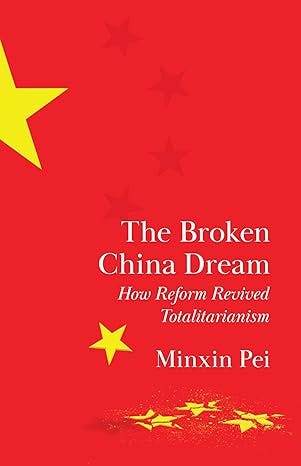
As an intrigued beginner in understanding China, I found this quite interesting.
Much analysis of Xi Jinping paints the Chinese president as a great disrupter, someone who has tossed out the rules of the game to maintain power at home and challenge the west head-on abroad. …
But as the political scientist Minxin Pei convincingly argues in his new book, The Broken China Dream, it is more accurate to see Xi as part of a communist continuum rather than radical change. More to the point, the focus on change in China distracted attention from what stayed the same — the ruling party’s absolute determination to remain in power, and the fact that it never relinquished the tools to do so.
Deng’s vulnerable rules
Deng is often seen solely as an economic reformer. But he also introduced rules for political reform, to prevent the emergence of another Mao Zedong, China’s revolutionary leader who unleashed multiple, deadly political campaigns and drove the economy into the ground.
It is remarkable to read Deng’s 1980 speech on political reform today. In it he attacks all the tenets of Mao’s rule that Xi has replicated — the concentration of power in a single leader, life-long tenure at the top and the nurturing of personality cults. …
Deng’s political reforms relied entirely on the force of his political personality. But as a good communist, he refused to put in place any institutions independent of the party to enforce them.
So while Deng bequeathed the rules to the Chinese system, he also left them vulnerable to removal. Once another powerful leader like Xi arrived, they were easily swept aside.
Xi has used multiple tools to enforce his singular power — an anti-corruption campaign to take down rivals, increased surveillance, ideological enforcement and an ever-present enemy in the US, always useful to mobilise the system.
All the levers were there. Xi only had to pull them.
Fundamental continuities
Deng and Xi are held up by many analysts, inside and outside of China, as very different leaders. On closer examination, “the discontinuities are superficial and the continuities between the two are fundamental”, argues Pei. “Both are hardcore Leninists who regard preservation of the party’s monopoly of power as the overriding objective of their rule.”
Pei describes the journey from the Deng to the Xi era as one from neo-authoritarianism to “neo-Stalinism”, a kind of digital totalitarianism with Chinese characteristics. I wonder, though, whether neo-Stalinism really captures China today.
Take the private sector. Yes, Xi has cracked down on entrepreneurs, especially digital giants such as Alibaba. His aim, as ever, was to erase any emerging centres of power not subservient to his agenda.
But Xi has hardly squelched the private economy in the process. Look at the economic frontiers that China dominates — in electric vehicles, batteries, solar power and the like. China’s global champions, like BYD (cars) and CATL (batteries), are all private. DeepSeek, China’s AI pioneer, also rose largely on its own.
Chinese private companies have benefited from subsidies and protection. They can be closed at any time by the state, as they don’t enjoy any real legal protection. But they are also highly innovative, globally competitive and enormously useful to Xi’s agenda. Stalinism never enjoyed anything like it.
Pei is right to see Xi as a leader in the traditions of Chinese communism. But whether Xi “is failing more than he is succeeding” in building China into a global superpower [can] only be judged in relative terms, in comparison to Donald Trump’s America. On that score, Xi is doing exceedingly well.
The Broken China Dream: How Reform Revived Totalitarianism by Minxin Pei Princeton
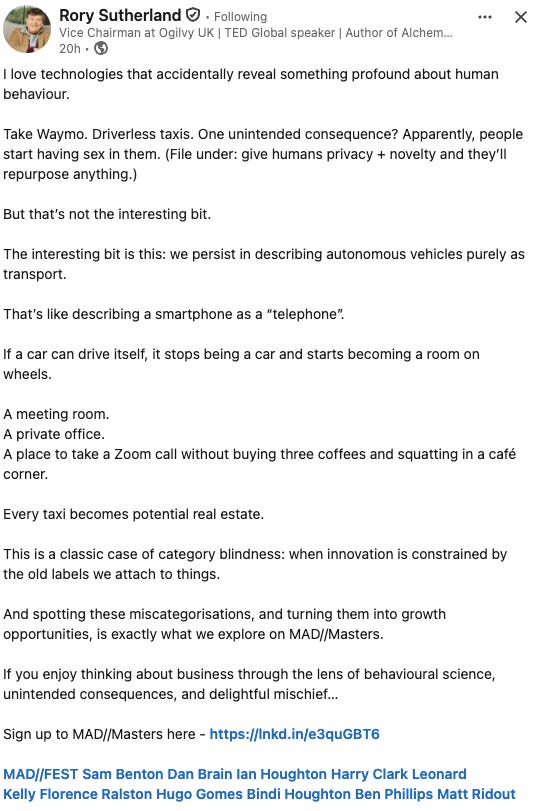
Category blindness
Good concept

AI and education
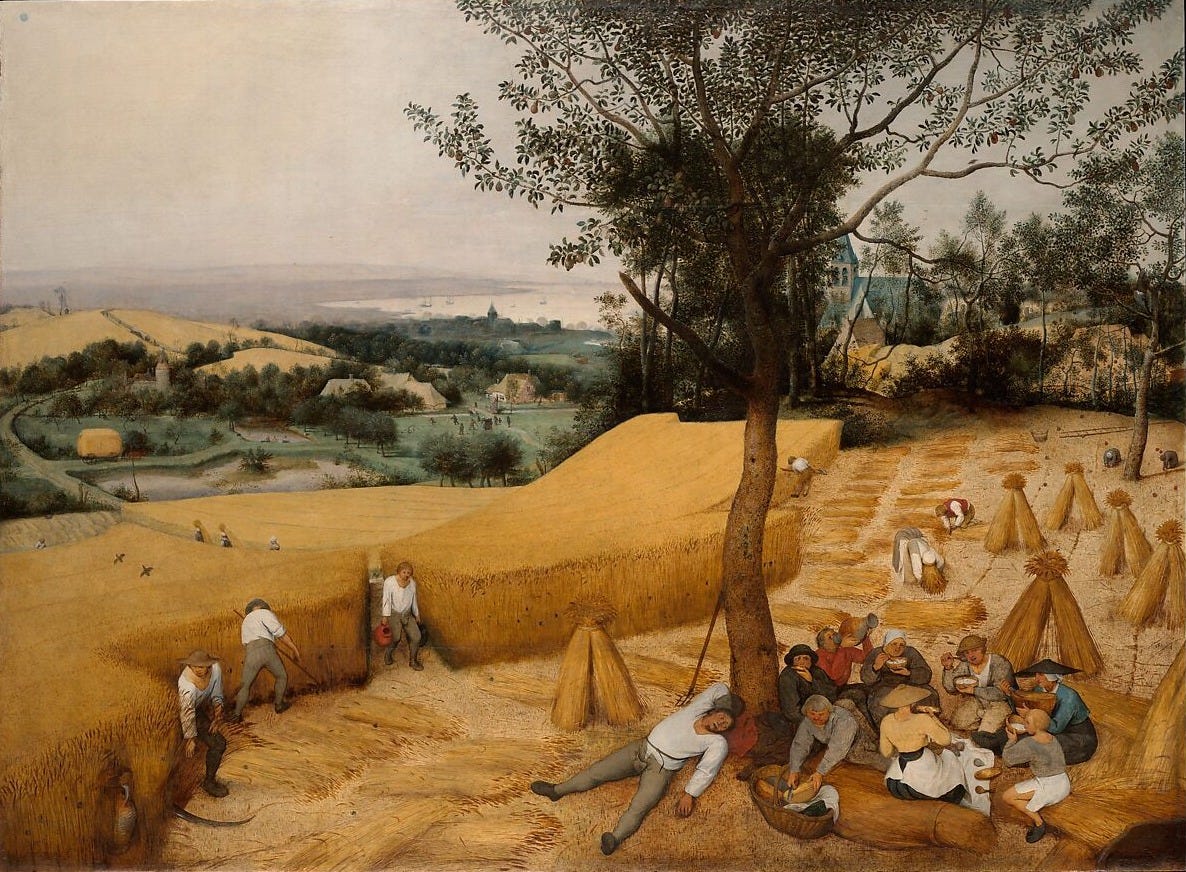
This piece is much breezier about the implications of AI than I fancy, but it seems to raise a fundamental question — with obvious implications for education.
A student can have AI do her homework and then pass it off as her own. She speaks fluently about concepts she doesn’t understand. The appearance of intelligence replaces its reality. Like muscles that atrophy without use, her reasoning capacity withers.
Or she can use AI to challenge herself. Study mode forces her to work through problems rather than receiving answers. The AI asks questions, corrects misconceptions, and refuses to simply hand over solutions. Each session builds her capacity. She’s still using AI. But she’s building human thinking on top of AI thinking. .…
What distinguishes good offloading from bad? The examples suggest an answer. Offload mechanical cognition: the tedious, repetitive operations that don’t require judgment. Preserve core deliberative capacities: the ability to evaluate, choose, and reason through hard cases. Make sure evaluating AI outputs requires active engagement. Expand higher-level intellectual activity. And preserve cognitive sovereignty: maintain the ability to contest what the AI tells you, to understand how it reached its conclusions, and to exit when you need to.
This seems that this is broadly right. I wonder how much if any of this is reflected in discussions in educational circles – and perhaps more importantly, in applying the ideas in ways that work.
As a quick take, one could reimagine the exam as a trip to a secure terminal where a student would be given some task - it might be to write an essay or do some other research. They would have access to AI resources and the task would be to use their own knowledge and that of the AI to achieve the best result they could. How would you know what contribution the student made compared with the AI? Another AI would observe the entire process and report on it.



Fake problems: there are a lot of them
This is the sort of thing the internet could be about. Sorting out what’s real, instead of amplifying the unreal. Anyway, I know that’s very 2010s.

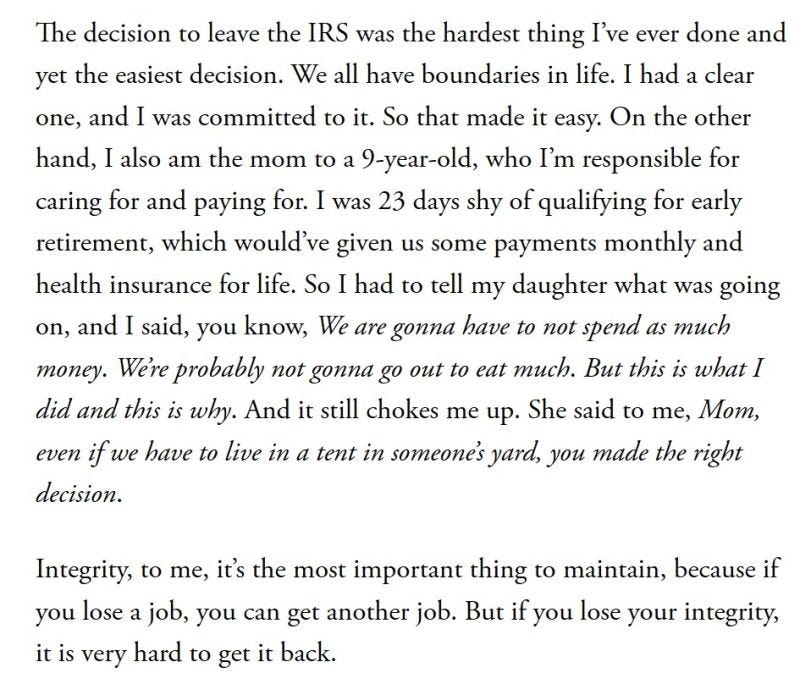
Kathleen Walters: asked to break the law but refused
Engineering, Darwin and female orgasms

Everyone knows that you cannot enquire into the functions of living organisms without referring to the purpose served by them and by the organs and processes that belong to them. Yet we must pretend that all such teleological explanations are merely provisional. The story goes around among biologists … that teleology is a woman of easy virtue, whom the biologist disowns in public, but lives with in private.
Great post.
I was something of a disappointment to my father. He was a self-taught engineer and I grew up thinking it was normal to be surrounded by draughtsman’s tables covered in circuit diagrams...
Psychology (and biology) are soft sciences, but humans are (mostly) soft. This doesn’t mean that an engineering perspective is irrelevant to these disciplines, however, and maybe I inherited some of my father’s engineering DNA. This meant that when I first encountered the (often still dominant) idea in biology that women can be modeled as defective men, I wasn’t so much offended as baffled. Natural selection—the greatest engineer of all—simply does not work that way. Yet those were the leading ideas in explaining female orgasm and its (apparent) ‘inefficiency’...
The great actress Hedy Lamarr—who would have turned 112 today—in the film Ekstase (Ecstasy), which horrified the Hays code censors of 1933, [gave] the first representation of a female orgasm on celluloid.
Hedy Lamarr, as well as being a taboo-breaking screen goddess, also thought it was normal to be surrounded by circuit diagrams, and also had a draughtsman’s table permanently installed in her home. This is because she held patents for radio technology inventions. Of all these the one she is most celebrated for is the introduction of frequency hopping. This is a technique—based on music—to keep radio transmissions from being interpreted by the enemy. It is one of the insights that allows modern mobile phones to work.
Darwinism is design-thinking
Darwinian selection is fundamentally an engineering take on the world. Why does a thing look this way? What does it appear designed to do? Why is it (apparently) not working? The only non-magical mechanism that explains apparent design is natural selection. So, engineering, and Darwinian insights are close cousins.
Orgasms and engineering
Lots of scholarly ink has been spilled on the subject of female inorgasmia. Lots of women don’t orgasm during sex. Most men do. [There] are several possible evolutionary reasons for this orgasm gap.
Women are broken. This is roughly Freud’s idea, that inorgasmic women are psychologically damaged, and need therapy before they work properly.
Women are not designed to have orgasms at all. The “by-product” view
The reason women don’t have orgasms every time is that the system is accurately separating males into wheat and chaff.
I have blogged about why the first two ideas are probably wrong elsewhere. In essence—the broken/badly designed ideas don’t do justice to the complexity, intricacy, and specificity of the female sexual system. The by-product account is a non-starter once you have studied female anatomy.
This leaves us with the 3rd idea. Females are working just fine. It’s males that are not... More women than men become ancestors. More men than women are consigned (or consign themselves) to reproductive oblivion.
Female orgasmic response (quantity and quality) accurately tracks a range of things that females desire in male partners—intelligence, drive, focus and determination...
So, if we have a highly complex system (like the integrated set of nerves, muscles and physical structures making up the female sexual system) that appears to be broken, well, maybe, just maybe—it’s doing exactly what it was designed to do.
An oft-quoted statistic is that only 25% of women can orgasm through penetrative sex. Now, we don’t know actually that. We only know that women orgasm through penetrative sex 25% of the time. That doesn’t mean that they are incapable of it... All of that would need to be controlled for before we rush to conclusions about women being broken or badly designed.
There’s also reasons why men suffer performance anxiety. Indeed—they suffer anxiety about a lot of things that affect their fitness as mates. Height, status, penis size. This is no different. It also explains why men get defensive over female inorgasmia (”women are broken”, “women are badly designed”). But nature doesn’t care about your excuses or your ego.
Of course—these days we can circumvent nature--and a good thing too. Partner inorgasmia can be overcome by diligent study, playfulness, paying attention to what your partner actually wants, and as Carol Tavris puts it, “Sex is not soccer: the use of hands is permitted”.


The nexus between Western and Islamic extremism
Interesting story about an interesting and destructive phenomenon. I’m not sure I buy the pat conclusion that “ violence can be avoided if calls for radical change are given a political outlet”, but I guess it depends what you mean by ‘outlet’. Especially since one major cause of violent radicalism, according to the author, is the loss of faith that one might engineer a global revolution. Perhaps in the 1980s that became true of the left. But here in the 20s, has it become true of the right? In any event, I went hunting for the author on Listen Notes and found the podcast above which I found interesting.
In late 1967... Patrick Arguello wrote to a friend about the death of Ernesto “Che” Guevara... [Soon] Arguello... was shot and killed... as he attempted to hijack a plane on behalf of the Popular Front for the Liberation of Palestine.
... the execution of another ideologue inspired another young man to join the cause of revolutionary violence. Ayman al-Zawahiri was a teenager when he learned that Syed Qutb... had been hanged in prison... [Qutb’s] book... called for a renewal of faith among Muslims and a purging of Western influences... [al-Zawahiri] went on to... [lead] al-Qaeda until he was killed... in 2022.
Many assume that modern Islamist extremism emerged only after the war in Afghanistan in the 1980s. In fact, it began to gather force 20 years earlier, at a time of much wider revolutionary ferment, when leftist movements were already flourishing...
[Yet] the two movements had a surprising—and often overlooked—amount in common. Both worshipped heroic martyrs who had urged the masses to rise up, overthrow their rulers, and transform society. Both called for “armed struggle” against imperialism, capitalism, the U.S., and Israel...
In some cases, the leftists directly influenced the Islamists. In Lebanon in the 1970s, leftist instructors trained Iranian Islamists dedicated to the overthrow of the shah... In the ‘70s, Islamists took over embassies, and in the ‘80s, they hijacked planes—both tactics popularized by secular leftist groups.
Some vocabulary crossed over from the left to the religious right... Ruhollah Khomeini... talked about “revolution,” using the Persian term mostazafin to describe the oppressed... which came... from a translation of Frantz Fanon’s The Wretched of the Earth...
... many people don’t realize how much the Islamists borrowed from the leftists. Many Islamists subscribed... to Che’s doctrine of foquismo, which argued that a small number of committed militants could create the conditions for revolution...
... these two movements ultimately followed very different trajectories. In Western Europe, sweeping social and political reforms answered many of the demands... violent leftist groups seeking a “revolution” were marginalized by the early ‘80s.
Leftists in the Middle East were marginalized too... without political reforms to address citizens’ grievances, the decade that followed offered little but disappointment, disillusionment, and the brutal repression of leftist organizations...
This crackdown created a vacuum that allowed Islamism to take hold... By 1978, the British travel writer Jan Morris was writing in Rolling Stone about “the revolution I find easiest to envisage in Cairo now”—one that would come not from the left but “from the arsenals of Islam.”
Morris proved prescient. In 1979, a radical clerical regime took power in Iran... In 1981, Islamist extremist networks killed President Sadat... massive suicide bombs launched by new Islamist groups... destroyed the U.S. embassy in Beirut and killed hundreds of Marines...
The late ‘60s to the early ‘80s was a period unlike today in many ways—a period when terrorists wanted “a lot of people watching and not a lot of people dead,” in the words of one contemporary commentator...
But the parallels between then and now are striking. Those decades were a time of rapid and destabilizing change. Technological innovations exposed hundreds of millions of people to shocking images, radical ideas, and extreme opinions... Then, as now, many young people felt that their elders had betrayed them, and that wholesale change was called for...
If we’re to take anything from that earlier period, it’s that violence can be avoided if calls for radical change are given a political outlet. If governments ignore people’s needs and demands, the violence will soon return. It might be perpetrated by different people, with different words, ideas, tactics, and values, but they’re sure to be equally determined to remake their world, whatever the cost.
Boredom and decline at the Washington Post
From TPM
I think I can say with little fear of contradiction that I know as much as anyone else in modern American journalism about the absolute, no-excuses necessity of operating in the black... All the merit and great stories and hard work just melts into the background when you face the absolute necessity of making payroll. It’s a brutal taskmaster.
That’s not what’s happening at The Washington Post, and not simply because, of course, Jeff Bezos could float almost limitless news organization losses forever and barely notice. What we’re seeing is something that should be familiar to any close of observer of the news over the last generation. Let’s call it the formulaic billionaire white knight press baron doom cycle.
Our guy comes in as a White Knight. He solves every problem because money is no issue... He’s signed up as the protector and custodian of a public asset.
But billionaires turn out not to like losing money. That shouldn’t surprise us... It’s more integral to their personhood. It eats at them... Eventually it’s too much.
What’s the solution? Innovation, efficiency, scale … often it’s refocusing on the great underserved middle of the electorate. (Where’d that last part come from? Who do you think billionaires spend their days talking to?) The consultants and tech-adjacent efficiency and innovation bros are responsible for the rest... They speak billionaire, a language rife in talk of innovation, scale, synergies, efficiencies...
Still, the boss likes what he’s hearing. And he goes with it. A seed has been planted: he really doesn’t like the guff he’s getting from the help... The operation has been turned over to the consultants and billionaire-speakers... and the seeds have been planted for a curdled and resentful attitude toward the people who write the stories... The billionaire starts to get maybe a bit of a different idea of what the “problem” is with this operation.
Now we come to the pivot moment of the cycle. It turns out the innovation and scale mumbo-jumbo isn’t really working... That readership was already in at least longterm decline. Now you’re actually driving people away... And screw them anyway, right? If they want to self-cut, let them. That just helps with the bottom line.
At some point the billionaire realizes that as awesome as efficiencies and scale and serving the underserved middle is … well, this isn’t working... It turns out this is hard. And this is the kicker: He’s bored. This isn’t fun.
So the answer is: fuck this whole thing. The staff sucks. The readership sucks. This is when the self-immolation cuts start. If there’s one thing a local paper needs, one thing a metro paper needs, it’s sports... When you cut your sports section, it’s because you actually don’t want the paper to exist anymore.
Why not just sell?
Well, here’s why. If you sell, it means you failed... The key is that selling the thing is a kind of admission of failure. And personal failure isn’t an option. Institutional failure? Well, shit happens. That’s just a hardheaded business decision — something the newspaper business folks weren’t badass enough look at head on and not flinch.
My best sense, inferring from the decision to shutter the sports page, is that the near term-plan is to cut the Post’s grounding in metro D.C. and try to turn it into a Pulitzer mill. Hold on to the White House and Hill teams and get awards. Anyone who knows anything about the newspaper business knows this is a joke. But Bezos hasn’t been listening to actually newspaper folks for a few years.
It’s dead and there’s no point is the thinking. It’s the billionaire white knight publishing arc. At a smaller scale, see Chris Hughes at TNR going on a generation ago now. It almost always runs this cycle.
This really is funny


Abortion is to women as duelling is to men

As a big fan of Adam Smith, I knew of his more cynical 18th century forbear Bernard Mandeville, but had always been intrigued to know more. I found this fascinating. His very simple model of human social motivation is remarkably powerful methinks.
In 1705, the Anglo-Dutch physician and philosopher Bernard Mandeville anonymously published a poem called The Grumbling Hive: Or, Knaves Turned Honest. He described a community of bees – a transparent metaphor for contemporary Britain. In the hive, each bee works for its own personal gain, every profession has its cheat, and everyone exploits the passions of others. But the welfare of the community is not endangered:
Thus every part was full of vice, Yet the whole mass a paradise; … The worst of all the multitude Did something for the common good.
Even more scandalously, when the insects did implement moral reform and forced themselves to live according to honesty and virtue, the community fell into a downward spiral. ...
In 1714 ...Mandeville published the prose volume that made him infamous: The Fable of the Bees: Or, Private Vices, Public Benefits. ...Mandeville confronted his contemporaries with the fact that passions and habits commonly denounced as vices actually generate the welfare of a society. ...
Mandeville never made economic issues the focus of his analysis ...his arguments concerning trade and wealth form only one part of a broader examination: his psychological analysis of self-love and the social effects of the hidden workings of pride and shame. ...
In Mandeville’s view, human beings are driven by their self-regarding passions. ...The predominant force is pride:
that natural faculty by which every mortal that has any understanding over-values, and imagines better things of himself than any impartial judge, thoroughly acquainted with all his qualities and circumstances, could allow him. We are possessed of no other quality so beneficial to society, and so necessary to render it wealthy and flourishing …
...Mandeville identifies in the self-regarding nature of human individuals the original, natural disposition to sociability. ...Our pride creates the need to socialise, to form society.
For Mandeville, sociability is the result of an evolutionary process. ...individuals desire for others to share in that opinion. ...We learn to take pride in hiding our pride ...
In early 18th-century Britain, the language of manners and its key term ‘politeness’ had become a crucial model for honourable behaviour ...Mandeville denounces the moral hypocrisy of the fashionably well-bred, who deluded themselves that their good manners are equivalent to virtuous conduct. ...
Mandeville’s ‘science of man’ took seriously the position of women in a deeply misogynistic society. ...men have excluded women from education ...women’s fate is submission, their most precious quality is meekness, and their reputation for virtue is based solely on chastity. ...
...Mandeville ...makes the duel a paradigmatic expression of the function of pride and shame in the development of sociability ...the tendency to strive for social recognition ...to satisfy pride and the fear of shame ...
Women, for Mandeville, are not naturally ashamed of their sexuality, but they are educated to feel shame. ...Chastity and courage are ‘artificial’ passions, the outcome of evolution, conventions and education.
In The Fable of the Bees, Mandeville uses a scene from everyday life to illustrate the social effects of double standards, explaining the dynamics that lead to infanticide. ...women’s natural love for their children can be overwhelmed by a more powerful, socially inculcated type of self-love: the fear of shame. ...
Infanticide is to artificial chastity as the duel is to artificial courage: a bloody tribute to the cult of the self on which modern honour is grounded. ...
For Mandeville, morals and manners evolved over time, without any planning, from the dynamics of pride and shame ...Before being ‘utility-maximisers’, human beings are primarily ‘esteem-seekers’, and their self-interest is intertwined with the bottomless desire for recognition from others. Mandeville’s anatomy of human nature remains true today.
Me, gramps and Napoleon
Heaviosity half hour
Facebook: or sociopathy as a service
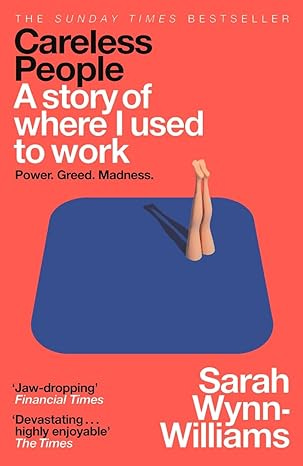
A while back the union movement was able to prevail upon Labor to legislate penalties for industrial manslaughter. It was a specific criminal offence for workplace deaths caused by very serious failures in workplace safety management. It sits above ordinary workplace safety breaches and is intended to capture conduct that amounts to criminal negligence or gross negligence leading to death. It is generally aimed at employers, corporations, officers, and persons conducting a business or undertaking. Seems to fit Facebook’s criminal negligence towards the safety of the Rohingya pretty well!
Chapter 46 Myanmar
We’re not just treating each other badly in our own headquarters. We’re also doing some real damage out in the world. And I’m failing when I try to get the people in charge to care.
Take Myanmar. By now, it’s not that I expect anything good or responsible from Facebook’s leadership. There was a time when I could make that happen, but I know I can’t influence the things that matter now. It’s hard for me to hold on to the difference between knowing when to perservere and knowing when to quit. I keep telling myself I can do more to change things inside than I can out. So I’m trying to work the rotten system to achieve what little I can to make things better. In this case, I’m trying to do something very simple. I want to hire a human rights expert to manage Myanmar. But even this is not going well.
Myanmar exemplifies how damaging Facebook can be. But to understand this and why I can’t hire someone to fix it we need to go back in time. Since my visit to Myanmar four years ago, things have deteriorated there. And Facebook has played a big role in this unraveling.
Myanmar is the one country where Mark’s dream for Internet.org kind of came true. Since my time there in 2013, it went from having virtually no internet to everyone on mobile, totally skipping desktops. And on mobile phones, Facebook is the internet for nearly everyone. Facebook made deals with the local telecoms to preload phones with Facebook, and in many plans, time spent on Facebook wasn’t counted toward your minutes.
So in Myanmar, if you’re on the internet, you’re on Facebook, and because of this, Myanmar demonstrates better than anywhere the havoc Facebook can wreak when it’s truly ubiquitous. The best way I can describe what’s happened there is a kind of lethal carelessness. At every turn, when Facebook’s leaders see how Facebook is inflaming tensions and making an unstable and frightening political situation much worse, they do … nothing.
We got our first real glimpse of how badly things can go in 2014, nearly one year after I met with the junta. In April 2014 I and some others on the policy team hear that there is virulent hate speech circulating in Myanmar. Most of it is targeted at the country’s Muslim minority, the Rohingya. Mobs are burning down mosques. We go to the content team that’s responsible for removing hate speech and ask if there’s more we can do to address it, and we’re told no. They’ve just hired a new Burmese contractor to manage this; everything is fine. Facebook’s head of content policy says, “I can confirm our Burmese rep has plenty of bandwidth.” We push for more details and they provide a breakdown showing that they only have four or five reports of hate speech in the queue, which is nothing.
A few months after this exchange with the content team, a riot is triggered by a Facebook post and the junta blocks Facebook on July 4, 2014. The post claimed a Buddhist woman had been raped by a Muslim man, a tea shop owner. Much later a UN report concludes that the story is fabricated. But it went viral after it was shared by a Buddhist monk who’s often described as the “Burmese Bin Laden,” Ashin Wirathu. Wirathu had been jailed in the past for inciting religious hatred, and he was beginning to figure out how to weaponize Facebook. (And yes, I know the phrase “Buddhist monk” conjures something very different from “terrorist” for most people, but members of the Buddhist majority in Myanmar have persecuted Rohingya Muslims for decades.)
I get an email telling me the junta wants us to remove Wirathu’s posts about this alleged rape. Because they’re causing real-world violence—riots are ongoing, Buddhist mobs are attacking Muslim shops, people are dying—the posts seem like a clear violation of our standards. But the content operations team—which is based in Dublin—doesn’t want to take down the posts. The case officer tells me she doesn’t think they violate our rules, but she can’t find anyone who speaks Burmese, and Google Translate doesn’t do Burmese, so she can’t say for sure.
I pull in someone more senior, and he reaches out to that same contractor they’d hired a few months before—a Burmese guy based in Dublin—to review the material. Five hours pass.
“How long do you think this will take?” I ask. There are riots in the streets over this. I really need these posts to come down.
“Unfortunately no idea,” the senior guy responds. “He’s offline, I have pinged him on FB and hope he sees it and gets back to me.”
“Do you have a contact phone number for him?” I write. “This is an emergency.”
The senior guy calls him. The Burmese contractor is at a restaurant and I’m told he’ll go home and “should have access to a PC in fifteen minutes.” He’ll comb through the posts to try to see what is being said, and if we would action it or not. Nearly two hours pass, and the senior guy confesses that the contractor does not have his work laptop and he himself is on the road but he’ll get to it when he gets home later. I feel both responsible and completely impotent.
“When will you be in a position to do this? We really need to move quickly,” I urge.
After receiving no response, I find a way to get other people to take down the posts from California, but to do that we need the senior guy to send the links that have been reported. Finally he does, the three posts are removed, and four minutes later we get notification that Facebook was unblocked in Myanmar, despite the fact that it’s 4:30 A.M. there.
This cannot be the system Facebook relies on when people are dying. If posts are causing riots in the streets, we can’t be depending on some random contractor in Ireland who’s out to dinner and can’t find his laptop.
Based on this and the experience over the last few months, I suggest to both leadership and the content teams that we need to rethink how to handle Myanmar, and figure out what we did wrong and how we fix it. This does not go over well. The head of the content team emails that her people “did exactly what they were supposed to do. This content, on its face, did not violate our policies.… Those 3 posts contained factual reports and calls to political action—not hate speech.” I point out that this doesn’t matter under our own guidelines, which state clearly that we remove content “when we perceive a genuine risk of physical harm, or a direct threat to public safety.” Triggering real-world violence like riots violates our rules. They think they can ignore this because it’s happening in Myanmar, but as with the elections of despots, if Facebook can enable it in one place, the pattern will surely repeat unless it is actively prevented. This gets me nowhere. The head of content policy doesn’t want to do more training, and doesn’t see anything wrong with how this was handled. In fact, they want to send a “quick note reassuring the CO [content operations] folks that they did the right thing here.” They tell leadership,
“To be clear on CO’s responsibilities here … [the] team did exactly what they were supposed to do. This content, on its face, did not violate our policies.”
I disagree. At this point in 2014, Myanmar is too explosive—grappling with hate speech, fake news, and mob violence, struggling to become a democracy—for us to treat it like any other country. Millions in Myanmar think of Facebook as the internet, and we have only one person who speaks Burmese in Facebook’s operations team. That’s it. One person. Compared with the hundreds for China. One man in Dublin, who isn’t even on staff, to resolve all of the hate speech roiling Myanmar.
The note thanking the content operations team for how they handled this gets sent anyway.
So even though the content operations team doesn’t want to figure out what’s going on with reported content in Myanmar, at least my team and I can try. Within weeks, we learn just how crudely Facebook is functioning in Myanmar. For example, we’ve never posted our Community Standards in Burmese, so it would be impossible for anyone to know what’s allowed and what isn’t. Basic architecture of the site—the like button and most importantly the reporting button that you’d use to alert Facebook to problematic content—is not in Burmese (or shows up as corrupted characters). And—biggest and most surprising of all—Facebook is incompatible with the Burmese language. Facebook’s site could be translated into Burmese at any point. It’s just … not a priority.
In addition to all this, Myanmar is one of the few countries that doesn’t run on Unicode. This Unicode is the universal standard for encoding text on computers. As a result, if you’re in Myanmar, you can type posts in Facebook and read them as recognizable Burmese characters. But for anyone outside Myanmar, the letters are just an unreadable jumble.
How do you moderate the content when you can’t read it? We go to the head of internationalization at Facebook, who tells us that she and engineering are very aware of this problem with Burmese, and it’s eminently solvable. In fact, she’d tried to address it a year before this, but nobody would listen. She just needs someone to prioritize it and assign engineers. Myanmar is a huge potential market for Facebook, with over sixty million people. A few weeks after the riot, I go to Elliot and Javi and the head of content policy and others to plead my case. In the wake of the riots, now we can see how deadly Facebook can be in Myanmar. We need to do a better job monitoring hate speech on the platform. So we need everything in Unicode. Nobody cares. I’m told, “I would love to prioritize getting this done.… I just don’t think we can justify that given the other things in our pipeline.” By contrast, there’s no problem spinning up huge teams of expensive engineers to build a Facebook tool to facilitate Chinese censorship.
This would become a consistent refrain whenever my team and I ask for something for Myanmar.
Faced with the absurd situation that Facebook can’t actually post in Burmese on its own platform, my team translates the Community Standards and a tip sheet on how to report questionable content, and we print it as a handout. A leaflet. Like it’s the year 1776 and Thomas Paine has this great commonsense idea about independence from Great Britain. That’s how we’re going to get the word out. We go to the comms team to ask for their help in getting this to people in Myanmar. We’re told no. “Myanmar isn’t a priority country in SEA [Southeast Asia], which means we don’t have any PR resources on the ground.”
And then, the kicker in June 2015: while trying to help groups and activists report abusive content on Facebook, my team starts noticing that users appear to be using unofficial Facebook apps that don’t offer a reporting function. This is something that civil society had been trying to tell us, but it seemed so preposterous that we didn’t believe them initially. Then we learn that the official Facebook app is still unavailable for download in Myanmar and, as a result, unofficial versions of the app get shared through friends and at mobile shops. It seems impossible to report the hate speech, racist posts, or content intended to trigger violence even if they could solve the language and Unicode issues.
This explains why we’ve had a steady flow of complaints from the junta, civil society, activists, and others all complaining about fake news, hacked accounts, and racist, violent, threatening content on the site. They said it’s impossible to report these posts, and in the few cases they managed to get a report through, no one took action. They clicked on a button and nothing happened. It also explains why the content team confidently assured me throughout 2014 that users in Myanmar weren’t filing reports about questionable content. Of course they weren’t filing reports. Of course we took no action. Our users weren’t using apps capable of any of that.
As if that’s not troubling enough, a new problem emerges in May 2015. By slowly piecing together the decisions being made by the now two Burmese contractors who are doing all the content moderation in Dublin for the content reports that manage to make it through all those issues, my team and I start to suspect that one of them is allowing a lot of racist content onto the site. He’s allowing a slur for Muslims that’s the equivalent of the N-word—kalar—and defending its use, even in posts calling for people’s blood. He’s removing more posts by civil society groups and peace activists than government and anti-Muslim accounts. Worried he might be in cahoots with the junta, we raise this with the content team, who tell us there’s nothing to worry about.
We inform our bosses and plead with them to do something, anything, to make the content team address it, but nothing comes of that. We ask them to ban the word kalar, if they won’t deal with the moderator. They refuse. (Years later, after untold harm, Facebook finally bans the slur.)
With few other options, my team sets up clandestine meetings with nongovernmental organizations in Myanmar that track what’s posted on Facebook, to gather information to make our arguments internally. It feels weird and disloyal to collaborate with groups outside Facebook to solve an issue within Facebook, but I don’t see what other choice we have. One of the groups has been monitoring the posts and accounts Facebook takes down, keeping records on big Excel spreadsheets, and it confirms that our moderators are not removing racist and nationalist content that should come down, and they’re taking down other content they shouldn’t.
We set up secret Facebook groups where civil society organizations can communicate directly with us about whatever problems are not getting addressed on the platform. They send us examples of posts where government ministers spread hate speech and talk about how they’ll ensure Muslims won’t be able to vote in the upcoming election. Or junta-backed candidates encouraging their followers to burn a mosque to the ground.
This all heats up as Myanmar heads toward its first fully free, fully contested election in decades, scheduled for November 2015, an election where millions will be voting for the first time. A month before the election, the civil society groups use the secret group to tell us that liberal candidates opposing the junta have been removed from Facebook en masse. Their accounts have been suspended in response to mass reports saying the accounts are fake. Our platform is so dysfunctional in Burmese that there’s no way to verify accounts. My team gets them reinstated.
At the same time, the junta starts to arrest civil society members for their Facebook posts.
More than anything, it feels like we’re flying blind. This extremely fragile country is heading into a contentious election while struggling with hate speech, violence, and ethnic tension that Facebook appears to be enabling. It’s like a newborn that needs extra care. In a country where most people treat Facebook as though it is the internet, leadership have assigned only two full-time Burmese staffers and it is unclear whether they are employees or contractors (and two bonus contractors for the week of the election), and they’re all based in Dublin, so not in the right time zone to monitor all the posts. To properly cover the country as well as we cover, say, Germany, we’d need hundreds of skilled moderators. And in China we had promised four hundred initially, rising to over two thousand Facebook employees. I know the size of the Myanmar staff is woefully inadequate, so my team and I do what we can. On the cusp of the election, I divide up the clock with a teammate in Australia so there’s always someone from our team monitoring any reports to Facebook and our secret groups even in the middle of the night, the fear of catastrophe ever present.
In the end, the election goes peacefully, with only rare and isolated incidents of violence in the run-up. The National League for Democracy sweeps into power in a landslide, driving out the junta. But as we head into 2016, it’s still unclear whether the military will respect the results and step down.
After the election, the hate speech and fake news on Facebook continue, worse than we’ve seen in any other country. The junta is supposedly transitioning to democracy but that seems to be backsliding, and we genuinely can’t tell where they stand on all this. Sometimes they ask to collaborate to fight hate speech, but we don’t know if that’s sincere or if they’re doing it as an underhanded way to crack down on their political opponents. We’re in over our heads. We don’t understand the role Facebook is playing in the country. And much of the platform still isn’t working as it should in Myanmar. We need to get someone on the ground to figure it out and start to work on solutions urgently, every day. Or at least that’s what I think. The leadership of Facebook is utterly indifferent.
Then I think I’ve struck lucky. I’ve managed to find someone with exactly the right expertise. And when I say “the right expertise,” I’m not just referring to his extensive human rights experience. I’ve learned by this point that hiring for a senior position at Facebook follows certain unspoken rules. If you want someone to actually influence the policy and political decisions that are ultimately made by Joel and Elliot, they’ll have a greater chance of success if they’re male, older, white, and a Harvard graduate. Facebook’s leaders want someone just like them. The ultimate trump card is if they’re friends with Joel, Elliot, Marne, Sheryl, or especially Mark. A few years ago, one of the Republicans in the DC office—an old Capitol Hill veteran with a dry sense of humor—sat me down to explain.
“Sarah, you know your boss Joel. He’s a Jew who went to Harvard.”
“Yes,” I said uneasily, worried that we’re drifting into some anti-Semitic conversation I don’t want to be part of.
“And his boss.”
“Elliot.”
“Yes—a Jew who went to Harvard; and his boss … a Jew who went to Harvard. And her boss…”
“A Jew who dropped out of Harvard?” I venture.
“You’re catching on,” he said. “So you see, one of these things is not like the other.”
“You mean me?”
“Yeah,” he said. “You’re not like these people. And you’ll never be like them. And the sooner you grasp this, the better.”
Facebook is an elite product, born in an elite college, fronted by elite Harvard grads who show up for other elite Harvard grads, who are decision makers in all sorts of places. A pragmatist accepts that and moves forward. And so, back in 2016, I decided that until I walked out the door for the last time, I would try to work the system, because for so long I still believed I could do more good inside than out, by doing things like hiring good people. I accepted that I failed to get the changes Myanmar needs, and I’d probably continue to be ignored, but I started the process to hire a Harvard man who might be able to fix Facebook’s problems in Myanmar in a way that I can’t. Someone who could focus exclusively on Myanmar without responsibility for hundreds of other issues. Someone who’d wake up every day and devote all their efforts to the problems Facebook is causing in Myanmar. Someone leadership would listen to. Hiring someone with responsibility for Myanmar is obviously the right thing to do.
The guy I find is a human rights expert based in Thailand, with a master’s from Harvard, and—bingo!—a friend of Elliot’s. Years before this, Elliot had suggested I try to find work for him at Facebook. He’s dated a member of the policy team and she vouches for him, satisfying the requirement of casual nepotism that runs through most of the senior team, and we have an opening in Thailand that I can expand to include Myanmar, getting around the sad fact that it would be impossible to convince Facebook’s leadership to hire someone just for Myanmar.
The process of hiring this guy drags on for months. Finally, I’m in my regular weekly meeting with Joel in February 2017. Everyone else has signed off on hiring him. I come back to Joel and say it’s time to make this happen. Things in Myanmar seem darker and more confusing each day. We’re good to go. The candidate is good to go. Let’s do it.
For the first time since I started this long process of trying to hire someone for Myanmar in 2015, and with this particular Harvard man since May 2016, Joel levels with me.
He tells me it’s time to move on and get over it. He concocts a bureaucratic reason to say no: that it would be wrong to “install my guy” in this job because I’m only in charge of Asia temporarily. Never mind that I started this hire long before there was any suggestion I was temporary. Never mind that we need someone in-country and we’re not going to find a more qualified candidate. He tells me not to raise the issue again.
Over the next few months, the hate speech and inflammatory posts in Myanmar only increase. Journalists and activists are being arrested for things they post on Facebook. Civil society groups raise an alarm about the rampant misuse of Facebook services in Myanmar, saying things like,
I think it’s critical to recognize that Facebook is being used deliberately, systematically, and very effectively to target not just peace and interfaith activists, but also journalists and anyone who deviates from the dominant [junta] narrative.
Facebook’s security team documents a widespread pattern in which people’s accounts are being hacked and taken over in Myanmar. They discover a secret Facebook group with 571 members that seems to be a site for planning and sharing information for spearfishing attacks on verified users and pages. This group seems to be doing another thing the civil society activists warned Facebook about: they’re taking over the verified accounts of anyone in Myanmar with a large following and pumping out content, lurid photos, fake news, incendiary memes, and propaganda, pretending to be them. Spreading rumors to both Muslim and Buddhist groups that an attack from the other side was imminent. Anything that would spread hatred and fear, making people vulnerable and wanting the protection of the military. And of course Facebook would elevate all this content because it received so much engagement.
So Facebook knows this is happening, but it doesn’t mean it does anything about it. When my team recommends taking down posts that are destabilizing or coded hate speech—or posts that might lead to real-world violence—the content operations team often throws up its hands, saying the posts don’t violate local laws, so there’s no reason to take them down. When a fake news story goes viral in June 2017, saying that the democratically elected president of Myanmar is resigning, my team recommends as usual that we take it down, worried it’ll further destabilize the country. And as usual, the content team and legal team leave it up. Frustrated, the person on my team handling Myanmar responds,
There is a commonly held belief that the military or someone is trying to undermine democracy in Myanmar. We have identified hundreds of accounts trying to destabilise things. Security operations is currently reviewing.… Are we going to let our service be used to destabilise…?
The answer is apparently yes.
The unthinkable happens. In late August, the military launches a campaign of atrocities against the Muslim population that the UN later describes as genocide and crimes against humanity. At least ten thousand people are murdered. The clinical language of the UN report on this somehow makes it all seem more horrible. They interviewed over eight hundred eyewitnesses and victims of the violence.
Children were killed in front of their parents, and young girls were targeted for sexual violence.… Rape and other forms of sexual violence were perpetrated on a massive scale.… Sometimes up to 40 women and girls were raped or gang-raped together.… Rapes were often in public spaces and in front of families and the community, maximizing humiliation and trauma. Mothers were gang raped in front of young children, who were severely injured and in some instances killed.… Women and girls were systematically abducted, detained and raped in military and police compounds, often amounting to sexual slavery. Victims were severely injured before and during rape, often marked by deep bites. They suffered serious injuries to reproductive organs, including from rape with knives and sticks. Many victims were killed or died from injuries.…
Others [men and women] were killed in arson attacks, burned to death in their own houses, in particular the elderly, persons with disabilities and young children, unable to escape. In some cases, people were forced into burning houses, or locked in buildings set on fire.
Over seven hundred thousand Muslims fled the country.
What the world will learn later is that the military had set up a massive operation—at least seven hundred people—to spread misinformation and hate on Facebook. This was revealed by a reporter named Paul Mozur in the New York Times. Sources in the military’s secret operation told him how they created and took over verified accounts that had huge followings—fan accounts for pop stars and celebrities, the Facebook page for a military hero—and used them to pump out false, inflammatory posts. “Troll accounts run by the military helped spread the content, shout down critics and fuel arguments between commenters to rile people up.”
As Mozur points out, “It’s among the first examples of an authoritarian government using the social network against its own people.”
Facebook’s response to Mozur? The company issued a statement saying, “It had found evidence that the messages were being intentionally spread by inauthentic accounts and took some down at the time. It did not investigate any link to the military at that point.”
Which raises the question, What was Facebook’s role in all of this? The UN report on the human rights violations in Myanmar devotes over twenty pages to the critical role Facebook played in spreading hate. It catalogs the different kinds of derogatory language investigators found in posts, memes, and cartoons—including several variations on the ethnic slur kalar, the word our team tried and failed to ban for years because we couldn’t convince the decision makers at Facebook to take action. It lists the different anti-Muslim narratives found on Facebook: posts that portray Muslims and Rohingya as a threat to the Buddhist character of the country and Burmese racial purity; posts that characterize Muslims as terrorists, criminals, and rapists; posts that claim they “breed like rabbits” and will overtake the population. Organizations with an explicitly racist agenda like MaBaTha, led by the extremist monk Wirathu, have an active Facebook presence. Death threats, harassment, and calls for violence aren’t just against Muslims “but also against moderate commentators, human rights defenders and ordinary people who have views that differ from the official line.” All of these are issues Facebook had been aware of for years.
The UN investigators point out many of the other issues we’d tried and failed to convince Facebook’s leaders to address: the woefully inadequate content moderation Facebook provided for Myanmar; the lack of moderators who “understand Myanmar language and its nuances, as well as the context within which comments are made”; the fact that the Burmese language isn’t rendered in Unicode; the lack of a clear system to report hate speech and alarming unresponsiveness when it is reported. The investigators noted with regret that Facebook said it was unable to provide country-specific data about the spread of hate speech on its platform, which was imperative to assess the problem and the adequacy of its response. This was surprising given that Facebook had been tracking hate speech. Community operations had written an internal report noting that forty-five of the one hundred most active hate speech accounts in Southeast Asia are in Myanmar.
The truth here is inescapable. Myanmar would’ve been far better off if Facebook had never arrived there.
I’ve spent a lot of time thinking about what unfolded next in Myanmar, and Facebook’s complicity. It wasn’t because of some grander vision or any malevolence toward Muslims in the country. Nor a lack of money. My conclusion: It was just that Joel, Elliot, Sheryl, and Mark didn’t give a fuck. Joel was a veteran of George W. Bush’s White House. An issue in Syria would be met by a wave of his hand and, “Drop a bomb on it. I don’t care.” A joke, but also who he was. He was the man in charge of those countries for Facebook. And when it came to Myanmar, those people just didn’t matter to him. He couldn’t be bothered. There was no greater principle ever offered.
People outside big companies sometimes wonder and speculate about how these sorts of decisions happen. This is how it happened at Facebook.
And it wasn’t just Joel. None of the senior leaders—Elliot or Sheryl or Mark—thought about this enough to put in place the kinds of systems we’d need, in Myanmar or other countries. They apparently didn’t care. These were sins of omission. It wasn’t the things they did; it was the things they didn’t do.
I am glad your YouTube channel was re-instated. (But I am disappointed that you received no explanation as to what went wrong or how to avoid this in the future).
https://substack.nomoremarking.com/p/if-we-are-setting-assessments-that-a-robot-can-complete-what-does-that-say-about-our-assessments-cbc1871f502 - Daisy Chrystodoulou is doing very interesting things with computers in assessment and is a very thoughtful and respected practitioner - this is worth a read on AI and education.