


Julian Assange’s election message
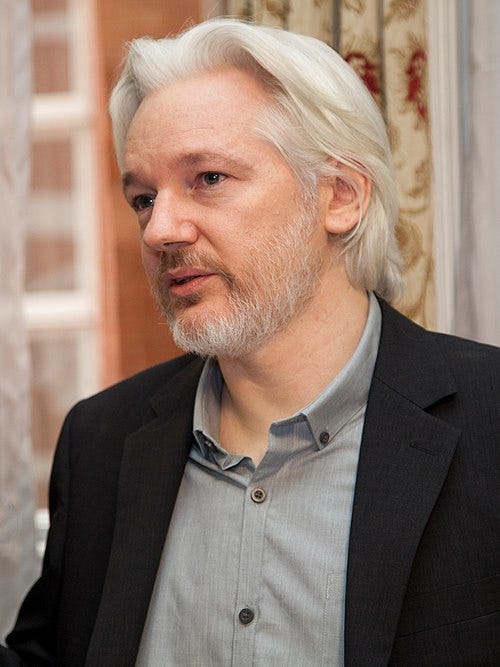
From the New Daily:
[Assange] has largely been quiet since [arriving back in Australia], but provided a statement to Nine Newspapers praising the Prime Minister’s role in lobbying for his release.
“The truth is, in what became an impressive field of advocates, Albo did more to secure my freedom than any other politician or public figure, even more than the late Pope, whose support was both moving and significant,” said Assange, who attended Pope Francis’s funeral last week.
He said the Prime Minister had also stood up for other Australians “detained in difficult circumstances”.
“Does this mean Albo will put Australian interests first and skilfully navigate tensions between the US, EU, and China? I can’t say for sure. But I do know this: He can. Albo did right by me…”
Post-liberalism’s latest decapitation: 60 minutes
Fortunately this is the next outrage for all those folks marching in the street protecting our liberties against the lockdowns. (Only kidding!) As I learned in my first serious job over forty years ago, it turns out noone much cares, wherever they are on the ideological spectrum.
How we got here
Working Dog have released the highlights of my favourite episode of Hollow Men.
Who’s side are you on?
Alex Kaschuta’s vibes-BASED international order

It’s like the purges and show trials of the 1930s or the tanks rolling into Hungary or Czechoslovakia … you know, when people have to choose between their ideological loyalties and what those lying eyes of theirs are telling them. Having been impressed with Patrick Deneen’s Why liberalism failed, I looked forward to his next book which would tell us what he proposed instead. Let’s just say it was underwhelming.
Meanwhile quite a few of those who stood for liberal values against the creeping authoritarianism of the left have now recoiled in horror at what the right have cooked up. Like Claire Lehman and Alex Kaschuta. Meanwhile I’ve been sitting in the horrified centre. Impressed with the power of the best of the alt-right’s complaints, but completely unconvinced by the intellectual vacuity of what their actual plan is.
I saluted Curtis Yarvin and Marc Andreessen’s highlighting of James Burnham as someone who can tell us a great deal about the pervasive corruption of our political discourse. But I remained where I started in the intransigent centre - a conservative, liberal social democrat.
Anyway, here’s an extract from a post Alex Kaschuta made a splash with a few weeks ago.
The online right is one of the most creative and potent vibe-crafting machines in history, but its real-world powers are limited, and many of its strengths have curdled into liabilities. That's the conclusion I've come to after years of interviewing its thinkers, platforming its ideas, and believing it could be a vessel for renewal. Instead, it has drifted into becoming a system where performative energy has replaced constructive direction, more often producing delusion, dysfunction, and a slow erosion of its own promises.
The first four months of Trump's return now seem like a case study in government by meme.
After my "crashing out" was documented in the New York Times, I thought I'd try to explain what I object to. Despite many speculations, there was neither a monetary reward nor an opportunity to craft how I was presented in the article. It was based on a rather heated and freewheeling conversation with Pedro Gonzalez, a friend. Michelle Goldberg contacted me to say she enjoyed the podcast, that it reflected a broader phenomenon she was researching, and that she would use some quotes from it for a piece. I was incensed enough with the events of the day to say: "Go ahead." ...
I've seen people who started with curiosity, integrity, and yes, a dose of rightful indignation, morph into walking, talking bundles of thought-terminating clichés. The end of the road is either a relentless focus on classics like "the Jews" or "women," or something more amorphous like the eldritch specter of entropy represented by the Left consuming everything in its path. The audience is a co-author on these journeys; they want their red meat and will take no substitutes. My own audience grew progressively more hungry for its weekly dose of edginess, as it says on the tin: "Subversive." ...
The news cycle continuously feeds this system by providing memeable anecdotes. "He did the meme." Every influencer waits to see what comes down the daily social media slop chute and how it can be framed within their existing toolbox of memes to fit the narrative. Taking something that seems to counter your usual story and managing to verbally spin a win out of it, shoehorning it into the proper meme format, is the craft of a true artist. Reality bends to the meme, not the other way around. And the only direction a meme can take is further. To de-escalate is to cuck. ...
The Liberation Day Tariffs are one of the first online-right meme policies. They are a perfect storm of congruence between the ascendant memes of "multipolarity," "America First," and "reviving manufacturing will bring back the 1950s social order," and Trump's hardened mind palace where he has been obsessed with both the trade deficit with China and the idea of tariffs as revenue since the 1980s. ...
DOGE is also a meme policy. Despite there doubtlessly being ways to make the government more efficient, the guiding meme here is "the establishment is corrupt and wasteful." For the true believer, and Trump is surrounded by nothing but, it is natural to boast about a massive budget deficit reduction before assessing if the reality on the ground matches the priors set by the meme. ...
The online right signalling ratchet also selects for the most apocalyptic scenarios of the future lest the issues be resolved. This is part of the escalation cycle and a crucial component of trusting the plan. The end is nigh, so we have to do something, anything, to stave it off. ...
One of the core issues is that there is no truth test for a meme. It is powerful in proportion to how emotionally resonant, oppositional to the other side, and personally flattering it is. There is also no de-escalation mechanism online. These ideas will have to fail in the real world to be discredited.
Whatever the merits of individual thinkers and thoughts, in the end, as the meme goes, the purpose of a system is what it does: the online right is a machine for creating ever-escalating brainworms, personality cults, mental dissociation, haphazard and destructive policies, and in the end eating itself through purity spirals and the eternal struggle to prove you are the most based left standing at the top of the iron hierarchy of nature. ...
As for me, I didn't change sides. I didn't sell out. I didn't take a deal. I looked at what was happening in front of me, in real time, and saw that it wasn't leading to renewal. It was leading to rot. And if I can't say that honestly, what the hell was I ever doing here in the first place?
"Conquering the world on horseback is easy; it is dismounting and governing that is hard." – attributed to Genghis Khan (to the right of Donald Trump)
Playing the dictator card
The hair-raising back story of all those claims to emergency dictatorship that have been kept ready for the dictator in waiting. Just like the transition from the Roman republic to the empire.

Is John Mearsheimer’s realism realistic enough?

Great piece by behavioural economist Lionel Page. I like the cogency of the argument, and also the way in which results from game theory and the sensibility of a behavioural economist are woven into an argument in which they guide rather than dominate. It’s surprisingly, sadly rare. The fundamental organising idea in the piece is the political question “in whose name; in whose interest?”
Mearsheimer's realism stands in opposition to the idealist vision of international relations defended by liberal thinkers. To his credit, he challenged this view when it was still dominant. His book The Tragedy of Great Power Politics was published just over a decade after the fall of the Berlin Wall—an event widely regarded as a turning point that would usher in a more unified world marked by the spread of democracy and liberalism, global peace, and respect for international rules. ...
Thirty five years later, it is clear that this view was overly naive. Russia has launched the first large-scale invasion of a European country since World War II, and we now find ourselves in what many describe as a second Cold War with China, which openly speaks of invading Taiwan—an event that could trigger a major global military conflict.
In this context, Mearsheimer may appear to many as a voice of foresight. At the height of liberal optimism in the early 2000s, he criticised its idealism and predicted that raw power and conflict would return. On that point, he was right.
A realism based on a wrong model of the world
A misguided view of the implications of a lack of overarching authority
Hobbes' description of the implications of a lack of authority is one of the most influential pieces of political philosophy. Unfortunately, it is deeply wrong. It fails to take into account the variety of solutions that can emerge among actors with conflicting interests in the absence of an external authority to enforce peace.
Chaos and mayhem are certainly one possibility. We observe this kind of anarchy in disaster movies: police vanishes, looting erupts, and individuals arm themselves for protection. ... However, such chaos is not the most likely outcome. In fact, across the world, small stateless societies have lived in an orderly manner even in the absence of an external authority. Hobbes used his image of a war of all against all in the state of nature to justify appointing a single individual with authority over others to prevent conflict. But this is only one among many possible solutions humans can adopt.
Social norms and conventions, enforced through mutual monitoring, offer another way to limit recurring conflict. These conventions may involve granting substantial authority to an individual or group to help resolve disputes. However, social groups can also feature social order with a much more egalitarian organisation and without a strong leader.
For international relations, this means that generalised conflict is not an inevitable feature of an anarchic world. Norms and conventions can emerge and be sustained through institutions commonly agreed upon by states.
Fear is not what is driving most wars
Starting from a Hobbesian position, Mearsheimer is too committed to viewing international politics as rooted in irreconcilable conflict. On top of this, he adds a specific theory about the motives driving state behaviour: fear.
Given this fear—which can never be wholly eliminated—states recognize that the more powerful they are relative to their rivals, the better their chances of survival. - Mearsheimer (2001)
For Mearsheimer, the security dilemma takes an extreme form. Great powers seek to maximise their relative power and therefore expand, often at the expense of their neighbours, out of "fear." He concedes that, for this fear to be justified, some states must indeed be aggressive, but otherwise it is this generalised paranoia between states that leads them to invade and attack one another.
This is one of the most implausible explanations for imperialist wars. It reveals a fundamental flaw in Mearsheimer's analysis: he treats states as unitary agents, without considering how decisions are actually made within them. This approach allows him to attribute to states a superficially credible motive, fear, that supposedly underpins their realpolitik behaviour on the global stage.
But states are not agents. They are led by human beings with human motives. And survival is only one among many such motives. One of the most powerful drivers of human behaviour is the pursuit of status. In this light, offensive imperialism—from Ancient Rome and the Mongol Empire to Napoleonic France, Imperial Japan, and the Soviet Union—was not primarily driven by fear of others, but by the will to dominate and subjugate. ...
Paradoxically, Mearsheimer's "realism" lets the leaders of imperialist countries largely off the hook. He portrays them as merely (and reasonably) concerned with their survival, rather than adopting the more cynical view that the pursuit of power and status is a primary driver of imperialist conquest.
AI and alignment: lucky the tech bros are in charge
Profiles: A journalist’s credo

Cousin Ren (Lawrence Weschler) has a piece which, praises Janet Malcolm’s journalism yet nevertheless begs to differ that the journalist is necessarily engaged in betraying those they interview and profile. And his test of what he’s really trying to do is the one I’ve always thought is the right one.
Why do so many journalists not live by it? To paraphrase Harold Macmillan — Incentives dear boy: Incentives.
The backdrop for this particular piece was the Janet Malcolm/Jeffrey Masson scandal which consumed literati observers for nearly a decade back in the day, but for those of you who weren't yet around or had better things to preoccupy yourselves with at the time, a quick refresher:
Janet Malcolm, one of the finest New Yorker writers ever, among the smartest, wittiest, slyest, most stylish and engaging and provocative, and for that matter one of the best purveyors and interrogators of the craft of narrative nonfiction, period—and a dear and vivid, albeit shy and sometimes self-effacing colleague—was one tough cookie.
... [In] November 1983, Janet released a thoroughly engrossing, compellingly readable multipart account of a vast rumbling disturbance in the field of Freudworld across a series of New Yorkers entitled "Trouble in the Archives" ... which caused a huge ruckus all its own, not least because its main protagonist, a charismatic Sanskritist turned analyst-in-training turned Head-Honcho-protégé and presently Director of the prestigious Freud Archives turned renegade apostate named Jeffrey Masson ... pronounced himself thoroughly blindsided and betrayed by the piece as it appeared, insisting that he'd never even uttered any of the dozens of often quite self-damning remarks attributed to him, whereupon he sued both Janet and the New Yorker more generally for libel. ...
In the midst of all this, in March 1989, Janet unleashed a new and equally compelling narrative about an entirely separate recent journalistic train-wreck that occurred when the eminent reporter Joe McGuinness took it upon himself to reinvestigate the notorious case of an Army Special Forces doctor named Jeffrey MacDonald who'd been convicted of the exceptionally gruesome murders of his wife and two young daughters ... Even though McGuinness and MacDonald agreed to split the proceeds of the eventual book, which everyone expected to be a big bestseller, somewhere along the line McGuinness became convinced of MacDonald's guilt after all (though he refrained from indicating as much as he continued to work alongside him), such that MacDonald felt deeply betrayed and utterly shocked by the book as it presently appeared. ...
Malcolm had launched into her multi-part piece, entitled "The Journalist and the Murderer," starting in the March 5, 1989 issue of The New Yorker, like this:
Every journalist who is not too stupid or too full of himself to notice what is going on knows that what he does is morally indefensible. He is a kind of confidence man, preying on people's vanity, ignorance, or loneliness, gaining their trust and betraying them without remorse. Like the credulous widow who wakes up one day to find the charming young man and all her savings gone, so the consenting subject of a piece of nonfiction writing learns—when the article or book appears—his hard lesson. Journalists justify their treachery in various ways according to their temperaments. The more pompous talk about freedom of speech and "the public's right to know"; the least talented talk about Art; the seemliest murmur about earning a living.
... Within a few months, the Columbia Journalism Review took it upon itself to harvest a whole cropful of such responses, by way of a series of over twenty brief interviews conducted and collated by Martin Gottlieb...
And as it happens I was one of those canvassed, and this (the piece I was referring to at the outset of this whole entry) is what Gottlieb has me down as saying (not that I contest it in the least, it's just that, as I always do, when he took out his tape recorder, I told him I didn't care what he used as long as he didn't quote me verbatim):
You know about all the weird JM business in this story, with Janet Malcolm writing about Joe McGuinness writing about Jeffrey MacDonald and herself having written about Jeffrey Masson and the piece being called "The Journalist and the Murderer"? Well, I was telling someone you could have called the piece Les Jouissances Meurtrières—Deadly Pleasures or Murderous Orgasms—because the rhetorical tone of the piece is straight out of Les Liaisons Dangereuses.
... Janet's thesis is spellbinding, too, and I want to emphasize that I think it's a remarkable piece of writing. But it falls apart in the same way. While the dynamic she describes is potential everywhere in journalism, it doesn't inevitably have to materialize. There are journalistic equivalents of love—compassion, engagement, conscience.
I am still on far more than speaking terms with all the people that I have done profiles of. And I think I have portrayed some fairly complicated individuals, and portrayed them as both admirable and also demonical and all sorts of other things. My ideal for a profile is that I want it to be as if you were meeting this person. The highest thing that I aspire to is fairness and transparency. ... I'm all for doing devastating pieces, but I generally prefer to devastate institutions rather than people.
... Let's say, for example, that I am describing someone who, as I get to know him, I realize is an alcoholic. I don't think I need to say the guy is an alcoholic. I can portray him in bars, talking about being thirsty, or do other things that will provide a kind of feeling about that, but not a label. ... To label may in some cases be to betray. Whereas if you just show things, I think you can be fair.
By the way, sometimes in my political reporting I get into situations directly analogous to what Janet was talking about. In fact, there was one particular incident during my reporting recently in Uruguay when I dealt with these issues in the body of the text, but ironically the paragraph was taken out in part because the editors at The New Yorker did not want to call further attention to the Janet drama. My article ran only two weeks after hers.
I was interviewing General Hugo Medina, the former junta head who was now the defense minister. He said that sometimes when they were interrogating people during the military dictatorship, they would do so "energetically."
And I said, "Energetically?"
And the way I originally wrote it is as follows: "He was silent for a moment, his smile steady. For him, this was clearly a game of cat and mouse. His smile horrified me, but presently I realized I'd begun smiling back (it seemed clear the interview had reached a crisis: either I was going to smile back, showing that I was the sort of man who understood these things or the interview was going to be abruptly over). So I smiled, and now I was doubly horrified that I was smiling. I'm sure he realized this, because he now smiled all the more, precisely at the way he'd gotten me to smile and how obviously horrified I was to be doing so. He swallowed me whole."
That is how the text read. And what is interesting about that passage is it displays exactly the kind of transparency that I am talking about. It describes the situation.
But, of course, when I write, "He swallowed me whole," I swallow him whole. So I have the last word. I get to have the Cheshire Cat grin.
Modern collapse: a user’s guide

Yes, I could criticise it myself in numerous ways. It’s overly dramatic, self-absorbed. And I’m not usually too keen on Jeremiads. But there you go. It’s trying to say something I expect you’ll recognise all too well.

Making the lucky luckier
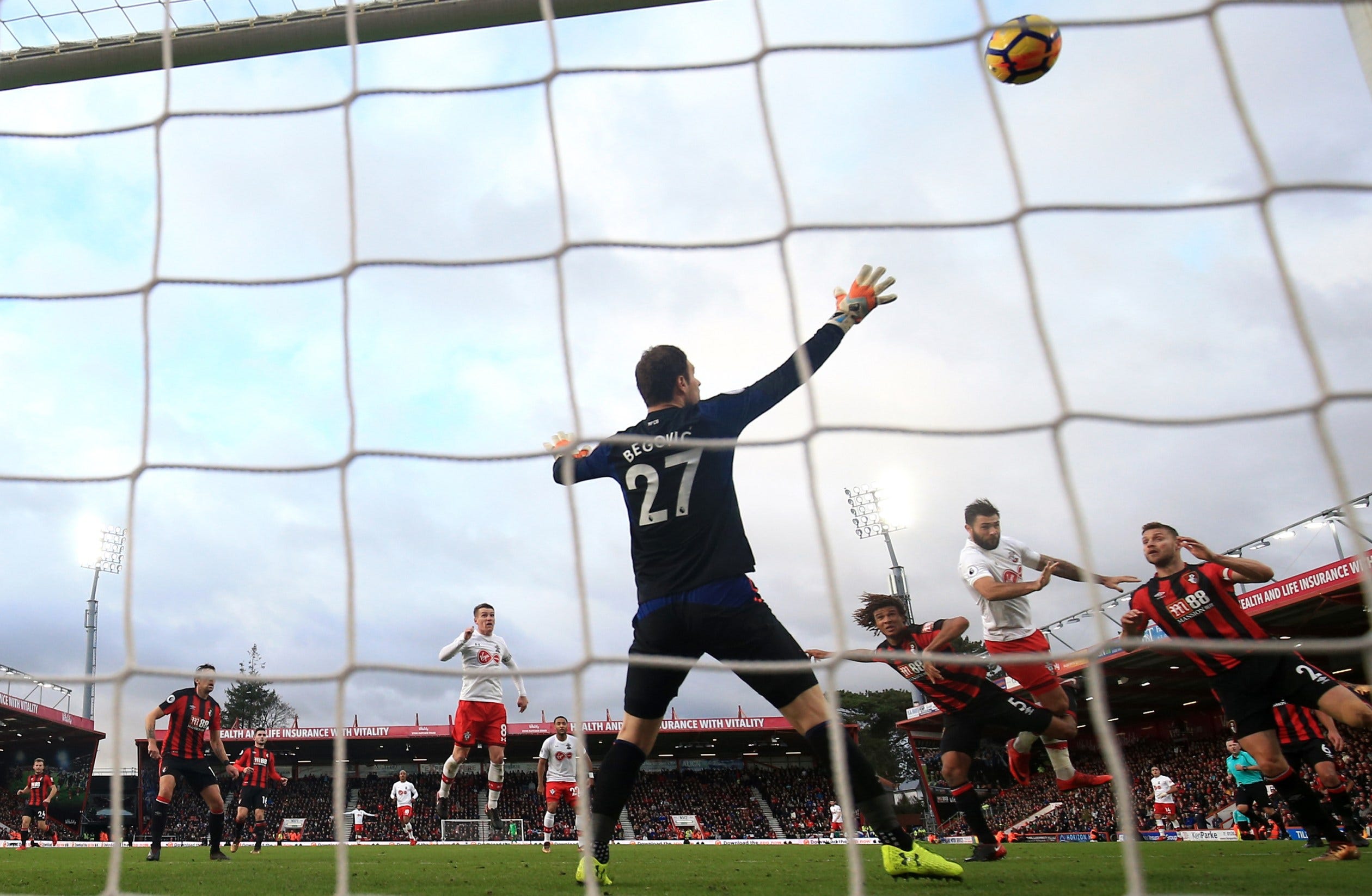
Abstract: We provide evidence of a violation of the informativeness principle whereby lucky successes are overly rewarded. We isolate a quasi-experimental situation where the success of an agent is as good as random. To do so, we use high-quality data on football (soccer) matches and select shots on goal that landed on the goal posts. Using nonscoring shots, taken from a similar location on the pitch, as counterfactuals to scoring shots, we estimate the causal effect of a lucky success (goal) on the evaluation of the player's performance. We find clear evidence that luck is overly influencing managers' decisions and evaluators' ratings. Our results suggest that this phenomenon is likely to be widespread in economic organizations.

Alice Evans on Latin American violence against women

Alice Evans is possibly the world’s most indefatigable Substacker. She’s usually worth reading, but I only do it so often or I’d have to time for anything much else! Anyway, I found this very interesting.
For decades, Latin American feminists have rallied against intimate partner violence - decrying silence and demanding state protection. But why is the region such an outlier: why are so many women being beaten and murdered?
The standard answer is machismo, and of course this is a major motivation. But here's the paradox: Latin America scores highly for gender equal attitudes, employment and representation - far above the Middle East, North Africa, Central Asia, and South Asia. Yet it has much higher rates of femicides.
Drawing on my globally comparative as well as qualitative research in Brazil, Costa Rica, and Mexico, I suggest a resolution: Latin America is exceptionally violent. It accounts for 8% of the world's population, but 36% of homicides. This drives up femicides.
Before sharing my analysis, let me stress that this is hugely indebted to activists, politicians, police officers, market traders, church goers, teachers, as well as men and women from the poorest favelas. Latin American connections kindly introduced me to their trusted networks. Friendships have been crucial - especially after my own attack in Oaxaca. Microsoft Translate has also been a great aid, enabling conversations in Spanish and Portuguese...
Until very recently, men could abuse their partners with near impunity. Only in 1991 (after the fall of the dictatorship) did the Brazilian Supreme Court formally rejected 'defense of honor' as a legal justification for killing unfaithful spouses. Domestic violence continued to be seen as a minor offence, carrying a one-year sentence that could be converted to community service. Sustained feminist mobilisation has been vital in pushing governments to protect women...
Across Brazil, Costa Rica and Mexico, survivors explained that they had sacrificed for the sake of their children - "Darlo todo por los hijos". Worries about stigma also weighed heavily ("¿Qué va decir la gente?" - what will people say?), since dirty laundry is ideally washed at home ("La ropa sucia se lava en casa").
At a women's police station in São Paulo, officers described how victims come to report abuse but then retract their complaints, trapped in what they called a "cycle of abuse". Psychologically manipulative partners may manipulate them into self-blame - "gaslighting"...
The Latin American and Caribbean Paradox Now we come to a paradox. Latin America scores highly for gender equal attitudes, employment and representation - far above the Middle East, North Africa, Central Asia, and South Asia. Yet it has much higher rates of femicides.
Within Latin America, even when countries (like Chile, Costa Rica and Brazil) have similar attitudes towards gender, they can differ enormously on femicides. This discrepancy suggests that something beyond machismo may be driving the murders...
Femicides are Higher in Violent Places Globally, countries with more male homicides tend to have more female homicides.
Across Brazilian municipalities, the most significant predictor of female homicide rates in Brazil is male homicides. Other variables - like education, ethnicity, population size, and wealth - seem less important. From 2000 to 2018, Brazil's rate of femicides actually fell by 14 percentage points. This was geographically concentrated in the Southeast - where there was a reduction in fire-arm homicide. In the Northeast - which is less developed, has a weaker state, more drug trafficking and higher homicides - femicides actually increased...
Everyday Violence & Masculinity In areas where the state fails to secure rule of law, violence becomes defensively necessary, habitual and even glorified. Men may cultivate a reputation for violence - for both self-protection and prestige. If peers and successful individuals gain kudos by toughness, young men may emulate this pathway to status...
Most striking? His nonchalant irreverence: "Death isn't so bad, I've seen worse"...
Intimate Partner Violence "My brothers are married to women who obey them" - explained Sophia. "They have tempers, and their wives are afraid". She added "Nowhere is safe for women in Brazil".
Aggressive outbursts are not just individual idiosyncrasies, they are encouraged by cultures of violence. Across Mexico, Brazil and Chile, men who were beaten in their youth are doubly likely to abuse their wives. A man who abuses his wife is also much more likely to own a gun, participate in gangs and have a prison record...
My globally comparative, political economy analysis suggests a rethink: if feminists want to protect women, we need general security. Building on Stephen Pinker, as well as Acemoglu and Johnson, it's vital to strengthen inclusive growth, effective policing and feminist activism so as to ensure everyone's safety.
Methodologically, I hope to show the value of combining global comparativism, historical political economy, and qualitative interviews.
Stay tuned for my next essay on why Latin America has exceptionally high homicides, which drive exceptionally high femicides.
Not enough friends? There’s an AI for that

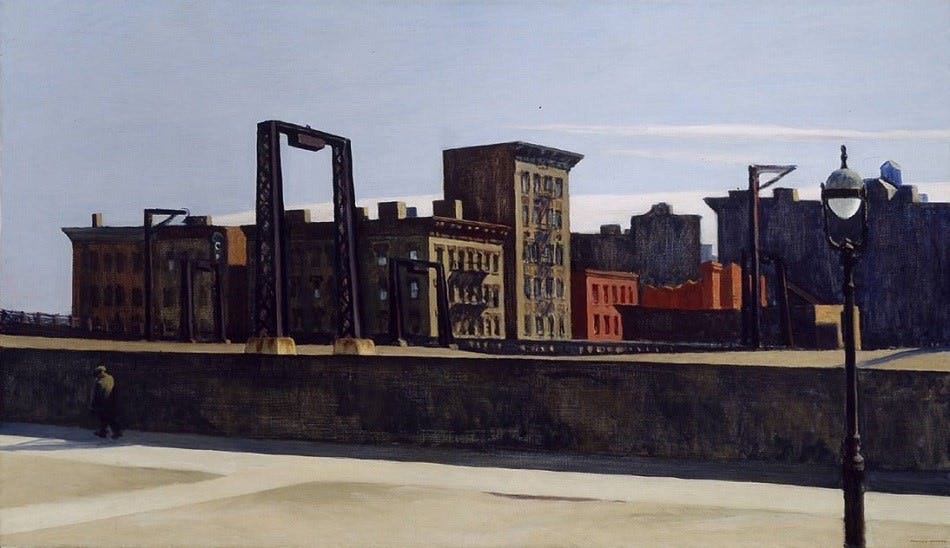
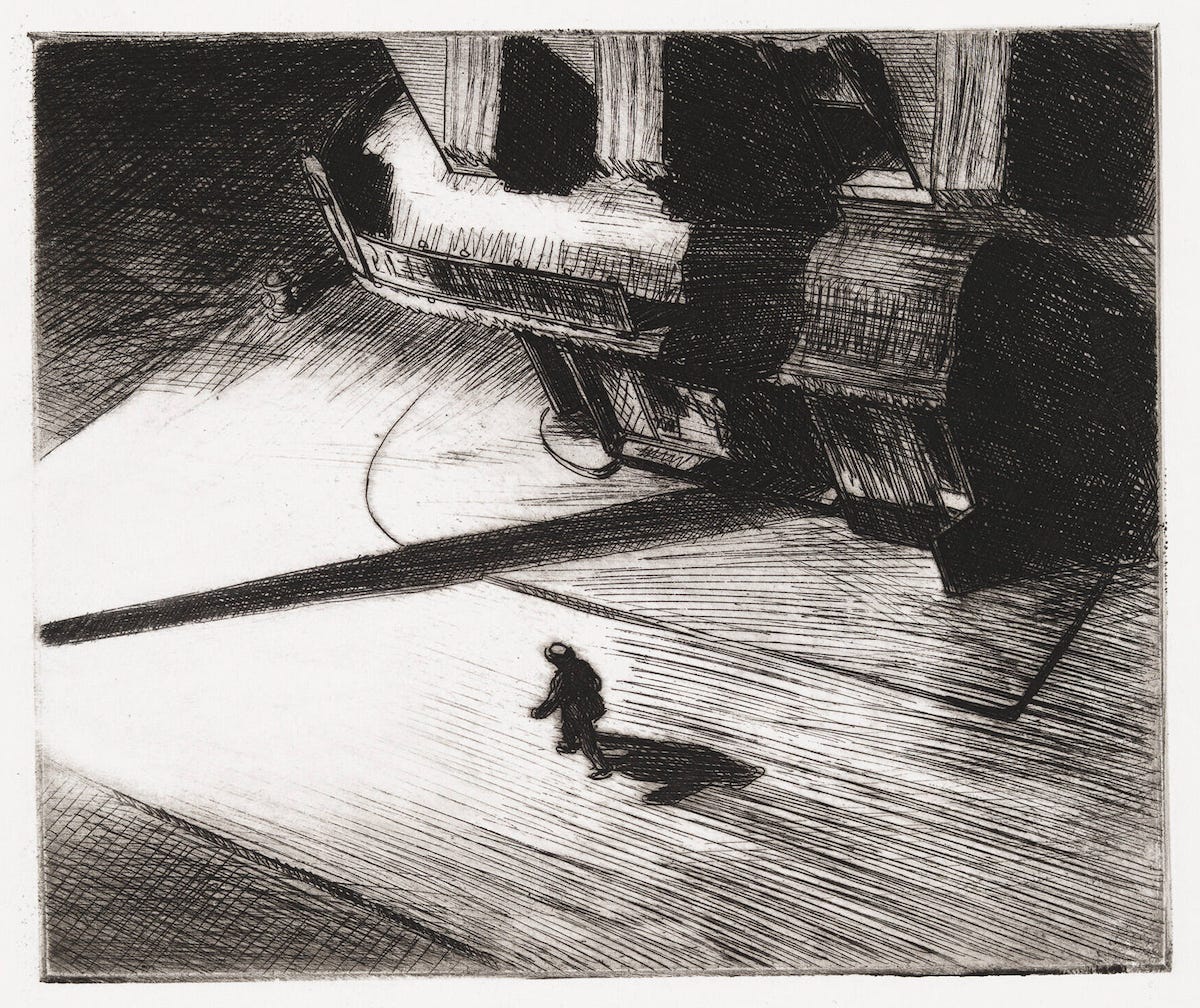
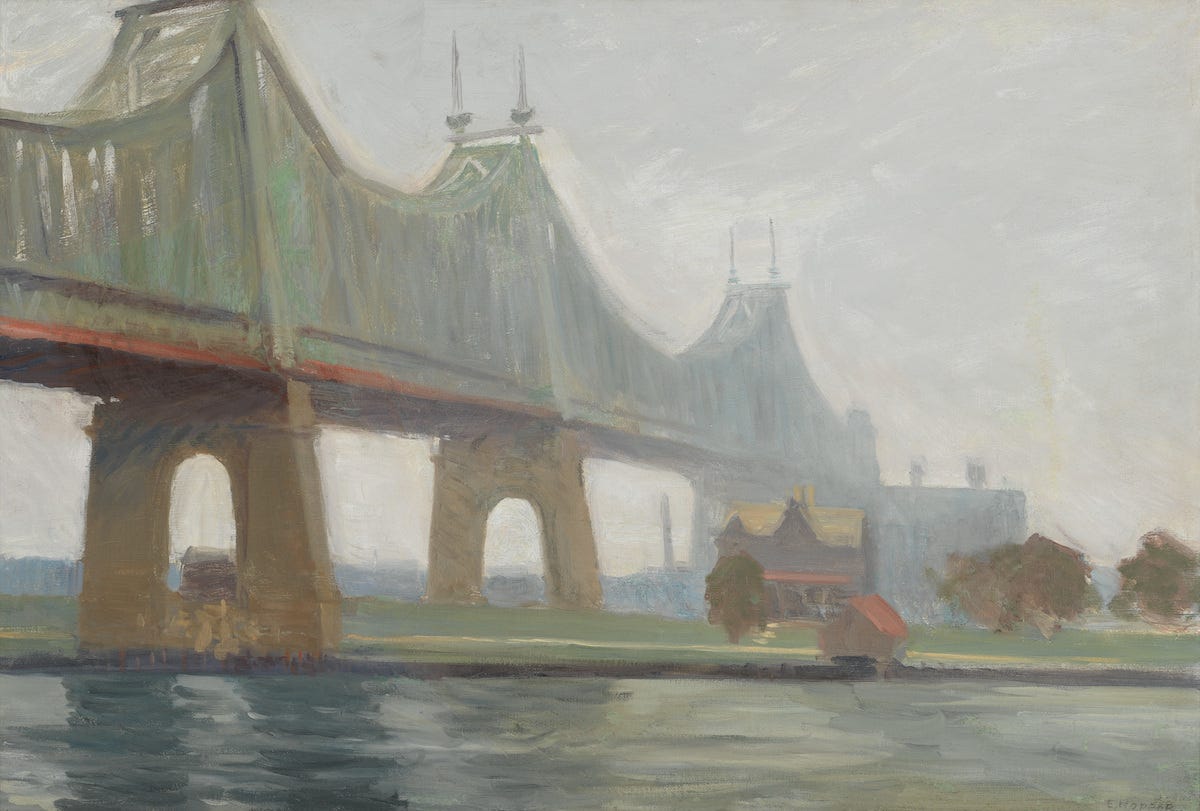
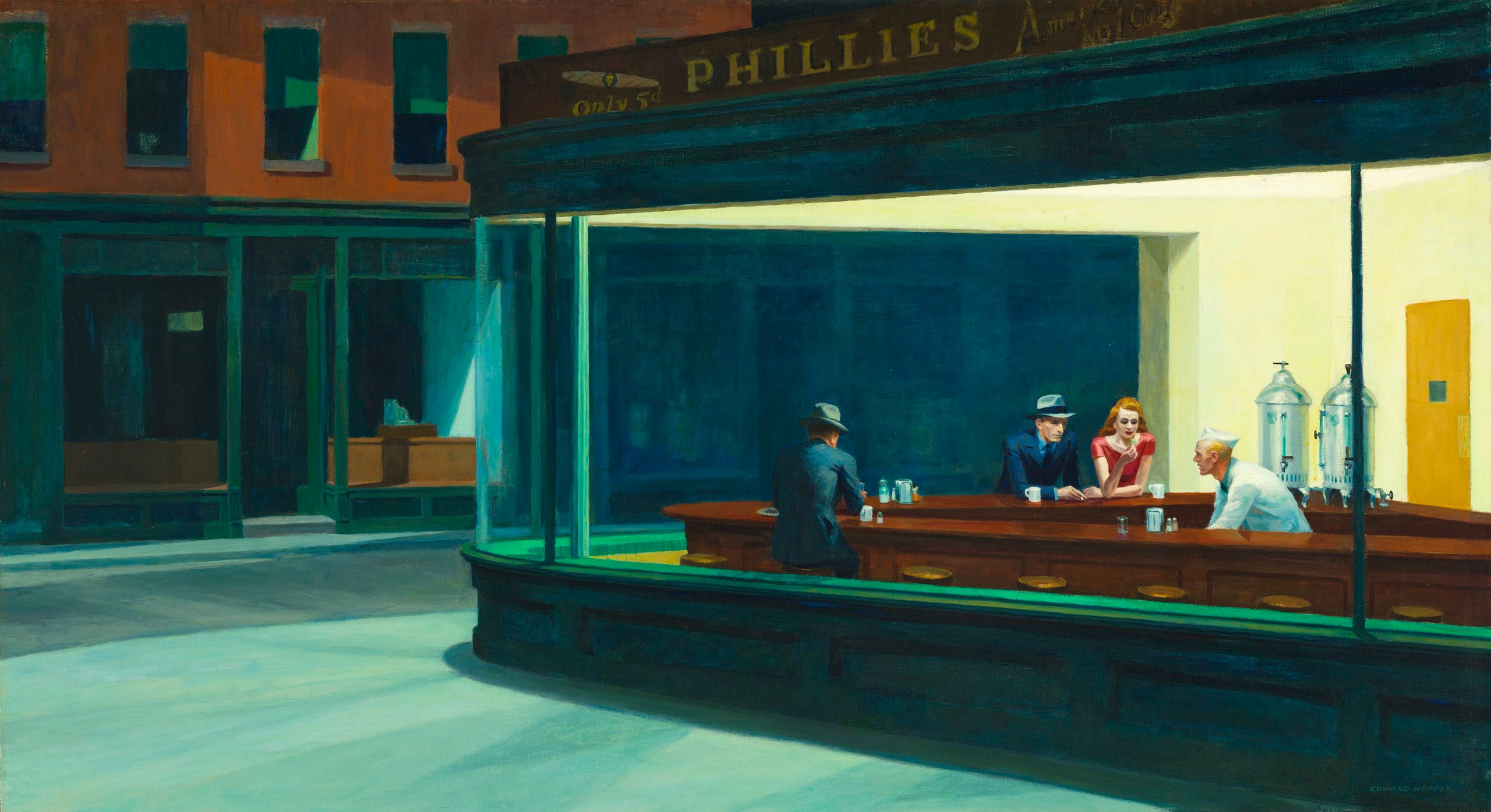
Edward Hopper!

Bernie and the unaccountability machine
Last week I watched the 4 part doco series on Bernie Madoff on Netflix. It’s well done. And it highlights just how inept/complicit regulators and others in the eco-system were. I asked ChatGPT to write up some of the warnings the system got.
The collapse of Bernard Madoff’s colossal Ponzi scheme in 2008 was not simply the exposure of a single fraudulent financier; it was a damning indictment of financial regulators, institutions, and individuals who failed in their oversight duties. Despite the enormity of Madoff’s crimes—over $64 billion in paper losses—few outside Madoff himself faced any consequences. A close look at Harry Markopolos’s repeated warnings to the Securities and Exchange Commission (SEC) reveals how clear signals were ignored, and highlights why accountability remained elusive.
Harry Markopolos and the SEC’s Inaction
Harry Markopolos, a derivatives expert, first suspected Madoff was operating a fraud in 1999 while working at Rampart Investment Management. Asked by his boss to replicate Madoff’s returns, Markopolos quickly realized they were mathematically impossible. By May 2000, Markopolos had submitted his first formal complaint to the SEC’s Boston office, outlining suspicions that Madoff was either front-running or running a Ponzi scheme.
Over the next eight years, Markopolos approached the SEC five separate times:
May 2000: First submission to the Boston SEC office, detailing Madoff’s implausible returns.
October 2001: After Barron’s published a skeptical article (“Don’t Ask, Don’t Tell”), Markopolos again contacted the SEC, urging an investigation.
November 2005: Markopolos sent an extensive 19-page memo titled “The World’s Largest Hedge Fund is a Fraud” to SEC offices in Boston and New York, including 29 “red flags” that detailed why Madoff’s operations could not be legitimate.
2007 and early 2008: Markopolos continued to pressure SEC officials informally, warning that market turbulence would eventually expose Madoff.
Despite these efforts, SEC staffers either lacked the expertise to understand the allegations or deferred to Madoff’s formidable reputation. The Office of Inspector General’s 2009 report later confirmed that the SEC received detailed and credible complaints but failed to act effectively.
Yet no SEC official was fired. Internal reviews cited “good faith” errors rather than misconduct, preserving careers at the cost of public trust. Figures such as Eric Swanson—an SEC official who married Madoff’s niece Shana—became symbolic of broader conflicts of interest, but no personal penalties were imposed.
Financial Institutions and Complicity
Major financial institutions also played enabling roles. JPMorgan Chase, where Madoff held key accounts, grew suspicious enough by 2007 to file a Suspicious Activity Report (SAR)—not in the U.S., but with British regulators. Meanwhile, they continued servicing Madoff’s accounts. In 2014, JPMorgan paid $2.6 billion to settle claims related to Madoff but no executives were personally charged.
Feeder funds such as Fairfield Greenwich Group and Ascot Partners fed billions to Madoff while collecting handsome management fees, often ignoring warning signs about the lack of independent audits or third-party custodianship. Some settlements and fines followed, but criminal prosecutions were rare.
Accounting firm Friehling & Horowitz, a tiny three-person operation, issued clean audit opinions on Madoff’s books without performing real audits. David Friehling eventually pleaded guilty to securities fraud, but received only one year of home detention—a minor punishment given the scale of the disaster.
Why Accountability Was Absent
Several factors explain the stunning absence of consequences:
Good Faith Shields: Regulators and institutions could claim mistakes were made without malicious intent, protecting individuals from discipline.
Institutional Self-Protection: Agencies like the SEC avoided firing staff to limit reputational damage.
Resource Asymmetry: Financial giants had far greater legal resources, allowing them to settle civilly without exposing executives to criminal risk.
Cultural Deference: Madoff’s stature as a former NASDAQ chairman fostered a presumption of honesty that dulled investigative rigor.
Political Concerns: In the wake of the 2008 financial collapse, systemic prosecutions risked further undermining public confidence in financial markets.
Conclusion
Bernie Madoff’s crimes were monstrous, but they were enabled by a system riddled with negligence, deference, and institutional cowardice. Harry Markopolos handed regulators a detailed map to Madoff’s fraud—over and over—but they refused to read it. The choice to preserve reputations and institutions at the expense of justice reveals a system still more interested in protecting itself than the public it is supposed to serve.
A freestyle chess tourney: a big one
Edward Coleridge at 45 Downstairs


Enter the Euro

Intriguing piece by Felix Martin.
President Trump's unorthodox economic policies have tanked the US dollar and thrown its status as the world's reserve currency into question. The greenback's long-term rival the euro is poised to take advantage. Uncertainty over the transatlantic alliance may finally remove the political obstacles to the all-important creation of a Eurozone equivalent of US Treasuries.
The new US administration has launched an all-out assault on economic orthodoxy, unilaterally declaring a trade war on the whole of the rest of the world, clashing with the US Supreme Court and the US Federal Reserve, and even openly questioning the benefits of the greenback's status as the global reserve currency.
Shell-shocked investors have responded by deserting the US dollar. The main index of the greenback's strength against its peers has fallen roughly 10 per cent since President Trump's inauguration on January 20, 2025. The search is suddenly on for alternatives to the US currency.
By common consent, the euro is the only realistic candidate. The single currency's international reach consistently failed to match the Eurozone's economic heft throughout its first quarter century. With confidence in American exceptionalism evaporating, however, it is worth casting a fresh eye over what it takes for a currency to go global – and whether this time, the euro might finally make the grade.
To begin with, it's necessary to grasp that the existence of a single undisputed international currency champion is the historical exception, not the rule. Most of us have never known anything but US dollar supremacy. Yet economic historians Barry Eichengreen and Marc Flandreau have shown that monetary multipolarity is nothing new. For nearly two decades between World War I and World War II the British pound and the US dollar constantly jockeyed for first place...
Incumbency, inertia, and network effects, it turns out, are less decisive than commonly thought. Instead, there are three critical tests a currency must pass to make it big on the international stage.
The first and most basic is swearing off capital controls. It is impossible for a currency to colonise international trade and finance if foreigners cannot freely access it. Both the US dollar and the euro clear this low bar easily. China's renminbi, by contrast, does not – despite being the currency of the world's third economic superpower. Beijing's careful management of its exchange rate and its capital flows mean it falls at the first attempt.
The next hurdle an aspirant global money has to jump is to get into international circulation...
The reality is that a country may lend to foreigners and hence put its currency into circulation via the capital account independently of its current balance of trade. The true prerequisite for extraterritorial reach is therefore an ambitious and globally active banking sector, backed by an well-resourced and internationally credible central bank. That's why the US dollar only really began to rival the British pound after the US Federal Reserve had been established in 1913.
On this test, the Eurozone scores well – if not quite at America's level. The European Central Bank (ECB) is well established as both a steely guarantor of monetary stability and an agile Lender of Last Resort...
This relative underperformance is explained above all by the third test that a global currency must fulfil – and the fact that on it the Eurozone unfortunately falls down flat. This is the existence of a euro-denominated 'safe asset' to compete with US Treasury bonds. Such an ultimate safe haven security is the most fundamental building-block of a modern financial system – the collateral for repurchase and derivative contracts, the pricing benchmark for all other asset markets, and the basic savings instrument for domestic and foreign investors alike. Without a like-for-like Eurozone substitute for the US Treasury market, the euro simply isn't at the races.
That fact is not lost on policy-makers...
The obstacle to the creation of a Eurozone safe asset, however, has always been political rather than technical. Bluntly, the more fiscally conservative Eurozone members have never accepted the principle of joint liability for Eurozone public debt. Yet in the era of America First, maybe even that shibboleth will fall.
Canada shows how fast public attitudes can change. President Trump's economic and diplomatic blitzkrieg has just produced one of the biggest turn-arounds in recent political history...
Likewise in the Eurozone, the prospect of further financial integration appeared vanishingly slight just a few short weeks ago. Yet with the greatest threat to incumbent parties in both France and Germany coming from the Trump-adjacent nationalist right, the heightened transatlantic tensions may prove a political gift to the dream of a truly global euro.
After all, what self-respecting patriot would now dare to oppose the project that, more than any other, will finally put Europe First?

YouTube’s algorithm figured I’d enjoy this: which I did
Fun
Speaking of tyranny …
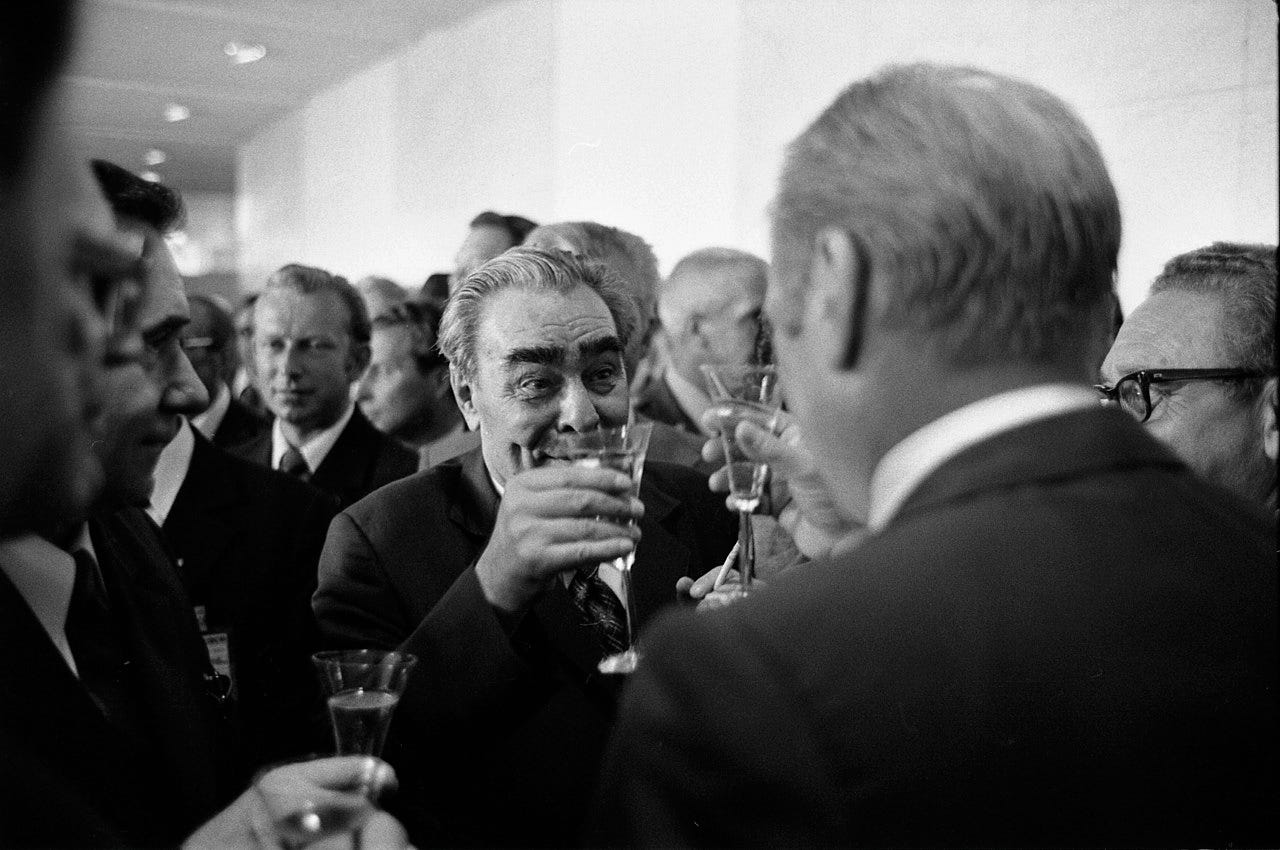

I came across this piece on the cunning of history, on the way in which the Helsinki Accords of 1975 actually helped undermine communism, even as Czech dissidents despaired that it was empty words. The original article is edited down to give as much context as possible to the last two paragraphs, which is why I have digested the article here:
To a young Slovak dissident, the Helsinki Accords seemed at the time merely to cement the status quo. He was proven wrong. Fifty years later, however, it is clear that the power of the treaty was confined to its historical moment.
... I have a vague recollection of the headlines in the communist press. The newspaper celebrated the document as a great victory for Soviet diplomacy, which was enough for me to ignore what had happened up there in Finland.
... The envelope contained a few typed pages of text, entitled 'Declaration of Charter 77' ('Prohlášení Charty 77'). The signatories were friends of my father: the philosopher Jan Patočka (who died three months later, after eight hours of secret police interrogation), the playwright Václav Havel and the former politician Jiří Hájek. ...
I agreed with every sentence, except for the one that proposed 'a constructive dialogue with the political and state authorities'. Dialogue? No way! ...
... Among the key authors of the text were Pavel Kohout and Ludvík Vaculík, both former communists who knew the regime from within. They understood that its weakness was a morbid desire for western recognition. The communist regime saw the Helsinki Final Act as its victory because the West accepted the Soviet empire – including Czechoslovakia – as a partner. The fact that Czechoslovakia had simultaneously agreed to respect human rights was considered to be an insignificant concession that citizens did not need to be informed about. ...
Charter 77 was a carefully aimed blow, because it accused the regime of ignoring the commitment it had formally made in Helsinki. When the manifesto was published by western newspapers in January 1977, the regime – rightly – considered it to be a direct attack on its legitimacy.
... At the time, however, the Helsinki Final Act seemed to be a victory for the communist regimes. The brutal repression of dissidents in Czechoslovakia confirmed this. I was not alone in considering the West's efforts towards a détente with the Soviet empire as a betrayal of the millions of people oppressed by communism. I was convinced that the dialogue between the democratic West and the dictatorships of the East was perfidious, nothing else.
Turning point ... It seemed to me that the Helsinki Final Act had become just a scrap of paper, yet another international document that no one took seriously. But as Henry Kissinger later said, 'turning points often pass unrecognized by contemporaries'.
The 'turning point' appeared at the time like a formal addition through which the West could relieve its guilty conscience for abandoning eastern Europe to Stalin. But it was more than that. This was the famous 'third basket' of the Helsinki agreement, which contained all the formulations on human rights and freedoms.
What the communist states assumed was mere decoration added to an international treaty that de facto recognized the immutability of the Yalta agreement on the division of Europe, instead became a hammer that gradually smashed the concrete structure of the Soviet empire. ...
From soft power to no power ... The idea of human rights helped the states of Central Europe to manage the transition to democracy with remarkable speed. The process was accompanied and supported by a strong dissident narrative, cultivated above all by Václav Havel, who became the president of Czechoslovakia in December 1989. In the post-communist states where dissidents did not come to power, for example former Yugoslavia, Romania and Bulgaria, the transition took much longer. In some cases, like Russia, it failed altogether.
But while the soft power of the Helsinki Final Act undoubtedly accelerated the collapse of the communist empire, it had no hard power. If a state actively chose to ignore it, it was powerless. It was powerless when the Soviet Union invaded Afghanistan in late 1979; it was powerless against the Serbian nationalism that killed in Sarajevo, Srebrenica and Kosovo in the 1990s. And it is powerless against Russian aggression in Ukraine today.
This is not a reproach of the Organization for Security and Co-operation in Europe (OSCE), which is built on the moral principles of human rights and freedoms established in Helsinki. But its authority evaporates the moment a state openly mocks those principles.
... Fifty years on, the world looks very different. Russia has launched a war against Ukraine and is ignoring international treaties and agreements. The Budapest Memorandum signed by Russia in 1994 (along with the USA, Britain and Ukraine), which was supposed to guarantee Ukraine's sovereignty in return for giving up its nuclear weapons, has become nothing more than a scrap of paper, as have the Minsk 'agreements'.
In a world where international treaties are no longer valid, the OSCE is an organization without authority. In countries where human rights are being massively violated, dissidents may still feel that the OSCE is interested in their fate. That is better than nothing. But the soft power of the Helsinki Final Act has been exhausted, precisely because contemporary authoritarians don't even pretend that they recognize its principles.
In 1975, an international treaty was signed that opened up space for dissidents in eastern Europe who, thanks to their imagination, were able to use it effectively. The moment in history in which we live today also requires the imagination of those who care about democracy. But the essence of imagination lies in coming up with something new. Old formulas no longer work; the past cannot be repeated.
Perhaps, at this very moment, another 'turning point' is occurring. A turning point that we, the 'contemporaries', do not yet fully understand. It would be nice if it was happening under the auspices of the OSCE. But I suspect that this is not the case.


Eric Schliesser: intellectual leader

I only recently discovered this guy and extracted a fascinating article from him last week. I’m impressed. He’s been debilitated by long COVID for years now. He gets exhausted conversing, but plugs away writing when he can. Here’s a short extract from a long interview.
I really adore being a historian of philosophy for lots of reasons, one of which is that it allows for a kind of do-no-harm-principle in action because it seems largely inconsequential to society. As the effects of the financial crisis started to play out, however, I noticed among my students a persistent strain of pessimism and also an increasing amount of rather serious psychological challenges. Now, I like to be around college-age students because of their utopian idealism and their optimistic plans to change the world. But I could tell that an increasing sub-set of my students did not fit this picture. So, the lack of social significance of my work started to gnaw on me…
I also realized that the grant agencies were expecting narratives about the social impact of one’s work. Since the classification as research professors entailed that I should bring in grants, I started to feel a soft, internalized pressure to recast my work in more socially salient ways. I always had a side interest in the philosophy and methodology of economics… So while at Ghent… I got involved with a group to set up a center for complexity studies. …
Throughout the rather rapid application process to Amsterdam, I didn’t expect to land the position because I really didn’t think of myself as a political theorist or a political philosopher or someone doing ethics. It’s been a steep learning curve since, actually. While I continue to do history of philosophy and historically informed philosophy of science, my work is now much more focused on political philosophy and policy related issues. …
However, I increasingly recognize that teaching is, in fact, a fundamental contribution to civilization and socially significant and consequential in ways that one can never quite foresee. So, I think I would be less defensive now about my earlier work in history of philosophy and history of philosophy of science than I was in the past. …
I got into philosophy because, as an undergraduate in International Relations at Tufts University, I was rather surprised that my professors had not seen the fall of the Berlin Wall coming… I ended up taking a year-long course on Newton’s Principia taught by George Smith… We did quite a bit of research together. I still work on Newton and early modern philosophy and science. …
My main current focus is writing a commentary on Foucault’s Birth of Biopolitics in order to rethink the liberal art of government.


Heaviosity half-hour
Raymond Aron’s last lecture
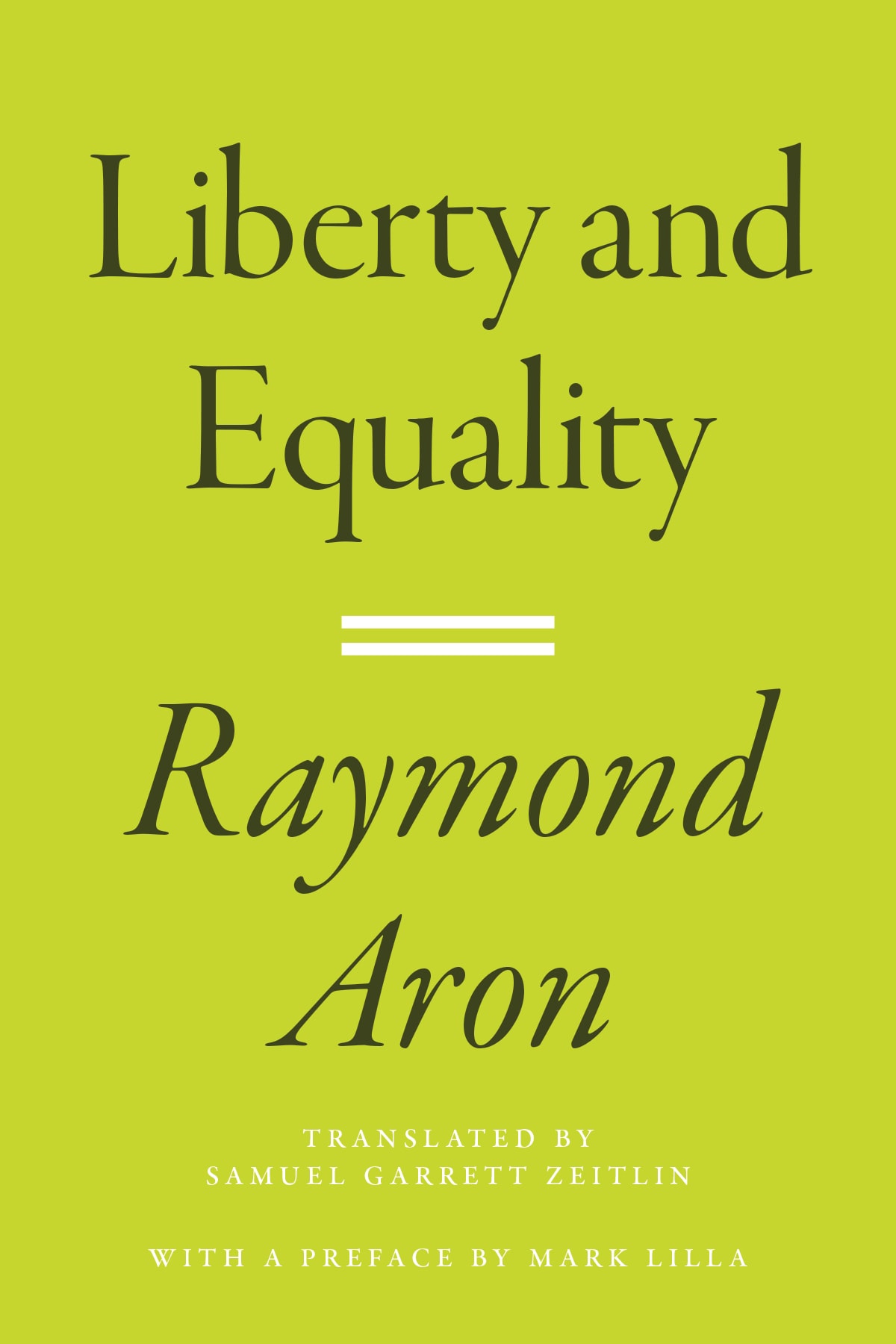
Raymond Aron on how our liberalism is one of desire, not liberality or virtue. An extract from a much longer piece.
Political Liberty and Philosophic Liberty
I arrive now at the last point, to wit, the relation between political liberty and philosophic liberty. Up to the present moment, I have defined, during this lecture, liberty simply as intentional action, action which consists in choice and which presupposes for the individual the possibility of doing or of not doing. Indeed, without doubt, the philosophers give a richer and more precise sense to liberty. Montesquieu, for his part, says that the liberty of the philosopher was the exercise of will. I am not sure that this would be the definition which all the philosophers would have given, but let us say that there is a great philosophic tradition according to which authentic liberty is the mastery of reason or of the will over the passions. Liberty par excellence would be reflective thought, the thought process guided by a reason dominating the passions. From here, certain philosophies of liberty may more or less confound the politics of liberty and the philosophy of liberty. Indeed, philosophy and politics coincide when both assume the reasonable man by hypothesis. They do not necessarily assume the good man; they presuppose him perhaps, or probably, to be egoistic and calculating, with desires, perhaps even with passions. But the politics of liberty more often assumed the reasonable man not as a postulate or as a condition but as an objective, and supposed that if free society had an objective, it was to create free men, and that men would only be really, authentically free to the extent to which they obey not any caprice whatsoever, not any passion whatsoever, but reason, the reason which makes them accept citizenship, which is to say the reason which makes them accept the laws of society.
The man in society who obeys the laws is in a certain manner already a free man, in the political sense and even in the philosophic sense: he obeys himself, at least in a democratic regime, and he accomplishes what is best for himself. He realizes himself as a free man in obeying the law. And if there is not a coincidence between civic spirit and morality, one may at least say that civic spirit is a part of morality. Now, this representation of the free society as permitting the formation of free men, I am not sure that it would still be the dominant philosophy among us. Kant, in order to represent a good society, imagined free and responsible men, guided by the commandments of reason. Now, I believe that today, in the majority of Western societies, liberty essentially means the liberation of the desires. Not only are we in a hedonistic society, that’s obvious, but I would say also that today, the enemy is the State or power qua the enemy of individual desires; the enemy is also all the prohibitions and all the institutions which, in effect, limit the liberty of the individual as a being of desire.
Perhaps I err in taking too seriously and in considering as central a certain philosophy which is in fashion in Paris today. Yet I think that in fact, in the assemblage of Western societies, when one invokes the idea of the free society, the idea of liberty, it’s not in order to invite individuals to obey the laws or to govern themselves according to the rational law, but rather in order to incite them to express their personality such as it is and to follow their desires such as they are. Assuredly, John Stuart Mill himself, in the book On Liberty5 on which I offered a commentary for you several weeks ago, also said that society ought to offer a total liberty to individuals to the extent that their way of life, even if it was shocking, did not harm others. And in this sense, Mill conceived liberty essentially as the possibility, the legitimacy for the individual of living after his fashion, debauched if he wanted to be, miserly if he so wished, odious with those near to him if this was his disposition; such conduct called for moral censure, but not for any intervention whatsoever by the public powers. Today, liberty is defined in our societies by repressing the reality principle and by the liberation of the pleasure principle, the liberation of eros. Whence, it seems to me, derives what one calls the moral crisis of liberal democracies. Indeed, every regime must define itself first by a notion of legitimacy, and then by an ideal. With respect to legitimacy, I think that our democracies have more or less succeeded. I think that, in particular thanks to the comparison with the Soviet experience, the electoral procedures and the personal liberties are considered as something essential by Westerners, including the immense majority of the French, whatever, moreover, their other political options may be. But what one no longer knows today in our democracies is where virtue is to be found. Because the theories of democracy and the theories of liberalism always included something like the definition of the virtuous citizen or the manner of life which would conform to the ideal of a free society.
Our societies are legitimate in the eyes of the members, but they have no other ideal than that of permitting to each the choice of one’s path. I share this ideal. I participate in this manner of thinking of the society in which I live. But as an observer of societies in history, I ask myself: is it possible to give stability to democratic regimes of which the principle of legitimacy is election and of which the ideal is the right or the liberty for everyone of choosing not only one’s path in life, which is just, but in addition one’s conception of good and evil? The fact is that today it seems to me extremely difficult whether in the high schools or in the universities to speak seriously of the duties of the citizens. I think that whoever risks doing this would seem like one who belongs to a world which has disappeared.
It’s an idea which Malraux expressed in diverse forms more than once. Like him, I am no longer sure whether in our societies there is still a representation of the good society, nor a representation of the ideal or accomplished man. Perhaps this species of scepticism which underlies liberalism is the necessary result of the development of our civilizations. One may not stop posing questions, all the more so given that in the face of our societies there are others which have a different principle of legitimacy and which attempt to teach both their principle of legitimacy and their representation of the good society and of the virtuous man. Moreover, I am not sure that this indoctrination such as one may encounter it elsewhere has really succeeded. I simply state this and content myself with fixing the point at which we find ourselves.
I have not taken new research into consideration. Today, one does research, on the one hand, in animal ethology, and, on the other hand, in the biology of human societies. One better understands the social mechanism. All this is found beyond the traditional discussions in which I have remained. I have remained there, not because I am ignorant of later research, but because the research in biology, or in ethology, is not conclusive and they leave us for the moment in the situation which I have attempted to describe.
The Happy Exception of Free Societies
A last word, which is not a conclusion but a marginal remark. At root, all that I have said only deeply concerns a small part of humanity. My reflections on the relations between liberty and equality, on the claims of equality in liberty, concern the phenomena of Western societies, that is to say, of relatively prosperous societies and those which have a deep tradition of seeking liberty in equality or equality in liberty. Now, if we imagine that our societies only represent a feeble part of humanity, it is necessary to say that these problems, which are still ours, these debates which still have, I believe, a meaning, these philosophic speculations which still make nourishment for our thoughts, all this is, all the same, specifically, and perhaps narrowly, Western. I do not want at all to say that the populations of Africa or of Asia are indifferent to the problem of equality such as I have posed it or to the problem of liberty such as I have discussed it. I do not believe that whatever we do or think, we others in the West, ought to be provincial. But these are the problems and thoughts of privileged societies—of privileged societies which have, so to speak, determined the vocabulary and the discourses of other peoples, of other societies, in placing at the center of attention questions which are probably not, for many other peoples, the most urgent questions.
I don’t want to conclude anything. I am simply saying that our societies, the imperfections of which we critique with a just title, represent today, in relation to the majority of the societies of the world, a happy exception. The societies which we describe and which we critique, these societies which live by permanent debate concerning the order which ought to be, these societies which make power move toward rule-bound and pacific conflict between the groups and the parties, are historically exceptional societies. I do not conclude that they are condemned to die. Still less do I conclude that the societies of the rest of humanity are called to organize their communal life on our model. I say that we ought never to forget, to the extent that we love liberties or liberty, that we enjoy a privilege rare in history and rare in space.
Liberal Nationalism is the way.