


Don’t tell us your vision. Where’s your red line?

Several people have written to me in the last couple of months seeking some kind of input from me on innovation in or adjacent to government. In all these cases, I’ve written back confessing that it seems to me that not only is there virtually no substantial improvement-inducing innovation in government, but that most of the discussion of innovation in government is largely arm-waving. Let me quote from an email to someone who wanted to engage on ‘impact investing’.
I’ve been involved for 15 years in trying to think about this through a public policy lens, and have reluctantly concluded that it’s very hard to find serious engagement with the problems from any of the stakeholders. A big claim I know. But in 2019 I thought I’d identified something pretty big which the philanthropy sector would take an interest in – a Catch 22 at the heart of the system.
An NGO claiming to have a program that solved social problems cost-effectively would be asked to commission ‘independent’ — i.e. third party — analysis. Of course, any analysis that you commission and pay for yourself is not independent at all. That’s essentially what the large consultancies sell, their ability to dress up spin as analysis. As a result, once such an analysis arrives at a central agency, it is popped in the bin as biased, as indeed it should be.
I gave presentations to various philanthropical bodies and naïvely thought they’d find the argument compelling. … Anyway, no one took any interest whatever :) Noone in government, no one in philanthropy, no one in social impact investing.
So can anything be done? I think it can. I think if people really want things to change they need to identify some minimum requirements of a system that isn’t pretending. We have a system that talks about innovation, that talks about expanding what works and defunding what doesn’t. So we should set out some red lines.
We need some way to make transparent whether the system is just talking about expanding what works or actually building towards that goal. In this talk, I outlined the kind of thing:
A biennial stock-take of ‘spreading innovation’, with the Auditor General reporting on:
The state of pilots and other exploratory innovation at the edge of the system
How the best innovation is identified.
What has been upscaled and downscaled, and why.
Whether successful innovators are gaining greater authority in the system.
The idea is to introduce the prospect of identifying success and failure, even at the cost of some discomfort for the government and those involved in individual programs. Not everyone gets a prize. Like a scientist doing an experiment, if they’re not prepared to be wrong, that’s crossed the red line of unseriousness.
Should randos rule the world?
Well, this is video 16 of 20 so it’s getting to the pointy end. In this video I look at the idea of a house of parliament chosen by lottery. Please watch, like, share and subscribe and #SaveTheWorld.
And here’s my chat with Colm, in which I discuss how and why politics became unfit for human habitation. More on that from me in the not too distant — by way of a new essay I’m working on. It’s working title is “Staying out of trouble: Accountability and the eclipse of purpose.” And the audio of my chat with Colm on Spotify is below the YouTube video.


The heritage of Christianity
Fukuyama 1: Rubio 0
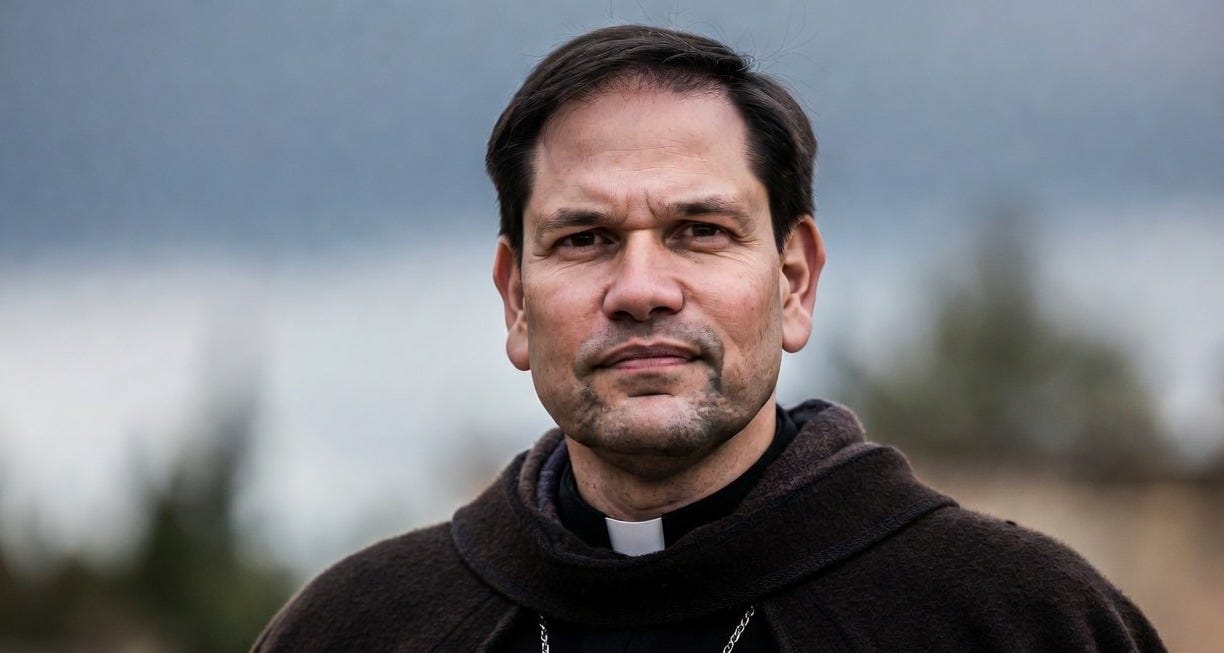
Is it Tony Benn who said who said that all politicians are straight men, fixers or crazies? If one is making a quick lunge from liberal constitutionalism to dictatorship, crazies are really indispensable. You can go the all-crazy route like Adolf Hitler, but I’m thinking there may be some law requiring you to have a critical mass. Trump looks like he has that, but he’s also got Mephistophelians like Marco and JD.
And they’re making themselves of service by intellectualising things. JD doesn’t say ‘blood and soil’ very much, but he does talk about ‘Heritage’ Americans. And Marco’s a Western Civilisation guy. Anyway, Fukuyama spells out some Western Civ 101 below.
U.S. Secretary of State Marco Rubio got a standing ovation at the Munich Security Conference in February, largely for his assertion, quoted above, that the United States and Europe are all part of a single “Western Civilization.” His listeners were gratified he seemed to be anchoring the trans-Atlantic relationship in values, as American leaders had done before the rise of Donald Trump....
But what is the “Western Civilization” to which Rubio was referring? His version is likely quite different from the understanding of most contemporary Europeans, and from mine as well....
For an important group of American conservatives, “Western Civilization” denotes a specifically Christian civilization, and a culture built around active Christian belief. Rubio alludes to this by speaking not of “Christian heritage” but of “Christian faith.” His list of shared aspects also includes “heritage” and “ancestry,” which echo Vance’s use of the term “heritage Americans“ to imply that our culture is based on a common ethnicity as well as shared religion.
Western civilization is unquestionably rooted in “Christian heritage.” One of the deepest Christian values is belief in the universal equality of all human beings in the eyes of God. There’s one important abstract idea at the core of Christianity and of Western culture, expressed by the Apostle Paul in Galatians 3:28: “There is neither Jew nor Gentile, neither slave nor free, nor is there male and female, for you are all one in Christ Jesus.”... Many important thinkers, from Tocqueville to Nietzsche, have understood that Christianity spawned modern liberal democracy and that modern understandings of rights descend from Christian belief.
But in making this transition, Western civilization detached itself from any overt identification with religion. Following the Protestant Reformation, Europeans spent 150 years killing each other over differing interpretations of Christian doctrine; since Medieval times there has been no monolithic Christianity, with Protestantism spawning a “way of life” quite different from Catholicism.
As a result, the Enlightenment founders of modern liberalism agreed to push religion into the realm of private belief.... It was only with the separation of empirical inquiry from religious dogma that modern natural science, and the economic world it made possible, emerged.
So there is a very different understanding of Western civilization from the one that Rubio advances — one built around liberalism itself, encompassing Enlightenment values like openness, tolerance, and skepticism about received ideas. We can acknowledge the Christian origins of democratic rights without defining our civilization in religious terms....
Even worse than shared religion is an effort to define our civilization in terms of “heritage” or “ancestry.” I hate to remind Rubio, but his heritage leads back to an authoritarian and Catholic Habsburg Empire, while that of James Monroe and Thomas Jefferson leads to a very different and more liberal Protestant part of Europe....
Last month saw the passing of civil rights leader Jesse Jackson. Back in 1987 he participated in a march at Stanford where students chanted “Hey, hey, ho, ho, Western Civ has got to go.” As a result, Stanford and other elite universities got rid of their Western culture core courses, replacing them with an incoherent mishmash of multicultural offerings. This was a big mistake.
Jackson apparently disavowed this rejection, as well he might. His own life was completely framed by Western civilization: as a Christian minister in the Civil Rights Movement, he embodied King’s preaching of succor for, as Jesus put it in Matthew, “the least of these” — and as an advocate for universal human rights protected by the rule of law.
This protection will not survive unless students in the West learn the history of their own culture. The only way to counter reactionary ideas like those of Rubio or Vance is to understand how Western civilization evolved, and that it is today defined by liberal Enlightenment values originally rooted in Christian belief. It is these “abstract ideas” that define our way of life, and for which we should be willing to struggle and die today.
In case you’re interested, Nathan Pinkowski, who often does first-rate work (but who is a Trump supporter), has a go at Fukuyama here, though I found it snide, tendentious and unconvincing. (But what would I know? At least it’s a funny heading.)

Of manospheres and moral panics

A little long-winded, but skewers the moral panic about the toxic manosphere. A lot of it is toxic alas. But sadly, that’s how we do cultural politics now. It all started when competition became the master operating system in the world of ideas (you know where we make everything a competition and winning the argument — thus proving how superior you are — is more important than understanding the other side). We took that and hyped it up with social media. And now virtually all ideas are litigated as culture wars. It’s a great pity, because in many ways, men are doing particularly badly, and, with much lower levels of education than women, setting themselves up for more trouble to come.
A confession: I don’t like Louis Theroux’s work. Not because it’s always bad (although his new Netflix documentary “Inside the Manopshere” is tired stuff, working over ground that’s been farmed to the point of infertility) but because his stock in trade is embarrassment - the awkward pause, the lingering implication, the humiliating backtrack....
The documentary misses multiple points: why this world exists, how the content it produces is consumed, and the creators’ symbiotic relationship with a wider Progressive culture.
It does correctly highlight that these are horrible, stupid people... waistcoats, pointy shoes, shiny suits that are always a size too small... sports cars the colour of highlighter pens, cigars, boats....
One piece of analysis Theroux does that I think is helpful is on the absence of fathers. What these men are suffering from is a chronic lack of traditional patriarchy. All of their “I’m the boss” stuff comes across as the tantrum of a disempowered loser.... The participants made me think of the clowns of Commedia dell’arte, where the original meaning of each of the types have been long forgotten leaving only the gaudy costumes and exaggerated gestures behind. If the Manosphere represents anything it is not traditional patriarchy reasserting itself; it is testament to the totality of Progressive cultural victory.
When Louis meets Sneako, he notes that the popularity of the latter is in spite of having been banned by all major platforms... Bans function as badges of authenticity - exactly what a healthily transgressive person would seek out. It takes a true spiritual schoolmarm to miss this point, but Louis does; when he describes the denizens of the Manosphere as dwelling “in the unregulated new media landscape they share their unfiltered views….” the conclusion we are supposed to reach is clear, that regulation and “filtering” would put a stop to all this when they are in fact powering it....
There is a thick layer of female-oriented content on TikTok and Instagram designed around the expression of deep contempt towards men... the movement is primarily happening on the female rather than the male side... the hypocritical stance as to which edgy or hate-filled content is acceptable and which isn’t probably doesn’t hurt the popularity of the Manosphere....
A Progressive outlook can be a burden in coming to grips with this. When he meets the fans of one creator, they describe the important lessons he has imparted. “As a man you’re born without value,” one says. “The lesson is to never give up… you have to build that value… nothing in the world is given to you… you have to work for every penny.” Many men would find this inspiring. But in a world that constantly boosts therapy culture as the only legitimate path to personal improvement, where else will it come from?
For me the giveaway is Louis’s reaction - to say “but don’t you think women have it hard?” If you regard men as emotionally malfunctioning women and members of an oppressor class, any attempt to talk about their own problems is by definition sinister. But in taking that opposing stance you are unintentionally insisting that Manosphere or something like it must exist....
The biggest blindspot is the way the Manosphere seems to exist as the logical extension of a society with a dominant Progressive culture. Just look at the creators: multi-ethnic, often minority religious, raised by women and schooled in egalitarianism... both the Manosphere and Progressive culture essentially agree that only men have moral agency... They are the perfection of Progressive cultural rule even if they do not perceive themselves that way. Louis’s prescription, I’m sure, would be more Progressive thought. Think about that....
Louis is an old media figure... The people featured here are one fleck of froth on a titanic wave of content... Only a boomer - or someone seeking to make some exploitative and misleading content of their own - would think that it is.
The Irrational Decision by Ben Recht: Recommended
And here’s a recent podcast. Being on a regular podcast with two buddies as guests, there’s too much bro giggling, but otherwise it an interesting discussion.
Adversarialism, separation of powers and frustration of effort

Tanya’s piece below struck me as first-rate when I first read it, and I’m very pleased to republish it here. Still, reading it prompted a question in my mind about whether the architecture of the system she describes is quite right.
There are obvious advantages in keeping the roles of investigation and prosecution—or investigation and court enforcement—separate. That division protects due process and the independence of the different actors in the system. But the process can sometimes seem to operate as if time were not of the essence. When wrongdoing appears to be occurring, is there not a case for providing early and explicit notice to the possible or alleged wrongdoer? Such notice could make clear that allegations are being taken seriously and that the party concerned will bear the costs of any failure to assist investigations or of resisting what are later determined in court to be their regulatory obligations.
As Dan Davies argues in a somewhat different context in “The Problem Factory”, it is possible to sustain more collaborative relationships between regulators and the regulated without sacrificing the independence of the different roles within the system.
Indeed, in European and Japanese governance systems similar issues appear to be handled at least as well as in Anglo systems—but often with much greater speed and practical effectiveness.
Unless there are reasons to suspect the destruction of evidence or other criminal obstruction, it ought often to be possible to surface concerns earlier and to give notice that, if those concerns are ultimately borne out, damages will be increased to reflect the system’s expectation that regulated parties remedy any material failure to comply as soon as practicable.
One of the most persistent misunderstandings in regulation, including environmental regulation, is what happens — and what doesn’t happen — once a matter is referred for formal investigation. This piece is about that gap.
Across my career working at different regulators, the same tension appears time and again. Communities and stakeholders expect that a referral to investigation will fix the problem on the ground. It rarely works that way, and understanding why matters....
That expectation rests on a conflation of two separate things: the management of risk on the ground, and the formal investigation of conduct that may ultimately be used in court. These are not the same thing — they are different functions, operating in parallel, under different frameworks....
The misconception — and where it comes from
When a duty holder is non-compliant, the community naturally looks to the regulator to act. And regulators do act. Authorised officers attend sites, issue remedial notices, directions, and clean-up notices — powerful tools that can be deployed quickly....
The misconception arises when a matter is escalated to formal investigation. People assume that investigators will attend the site, compel compliance, and resolve the non-compliance. That is not what investigators do, and it is not what investigations are for.
An investigation is a fact-finding process — to gather evidence about what occurred, who is responsible, and what enforcement outcome the evidence supports in court....
What regulators can and cannot do — the reality of working within the law
Where a duty holder is wilfully non-compliant — aware of their obligations, directed to act, and continuing to refuse — the remedial tools available may not resolve the situation immediately.... The path to resolution runs through the courts — and the path to court runs through investigation. That path takes time. And during that time, the risk on the ground does not disappear....
What an investigation actually does — and why it takes time
A formal investigation must gather evidence with integrity and produce a brief that can withstand rigorous scrutiny in court. Witnesses must be interviewed to a standard that survives cross-examination. Experts must be, and must be seen to be, independent — their role is to assist the court, not the investigation. Withholding material from an expert compromises their independence and potentially the opinion itself....
A serious investigation can take up to 12 months — sometimes longer. Environmental cases turn on data that must be measured, monitored, modelled, and interpreted. The science takes the time it takes....
Why getting it right matters — sentencing, precedent, and the long game
The quality of the investigation directly affects the quality of the sentencing outcome. A pattern of low sentences from underprepared briefs creates persuasive precedent that pulls future outcomes downward. Correcting that trajectory, once established, is difficult.
Where a duty holder has profited from non-compliance, the court may make a monetary benefit order requiring that gain to be repaid on top of any penalty — requiring forensic accounting work that is non-negotiable if the monetary benefit case is to be properly made....
What this means for communities, duty holders, and the public interest
For communities: the time an investigation takes is not wasted. It is the time required to build a case that will hold up....
For duty holders: non-compliance during the investigative period accumulates financial liability as well as enforcement exposure. The longer it continues, the larger that liability potentially grows.
What transforms the way organisations think is the steady, accumulated weight of regulatory consequence over time. Cultural change arrives gradually, as the question moves from “what is the likely fine if we’re caught?” to “what is the full range of consequences — financial, reputational, and criminal — that this organisation is prepared to accept?”
Investigations take time because doing them properly takes time. And doing them properly is what makes environmental regulation a genuine consequence for conduct that harms the environment and the communities that depend on it — not a compliance exercise, not a cost of doing business.
That is what the time is for. And yes — it is worth it.


Why I Am Not an Atheist: The Confessions of a Skeptical Believer

Nice review from the indefatigable Alan Jacobs:
There’s a wonderful passage in Annie Dillard’s Pilgrim at Tinker Creek where she discusses naturalists and zoologists always seeing things she can’t manage to see. Snakes in a hollow where locals think there are none; tiny leaf cuttings made by tiny insects. Dillard realizes that training enables us to construct what she calls the “artificial obvious.” After enough devoted attentiveness, things invisible to the ordinary person become obvious—to them.
Almost everything obvious to me and you and our neighbors is made so artificially. We are trained, habituated to certain ways of thinking. We hang around people for whom some views are unquestionable, for whom no alternative has ever been on the table—and those views become unquestionable to us too.
This isn’t to say that what becomes unquestionable through habituation is false. But we haven’t come to the world with a blank slate....
Debates between religious believers and atheists are often conducted by people whose position is evidently true to them, and who have difficulty understanding how it could be otherwise—which leads to the assumption of bad faith or stupidity on the part of those who refuse to acknowledge what seems so palpably correct.
The primary purpose of Christopher Beha’s new book Why I Am Not an Atheist: The Confessions of a Skeptical Believer is to show atheists that what is obviously true to them is something constructed over centuries. Previous thinkers built up, step by step, a frame of reference from within which religious belief is obviously wrong. Beha demonstrates that these beliefs have a history—and if you see no way they could be wrong, that’s because you are the beneficiary of centuries of labor to construct a worldview that offers its adherents an “artificial obvious.”
The two varieties of atheism Beha treats are “scientific materialism” (think Richard Dawkins or Daniel Dennett) and “romantic idealism” (think Friedrich Nietzsche or Albert Camus). Both fiercely reject religious belief as illusory, but have little respect for each other. For the romantic idealist, scientific materialism gives us no reason to live; for the scientific materialist, romantic idealism is just religious superstition by another name. No quarrels like family quarrels.
Beha explains that what led him to unbelief was Bertrand Russell’s Why I Am Not a Christian (1927). The truly skeptical atheist must turn that habit of inquiry on atheism itself—you don’t take things on faith, including your own unbelief. When Beha returned to Catholic faith, those habits returned with him. “If the way to believe is to live, then you must keep on doing it, and you can falter at any time.”...
This is an admirable and important endeavor. My fear is that the people most in need of this history will have no interest in it. To grasp that your convictions have a history is already to plant a seed of doubt. As Beha points out, “Christopher Hitchens’s anthology of atheist thought, The Portable Atheist, features more contributions by the illusionist Penn Jillette (one) than by Schopenhauer, Nietzsche, and Heidegger combined (zero).”
Often there is no “why” to belief: I believe it because it’s obviously correct. But what if that obviousness is artificially constructed? I found Beha’s book clear and compelling—but I’m not the audience.
Or am I? These “confessions of a skeptical believer” are sobering for me too. Beha turned away from God and then turned back. Those intervening years are never forgotten—they continue to shape the character of one’s faith. French philosopher Paul Ricoeur once wrote that “Beyond the desert of criticism, we wish to be called again.” Beha has been called again. But those who have dwelt in the desert are marked by it. Believing again is not the same as believing still. So the story Beha tells is profoundly challenging to scientific materialists, to romantic idealists—and to Christians like me.


Most Work is Translation: Now we have LLMs
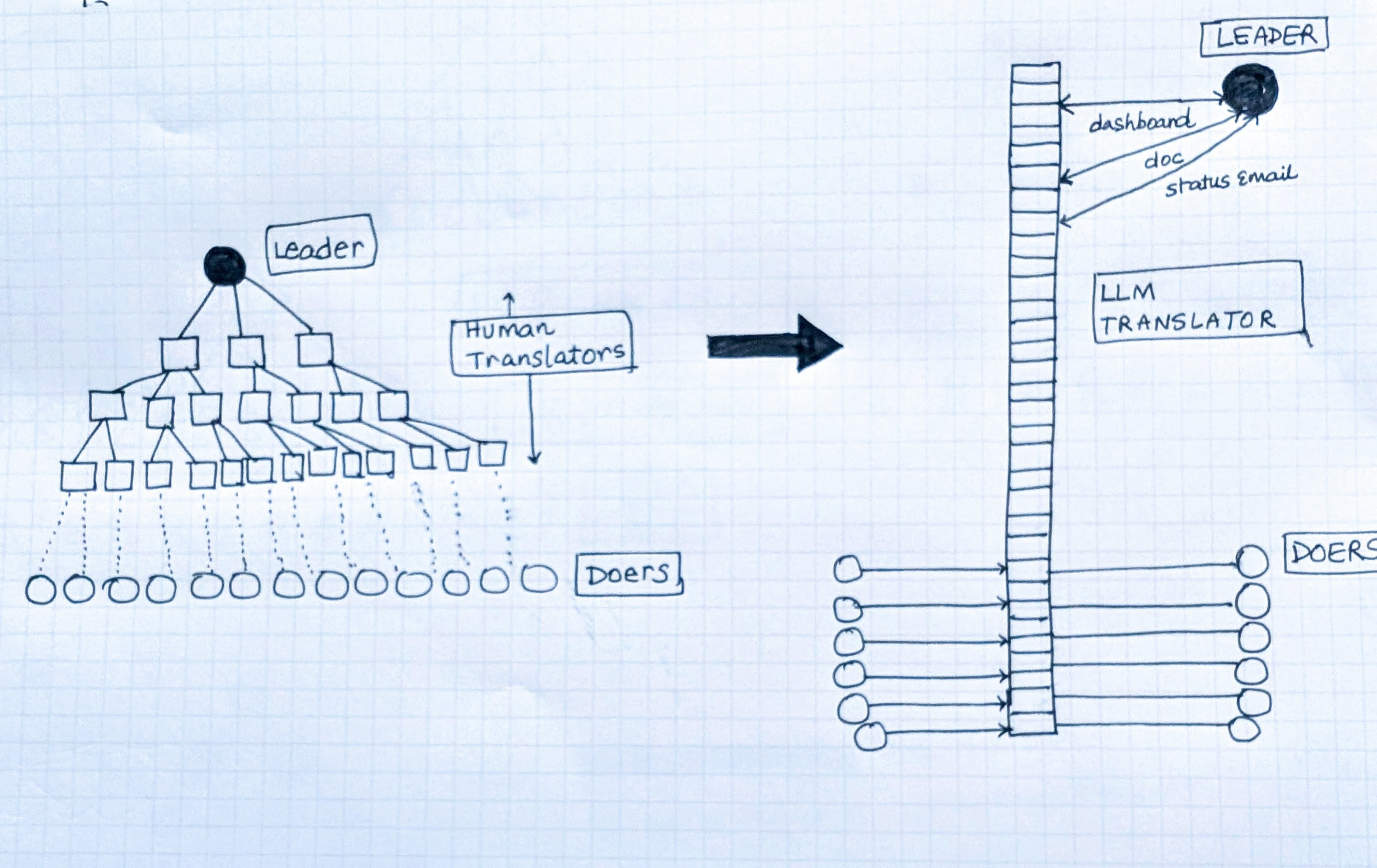
A good, simple, insightful piece about LLMs asa the first universal translators for work.
I keep coming back to a scene from Office Space:
“What would you say...you do here, Bob?” “I take the requirements from the customers… and I bring them to the engineers… so the engineers don’t have to.”
It’s a joke, but the more you look at how organizations actually run, the more you realize Bob isn’t an exception. He’s in fact the archetype.
We tell ourselves we’re creating, building and executing, but when you zoom out, most of the day isn’t invention or execution. It’s TRANSLATION: taking something in one form and turning it into another form that someone else can act on.
A soap formula becomes a manufacturable soap bar, then a marketing claim, then a retail SKU, then a line on a P&L....
Once you see it, you can’t unsee it. Lawyers translating risk into clauses. Engineers translating specs into code. PMs translating activity into status updates. Analysts translating logs into narratives. Executives translating market noise into bets.
The Org Chart as a Translation Machine
The numbers are telling:
Only 39% of the workday is spent on core job duties....
Knowledge workers spend 57–60% of their time coordinating and communicating....
No wonder org charts look the way they do. They’re pyramids: leaders at the top, doers at the bottom, and a thick middle band of human translators carrying information up and down.
Enter the Universal Translator
Now something fundamental has shifted with AI: translation has gotten way cheaper, way faster and way better. A 20-page research paper can instantly be translated into a one-page “so what” memo. A 60-minute call translated into a four-minute decision brief. Requirements translate into a code scaffold with tests....
To me, LLMs have the potential to be the Babel fish of work, the little creature from Hitchhiker’s Guide that instantly translates whatever goes into your ear. It’s papers into briefs, meetings into memos, data into charts, ideas into roadmaps etc.
For the first time, the unit cost of translation is close to zero. Humans still need to provide judgment, taste, and accountability. But the blank-page tax that fills so much of modern work is close to zero.
From Pyramid to Backbone
Org charts have traditionally had to be pyramids because translation was expensive. Thick middle layers of managers, coordinators, and analysts existed to carry that cost. When translation becomes cheap, the middle collapses into AI infrastructure.
What does this future of work look like?
For individuals: Less time producing artifacts, more time reviewing and directing them....
For teams: Less time patching broken handoffs in meetings, more time moving quickly from messy outputs to usable inputs....
For organizations: Middle layers compress. Throughput rises, decisions accelerate. Smaller, leaner orgs can now coordinate at scale too.
Creation and execution are why a business exists. Translation has always been the cost of doing business. With AI as the universal translator backbone for work, that cost is going to dramatically collapse, resizing and reshaping the entire org chart.


Are nukes the only serious security guarantees

The FT’s Janan Ganesh on the fraying of nuclear non-proliferation. Naturally, none of this applies to Australia because we have the American alliance and, like the British garrison at Singapore, it should pretty much hold things together till the adults arrive. And that’s before you even count the submarines we might get - if the Americans don’t need them.
In any event, the prospect of all and sundry countries getting the bomb is pretty horrifying. It raises the probability of nuclear war. A nuclear war between two mid-sized powers would be horrendous. Then again, we’re a forgetful species. But the experience of a nuclear war that only killed 100 million people or so might actually make a full-on near-extinction exchange between two superpowers less likely. But what would I know?
Britain’s Liberal Democrats, who are as innocuous as their name suggests, now want the nation to build a nuclear deterrent that is less reliant on the US. Not even the parties of the right have so hawkish a line. If you grew up in the UK, the effect is that of spotting the local librarian at a cage fight.
The Lib Dems are at least in line with the times. France, whose force de frappe is truly sovereign, said this month that it would increase its stockpile of warheads. In Poland, a rare point of agreement between the prime minister and the president is their openness to going nuclear.... Even the original nuclear powers are chafing at old taboos. As of last month, there is for the first time in over half a century no binding agreement to limit nuclear arms between America and Russia....
What is this? A wave of recklessness? Perhaps, but also a natural response to events.
One is the ordeal of Ukraine. In 1994, it gave up the Soviet nuclear weapons on its soil in exchange for certain assurances about its security. Two decades later, Moscow began its war against Ukraine with the annexation of Crimea. The lesson, for some, is obvious. A country with dangerous neighbours should retain or acquire the ultimate deterrent.
Another salutary tale is that of Iran. An unfinished nuclear bomb is the worst of all worlds: a provocation to other states but not a deterrent. A rational government would either abandon all ambitions of that kind or realise them in full. On balance, observers will regard the second course as the more prudent....
On top of all this is the endless unpredictability of the US. Until now, countries with the expertise to build the bomb, such as Japan and several European countries, have chosen to duck under America’s nuclear umbrella instead. As Donald Trump casts doubt over whether he would ever honour those mutual defence treaties, this “nuclear latency” doesn’t seem so clever.
In the end, however, it is a major non-event that matters. The longer the world goes without the bomb being dropped, the more relaxed people are liable to become about proliferation. In the mid-20th century, each successful new test — Britain’s, France’s, China’s — was worldwide news. A generation less harrowed by the recent past seems not to track these things as much, which of course is a good way of stumbling into disaster. Stability destabilises.
Notice that nuclear dread, which gripped Hollywood as late as the 1980s, faded as a cinematic theme until the likes of Oppenheimer in recent years.... This is despite the fact that Pakistan and, yes, North Korea have joined the nuclear club since the end of the cold war. While the aggregate stock of warheads has shrunk, their owners are more varied and, insofar as we can judge, less uniformly rational....
Still, the frankness with which governments now discuss the subject suggests that an intellectual and even moral seal has been broken. It took over 60 years for the nuclear club to grow from one to today’s nine.... If the theme of the century is fragmentation, the breaking of a US-centric world into something more plural, it would be odd if the distribution of nuclear weapons did not reflect that trend.
Game theorists would say that more nuclear states means more states that cannot contemplate attacking each other. The bleaker of temperament will counter that a “game” with 13 or 14 players is likelier to go wrong than one with nine. In what used to be known as “polite company”, it has become almost impossible to pass an evening without a conversation about AI. Love of novelty might be blinding us to the chance that today’s most important technology is an old one.



Fisher & Paykel
Australia’s whitegoods industry more or less closed down a couple of decades ago leaving plucky New Zealand whitegoods producer Fisher and Paykel plugging away. Now they have a “suite of luxury appliances that will be unveiled at Milan design week 2026”. Just the thing if you’re in the rainforest and you need a diswasher or perhaps a refrigerated filing cabinet. Anyway, it’s a very pretty picture.

How trans radicalism became so radical
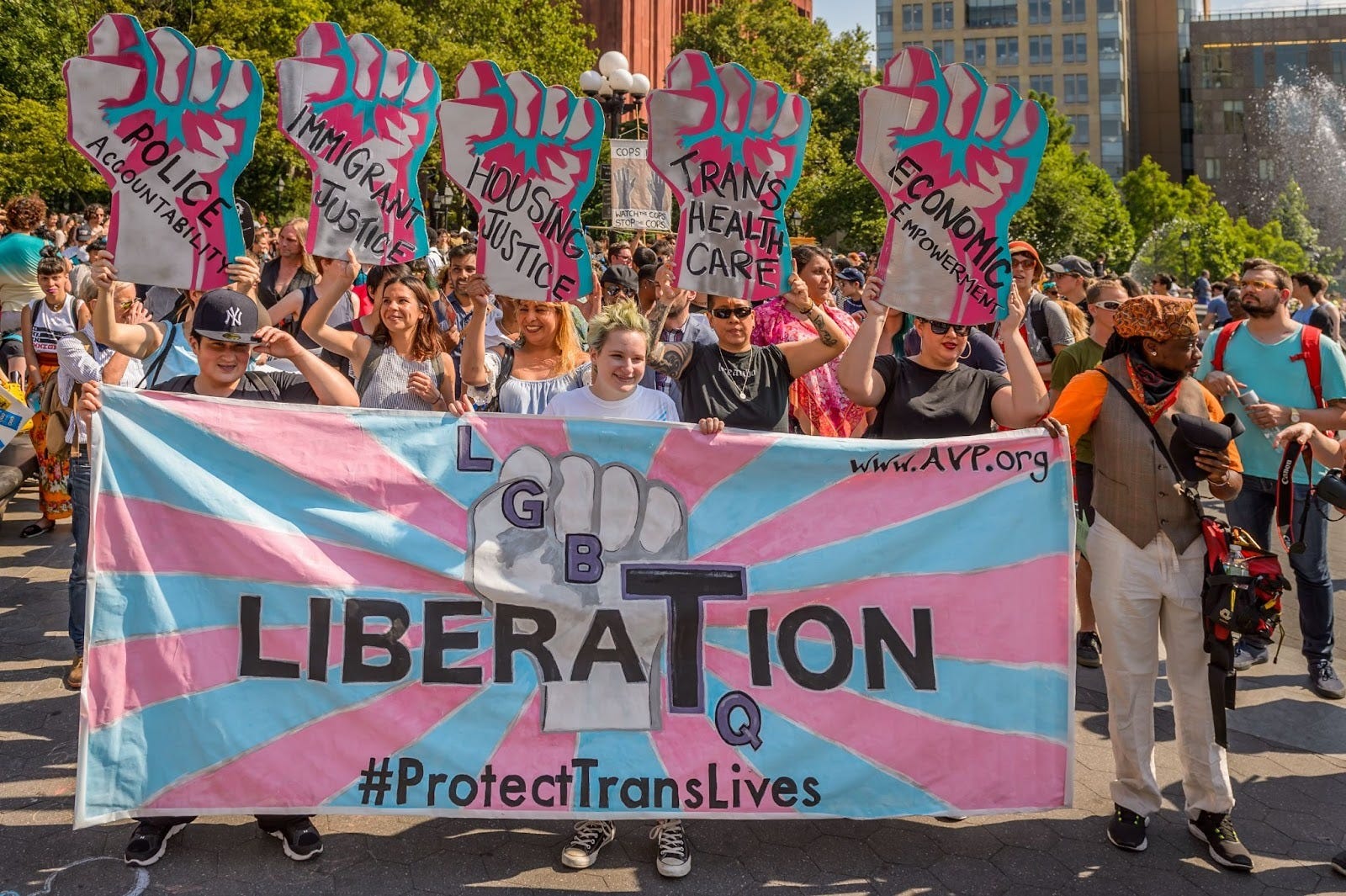
Quite interesting to ponder. I think the argument of this piece is essentially right that the trans rights movement was ‘fast-tracked’ by piggybacking on the work that had been done by earlier liberation movements and so came into the world without having been battle-hardened to objections. That’s putting it mildly. Allowing sex offenders (who will be almost all be born male) to choose whether to enter a male or female prison by self-identification is barmy on its face, and profoundly offensive to most people’s commonsense.
But there’s also the way in which, politics is a competitive spectator sport, intensified by social media. So one wins the day by bullying not by winning the argument. Anyway, here’s Jamie Paul — writing in Persuasion
As the backlash to transgender activism went mainstream, commentators have fallen over themselves to criticize the counterproductive aspects of trans activism. But when they assess “what went wrong,” the question that often goes unasked is: how and why did the trans movement become so radical in the first place?
The answer boils down to human nature: trans activists tried to bully their way to progress because they believed they could—there was a moment of opportunity where the movement had the wind at its back and a tendency (which proved disastrous) to be as ambitious as possible.
Many observers have grasped at the mainstreamization of queer theory or the LGBT movement’s reorientation after Obergefell v. Hodges as the main culprits. But these narratives don’t explain quite as much as they purport to. As so often, politics lies downstream from culture. Once we understand the cultural trends of a particular moment, the ruinous decisions of a small number of activists—who could have followed the consensus-building playbook of the gay rights movement but instead embraced extremism—begin to make sense.
Trans rights was poised to become a major issue almost no matter what. In June 2014, Time ran the cover story “The Transgender Tipping Point,” declaring trans “America’s next civil rights frontier.” But social media pushed a more radical turn in the discourse, and dynamics within the trans movement broadened the definition of trans in a way that became purely political....
What mattered most was a shift from a medicalized conception of trans identity. Trans originally referred to people diagnosed with gender dysphoria who transitioned to live as the opposite sex. In the early-to-mid-2010s, “transmedicalists” were quickly outnumbered by a growing cohort for whom medical diagnoses were not only unnecessary but dehumanizing. To this emerging generation, to be trans one merely had to identify as trans. This rejection of “gatekeeping” opened a Pandora’s box: trans people went from 0.3% of U.S. adults in 2011 to 1.6% (and 5.1% among young adults) in 2022. As trans evolved away from a psychological condition and toward a political identity, the nature of the movement’s activism couldn’t help but change....
Those shifts coincided with surging political polarization. In 2016–17, negative partisanship became the political north star. It wasn’t until the flood of GOP “bathroom bills” that liberal normies adopted trans rights as a central plank of what it meant to oppose Donald Trump—with what this specifically entailed, and who was being empowered, treated as insignificant details....
Trans activism was quickly handed a level of cultural and institutional power unprecedented for a movement barely out of its infancy—holding sway across universities, government agencies, media outlets, corporations, and K-12 schools.... Every prominent social movement of the past spent generations changing hearts and minds before gaining anything like this power. Whereas the LGB rights movement was a rags-to-riches story of long decades toiling to shift attitudes, trans activism had everything handed to it.
Instead, flush with cultural power and a sense of invincibility, the trans movement regarded public opinion, persuasion, civility, and incrementalism as irrelevant. [Trans activists understood] that they could “bypass politics altogether and simply seize progress and carry it off like an unprosecuted shoplifter in a San Francisco Walgreens.” And so they did, wielding accusations of transphobia like a cudgel and watching the professional classes fold like cheap suits.
Why did so many trans activists behave like authoritarian bullies? Because they could. Why did they think it would work? Because, for a solid five years, it did. But it was a mirage—a cautionary tale about the dangers of too much power suddenly falling into one’s lap.
Somewhere in the multiverse, there’s an alternate timeline in which trans activism grew more slowly, pushed and pulled by democratic pressures, forcing it to smooth over the extreme edges and hear out moderate or dissenting voices—a world in which the trans movement built durable liberal progress. Sadly, that’s not how things played out. But it’s never too late to, well, do better.
Well, this is awkward


The rise of the parasocial

I can’t help thinking of this as a new front in Gresham’s Law, which states that bad money drives out good. Bad money is cheaper to come by, so it spreads like wildfire, and the presence of bad money drives good money away. If you’re a merchant and receive money you think could be dodgy, you’ll hand back dodgy change if you can. Well it’s kind of the same thing with friction in relationships. No friction makes relationships easier, faster, better.
But not really. When you think about it, no friction, no relationship.
First things takes up the story:
When Technoblade, a popular Minecraft streamer, announced his cancer diagnosis in August 2021, the outpouring of support was immense. Though millions of viewers had never met him, they felt as if they had. “Does anyone else get that grief still?” asked a much-read Reddit thread a few years after he died.... The world would never be the same again.
Parasocial relationships—one-way, screen-mediated, ersatz intimacies—are shaping Gen Z in ways we are only beginning to understand. It’s clear that Gen Z craves authenticity and connection. And yet members of Gen Z are more likely to bail on commitments and reflexively distrust the very peers they long to connect with. This simultaneous craving for, and retreat from, the real is symptomatic of a crisis of belonging.
In 1956, Donald Horton and R. Richard Wohl observed that modern mass media creates the illusion of face-to-face intimacy with performers (”personas”).... Today, “parasocial” dynamics are visible in the devotion of Taylor Swift’s fans, who, having never met her, nonetheless feel they know her intimately.... For fans who are socially isolated, this produces what Horton and Wohl call “extreme para-sociability”—the condition in which the parasocial becomes a substitute for real relationships, rather than merely a supplement.
Jean Baudrillard’s account of “hyperreality” helps explain the context. The mass media images we consume begin as reflections of reality but come progressively to distort it. The dynamic is cybernetic: outputs are recycled as inputs, each cycle deepening the substitution of reality with simulacra. Social media supercharges this process. But intimacy requires trust, which entails risk. Parasocial relationships involve no risk at all.
Digitally mediated communication flattens the markers of hierarchy, distance, and difference that structure real-world relationships. The felt collapse of distance conditions us to expect that distance doesn’t really exist. Carried offline, this corrodes the structures that make genuine relationships possible. Loneliness deepens. And so we return to the hyperreal with greater need—which further degrades our capacity for the real. Is it any wonder that Gen Z is the loneliest generation on record?
According to research by Eric Kaufmann, only 8 percent of Americans under thirty-five trust other people, and only 8 percent trust the government.... More alarming is the loss of interpersonal trust—built, slowly, through the friction of real relationships. When most of one’s relational life is conducted through a digital ecosystem that performs closeness without cost, that building process never really begins. Gen Z has become low-commitment: Plans are easily canceled, obligation subordinated to comfort.... Kaufmann’s research on audiences of figures like Nick Fuentes and Candace Owens bears this out. Members of this “floating conspiracy vote” are drawn parasocially to media personas savvy enough to fill the vacuum left by the collapse of communities and mainstream institutions.
The answer is not reaction but reorientation. The Church can’t merely be a venue for loose participation. This is where the Church, at its best, offers something the digital ecosystem structurally cannot: intergenerational community. When a twenty-five-year-old sits in a congregation alongside a seventy-year-old, something genuinely countercultural is happening: The feel for hierarchy is being restored.
When I was a new Christian in college, there was an eighty-year-old man who would take me fishing in the Adirondack Mountains. Those were formative times in my development. He offered perspective from a life well lived, enabling me to process outside of the digital simulation.
In this light, the tendency of young believers to seek congregations that “feel” authentic can prevent them from experiencing intergenerational depth. It imports the consumerist logic of the parasocial into the one institution best equipped to resist it.... If Gen Z is to experience real belonging, it must first recover its necessary conditions: presence, obligation, difference, and time—features that the hyperreal systematically obscures and that only intentional, embodied, intergenerational life can restore.
Parasocial belonging is not going away. But as Gen Z discovers the limits of the simulacrum, the Church has an opportunity to offer what no algorithm can manufacture: the real thing.


Your regular reminder that a great deal of high status research is nonsense and nothing serious is being done about it.
If you do read the piece, look at the dates of the exposés (eg. Ionnides’ landmark article) and ask what has been done about them since.

Heaviosity half hour
I’ve been reading quite a bit of the French post-war liberal theorist Bertrand de Jouvenel. He wrote three great books, the final one of which is called The Pure Theory of Politics. I was reading this and came upon the paragraph that begins the article below. It struck me as pretty interesting, so I asked ChatGPT whether Jouvenel had performed the task he’d sketched out anywhere in his works. It said he hadn’t, but that it could be reconstructed from his book On Power. So I asked it to write out an essay reconstructing the argument. This is what it wrote
Bertrand de Jouvenel
The Political System of Modern States
A Reconstruction from Bertrand de Jouvenel
“If my business here were (as it is not) to describe the political system of modern states, I should start with the body of public servants, regarding it as the very core of the system. The growth of professional Government far beyond the performance of specific sets of instructions, indeed with a capacity to generate new sets, is both remarkable and inevitable. But this is not my subject.”
This remark appears not in Jouvenel’s On Power but in The Pure Theory of Politics. Yet On Power offers the necessary guidance for elaborating on his remark. His declared project in On Power is to undertake a “natural history” of Power—its origins, growth, disguises, and transformations across centuries.
If we follow his own suggestion and begin with “the body of public servants,” a striking picture emerges. The political system of modern states is not fundamentally defined by constitutions, elections, parties, or even doctrines of sovereignty. Its defining core is a permanent administrative apparatus: a professional body that embodies accumulated authority, persists across regime changes, generates initiatives, and operates in the name of “the People” while standing structurally apart from their fluctuating will.
What follows is a reconstruction of that description from Jouvenel’s own argument, principally in On Power.
I. Power as Historical Growth
The central thesis of On Power is simple and unsettling: Power grows.
By “Power,” Jouvenel does not mean tyranny or arbitrary will. He means the central governing authority—l’ensemble des éléments gouvernementaux—that directs a political community. His aim is neither denunciation nor apology, but historical analysis. He asks: how has Power changed?
His answer is that it has expanded cumulatively. Power “is in its nature expansive.” It does not merely change hands from monarch to assembly or from aristocracy to democracy. It accumulates capacities. War centralises command. Taxation becomes systematic. Administration becomes continuous. Each emergency leaves institutional residues.
The history of Power is therefore not cyclical but sedimentary. The prerogatives of the medieval king become the instruments of the modern nation-state. The centralised machinery constructed under monarchy is inherited and often extended by democracy.
Thus, before one speaks of constitutions or elections, one must recognise the historical growth of central authority. The political system of modern states is the product of centuries of centralisation.
II. The Alliance Between Power and the People
One of Jouvenel’s most original insights is that the growth of central Power was frequently achieved through alliance with the People against intermediary authorities.
Medieval society was layered. Between the individual and the crown stood feudal lords, guilds, corporate bodies, provincial estates. These intermediary authorities limited the direct reach of central command.
Power grew by dissolving them.
Jouvenel remarks that Power often found in the People “a formidable ally.” The monarch presents himself as protector of the weak against feudal oppression. Uniform justice replaces local privilege. Central authority expands under the banner of equality.
When democracy succeeds monarchy, the alliance does not disappear—it is transformed. Sovereignty is declared to reside in “the People.” But Power, now acting in their name, retains and extends the centralised apparatus.
“The People,” Jouvenel observes, becomes “a king whose reign is eternal.” The shift from personal sovereignty to popular sovereignty does not weaken Power; it legitimates it. Appeals to equality and justice supply moral justification for central intervention.
Thus, democracy does not arrest the growth of Power. It frequently accelerates it.
III. The Destruction of Intermediary Bodies
“Power is a destroyer of social authorities.”
This line captures a decisive structural change. The intermediary body stands between individual and centre. It diffuses authority. It complicates direct rule.
As these bodies weaken, social structure becomes vertical. Individuals face a single dominant authority. Grievances flow upward; demands for remedy flow upward. The centre becomes the natural arbiter of social life.
Democratic rhetoric intensifies this verticalisation. The language of equality delegitimises corporate privilege. Uniform law replaces jurisdictional diversity. Standardisation replaces local variation.
The political system of modern states is therefore characterised by a simplified structure: a mass citizenry and a centralised authority, with relatively few autonomous buffers between them.
IV. The Emergence of Professional Government
It is here that the passage from The Pure Theory of Politics becomes central.
The growth of Power requires continuity. Monarchs die. Governments fall. Parliaments dissolve. But the administrative apparatus persists.
Jouvenel observes in On Power the emergence of a permanent machinery of rule: officials trained in finance, taxation, military organisation, record-keeping, regulation. Government ceases to be episodic command and becomes continuous management.
In The Pure Theory of Politics, he sharpens the point: professional government extends “far beyond the performance of specific sets of instructions.” It develops “a capacity to generate new sets.”
Administration becomes proactive.
Officials accumulate institutional memory. They draft proposals. They anticipate needs. They formulate regulatory frameworks. They do not simply execute policy; they participate in shaping it.
The permanence of this body has several consequences:
persists across political cycles
accumulates expertise
maintains organisational coherence
enjoys relative insulation from electoral volatility
The visible political drama of elections occurs above a stable administrative core.
If one were to describe the political system of modern states, one would begin here.
V. War as Midwife of Power
“War … is the great midwife of Power.”
Conflict demands mobilisation, coordination, taxation, planning. Temporary measures become permanent capacities. Ministries expand. Surveillance intensifies. Economic management becomes centralised.
When peace returns, the machinery remains.
War accelerates centralisation and deepens administrative capacity. The modern state bears the institutional imprint of repeated crises.
Thus, the political system of modern states cannot be understood apart from the cumulative effects of emergency governance.
VI. Law and Regulation
Another transformation concerns law.
In earlier epochs, law was comparatively stable and limited. Modern states legislate continuously. Regulation proliferates. Norms become detailed and technical.
The distinction between legislation and administration blurs. Officials draft regulations. Legislators ratify frameworks. Enforcement requires specialist interpretation.
Governance becomes regulatory rather than merely adjudicative. The administrative apparatus participates in the production of norms.
This regulatory expansion reinforces the centrality of professional government.
VII. Impersonality and Institutionalisation
Modern Power is impersonal. Authority resides in offices rather than individuals.
Jouvenel contrasts this with earlier forms of rule tied visibly to personal rulers. Institutionalisation enhances durability. Resistance cannot be directed at a single figure. The structure persists regardless of who occupies positions within it.
The political system thus becomes abstract and procedural. Authority operates through files, departments, routines.
Impersonality strengthens continuity.
VIII. The Asymmetry Between Citizen and State
As administrative capacity grows, so does informational asymmetry.
The state gathers statistics, commissions reports, forecasts trends. It interprets social reality through organised knowledge. The citizen petitions; the state diagnoses.
This asymmetry is structural, not conspiratorial. Complex societies require expertise. But expertise concentrates interpretive authority.
Thus, the political system of modern states is marked by a durable imbalance between organised administrative knowledge and dispersed citizen perspective.
IX. The Civil Service as Core
We can now state clearly the description Jouvenel implied.
The political system of modern states is organised around a permanent civil service that:
persists across regimes
accumulates institutional memory
generates policy initiatives
drafts and interprets regulations
coordinates national functions
implements and shapes law
Elections and parliamentary debate remain vital components of legitimacy. But operational authority resides in a continuous administrative structure.
To begin with elections is to begin at the surface. To begin with the civil service is to begin at the core.
X. Inevitable Yet Tension-Filled
Jouvenel does not present this development as aberrant. The growth of professional government is “remarkable and inevitable.” Large, complex societies require coordination.
Yet inevitability does not eliminate tension. The weakening of intermediary bodies reduces buffers between individual and centre. The permanence of administration creates structural asymmetry. The cumulative growth of Power raises perennial questions about liberty.
Jouvenel offers no simple prescription. His project is diagnostic.
Conclusion
Reconstructed from On Power and illuminated by the passage in The Pure Theory of Politics, the political system of modern states appears as follows:
It is a historically accumulated structure of central authority, strengthened through alliance with the People, expanded through war and crisis, legitimated through democratic rhetoric, and embodied in a permanent administrative apparatus.
Its defining core is the body of public servants.
That body—professional, continuous, cumulative—constitutes the operational heart of modern governance. Beneath constitutional forms and electoral drama lies a durable administrative centre.
That is the description Jouvenel declined to give, but fully enabled.

I am long-winded, you’ve got me there. I’m working on it. Appreciate the shout out.
To be fair to the trans rights movement they could assume that many progressives had important values that would easily translate to supporting trans rights. Progressives do not like the idea of very small minorities being bullied, believe that gender is socially constructed and should not be destiny, and support LGBQ rights so may be aware that some members of that community are trans or may be like Chelsea Manning and think at first that they are cis but gay. The trans rights movement would not be the first or last movement that college-educated progressives would instinctively get that found it difficult to do the hard work of communicating with more conservative or less educated people.