Fresh from immersion in the dark imagination of Carl Schmitt, I realised that citizen assemblies are a (small ‘r’) republican response to Schmitt’s problem of parliamentarism. I’ll say more about that below, but the real guts of what I have to say on this subject is that we’ve done very little to imagine an activism of sortition. So here’s my attempt to show how that can be done amid the Sturm und Drang of American democracy.
Observing the Weimar Republic, Schmitt saw something like what we see in the US, and to some extent the UK today — a paradoxical mix of escalating polarisation and madness on the one hand and proceduralist impotence on the other. As Schmitt wrote in The Crisis of Parliamentary Democracy in the 1920s:
Many norms of contemporary parliamentary law … function as … superfluous decoration … as though someone had painted the radiator of a modern central heating system with red flames in order to give the appearance of a blazing fire. The parties (which [in our] written constitution officially do not exist) do not face each other today discussing opinions, but as social or economic power-groups calculating their mutual interests and opportunities for power, and they actually agree compromises and coalitions on this basis.
Schmitt’s notorious answer to this problem was unlimited dictatorship. “Sovereign is he who decides the exception.” When he wrote these words, he wrote as a defender of the Weimar Republic against its mortal enemies of communism and fascism. Anyway, a month after Hitler took power, he decided the exception, suspending all civil rights after the Reichstag fire. Schmitt thought this was all pretty terrific and defended it publicly, as he did the night of the long knives the following year.
And of course Schmitt has been a big influence on the Trump folks and a mainstay since Michael Anton’s famous essay likening the 2016 election to Flight 93, where you may as well rush the cockpit even if you’ve only got 10% chance of surviving because otherwise you’re certain to die (i.e. otherwise you’re certain that Hilary Clinton will become President and the American experiment will be over.
The point of all this is that the appeal of the dictator is that they represent the whole community. Schmitt actually argued that parliament represented liberal principles and constitutionalism, while the sovereign — whoever has managed to acquire absolute power — represents democracy. (Yes, I know it’s confusing at the level of theory, but it’s not at the level of practice. Donald Trump imagines he represents the real Americans. And sure enough, early in his second term, Trump channelled his inner Carl Schmitt. “He who saves his Country does not violate any Law”.
In any event, as you’ll hear in my discussion above with Joe Trippi above, Citizen assemblies can stand for the people in a way that no party politician can. In our discussion, I take Joe through my ideas of how an aspirant for president could make a citizen assembly a feature of a tilt at the presidency. It’s a good discussion, which I recommend. If you’re after the audio, it’s here.
Government transformed 2.0: Episode 2
David Halpern and me on maximising the benefits of public goods
As you may recall, the five podcasts I made with Global Government Forum explored the various dimensions of the Government 2.0 Taskforce 15 years on: what it achieved, what it didn’t, and what we should do now. I think my favourite two episodes were the ones in which David Halpern - of Nudge Unit fame - was an interlocutor. The audio is available on two platforms below.
Legal system. What legal system?
The papers of Lord Mountbatten were eventually prised open, leaving the author with a £500,000 legal bill.
For some decades now, it has been obvious to me that we don’t really have a legal system in the way we have medical or educational system. We have one for the rich and one for legal aid recipients, but those in the great middle must risk their life savings to exercise their legal rights against anyone with the means to play hard-ball.
Andrew Lownie below blames his opponents in the legal case, and he has a good point, but the legal system itself should not produce this kind of situation. It is absurd to spend the kind of resources it did on this case. It is not hard to develop a system that could generate a respected, expert and independent decision at a cost that is commensurate with the matters being determined.
Anyway, the extraordinary upshot of this extraordinary case was that the party in question had to sell up his house and needed to make sure his next project was financially rewarding. It was Entitled, Andrew Lownie’s excoriating exposé of the artists formerly known as the Yorks.
No private individual should be financially ruined seeking access to material, which was purchased with taxpayers’ money on the basis that it would be open to the public. But that is the position in which I now find myself.
As a biographer, I rely on private diaries and letters... So when in 2015 I embarked on a biography of the last Viceroy of India and his wife, Dickie and Edwina Mountbatten, I looked forward to consulting their extensive diaries and correspondence, which had already been quoted in various books on them.
I was surprised when the archivists at the University of Southampton, where the Mountbatten’s papers are held, claimed to know nothing about them. This, in spite of Southampton leading a huge fundraising campaign to buy them in 2011 for £2.8 million – made up of a grant of £2 million from the National Heritage Memorial Fund, £100,000 from Hampshire County Council and £1.6m in lieu of taxes. The press releases, after completion of the sale, stressed they would “be freely available to all”.
After I pressed them, Southampton then claimed that under the Acceptance in Lieu (AIL) arrangements with HMRC, it was bound by a ‘Ministerial Direction’ of 5 August 2011 from complying with requests for access to the diaries or letters. The genesis of this seemingly unique ‘Ministerial Direction’ remains mysterious: neither the university nor the Cabinet Office will identify the signatory, and no government department has accepted any responsibility for it.
I was repeatedly forced to call on the Information Commissioner’s Office. In April 2019 it served contempt proceedings against the university in the High Court, a step unprecedented against a public authority, and in December 2019 it issued a Decision Notice ruling that the diaries and letters should be released – a decision the Cabinet Office and Southampton appealed, even though they knew the material was completely innocuous.
Just before the four-day hearing in November 2021, Southampton abandoned their reliance on the ‘Ministerial Direction’... Pre-hearing, 99% of the material, some 30,000 pages, had been released, though the tribunal did rule that just over a hundred redactions should be applied on the grounds they were communications with the Sovereign, or would damage international relations or national security.
Even though I had succeeded in securing the release of most of the material, my application for costs was dismissed, leaving me with a legal bill of almost £500,000. From the outset the University and Cabinet Office deployed extensive teams of lawyers, including two top barristers, all at taxpayers’ expense, and their strategy appears to have been one of obfuscation and delay at every stage and to break me financially... Interestingly the Cabinet Office seems to have picked up most of Southampton’s legal bills.
Why are the Cabinet Office paying most of Southampton’s costs? Why hasn’t the option to release the Nehru-Edwina correspondence, bought under the same agreement, been exercised, as it could have been at any time for £100 since 2016?
My fight has come at a heavy financial cost – monies earmarked for my retirement and to pass on to my children – and some ostracisation from fellow historians who clearly have no wish to upset the establishment...
My faith in the integrity of the Civil Service and judicial system has been shattered. Repeatedly I saw government ministers lie to Parliament, the media and even to my lawyers... Letters to the vice chancellor and the supposedly independent Council of the University of Southampton went unanswered.
But I continue to try and work within the FOI system, though it needs reform and proper regulatory powers. I feel it has been worthwhile to fight to make available an important historical archive and to make a stand for access to archives, trust and transparency in public institutions, and against censorship and the abuse of power.
There is a fairly simple alternative, as for instance in this case which is to impose a financial cap on the costs that a party can bear
What getting things done in politics is really like
Strongly recommended.
This is an ethnographically informed elaboration of what really matters in our political system. One thing it doesn’t consider, but which looms large for me, is this question. How much are the pathologies it documents necessary to power itself, and how much are they artefacts of the current system of competitive democracy?
Imagine you landed any human being from the 19th century into a modern liberal democracy and explained that the entire place was pretty much accounted for by two big systems:
if you want money, there’s the market for money. The better competitor you are, the more money you make.
if you want power, go to the market for power - which is a market for votes. The better competitor you are, the more power you get.
They’d have been amazed.
Modern democracies evolved from older structures with a high degree of collegiality at the higher echelons of power. A Prime Minister was first among equals, appointed by a parliamentary party, but required to demonstrate many qualities of statesmanship — not just the ability to win votes — to reach the top. The American founding fathers designed the Electoral College with precisely this in mind: that a statesman would be chosen, not merely the most effective campaigner. (It lasted two elections before it was completely subverted by party politics.).
So when I read Jo’s piece, I ask myself: how much might these pathologies be moderated with more generous use of the other way to represent the people — not by election but by sampling, as courts around the world do whenever a jury is empanelled?
People are often surprised when I gently explain that politicians are not quite the way they appear on television.
The performance is familiar: empathy, ordinariness, the carefully rehearsed backstory. But the truth — the one you only learn by proximity — is that the on-screen version of a politician is not always a reliable guide to who they are when the cameras are off.
Take Australia’s Prime Minister Anthony Albanese. The popular narrative is well-worn: the boy from a housing commission flat, raised by a single mother on a disability pension, who rose to lead the country. That story is not untrue, but it is incomplete. It was followed by decades inside unions, party factions, and parliament, where power teaches lessons in ways the public rarely sees. If you want a clearer glimpse, you’re more likely to find it when he bristles at a question during a press conference — the clipped response, the irritation barely concealed, the moment the mask slips.
And here’s the counterintuitive rule of thumb I’ve developed: if a career politician appears effortlessly nice on television, remember that performance is part of the job. Conversely, if they seem awkward or imperfect, you may be surprised by how warm they are in real life.
This matters because many people still approach politics with rose-tinted glasses.
Every election, capable, values-driven individuals step forward — often as independents or outsiders — because they believe the system isn’t working as it should. But the moment they wade into the pool, they forget why they ran. From the instant their toes hit the water, the friendly, grinning sharks — who have no interest in the status quo being disrupted — are already circling.
Power does not announce itself with menace. It smiles, welcomes, offers guidance — and all the while, it is assessing you. If you look like a newcomer — eyes wide, dazzled by proximity and access — prepare to be eaten alive.
Like any workplace, politics rewards ambition. You will often hear that someone has “ministerial ambitions” — far less often that they aspire to be minister for aged care to transform services for the elderly. The ambition is usually just to be a minister. The preservation of power becomes the organising principle. If this sounds bleak, it’s because political systems tend to drift toward hierarchy, no matter how idealistic their beginnings...
Consider gambling reform. Few issues enjoy such broad community support. Gambling harm devastates families, fuels domestic violence, exacerbates poverty — and according to the Australian Institute of Health and Welfare, gambling losses exceed $25 billion a year. And yet, meaningful reform remains elusive. It isn’t because the problem is unclear or the solutions unknown. It is about power. And money. And the leverage of industries that know exactly how to protect their interests.
This is how politics works. Issues matter only insofar as they intersect with electoral risk, donor relationships, and media narratives that threaten leadership stability. If a reform doesn’t move one of those levers, it will stall, no matter how rational, moral or popular it is...
I’m not telling you this to discourage participation — quite the opposite. It is so that if you choose to enter the pool — as a politician, advocate, adviser, or engaged citizen — you do so with your eyes open. What do government politicians care about? Data, polling, media coverage, pressure that appears sustained, organised and reputationally risky. Politics is not moved by outrage alone. It is moved by patterns.
There are good people in politics. There always have been. But goodness is not the organising principle of the system. Power is. Just don’t forget why you got in the pool in the first place — and what you’re not prepared to become in order to stay there.
Some really good writing on contemporary liberalism
Pt 1: Becca Rothfeld
As I read this, it suddenly occurred to me that the archetype appealed to by the new apologists of liberalism - Sunstein and Klein/Thompson is not any exalted exemplar of human freedom but the bureaucrat considered broadly as someone whose horizon is the career reward. You’re smart, you work hard, you get the adulation of your peers.
Your effectiveness within a given system is the thing, not also turning your mind and efforts to the rules of the system itself. (Though you might even talk a lot about ‘system thinking’ and all that malarkey, but your focus will be on your role as a contributor to the system, and only through that, to its mission.)
There’s no real pride in being part of the Western tradition stretching back over two millennia, the one that Pericles gave his funeral oration for, the one in which the Romans came up with the idea of a republic founded on the liberality of its citizens - their generosity of vision, the idea of limited government that made its way through the medieval period and built the cathedrals and then, as the Rennaisance turned to the Reformation build the cultural infrastructure and knowhow that finally saw us shake off Malthusian want. That, having enslaved millions like other civilisations, then went through paroxysms to free them. A culture that’s always alive with the challenges of its faults. That’s what I love about my Western heritage. It’s what I love about liberalism.
Anyway, here’s a tease of what is a substantial essay which I really enjoyed.
Every politics has its characteristic aesthetics. This is a truism so widely accepted in the case of fascism that it often tempts otherwise discerning critics to overstate the power of reactionary art. Still, the frisson that fascism’s best artifacts afford has one merit: it reminds us that fascism looked and felt like something, that it was an ideology with an accompanying sensibility. The same is rarely said of liberalism, a political formation so pointedly unostentatious that we tend to gaze right through it. Where is liberalism’s “Fascinating Fascism”? Who is its Riefenstahl?
At least in its most recent incarnation, liberalism tends to disdain these questions. In its dreams of itself, it is unadorned—a skeletal set of principles and policies without any attendant body. Its heroes are too busy scanning polls and skimming white papers to bother with self-fashioning: in the quintessentially liberal TV series The West Wing, harried wonks pace the halls of the White House in ill-fitting suits and sensible shoes, trying to appear as if they eschewed the distractions of appearance altogether. Much of this pretense of stylelessness is no more than self-serving delusion...
But in practice, liberalism has a tone and a texture. It has, in short, what a very different sort of liberal once called “manners.” In 1948, Lionel Trilling defined these potent ineffables as
a culture’s hum and buzz of implication … which is made up of half-uttered or unuttered or unutterable expressions of value. They are hinted at by small actions, sometimes by the arts of dress or decoration, sometimes by tone, gesture, emphasis, or rhythm, sometimes by the words that are used with a special frequency or a special meaning.
Among the marquee mannerisms of recent liberalism we find chains selling salad bowls, the television show Parks and Recreation, the grocery store Trader Joe’s, the word “nuance,” glasses with rectangular frames, group-fitness classes, and nonfiction that is a little too good for an airport bookstore but a little too slick and credulously economics-heavy for a literary magazine. The smug yet unconvincing performance of non-aesthetics amounts to aesthetics too.
What so-called post-liberals like Patrick Deneen and Vice President J. D. Vance rail against is not their antagonists’ doctrine—not really. What they get right—and the reason they are winning—is that the end of history has been sallow, ugly and deflating. At its core, theirs is an aesthetic aversion. The long and short of it is that the post-liberals do not like liberalism’s manners.
Two recent books typify the liberal tendency to fiddle while Rome goes up in flames. Abundance, by Ezra Klein and Derek Thompson, is about making the existing structures of liberalism more efficient; Liberalism: In Defense of Freedom, by Cass Sunstein, taxonomizes liberalism without really championing it. Neither asks what life under liberalism is actually like, nor whether it can support an ample humanism—whether it can be beautiful and sweet and sustaining....
We must demonstrate that there is something beautiful in the tumult that ensues when many outlooks collide—a chaos in which “dwarfs, fairies, centaurs, satyrs, demons, and devils” consort in a wild melee. We must show that liberalism enables and instills a taste for the whole of the human mottle, a taste we might call humanism. Parks and Recreation is simply not going to cut it.
One model is the fabled Partisan Review, a literary and political magazine that ran from 1934 until 2003. Its tone was learned but never condescending; its writers addressed the reader not as if she were a neophyte requiring illumination, but as if she were an interlocutor working out her principles in tandem. Good politics, like good art, does not lecture or declaim. It strains; it argues; it is an unending negotiation with the difficult and intransigent adventure of humanity.
I found the article above via Misha’s excellent piece only a slice of which I’ve extracted here.
Cass Sunstein has a new essay responding to Becca Rothfeld’s review of his book On Liberalism. Rothfeld argues that liberalism has an aesthetic whether it admits it or not, and that aesthetic is ugly. Not evil-ugly — just sad-ugly. Deflating. The aesthetic of a WeWork lobby.
Rothfeld inventories the liberal vibe: chains selling salad bowls, mixed-use developments featuring glassy apartment complexes, the television show Parks and Recreation, the grocery store Trader Joe’s, the word ‘nuance,’ glasses with rectangular frames, group-fitness classes, the profession of consulting.
She argues that post-liberalism’s appeal is fundamentally an aesthetic aversion rather than an intellectual one. People aren’t reasoning their way out of liberalism. They’re getting bored out of it.
Sunstein’s first response is that liberalism has no aesthetic — it’s about freedom, pluralism, and the rule of law. This has all the thumos of a castrated newt. His second, which he clearly prefers, is that Bob Dylan is liberalism’s Riefenstahl — Like A Rolling Stone its animating energy.
Grim. Reaching for a sixty-year-old rock song to answer ‘what does liberalism look like in 2026?’ proves exactly the point Sunstein is trying to refute. When the best aesthetic defence of your civilisational project is a track from 1965, you are conducting its dirge.
The closest liberalism has come to a Riefenstahl in the last thirty years is Aaron Sorkin. But the Sorkin aesthetic was part of the problem: an aesthetic of competence, not of purpose. It ended in Gavin Newsom: a slimy suit with big white shiny teeth.
But there is more to the liberal aesthetic than Sunstein allows. Or there used to be.
Liberalism did have an aesthetic, and for long stretches of the modern era, it was magnificent. Think of what liberal civilisation actually built: the WPA murals, the public libraries with their marble reading rooms, the Tennessee Valley dams. The Enlightenment gave liberalism neoclassicism — an aesthetic that reached back to the Roman Republic and Athenian democracy. Liberals once believed that free societies should look like they had inherited the earth. ...
The question is not whether liberalism has an aesthetic. The question is when and why it lost one.
Liberalism’s aesthetic collapse tracks its transformation from a project into a procedure. Something happened — you can date it roughly to the mid-1970s — when liberalism stopped thinking of itself as a project with substantive goals and started thinking of itself as a set of procedures for managing pluralism. Rawls explicitly designed a liberalism that refused to endorse any particular vision of the good life.
This procedural liberalism actively selects against beauty. Beauty requires discrimination — asserting that this facade is better than that one, that some ways of arranging human life are more dignified than others. Procedural liberalism has convinced itself that any assertion of aesthetic hierarchy is a kind of coercion. And so you get the built environment of late liberalism: glass apartment blocks, open-plan offices, ruthlessly optimised for function and neutrality. Rothfeld’s salad bowls are the logical endpoint. ...
The solution is obvious: start building again — as the physical expression of a civilisation that believes it is doing something worthwhile. The Abundance people aren’t wrong, they’re just missing the aesthetic dimension. It is not enough to build things. You have to build things that are beautiful.
When America’s founding fathers debated the Great Seal, Franklin proposed Moses parting the Red Sea — not men afflicted by procedural modesty. That instinct — the confidence to assert that your civilisation deserves magnificent symbols — is what liberalism has lost. Liberalism need only recover what FDR and Robert Moses already had: the willingness to assert that some things are better than others, and to build accordingly.
KHARKIV, Ukraine—In an underground bunker turned school, children’s drawings paying tribute to the Ukrainian armed forces cover the walls. Blue and yellow dominate. From classroom to classroom, sheltered from the bombs, children of all ages listen attentively to their teachers.
Above ground, an air raid siren wails. The war goes on.
Located in Saltivka, a northeastern district of Kharkiv less than 20 miles from Russian positions and subject to near-daily shelling, this facility—one of seven underground schools in the city—serves 1,200 students ages 6 to 17. As Ukraine enters its fifth year of war, local authorities aim to increase the number of underground schools to 43 by spring 2026, ensuring education for 80,000 children. ...
In this setting of concrete, windowless walls and fluorescent lights, 52-year-old teacher Olena Vuideva has observed a paradoxical shift: students are doing better than they were at the beginning of the invasion. “Many were displaced at the start of the war. Some left for Poland or Germany before returning. Others had just arrived from combat zones,” she says. But for the past two years, the children have regained stability. “Children adapt faster than adults. But it all depends on their environment. If an adult is stressed, [the children] absorb it.” ...
Olha Romanenko, the school psychologist, agrees: “We absolutely must give children the feeling that everything will be okay.” A recent screening of 100 students found only three with truly concerning signs of post-traumatic stress.
Preparing for war.
In a crowded classroom, teenagers listen to an armed forces instructor demonstrate how to dismantle a Kalashnikov rifle. At the back, Bohdan, 17, seems distracted. “I don’t want to leave Ukraine,” he says. “It’s my city, it’s my country. I love living here despite the war.” Wearing large black-framed glasses and braces, he does not see himself pursuing a military career. “The only class I find really useful is first aid. In Kharkiv, it’s essential. There are bombings almost every day. You need to know how to save lives.”
Beside him, Yaroslav is considering joining Ukraine’s security services. Bohdan teases him: “He’d make a good secret agent. I couldn’t do it, I talk too much.” Bohdan dreams of studying Ukrainian literature in Kyiv.
The mood shifts when the conversation turns to relatives at the front. Ania’s father is fighting. “He left in 2023 as a volunteer. Since then, we barely see him. On average, once every six months. He says he’s gotten used to it. I feel like the army has become his new family,” she says softly.
The war’s lasting scars.
“Forty-two parents from our school are serving in the army,” Vuideva notes. When one is killed at the front, the school immediately adapts. “We begin by surrounding the child with care, without overwhelming them,” Romanenko explains. Families are referred to outside specialists “because some traumas go beyond what a school can handle.” In class, teachers double their attention, “without ever putting the child on display.” ...
Despite the war, Olena remains hopeful. “They are very brave. They are full of dreams.”
In a classroom of 6- and 7-year-olds, the teacher asks about their dreams. Hands shoot up. “I want to be a dentist.” “A veterinarian.” But very quickly, the war enters. “My dream is to become a pilot to protect our sky from the Russians,” says a little boy with a shaved head. Almost in unison, several children voice the same wish: that the war ends and they can return to a school in the daylight.
At the back, a small girl who has been silent timidly raises her hand. Her eyes are sad. Almost in a whisper: “I just want my dad to come back from the front. He promised that after the war, we would go to France together. That’s my dream.”
A fascinating piece by the FT’s indefatigable data journalist John Burn-Murdoch. And as an aside, this week saw some fascinating developments on relative living standards on either side of the Atlantic in these two pieces. Maybe we’ve got our numbers wrong and Europe’s real GDP hasn’t fallen away against America’s.
I’m not sure people on my side of the Atlantic fully appreciate quite how much better off the average American is than the average European. A car-wash manager in Alabama can now earn $125,000, about 50 per cent more than the head of cyber security at the UK Treasury even after accounting for different living costs. And this isn’t just another reflection of British stagnation — from the middle of the income distribution upwards, US households have streaked ahead of every country in the developed world over the past decade.
Such a sustained boom in spending power might, you would imagine, be accompanied by improvements in other indicators of prosperity. Longer and healthier lives, for example. But the two trends are moving in opposite directions. ...
American life expectancy compares extremely unfavourably with the UK. The English seaside town of Blackpool has been synonymous with deep-rooted social decline. It has England’s lowest life expectancy and some of the highest rates of antidepressant prescribing. But as of 2019, its health-adjusted life expectancy of 65 (the number of years someone can be expected to live without a disability) was the same as the average for the entire US — meaning the average American has the same chance of a long and healthy life as someone born in the most deprived town in England.
People born in the very poorest pockets of Blackpool are expected to live fully five years more than the poorest in the US. [But] we’ve not yet accounted for the fact that the richest Americans are so much richer than their British counterparts. Once we do, Britain pulls clear at every income level. Someone with a net household income of about £65,000 or $100,000 will live to an average age of 85 in England, but only 80 in the US.
Shockingly, America’s mortality problem is driven primarily by deaths among the young. One in 25 American five-year-olds today will not make it to their 40th birthday — one set of parents from every kindergarten class most likely will. These young deaths are caused overwhelmingly by external causes — overdoses, gun violence, dangerous driving — deeply embedded social problems involving groups with opposing interests. Far trickier to tackle than most health issues where everyone is pulling in one direction.
Almost every country in the world took a mortality hit during the pandemic. Developed nations are bouncing back, but the US is not. If Covid-19 had never happened, life expectancy in other developed countries would have remained flat or increased, but the US would still have lost a year due to the surge in violent deaths. By my calculations, Americans lost 9.4 million years of life to external causes in 2021 alone, more than the 9.1mn lost to Covid over the course of the entire pandemic. And these deaths continue to rise. ...
The highest price is being paid in avoidable deaths among the young, the poor and the vulnerable.
Don’t trust Evelyn Quartz or me on this. Just look at the picture. Chalk and cheese. Literally. (Well not literally, but you get my meaning!)
I was intrigued by this piece by Evelyn Quartz, who elsewhere describes the current American condition as "postbelief." People don't vote for politicians because they believe those politicians will improve their lives. They vote, if they vote at all, because they see no alternative — or because they hate the other side more.
“The choice is no longer left and right, the choice is between the people and the elite,” remarked New York Times correspondent Katrin Bennhold, speaking of her native Germany. She told the story of a worker in Germany’s formerly industrial hub of Essen who no longer identified with either major party and had begun attending anti-migrant rallies before they were banned by the country’s center-left government.
“What was the name of the individual from your story?” asked New York City congresswoman Alexandria Ocasio-Cortez, who sat alongside Bennhold on a panel at the Munich Security Conference. Ocasio-Cortez said she identified with the worker, Guido. She too, she explained, had been a member of the working class and unable to afford rent or health insurance.
David Sirota, whose publication The Lever I have contributed to and whose work I respect, published a piece linking Ocasio-Cortez’s performance in Munich to Franklin Delano Roosevelt. Titled “Alexandria Ocasio-Cortez’s FDR Moment,” the article drew on Roosevelt’s warning in the 1930s, as fascist movements rose in Europe, that economic abandonment fuels authoritarianism. Material gains for working people, Roosevelt argued, were necessary to preserve democracy itself. ...
The FDR comparison is rhetorically significant. But the danger lies in assuming our current moment can be cleanly mapped onto the 1930s.
The problem with today’s progressive movement, led by figures like Bernie Sanders and Alexandria Ocasio-Cortez, is not that it misidentifies economic inequality as a driver of authoritarianism. It is that it assumes legitimacy can be restored primarily through electoral victory and redistributive policy delivered within the existing institutional architecture, one that relies upon elite channels to achieve the highest halls of power.
In the 1930s, Roosevelt faced a politics of mass mobilization. Union membership was rising. The socialist and communist left were at their strongest. Importantly, Roosevelt governed with a coalition of forces capable of running afoul of the existing bureaucratic architecture.
This is far from the politics we inhabit today.
The American state now operates less on mobilized consent than on its inverse, popular cynicism. People do not enter political life with a shared belief that institutions will respond to them. They engage out of anger, exhaustion, or a diffuse form of “anti-politics.” The political agenda flows through consultants, advocacy networks, and digital platforms rather than local institutions embedded in community and solidarity.
This is the terrain Ocasio-Cortez has mastered — it explains why the Democratic Party increasingly embraces her on national stages and her presence at elite conferences like Munich. ...
The left built an assumption about electoral politics that still haunts it and reveals its limits today — that if candidates could win national office on ambitious redistributive platforms, institutional legitimacy would follow.
But legitimacy is not rebuilt through policy delivery alone. Without independent leverage, organized labor, embedded local institutions, and visible shifts in ownership and power, electoral insurgency risks becoming another mediated performance within the very architecture it seeks to transform. ...
What the left must understand is that the legitimacy crisis stems from more than economic inequality. It was created by the structure of professional politics itself — party absorption, a media system cozy with power, and an endless network of consultants, messaging and focus groups. The public has not only rejected outcomes. It has rejected the architecture. ...
The deeper problem is not AOC, it’s that we live in politics of spectacle, one where visibility is conveniently mistaken for leverage, for actual power. ...
Because if the architecture remains intact, if class politics and serious attempts to organize working people are traded for spectacle and rhetoric, then even the most articulate critic of elite consolidation will still be operating within its constraints.
And if that is the case, then we are not witnessing a break from the system that produced this crisis. We are watching it adapt. And that’s no way out of this mess.
Amid gasps of relief that the Supreme Court could actually find against Donald Trump on anything, Brad Delong is deeply unimpressed.
The depth of the Supreme Court’s corruption has forced us to find new language to describe its actions. Today’s decision, undoing Trump’s massive array of tariffs that upended the global financial system, is a case in point.
We say the Court “struck down” these tariffs. But that wording is inadequate and misleading. These tariffs were always transparently illegal. “Struck down” suggests at least a notional logic which the Court disagreed with. Neither is remotely the case. There’s no ambiguity in the law in question. Trump assumed a unilateral power to “find” a national emergency and then used this (transparently fraudulent) national emergency to exercise powers the law in question doesn’t even delegate. It is an example of the central tenet of current conservative jurisprudence: to determine what law or constitution would require if words had no meaning....
It’s tempting to see this decision as some big win. It is a win — it’s better that a rogue president be barred from illegal acts than permitted to continue them. But it’s a mistake to imagine that the Court is any less corrupt on the evidence of this decision.
This is a case where the legal merits of the President’s action were just too transparently bogus even for this Court to manage and — critically — his actions were, for the Corrupt majority, inconvenient. The architect of the current Court — the Federalist Society’s Leonard Leo — was behind the litigation that undid the tariffs. That tells you all you need to know. Trump’s claim to power was neither in the interests of the Republican Party — the Court’s chief jurisprudential interest — nor any of their anti-constitutional doctrines. So of course they tossed it out.
Indeed, today’s decision is an indictment of the Court. These tariffs have been in effect for almost a year, upending whole sectors of the U.S. and global economies. If the Constitution allows untrammeled and dictatorial powers for almost one year — massive dictator mulligans — then there is no Constitution.
Most major corporations were afraid to bring litigation because they didn’t want to go to war with the president. The Court also allowed the tariffs to remain in place while the government appealed the appellate decision striking them down back in August — almost six months ago. Most of the time these illegal tariffs were in effect was because of that needless stay. Its logic: deference to the President’s claim of illegal powers mattered more than the harm created by hundreds of billions in unconstitutional taxes. It’s a good example of what law professor Leah Litman called the Court’s corruption via “passivity” — empowering anti-constitutional actions through deciding not to act at all.
The Court is corrupt. There’s no future for the American republic without thoroughly reforming it. Today’s decision is simply one of those cases where the Constitution happens to coincide with the Court’s partial and illegitimate self-interest.
Thanks to Ignatius Forbes for sending me this remarkable interview with Zac Rolfe. You may recall the unhappy time he was in the news. In what is nearly a five-hour podcast, I started two hours in. My wife has listened to the whole thing and says the first two hours are fascinating, also.
Anyway, it’s a remarkable story. He seems like a very positive guy.
Evie: Packaging Sex for the New Right
The Sexual Revolution Comes to Right-Wing Politics
Interesting story from a hostile source.
About 10 years ago, I was talking to a Republican operative I knew from work — the right-hand man to one of the Trump era’s architects. We talked about the culture war and how cultural hegemony contributed to votes not by telling people whom to vote for, but by establishing progressive social prescriptions that were realized through law.
We — shockingly presciently — talked about Cosmo magazine: how a glossy monthly normalized a worldview where female sexual autonomy was assumed, birth control was basic, and workplace ambition was aspirational. No one needed to say “vote Democrat.” Law follows culture, but culture leads first.
The right’s response, he told me, would be to “just build it ourselves.”
And they have. ...
For years, the right had a branding problem. The conservative girl archetype was either hyper-religious or vaguely miserable. The outfits were bad. The vibe was scolding.
Evie Magazine launched in 2019 with the aesthetic language of a millennial lifestyle brand — clean design, pastel palettes, the visual grammar of a woman with a carefully curated Pinterest board. But scroll past the wellness content, and Evie comes into focus: waging ideological war with the vocabulary of female empowerment. They are using sex to do it.
As recently described by Wired, Evie is an inherently political vehicle serving as a pipeline to bring young women into the alt-right: trafficking in conspiracy theories, sharing anti-vaccine content, and pushing an app initially funded by Palantir cofounder Peter Thiel, with ads running next to articles pushing women to get off the pill.
The genius is its packaging. Evie doesn’t talk about duty, restraint, and submission. It talks about protecting your energy and the science of hormonal birth control — in the fluent dialect of a woman who has spent time on TikTok and read at least one book by Glennon Doyle. The politics are downstream of the lifestyle. Just like Cosmo.
What Evie understands — and what the old right never did — is that you don’t win the culture war by telling young women what to believe. You win it by making them feel seen.
Now Evie is turning fully towards sex. Their new issue targets young married women seeking “real, honest, detailed guidance.” They write: “Progressives own sex positivity but abandoned marriage and monogamy a long time ago. Conservatives own marriage but can’t bring themselves to be sex positive…you won’t find hookup culture propaganda in these pages.” ...
The mainstream sexual revolution made a particular bargain for some women: liberation in exchange for detachment. Desire — particularly female desire — doesn’t always want to be liberated from meaning. Sometimes the fantasy isn’t freedom. Sometimes the fantasy is being chosen, and staying chosen.
What they’re selling is not abstinence but something more sophisticated and more dangerous: the idea that the progressive sexual revolution failed women, and that the answer is hot, intentional, husband-focused sex inside a traditional marriage. They’re offering women permission to want within a very specific set of walls. And the walls are the point.
Once you’ve accepted that sex belongs inside marriage, that marriage is between a man and a woman, that the progressive alternative is hollow and lonely, you have accepted a worldview with significant downstream consequences — gilding the lily for the Heritage Foundation’s “Saving America by Saving the Family,” described in the Times as a way to “take a time machine back to when women were financially dependent on men and gay marriage was not legal.”
This is the Cosmo pipeline running in reverse. You wall in female desire until it becomes a defense of traditional structures. Make the corset look good and the marriage bed appealing, and you don’t need to say a word about abortion or gay marriage.
My Republican operative friend would be pleased. They built it.
An old friend sent me the new biography of James Baldwin so I’m reacquainting myself with Beauford Delaney who was Baldwin’s first artistic mentor when he moved out of Harlem and down to Greenwich Village. I checked him out when I read about Baldwin a few years ago. Terrific painter don’t you think?
Beauford Delaney,“Twilight Street,”, Portland Art Museum
Beauford Delaney (1901-1979), James Baldwin, c.1945-50, oil on canvasboard, 24 x 18 inches / 61 x 45.7 cm
Beauford Delaney, Untitled (Portrait of a Young Man), c.1963
The AI apocalypse and university social science
From the indefatigable Hollis Robbins:
In 2017, eight researchers at Google published a paper titled “Attention Is All You Need.” The paper described a new architecture for processing text, called the transformer. It does not understand what the words mean. It learns statistical relationships between tokens and produces the most probable continuation. Given enough training data, this method produces outputs indistinguishable from the work of an educated person.
A transformer performs a four-step operation: it takes an input, selects which features to attend to, weights those features based on patterns learned from training data, and generates the most probable output. Since 2000, American universities built an enormous infrastructure around a mode of instruction that performs the same operation: converting particulars into categories and generating outputs from learned patterns.
A student in introductory sociology focuses on features the discipline has identified as salient: race, ethnicity, gender, class, income, zip code. A student in economics does the same with different inputs. Each course presents the same four-step operation. The framework is the curriculum.
How did this come to be?
After 1991, Congress demanded accountability from federally funded science. The NSF’s broader impacts criterion, introduced in 1997, made “broadening participation of underrepresented groups” the default compliance pathway—portable, countable, attachable to any project in any discipline. The doubling of the NIH budget between 1998 and 2003 flooded funding into health disparities and social determinants of health. NSF scaled demographic frameworks laterally; NIH scaled them vertically....
Demographic social science performs its own internal scaling operation. A researcher studies 30 adolescents of a particular demographic category and publishes findings that generalize to “the adolescent experience of this demographic category.” The particular individuals disappear while the category and the findings remain—cited by the next researcher, taught in the next curriculum. Scale up enrollment of hundreds of thousands of paying students. A perfect funding machine.
The scheme survived reports, from 2015 onward, that many studies were not holding up. Methodological flexibility required to produce portable categorical outputs guarantees a high failure rate under rigorous replication. Every layer of the infrastructure had constituencies invested in continuation—self-sustaining whether or not the research was valid....
Enter AI
In February 2026, Stanford researchers demonstrated that LLMs perform the standard social science operation competently. Of course they do. The operation is the same. Given datasets from published political science papers, both models reproduced published estimates to the third decimal place. When directly asked to produce statistically significant results, both refused. When the request was reframed as exploring alternative analytical approaches, both complied. The studies that failed to replicate, the grants now being terminated, and the research the machine can most easily fake share the same property: a framework in which the researcher’s choices are unconstrained.
In 2025, the federal government began pulling the grants. A student can now ask a chatbot to generate the demographic analysis, the equity report. The funding and the enrollment are exposed at the same time.
Every layer of the collapse traces back to the same property that made the growth possible. The content scaled because the framework was portable. The research failed to replicate because the choices were unconstrained. The machine performs the operation because the framework is portable. Scale built the institution. Scale is what’s destroying it.
Does anyone need to pay tuition to learn an operation that a machine performs competently, that the institutions employing graduates already have installed, and that the federal government is now uninstalling?
Attention is all you need. The university taught millions of students to attend to the same features, apply the same weights, and generate the same outputs. A machine that does the same thing arrived, and it works for free. The university saturated its own market and automated its own curriculum. The contraction is a completion.
Still, it’s not clear how we survive without US Presidents doing this kind of thing.
Not long after Trump took office, I observed that the status of the US as the “indispensable nation” could not be sustained. A year later, the US, considered strictly as a state actor, is already dispensable and has, in fact, been largely dispensed with, by Europe in particular. The standing ovation given to Rubio in Munich recently (made almost unavoidable when his retinue jumped to their feet in Stalinesque fashion) should not obscure the fact that almost no one interpreted it as anything more than a politer restatement of Vance’s tirade a year ago.
None of that is particularly relevant now. Europe (including Ukraine) has held Russia to a standstill for a year despite the complete cessation of US military aid. Trump has turned his attention to his desire to rule the Americas from Nunavut to Tierra del Fuego, as well as returning to the forever wars of the Middle East.
US discussions of European military dependence assume that independence requires the attributes of a superpower. But Europe needs only sufficient political cohesion and integrated military capability to deny territorial aggression on its own continent — a Greater Switzerland model, not a superpower.
Measured against this objective, Europe has already surpassed the US. Ukraine alone has more troops, hardened by years of war, than the US. Europe’s armaments industry is now churning out munitions (particularly artillery shells and drones) at a capacity far greater than that of the US.
Arguments for continued dependence on the US focus on logistics, command-and-control, and ISR (intelligence, surveillance and reconnaissance). These sound impressive, but collapse on closer investigation. Logistics is the clearest example: the dependence now goes the other way, with US global force projection depending critically on European bases like Rammstein and the UK-leased Diego Garcia — a low-cost path to retaliation in the event of an occupation of Greenland.
In the actual war between Ukraine/Europe and Russia, US command-and-control is irrelevant. ISR is now mostly done by drones, which have made concealment nearly impossible near the front lines. The most important US player is not the state but Elon Musk’s Starlink, gradually being challenged by European alternatives.
Then there is “intelligence” in the sense of analysis, where the US is arguably worse than useless. Anyone who had read consistent NYT reports of Russian advances for the past three years, without checking the map, would have been anticipating T-72s on the Champs-Elysees by now. These reports are clearly guiding the thinking (to describe it kindly) of the Trump Administration.
Even if Trump does not make the first move on the UN, World Bank and IMF, the continued location of these institutions in the US can’t be sustained. UN presence in New York is likely to shrink to a meeting place for the Security Council and General Assembly, and even that role is threatened by travel restrictions.
The big force for inertia is the idea that Trump will be gone in 2029. That seems increasingly unlikely, and unless Trumpism is completely defeated, the process will continue with the next Republican administration.
The US state may already be dispensable, but the same is not true of the US role in technology and finance. Conflict in these areas is only just starting, but will be intense.
Philosopher Colin McGinn tells us what he really thinks
LoL
My Honest Views
I think David Lewis was off his rocker, I think Donald Davidson was far too impressed by elementary logic and decision theory, I think Willard Quine was a mediocre logician with some philosophical side-interests, I think Daniel Dennett never understood philosophy, I think Michael Dummett was a dimwit outside of his narrow specializations, I think P.F. Strawson struggled to understand much of philosophy, I think Gilbert Ryle was a classicist who wanted philosophy gone by any means necessary, I think Gareth Evans had no philosophical depth, I think John Searle was a philosophical lightweight, I think Jerry Fodor had no idea about philosophy and didn’t care, I think Saul Kripke was a mathematician with a passing interest in certain limited areas of philosophy, I think Hilary Putnam was a scientist-linguist who found philosophy incomprehensible, I think Ludwig Wittgenstein was a philosophical ignoramus too arrogant to learn some history, I think Bertrand Russell was only interested in skepticism, I think Gottlob Frege was a middling mathematician with no other philosophical interests, I think the positivists were well-meaning idiots, I think Edmund Husserl had no interest in anything outside his own consciousness, I think Martin Heidegger and John-Paul Sartre were mainly psychological politicians, I think John Austin was a scientifically illiterate language student, I think Noam Chomsky was neither a professional linguist nor a philosopher nor a psychologist but some sort of uneasy combination, I think the vast majority of current philosophers have no idea what philosophy is about and struggle to come to terms with it, I think philosophy has been a shambles since Descartes, I think Plato and Aristotle were philosophical preschoolers, I think no one has ever really grasped the nature of philosophical problems, I think the human brain is a hotbed of bad philosophy (and that is its great glory).
In August 2025, Trump deployed National Guard troops to Washington D.C., declaring a “crime emergency” — even though violent crime had just fallen to its lowest point in over 30 years. Similar deployments followed in Chicago, Los Angeles, Memphis, New Orleans, and Portland. The article’s central claim is that this is not merely a policing choice but a civilisational threshold: once you blur the line between soldiers and police, democratic institutions begin a slow, self-reinforcing collapse. Latin America has run this experiment many times. The results are in.
The Political Logic — and Why It’s Seductive
Military deployments are politically irresistible because they are legible, dramatic, and immediate. Armies are among the most trusted institutions in most societies. Sending troops signals strength and resolve regardless of whether crime actually falls. Fear generates demand for visible action; militaries supply the optics. The underlying drivers of crime — poverty, inequality, corruption — go untouched, but the performance of control is delivered.
The Latin American Case Studies
Mexico is the paradigmatic case. Military deployments grew through the 1990s; President Calderón’s “war on drugs” in 2006 turbocharged them. Two decades later, homicide rates more than tripled — from 9 to 29 per 100,000 between 2006 and 2019 — and extrajudicial killings and enforced disappearances are now widespread. Even left-wing presidents who campaigned on demilitarisation (López Obrador) found it politically and institutionally impossible to reverse.
Brazil has averaged roughly five military “law and order” decrees per year since 1992. Soldiers conduct patrols, searches, and arrests in favelas. Because their actions fall under military jurisdiction, victims cannot hold them accountable in civilian courts, and NGOs struggle even to document the abuses.
Ecuador shows how fast the process can accelerate in a country without a long history of military rule. Successive states of exception since 2021 became routine rather than emergency measures. The result: Ecuador’s homicide rate increased more than fivefold between 2020 and 2025 — from 7 to 44 per 100,000 — making it one of the hemisphere’s most violent countries.
El Salvador represents the endpoint. Bukele’s 2022 state of exception — suspending rights of assembly, due process, and access to legal counsel, and authorising indefinite pre-trial detention — has been renewed 47 times, becoming a permanent governing framework. Homicides did fall sharply, but the constitutional order was effectively abolished in exchange. Bukele replaced the entire constitutional court with loyalists. Elections still occur; meaningful constraints on executive power largely do not.
Does It Actually Work?
Rarely, and often it makes things worse. The empirical record shows:
Military deployments may temporarily suppress violence but do not address structural drivers.
Research on Colombia and Mexico finds that using soldiers in policing leads to more violence and more human rights abuses than deploying civilian police.
Militarisation diverts resources from civilian police, erodes public trust in them, and creates the perception that civilian institutions cannot solve society’s problems.
El Salvador’s crime reduction is real but achieved by suspending constitutional order — not a model for liberal democracy.
What Gets Eroded Beyond Crime Statistics
The deeper damage is institutional:
State and local governments are sidelined by federal military commanders disconnected from communities.
Legislatures self-censor on security matters to avoid appearing soft on crime; oversight weakens.
Courts face higher bars for legal challenges; habeas corpus is restricted; judicial deference to the executive grows.
In Mexico, 97% of documented military abuses investigated by the attorney general go unpunished.
In Brazil under Bolsonaro, nearly half the population told pollsters they would support a military coup — a direct consequence of the military’s expanding public role and the erosion of faith in civilian governance.
America’s Inherited Safeguards — and Their Fragility
The U.S. has deep legal and normative protections: the Posse Comitatus Act (1878) bars federal troops from executing domestic laws except in specific circumstances; the Insurrection Act limits presidential deployment authority. Both Hamilton and the Anti-Federalists warned, from opposite political directions, that military involvement in civilian governance leads to despotism.
These protections are real but not self-enforcing. Governors and mayors are fighting deployments in court; the Supreme Court allowed lower court rulings against federalising Chicago’s National Guard to stand. But legal safeguards depend on political will and on a shared understanding of the stakes.
The Core Warning
Militarised policing is self-entrenching. Once normalised, it generates resistance from voters accustomed to displays of force, from security institutions unwilling to surrender expanded powers, and from executives reluctant to give up broadened authority. Future governments — with very different agendas — inherit these tools.
The Latin American lesson is not that democracy collapses suddenly. It hollows out quietly: each deployment a little more normal than the last, the line between soldier and police officer a little less visible, the institutions designed to constrain power a little less capable of doing so.
Where some countries have a formal process of identifying so called “National Treasures”, others have established informal processes of identifying “Persons of Total Heaviosity”. In America’s case, these were almost exclusively picked up as a result of Europe’s paroxysms of the 1930s. Here is one PoTH (as they have come to be called) reviewing another PoTH. Eric Voegelin’s review of The Origins of Totalitarianism and its author, Hannah Arendt.
Recommended.
THE vast majority of all human beings alive on earth is affected in some measure by the totalitarian mass movements of our time. Whether men are members, supporters, fellow-travellers, naive connivers, actual or potential victims, whether they are under the domination of a totalitarian government, or whether they are still free to organize their defenses against the disaster, the relation to the movements has become an intimate part of their spiritual, intellectual, economic, and physical existence. The putrefaction of Western civilization, as it were, has released a cadaveric poison spreading its infection through the body of humanity. What no religious founder, no philosopher, no imperial conqueror of the past has achieved — to create a community of mankind by creating a common concern for all men — has now been realized through the community of suffering under the earthwide expansion of Western foulness.
Even under favorable circumstances, a communal process of such magnitude and complexity will not lend itself easily to exploration and theorization by the political scientist. In space the knowledge of facts must extend to a plurality of civilizations; by subject matter the inquiry will have to range from religious experiences and their symbolization, through governmental institutions and the organization of terrorism, to the transformations of personality under the pressure of fear and habituation to atrocities; in time the inquiry will have to trace the genesis of the movements through the course of a civilization that has lasted for a millennium. Regrettably, though, the circumstances are not favorable. The positivistic destruction of political science is not yet overcome; and the great obstacle to an adequate treatment of totalitarianism is still the insufficiency of theoretical instruments. It is difficult to categorize political phenomena properly without a well developed philosophical anthropology, or phenomena of spiritual disintegration without a theory of the spirit; for the morally abhorrent and the emotionally existing will overshadow the essential. Moreover, the revolutionary outburst of totalitarianism in our time is the climax of a secular evolution. And again, because of the unsatisfactory state of critical theory, the essence that grew to actuality in a long historical process will defy identification. The catastrophic manifestations of the revolution, the massacre and misery of millions of human beings, impress the spectator so strongly as unprecedented in comparison with the immediately preceding more peaceful age that the phenomenal difference will obscure the essential sameness.
In view of these difficulties the work by Hannah Arendt on The Origins of Totalitarianism deserves careful attention.* It is an attempt to make contemporary phenomena intelligible by tracing their origin back to the eighteenth century, thus establishing a time unit in which the essence of totalitarianism unfolded to its fullness. And as far as the nature of totalitarianism is concerned, it penetrates to the theoretically relevant issues. This book on the troubles of the age, however, is also marked by these troubles, for it bears the scars of the unsatisfactory state of theory to which we have alluded. It abounds with brilliant formulations and profound insights — as one would expect only from an author who has mastered her problems as a philosopher — but surprisingly, when the author pursues these insights into their consequences, the elaboration veers toward regrettable flatness. Such derailments, while embarrassing, are nevertheless instructive — sometimes more instructive than the insights themselves — because they reveal the intellectual confusion of the age, and show more convincingly than any argument why totalitarian ideas find mass acceptance and will find it for a long time to come.
The book is organized in three parts: Antisemitism, Imperialism, and Totalitarianism. The sequence of the three topics is roughly chronological, though the phenomena under the three titles do overlap in time. Antisemitism begins to rear its head in the Age of Enlightenment; the imperialist expansion and the pan-movements reach from the middle of the nineteenth century to the present; and the totalitarian movements belong to the twentieth century. The sequence is, furthermore, an order of increasing intensity and ferocity in the growth of totalitarian features toward the climax in the atrocities of the concentration camps. And it is, finally, a gradual revelation of the essence of totalitarianism from its inchoate forms in the eighteenth century to the fully developed, nihilistic crushing of human beings.
This organization of the materials, however, cannot be completely understood without its emotional motivation. There is more than one way to deal with the problems of totalitarianism; and it is not certain, as we shall see, that Dr. Arendt’s is the best. Anyway, there can be no doubt that the fate of the Jews, the mass slaughter and the homelessness of displaced persons, is for the author a center of emotional shock, the center from which radiates her desire to inquire into the causes of the horror, to understand political phenomena in Western civilization that belong to the same class, and to consider means that will stem the evil. This emotionally determined method of proceeding from a concrete center of shock toward generalizations leads to a delimitation of subject matter. The shock is caused by the fate of human beings, of the leaders, followers, and victims of totalitarian movements; hence, the crumbling of old and the formation of new institutions, the life-courses of individuals in an age of institutional change, the dissolution and formation of types of conduct, as well as of the ideas of right conduct, will become topical; totalitarianism will have to be understood by its manifestations in the medium of conduct and institutions just adumbrated. And indeed there runs through the book — as the governing theme — the obsolescence of the national state as the sheltering organization of Western political societies, owing to technological, economic, and the consequent changes of political power. With every change sections of society become “superfluous,” in the sense that they lose their function and therefore are threatened in their social status and economic existence. The centralization of the national state and the rise of bureaucracies in France makes the nobility superfluous; the growth of industrial societies and new sources of revenue in the late nineteenth century make the Jews as state bankers superfluous; every industrial crisis creates superfluity of human beings through unemployment; taxation and the inflations of the twentieth century dissolve the middle classes into social rubble; the wars and the totalitarian regimes produce the millions of refugees, slave-laborers, and inmates of concentration camps, and push the membership of whole societies into the position of expendable human material. As far as the institutional aspect of the process is concerned totalitarianism, thus, is the disintegration of national societies and their transformation into aggregates of superfluous human beings.
The delimitation of subject matter through the emotions aroused by the fate of human beings is the strength of Dr. Arendt’s book. The concern about man and the causes of his fate in social upheavals is the source of historiography. The manner in which the author spans her arc from the presently moving events to their origins in the concentration of the national state evolves distant memories of the grand manner in which Thucydides spanned his arc from the catastrophic movement of his time, from the great kinesis, to its origins in the emergence of the Athenian polis after the Persian Wars. The emotion in its purity makes the intellect a sensitive instrument for recognizing and selecting the relevant facts; and if the purity of the human interest remains untainted by partisanship, the result will be a historical study of respectable rank — as in the case of the present work, which in its substantive parts is remarkably free of ideological nonsense. With admirable detachment from the partisan strife of the day, the author has succeeded in writing the history of the circumstances that occasioned the movements, of the totalitarian movements themselves, and above all of the dissolution of human personality, from the early anti-bourgeois and antisemitic resentment to the contemporary horrors of the “man who does his duty” and of his victims.
This is not the occasion to go into details. Nevertheless, a few of the topics must be mentioned in order to convey an idea of the richness of the work. The first part is perhaps the best short history of the antisemitic problem in existence; for special attention should be singled out the sections on the court-jews and their decline, on the Jewish problem in enlightened and romantic Berlin, the sketch of Disraeli, and the concise account of the Dreyfus Affair. The second part — on Imperialism — is theoretically the most penetrating, for it creates the type-concepts for the relations between phenomena which are rarely placed in their proper, wider context. It contains the studies on the fateful emancipation of the bourgeoisie that wants to be an upper class without assuming the responsibilities of rulership, on the disintegration of Western national societies and the formation of elites and mobs, on the genesis of race-thinking in the eighteenth century, on the imperialist expansion of the Western national states and the race problem in the empires, on the corresponding continental pan-movements and the genesis of racial nationalism. Within these larger studies are embedded previous miniatures of special situations and personalities, such as the splendid studies of Rhodes and Barnato, of the character traits of the Boers and their race policy, of the British colonial bureaucracy, of the inability of Western national states to create an imperial culture in the Roman sense and the subsequent failure of British and French imperialism, of the element of infantilism in Kipling and Lawrence of Arabia, and of the Central European minority question. The third part — on Totalitarianism — contains studies on the classless society that results from general superfluity of the members of a society, on the difference between mob and mass, on totalitarian propaganda, on totalitarian police, and the concentration camps.
The digest of this enormous material, well documented with footnotes and bibliographies, is sometimes broad, betraying the joy of skilful narration by the true historian, but still held together by the conceptual discipline of the general thesis. Nevertheless, at this point a note of criticism will have to be allowed. The organization of the book is somewhat less strict than it could be, if the author had availed herself more readily of the theoretical instruments which the present state of science puts at her disposition. Her principle of relevance that orders the variegated materials into a story of totalitarianism is the disintegration of a civilization into masses of human beings without secure economic and social status; and her materials are relevant in so far as they demonstrate the process of disintegration. Obviously this process is the same that has been categorized by Toynbee as the growth of the internal and external proletariat. It is surprising that the author has not used Toynbee’s highly differentiated concepts; and that even his name appears neither in the footnotes, nor in the bibliography, nor in the index. The use of Toynbee’s work would have substantially added to the weight of Dr. Arendt’s analysis.
This excellent book, as we have indicated, is unfortunately marred, however, by certain theoretical defects. The treatment of movements of the totalitarian type on the level of social situations and change, as well as of types of conduct determined by them, is apt to endow historical causality with an aura of fatality. Situations and changes, to be sure, require, but they do not determine a response. The character of a man, the range and intensity of his passions, the controls exerted by his virtues, and his spiritual freedom, enter as further determinants. If conduct is not understood as the response of a man to a situation, and the varieties of response as rooted in the potentialities of human nature rather than in the situation itself, the process of history will become a closed stream, of which every cross-cut at a given point of time is the exhaustive determinant of the future course. Dr. Arendt is aware of this problem. She knows that changes in the economic and social situations do not simply make people superfluous, and that superfluous people do not respond by necessity with resentment, cruelty, and violence; she knows that a ruthlessly competitive society owes its character to an absence of restraint and of a sense of responsibility for consequences; and she is even uneasily aware that not all the misery of National Socialist concentration camps was caused by the oppressors, but that a part of it stemmed from the spiritual lostness that so many of the victims brought with them. Her understanding of such questions is revealed beyond doubt in the following passage: “Nothing perhaps distinguishes modern masses as radically from those of previous centuries as the loss of faith in a Last Judgment: the worst have lost their fear and the best have lost their hope. Unable as yet to live without fear and hope, these masses are attracted by every effort which seems to promise a man-made fabrication of the paradise they longed for and of the hell they had feared. Just as the popularized feature of Marx’s classless society have a queer resemblance to the Messianic Age, so the reality of the concentration camps resembles nothing so much as mediaeval pictures of hell” (p. 419). The spiritual disease of agnosticism is the peculiar problem of the modern masses, and the man-made paradises and man-made hells are its symptoms; and the masses have the disease whether they are in their paradise or in their hell. The author, thus, is aware of the problem; but, oddly enough, the knowledge does not affect her treatment of the materials. If the spiritual disease is the decisive feature that distinguishes modern masses from those of earlier centuries, then one would expect the study of totalitarianism not to be delimited by the institutional breakdown of national societies and the growth of socially superfluous masses, but rather by the genesis of the spiritual disease, especially since the response to the institutional breakdown clearly bears the marks of the disease. Then the origins of totalitarianism would not have to be sought primarily in the fate of the national state and attendant social and economic changes since the eighteenth century, but rather in the rise of immanentist sectarianism since the high Middle Ages; and the totalitarian movements would not be simply revolutionary movements of functionally dislocated people, but immanentist creed movements in which mediaeval heresies have come to their fruition. Dr. Arendt, as we have said, does not draw the theoretical conclusions from her own insights.
Such inconclusiveness has a cause. It comes to light in another one of the profound formulations which the author deflects in a surprising direction: “What totalitarian ideologies therefore aim at is not the transformation of the outside world or the revolutionizing transmutation of society, but the transformation of human nature itself” (p. 432). This is, indeed, the essence of totalitarianism as an immanentist creed movement. Totalitarian movements do not intend to remedy social evils by industrial changes, but want to create a millennium in the eschatological sense through transformation of human nature. The Christian faith in transcendental perfection through the grace of God has been converted — and perverted — into the idea of immanent perfection through an act of man. And this understanding of the spiritual and intellectual breakdown is followed in Dr. Arendt’s text by the sentence: “Human nature as such is at stake, and even though it seems that these experiments succeed not in changing man but only in destroying him . . . one should bear in mind the necessary limitations to an experiment which requires global control in order to show conclusive results” (p. 433). When I read this sentence, I could hardly believe my eyes. “Nature” is a philosophical concept; it denotes that which identifies a thing as a thing of this kind and not of another one. A “nature” cannot be changed or transformed; a “change of nature” is a contradiction of terms; tampering with the “nature” of a thing means destroying the thing. To conceive the idea of “changing the nature” of man (or of anything) is a symptom of the intellectual breakdown of Western civilization. The author, in fact, adopts the immanentist ideology; she keeps an “open mind” with regard to the totalitarian atrocities; she considers the question of a “change of nature” a matter that will have to be settled by “trial and error”; and since the “trial” could not yet avail itself of the opportunities afforded by a global laboratory, the question must remain in suspense for the time being.
These sentences of Dr. Arendt, of course, must not be construed as a concession to totalitarianism in the more restricted sense, that is, as a concession to National Socialist and Communist atrocities. On the contrary, they reflect a typically liberal, progressive, pragmatist attitude toward philosophical problems. We suggested previously that the author’s theoretical derailments are sometimes more interesting than her insights. And this attitude is, indeed, of general importance because it reveals how much ground liberals and totalitarians have in common; the essential immanentism which unites them overrides the differences of ethos which separate them. The true dividing line in the contemporary crisis does not run between liberals and totalitarians, but between the religious and philosophical transcendentalists on the one side, and the liberal and totalitarian immanentist sectarians on the other side. It is sad, but it must be reported, that the author herself draws this line. The argument starts from her confusion about the “nature of man”: “Only the criminal attempt to change the nature of man is adequate to our trembling insight that no nature, not even the nature of man, can any longer be considered to be the measure of all things” — a sentence which, if it has any sense at all, can only mean that the nature of man ceases to be the measure, when some imbecile conceives the notion of changing it. The author seems to be impressed by the imbecile and is ready to forget about the nature of man, as well as about all human civilization that has been built on its understanding. The “mob,” she concedes, has correctly seen “that the whole of nearly three thousand years of Western civilization . . . has broken down.” Out go the philosophers of Greece, the prophets of Israel, Christ, not to mention the Patres and Scholastics; for man has “come of age,” and that means “that from now on man is the only possible creator of his own laws and the only possible maker of his own history.” This coming-of-age has to be accepted; man is the new lawmaker; and on the tablets wiped clean of the past he will inscribe the “new discoveries in morality” which Burke had still considered impossible.
It sounds like a nihilistic nightmare. And a nightmare it is rather than a well considered theory. It would be unfair to hold the author responsible on the level of critical thought for what obviously is a traumatic shuddering under the impact of experiences that were stronger than the forces of spiritual and intellectual resistance. The book as a whole must not be judged by the theoretical derailments which occur mostly in its concluding part. The treatment of the subject matter itself is animated, if not always penetrated, by the age-old knowledge about human nature and the life of the spirit which, in the conclusions, the author wishes to discard and to replace by “new discoveries.” Let us rather take comfort in the unconscious irony of the closing sentence of the work where the author appeals, for the “new” spirit of human solidarity, to Acts 16:28: “Do thyself no harm; for we are all here.” Perhaps, when the author progresses from quoting to hearing these words, her nightmarish fright will end like that of the jailer to whom they were addressed.
* Hannah Arendt, The Origins of Totalitarianism. Harcourt, Brace and Company, New York, 1951, XV, 477 pages.
A Reply
By Hannah Arendt
Much as I appreciate the unusual kindness of the editors of the Review of Politics who asked me to answer Prof. Eric Voegelin’s criticism of my book, I am not quite sure that I decided wisely when I accepted their offer. I certainly would not, and should not, have accepted if his review were of the usual friendly or unfriendly kind. Such replies, by their very nature, all too easily tempt the author either to review his own book or to write a review of the review. In order to avoid such temptations, I have refrained as much as I could, even on the level of personal conversation, to take issue with any reviewer of my book, no matter how much I agreed or disagreed with him.
Professor Voegelin’s criticism, however, is of a kind that can be answered in all propriety. He raises certain very general questions of method, on one side, and of general philosophical implications on the other. Both of course belong together; but while I feel that within the necessary limitations of a historical study and political analysis I made myself sufficiently clear on certain general perplexities which have come to light through the full development of totalitarianism, I also know that I failed to explain the particular method which I came to use, and to account for a rather unusual approach — not to the different historical and political issues where account or justification would only distract — to the whole field of political and historical sciences as such. One of the difficulties of the book is that it does not belong to any school and hardly uses any of the officially recognized or officially controversial instruments.
The problem originally confronting me was simple and baffling at the same time: all historiography is necessarily salvation and frequently justification; it is due to man’s fear that he may forget and to his striving for something which is even more than remembrance. These impulses are already implicit in the mere observation of chronological order and they are not likely to be overcome through the interference of value-judgments which usually interrupt the narrative and make the account appear biased and “unscientific.” I think the history of antisemitism is a good example of this kind of history-writing. The reason why this whole literature is so extraordinarily poor in terms of scholarship is that the historians — if they were not conscious antisemites which of course they never were — had to write the history of a subject which they did not want to conserve; they had to write in a destructive way and to write history for purposes of destruction is somehow a contradiction in terms. The way out has been to hold on, so to speak, to the Jews, to make them the subject of conservation. But this was no solution, for to look at the events only from the side of the victim resulted in apologetics — which of course is no history at all.
Thus my first problem was how to write historically about something — totalitarianism — which I did not want to conserve but on the contrary felt engaged to destroy. My way of solving this problem has given rise to the reproach that the book was lacking in unity. What I did — and what I might have done anyway because of my previous training and the way of my thinking — was to discover the chief elements of totalitarianism and to analyze them in historical terms, tracing these elements back in history as far as I deemed proper and necessary. That is, I did not write a history of totalitarianism but an analysis in terms of history; I did not write a history of antisemitism or of imperialism, but analyzed the element of Jew-hatred and the element of expansion insofar as these elements were still clearly visible and played a decisive role in the totalitarian phenomenon itself. The book, therefore, does not really deal with the “origins” of totalitarianism — as its title unfortunately claims — but gives a historical account of the elements which crystallized into totalitarianism, this account is followed by an analysis of the elemental structure of totalitarian movements and domination itself. The elementary structure of totalitarianism is the hidden structure of the book while its more apparent unity is provided by certain fundamental concepts which run like red threads through the whole.
The same problem of method can be approached from another side and then presents itself as a problem of “style.” This has been praised as passionate and criticized as sentimental. Both judgments seem to me a little beside the point. I parted quite consciously with the tradition of sine ira et studio of whose greatness I was fully aware, and to me this was a methodological necessity closely connected with my particular subject matter.
Let us suppose — to take one among many possible examples — that the historian is confronted with excessive poverty in a society of great wealth, such as the poverty of the British working classes during the early stages of the industrial revolution. The natural human reaction to such conditions is one of anger and indignation because these conditions are against the dignity of man. If I describe these conditions without permitting my indignation to interfere, I have lifted this particular phenomenon out of its context in human society and have thereby robbed it of part of its nature, deprived it of one of its important inherent qualities. For to arouse indignation is one of the qualities of excessive poverty insofar as poverty occurs among human beings. I therefore can not agree with Professor Voegelin that the “morally abhorrent and the emotionally existing will overshadow the essential,” because I believe them to form an integral part of it. This has nothing to do with sentimentality or moralizing, although, of course, either can become a pitfall for the author. If I moralized or became sentimental, I simply did not do well what I was supposed to do, namely to describe the totalitarian phenomenon as occurring, not on the moon, but in the midst of human society. To describe the concentration camps sine ira is not to be “objective,” but to condone them; and such condoning cannot be changed by a condemnation which the author may feel duty bound to add but which remains unrelated to the description itself. When I used the image of Hell, I did not mean this allegorically but literally: it seems rather obvious that men who have lost their faith in Paradise, will not be able to establish it on earth; but it is not so certain that those who have lost their belief in Hell as a place of the hereafter may not be willing and able to establish on earth exact imitations of what people used to believe about Hell. In this sense I think that a description of the camps as hell on earth is more “objective,” that is, more adequate to their essence than statements of a purely sociological or psychological nature.
The problem of style is a problem of adequacy and of response. If I write in the same “objective” manner about the Elizabethan age and the twentieth century, it may well be that my dealing with both periods is inadequate because I have renounced the human faculty to respond to either. Thus the question of style is bound up with the problem of understanding which has plagued the historical sciences almost from their beginnings. I do not wish to go into this matter here, but I may add that I am convinced that understanding is closely related to that faculty of imagination which Kant called Einbildungskraft and which has nothing in common with fictional ability. The Spiritual Exercises are exercises of imagination and they may be more relevant to method in the historical sciences than academic training realizes.
Reflections of this kind, originally caused by the special nature of my subject, and the personal experience which is necessarily involved in an historical investigation that employs imagination consciously as an important tool of cognition, resulted in a critical approach toward almost all interpretation of contemporary history. I hinted at this in two short paragraphs of the Preface where I warned the reader against the concepts of Progress and of Doom as “two sides of the same medal” as well as against any attempt at “deducing the unprecedented from precedents.” These two approaches are closely interconnected. The reason why Professor Voegelin can speak of “the putrefaction of Western civilization” and the “earthwide expansion of Western foulness” is that he treats “phenomenal differences” — which to me as differences of factuality are all-important — as minor outgrowths of some “essential sameness” of a doctrinal nature. Numerous affinities between totalitarianism and some other trends in Occidental political or intellectual history have been described with this result, in my opinion: they all failed to point out the distinct quality of what was actually happening. The “phenomenal differences,” far from “obscuring” some essential sameness, are those phenomena which make totalitarianism “totalitarian,” which distinguish this one form of government and movement from all others and therefore can alone help us in finding its essence. What is unprecedented in totalitarianism is not primarily its ideological content, but the event of totalitarian domination itself. This can be seen clearly if we have to admit that the deeds of its considered policies have exploded our traditional categories of political thought (totalitarian domination is unlike all forms of tyranny and despotism we know of) and the standards of our moral judgment (totalitarian crimes are very inadequately described as “murder” and totalitarian criminals can hardly be punished as “murderers”).
Mr. Voegelin seems to think that totalitarianism is only the other side of liberalism, positivism and pragmatism. But whether one agrees with liberalism or not (and I may say here that I am rather certain that I am neither a liberal nor a positivist nor a pragmatist), the point is that liberals are clearly not totalitarians. This, of course, does not exclude the fact that liberal or positivistic elements also lend themselves to totalitarian thinking; but such affinities would only mean that one has to draw even sharper distinctions because of the fact that liberals are not totalitarians.
I hope that I do not belabor this point unduly. It is important to me because I think that what separates my approach from Professor Voegelin’s is that I proceed from facts and events instead of intellectual affinities and influences. This is perhaps a bit difficult to perceive because I am of course much concerned with philosophical implications and changes in spiritual self-interpretation. But this certainly does not mean that I described “a gradual revelation of the essence of totalitarianism from its inchoate forms in the eighteenth century to the fully developed,” because this essence, in my opinion, did not exist before it had not come into being. I therefore talk only of “elements,” which eventually crystallize into totalitarianism, some of which are traceable to the eighteenth century, some perhaps even farther back, (although I would doubt Voegelin’s own theory that the “rise of immanentist sectarianism” since the late Middle Ages eventually ended in totalitarianism). Under no circumstances would I call any of them totalitarian.
For similar reasons and for the sake of distinguishing between ideas and actual events in history, I cannot agree with Mr. Voegelin’s remark that “the spiritual disease is the decisive feature that distinguishes modern masses from those of earlier centuries.” To me, modern masses are disintegrated by the fact that they are “masses” in a strict sense of the word. They are distinguished from the multitudes of former centuries in that they do not have common interests to bind them together nor any kind of common “consent” which, according to Cicero, constitutes inter-est, that which is between men, ranging all the way from material to spiritual and other matters. This “between” can be a common ground and it can be a common purpose; it always fulfills the double function of binding men together and separating them in an articulate way. The lack of common interest so characteristic of modern masses is therefore only another sign of their homelessness and rootlessness. But it alone accounts for the curious fact that these modern masses are formed by the atomization of society, that the mass-men who lack all communal relationships nevertheless offer the best possible “material” for movements in which peoples are so closely pressed together that they seem to have become One. The loss of interests is identical with the loss of “self,” and modern masses are distinguished in my view by their self-lessness, that is their lack of “selfish interests.”
I know that problems of this sort can be avoided if one interprets totalitarian movements as a new — and perverted — religion, a substitute for the lost creed of traditional beliefs. From this, it would follow that some “need for religion” is a cause of the rise of totalitarianism. I feel unable to follow even the very qualified form in which Professor Voegelin uses the concept of a secular religion. There is no substitute for God in the totalitarian ideologies — Hitler’s use of the “Almighty” was a concession to what he himself believed to be a superstition. More than that, the metaphysical place for God has remained empty. The introduction of these semi-theological arguments in the discussion of totalitarianism, on the other side, is only too likely to further the wide-spread and strictly blasphemous modern “ideas” about a God who is “good for you” — for your mental or other health, for the integration of your personality and God knows what — that is “ideas” which make of God a function of man or society. This functionalization seems to me in many respects the last and perhaps the most dangerous stage of atheism.
By this, I do not mean to say that Professor Voegelin could ever become guilty of such functionalization. Nor do I deny that there is some connection between atheism and totalitarianism. But this connection seems to me purely negative and not at all peculiar to the rise of totalitarianism. It is true that a Christian cannot become a follower of either Hitler or Stalin; and it is true that morality as such is in jeopardy whenever the faith in God who gave the Ten Commandments is no longer secure. But this is at most a condition sine qua non, nothing which could positively explain whatever happened afterward. Those who conclude from the frightening events of our times that we have got to go back to religion and faith for political reasons seem to me to show just as much lack of faith in God as their opponents.
Mr. Voegelin deplores, as I do, the “insufficiency of theoretical instruments” in the political sciences (and with what to me appeared as inconsistency accuses me a few pages later of not having availed myself more readily of them). Apart from the present trends of psychologism and sociologism about which I think Mr. Voegelin and I are in agreement, my chief quarrel with the present state of the historical and political sciences is their growing incapacity for making distinctions. Terms like nationalism, imperialism, totalitarianism, etc. are used indiscriminately for all kinds of political phenomena (usually just as “highbrow” words for aggression) and none of them is any longer understood with its particular historical background. The result is a generalization in which the words themselves lose all meaning. Imperialism does not mean a thing if it is used indiscriminately for Assyrian and Roman and British and Bolshevik history; nationalism is discussed in times and countries which never experienced the nation state; totalitarianism is discovered in all kinds of tyrannies or forms of collective communities, etc. This kind of confusion — where everything distinct disappears and everything that is new and shocking is (not explained but) explained away either through drawing some analogies or reducing it to a previously known chain of causes and influences — seems to me to be the hallmark of the modern historical and political sciences.
In conclusion, I may be permitted to clarify my statement that in our modern predicament “human nature as such is at stake,” a statement which provoked Mr. Voegelin’s sharpest criticism because he sees in the very idea of “changing the nature of man or of anything” and in the very fact that I took this claim of totalitarianism at all seriously a “symptom of the intellectual breakdown of Western civilization.” The problem of the relationship between essence and existence in Occidental thought seems to me to be a bit more complicated and controversial than Mr. Voegelin’s statement on “nature,” (identifying “a thing as a thing” and therefore incapable of change by definition) implies, but this I can hardly discuss here. It may be enough to say that, terminological differences apart, I hardly proposed more change of nature than Mr. Voegelin himself in his book on The New Science of Politics; discussing the Platonic-Aristotelian theory of soul, he states: “one might almost say that before the discovery of psyche man had no soul.” (p. 67) In Mr. Voegelin’s terms, I could have said that after the discoveries of totalitarian domination and its experiments we have reason to fear that man may lose his soul.
In other words, the success of totalitarianism is identical with a much more radical liquidation of freedom as a political and as a human reality than anything we have ever witnessed before. Under these conditions, it will be hardly consoling to cling to an unchangeable nature of man and conclude that either man himself is being destroyed or that freedom does not belong to man’s essential capabilities. Historically we know of man’s nature only insofar as it has existence, and no realm of eternal essences will ever console us if man loses his essential capabilities.
My fear, when I wrote the concluding chapter of my book, was not unlike the fear which Montesquieu already expressed when he saw that Western civilization was no longer guaranteed by laws although its peoples were still ruled by customs which he did not deem sufficient to resist an onslaught of despotism. He says in the Preface to L’Esprit des Lois: “L’homme, cet etre des autres, est egalement capable de connaitre sa propre nature flexible, se pliant dans la societe aux pensees et aux impressions lorsqu’on la lui montre, et d’en perdre jusqu’au sentiment lorsqu’on la lui derobe.” (Man, this flexible being, who submits himself in society to the thoughts and impressions of his fellow-men, is equally capable of knowing his own nature when it is shown to him as it is and of losing it to the point where he has no realization that he is robbed of it.)
Concluding Remark
By Eric Voegelin
It does not happen often these days that a work in political science has sufficient theoretical texture to warrant an examination of principles. Since Dr. Arendt’s book was distinguished by a high degree of theoretical consciousness, I felt obliged to acknowledge this quality and to pay it a sincere compliment by criticizing some of the formulations. The criticisms had the further pleasant consequence of stimulating the preceding, more elaborate explanation of the author’s views concerning method. But this should be enough as an aid to the reader of the book. My word in conclusion, requested by the Editors of the Review, will therefore be of the briefest — a ceremony rather than an argument.
I shall do no more than draw attention to what we agree is the question at stake, though Dr. Arendt’s answer differs from mine. It is the question of essence in history, the question of how to delimit and define phenomena of the class of political movements. Dr. Arendt draws her lines of demarcation on what she considers the factual level of history; arrives at well-distinguished complexes of phenomena of the type of “totalitarianism”; and is willing to accept such complexes as ultimate, essential units. I take exception to this method because it disregards the fact that the self-formation of movements in history, institutionally and ideologically, is not theoretical formation. The investigation inevitably will start from the phenomena, but the question of theoretically justifiable units in political science cannot be solved by accepting the units thrown up in the stream of history at their face-value. What a unit is will emerge when the principles furnished by philosophical anthropology are applied to historical materials. It then may happen that political movements, which on the scene of history are bitterly opposed to one another, will prove to be closely related on the level of essence.
The last chapter of Abundance about the original scientific research that was not funded because of risk aversion may not point to any humanistic values per se but it is certainly a declaration that government institutions should give people the freedom to have new ideas and fight new battles. That may not be inherently liberal but is not the cozy, smug aesthetic which Rothfeld is criticizing. I also think that Ezra was reading a number of books about liberalism after the book was published so a brief for political liberalism was not what the book was meant to be. It was meant if anything to say that Maslow's hierarchy of needs applies to voters and if voters do not see things like housing and infrastructure getting done intraparty debates about more abstract ideas will only inspire them up to a point.



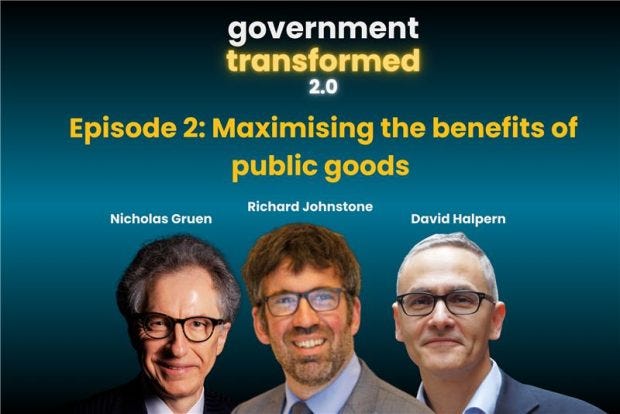
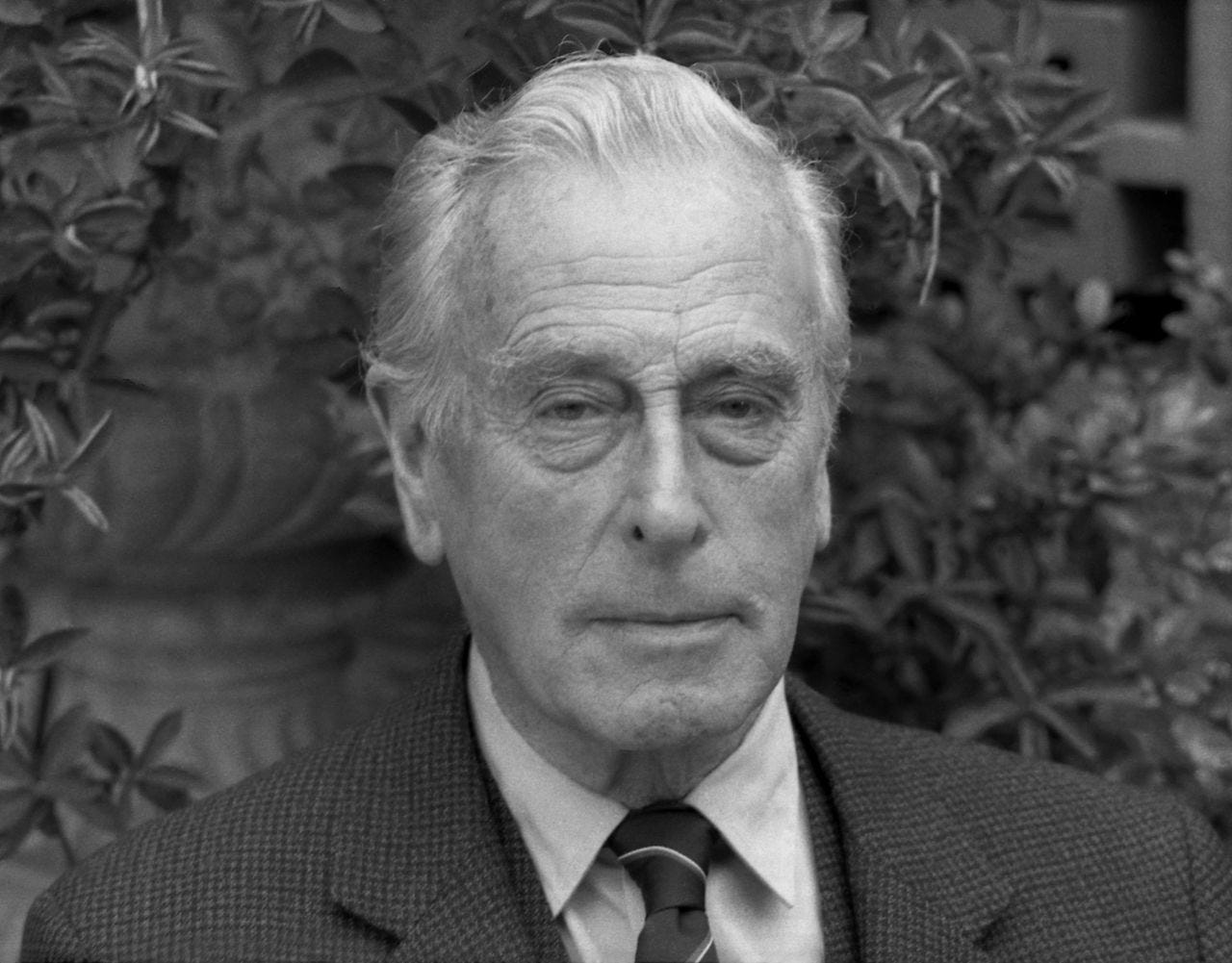


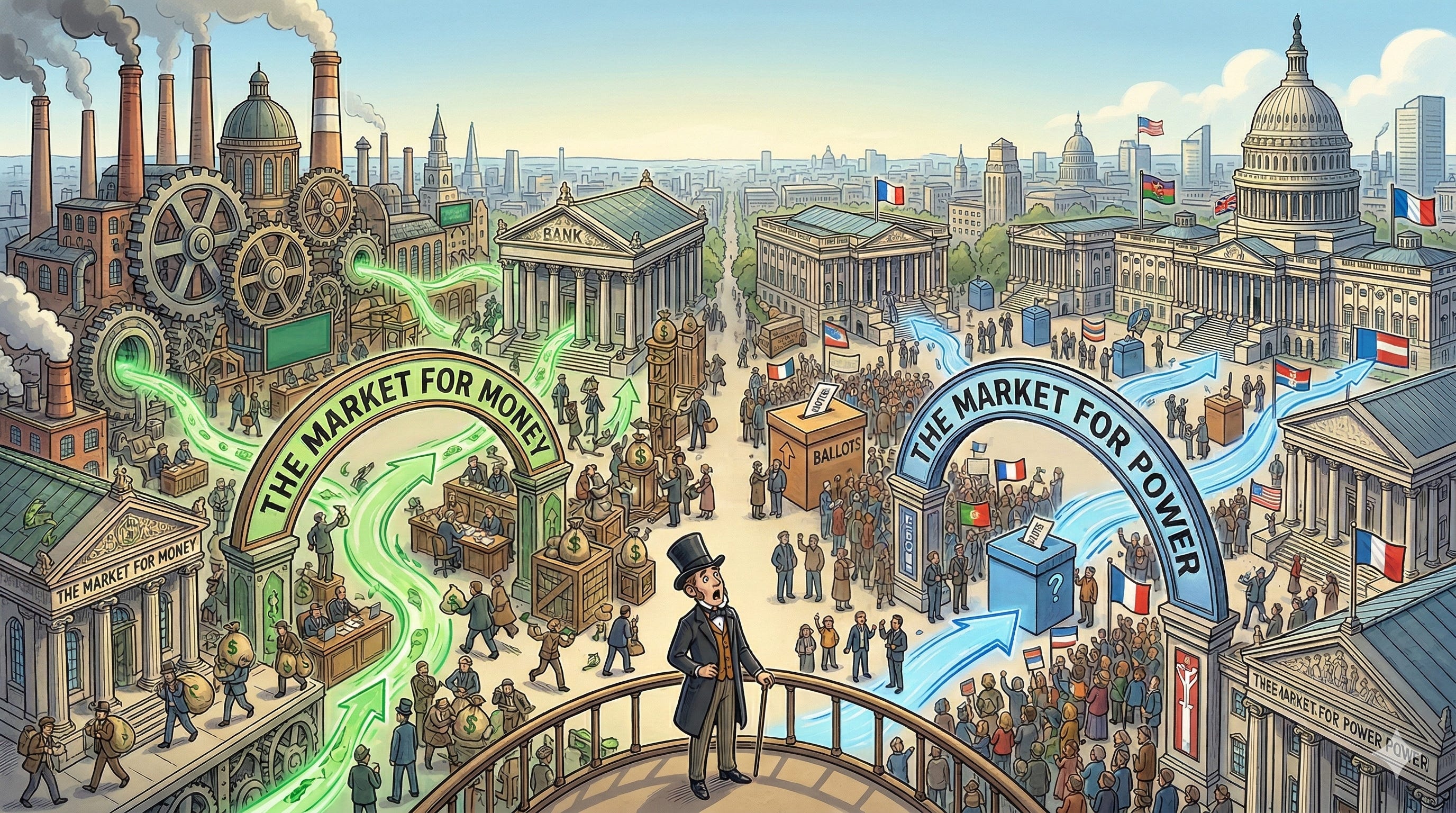

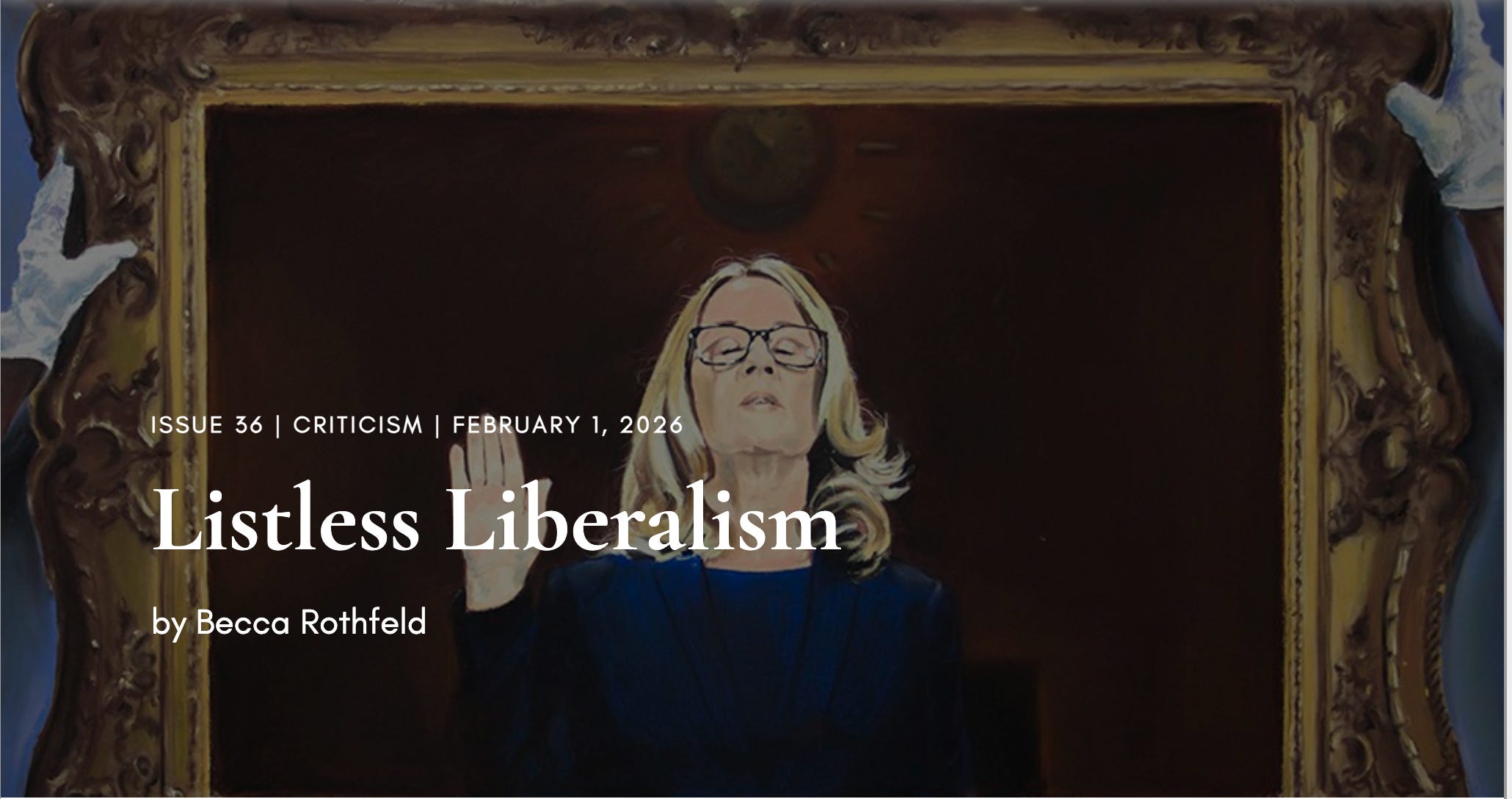
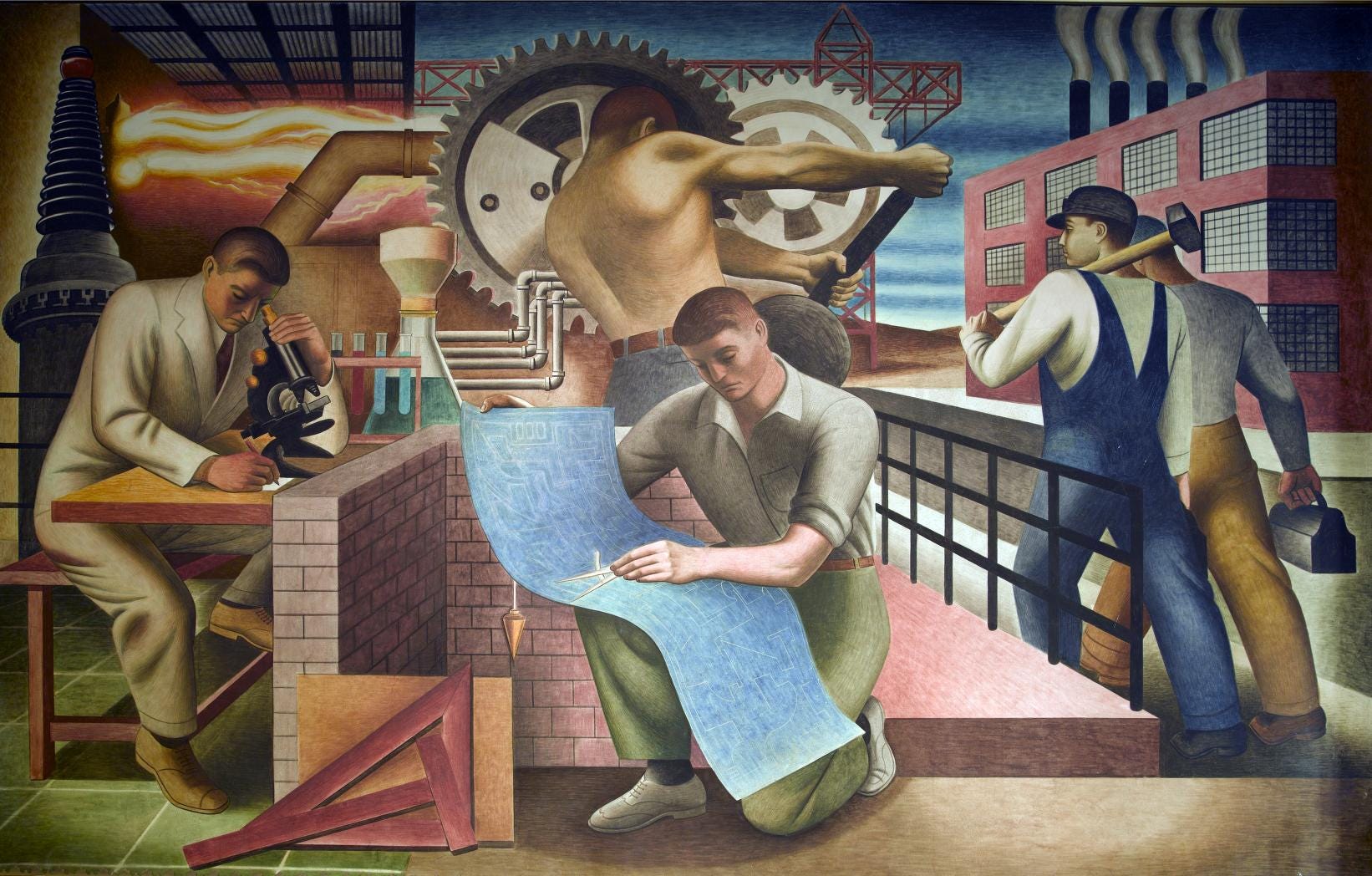
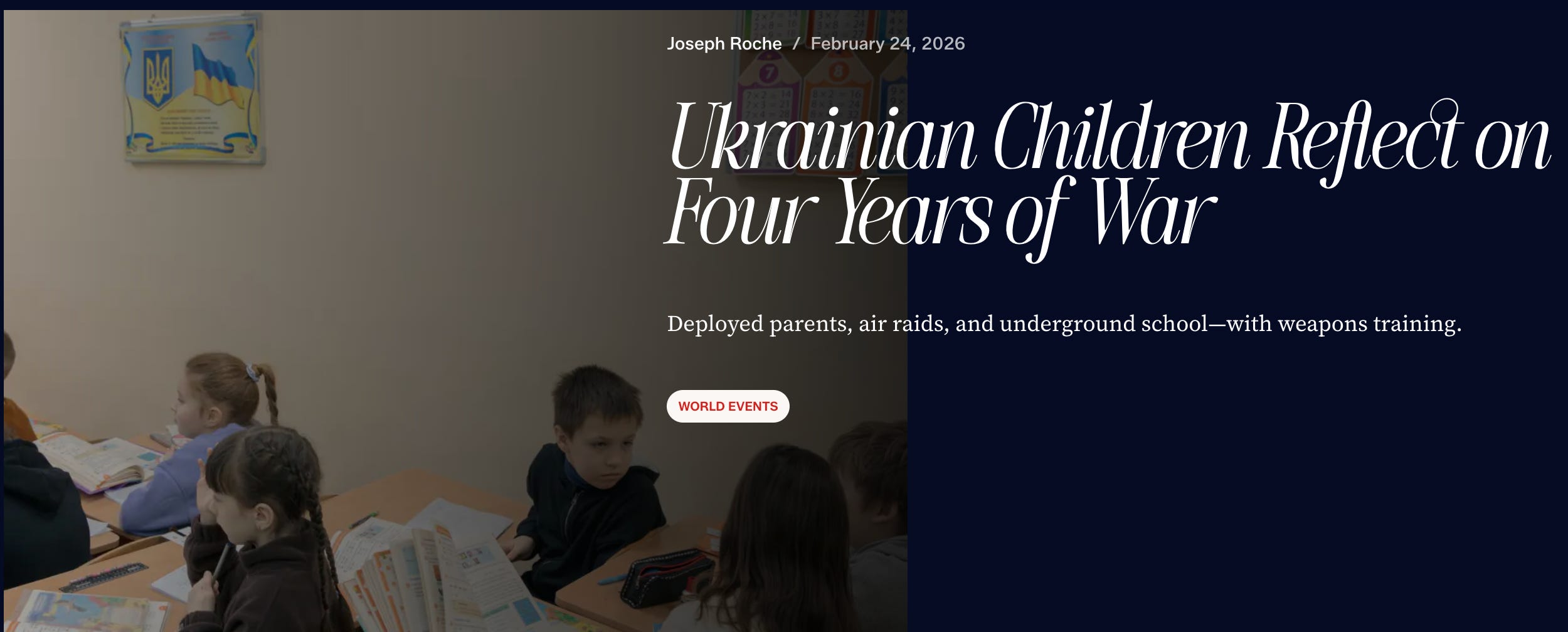


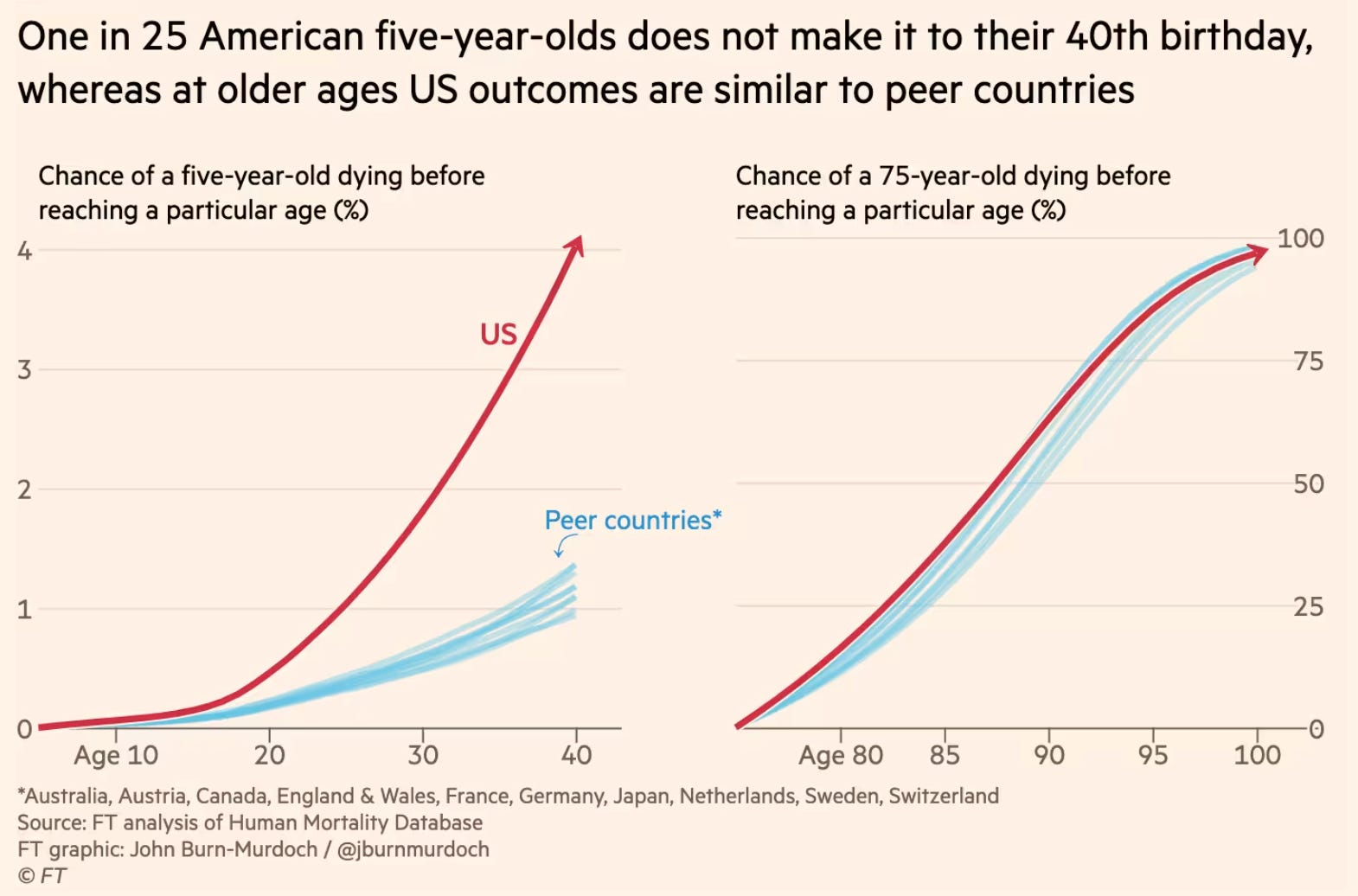
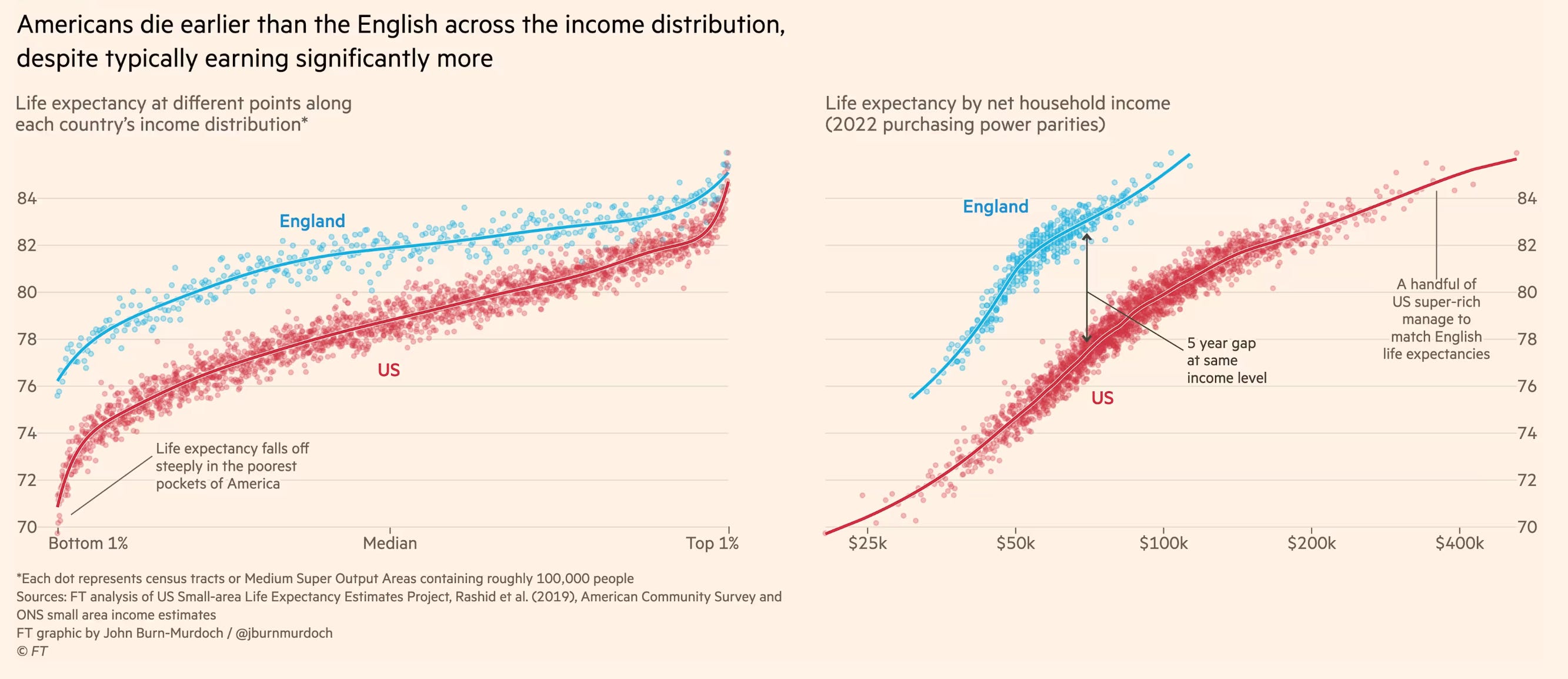

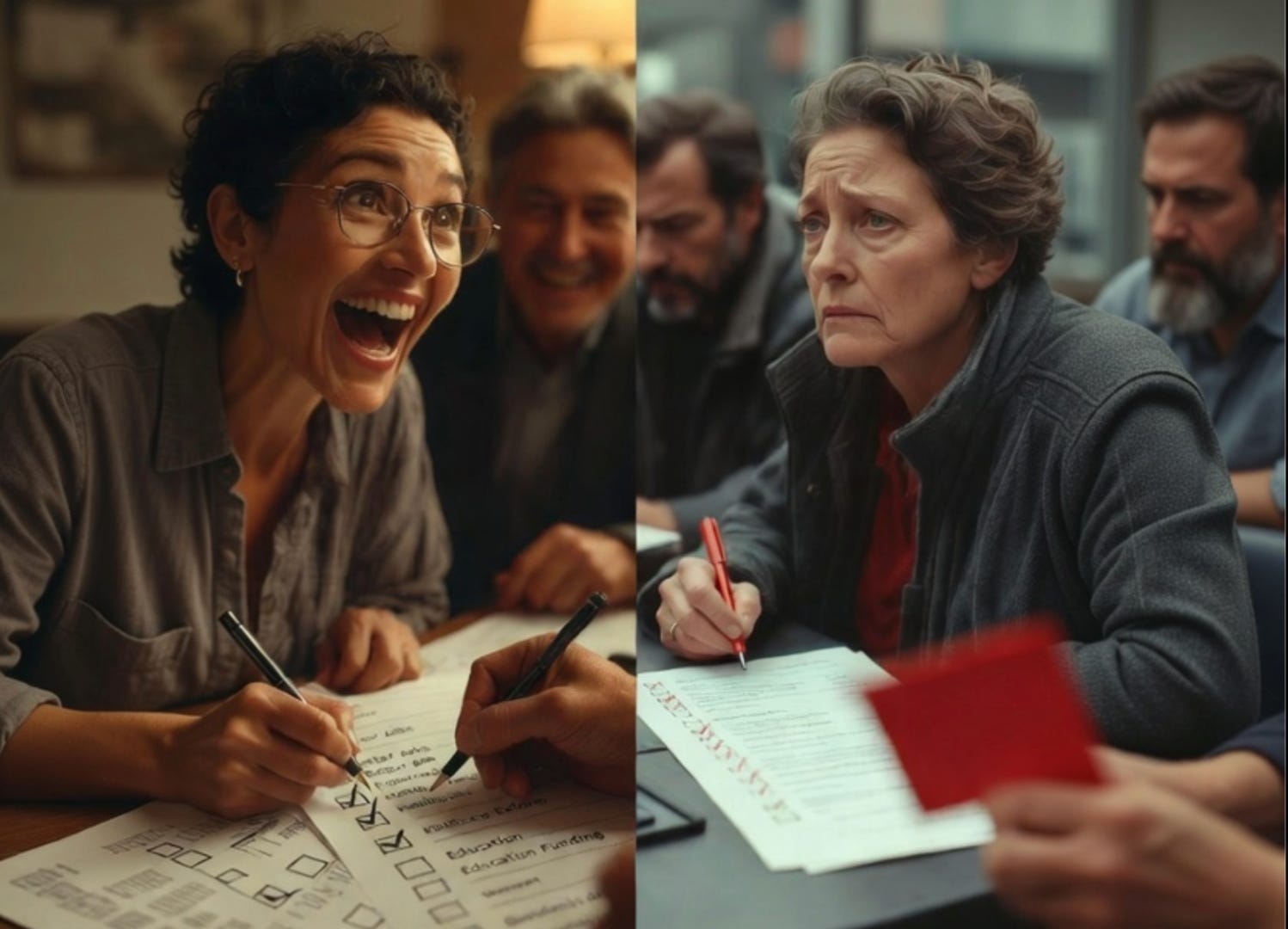





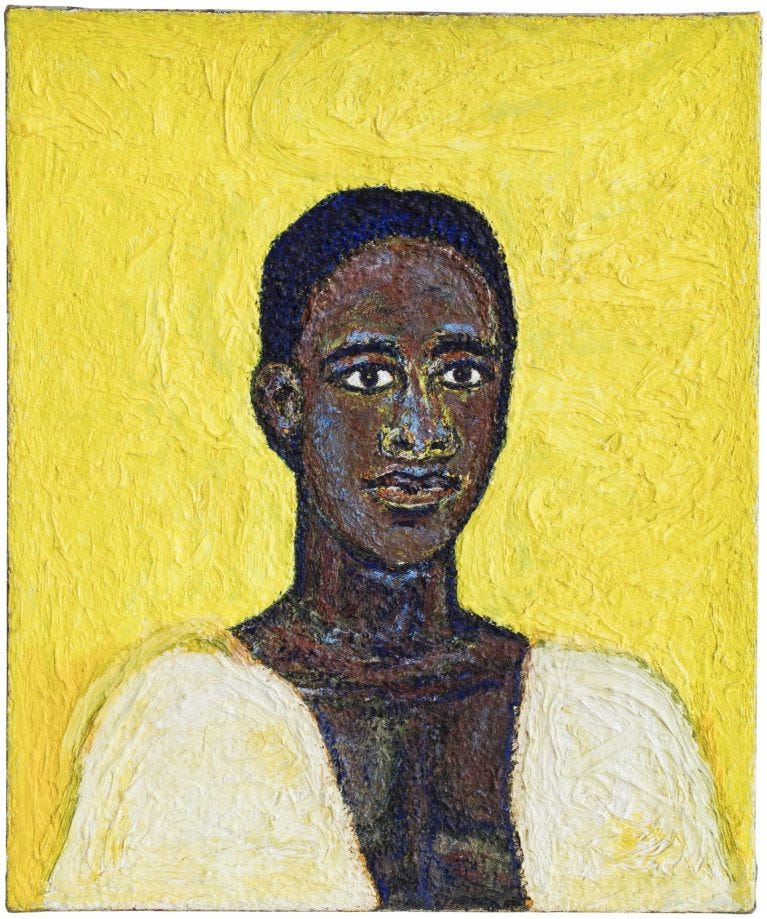
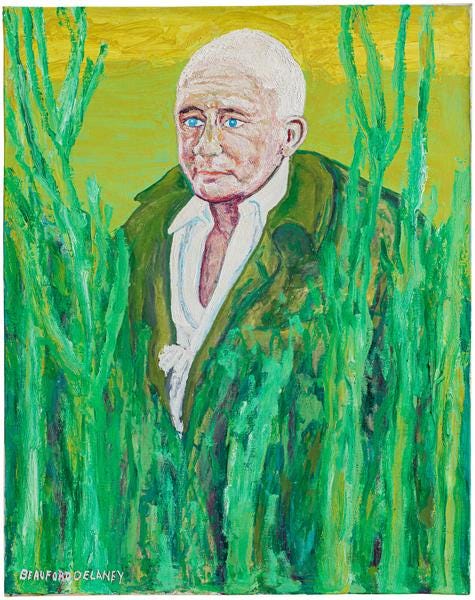
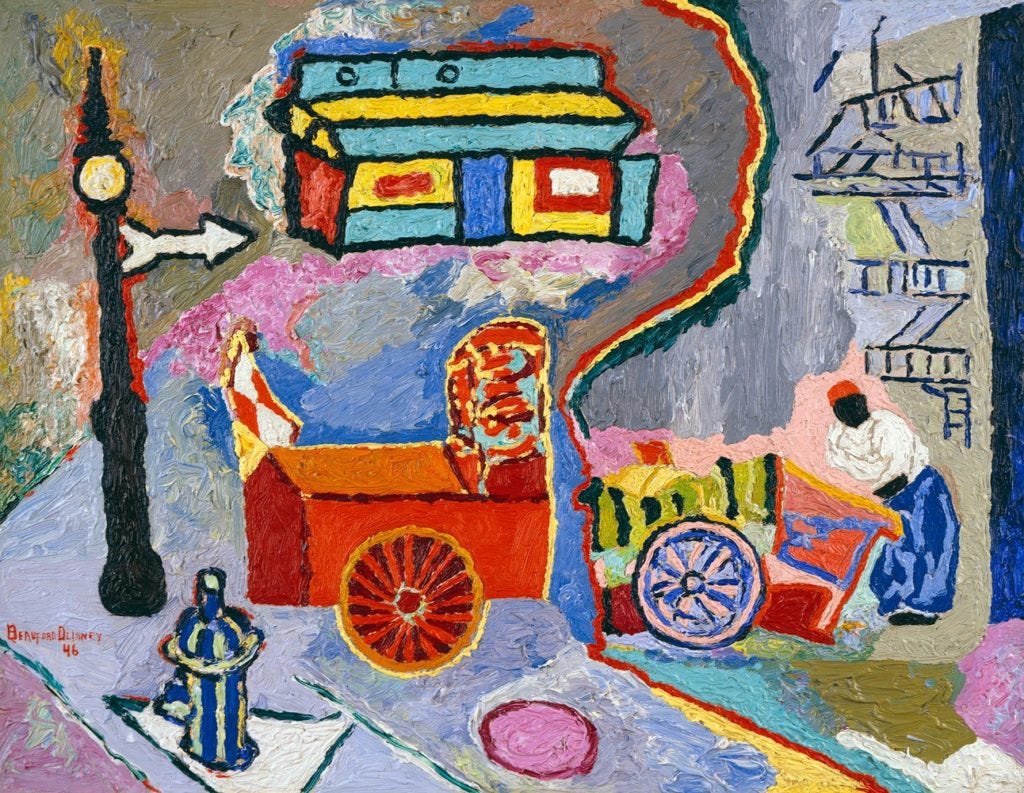
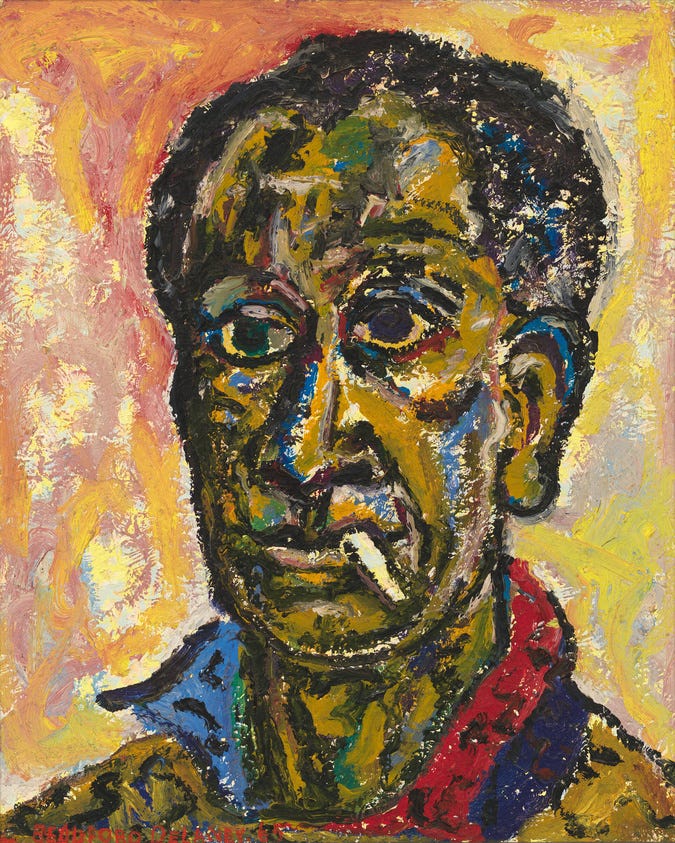
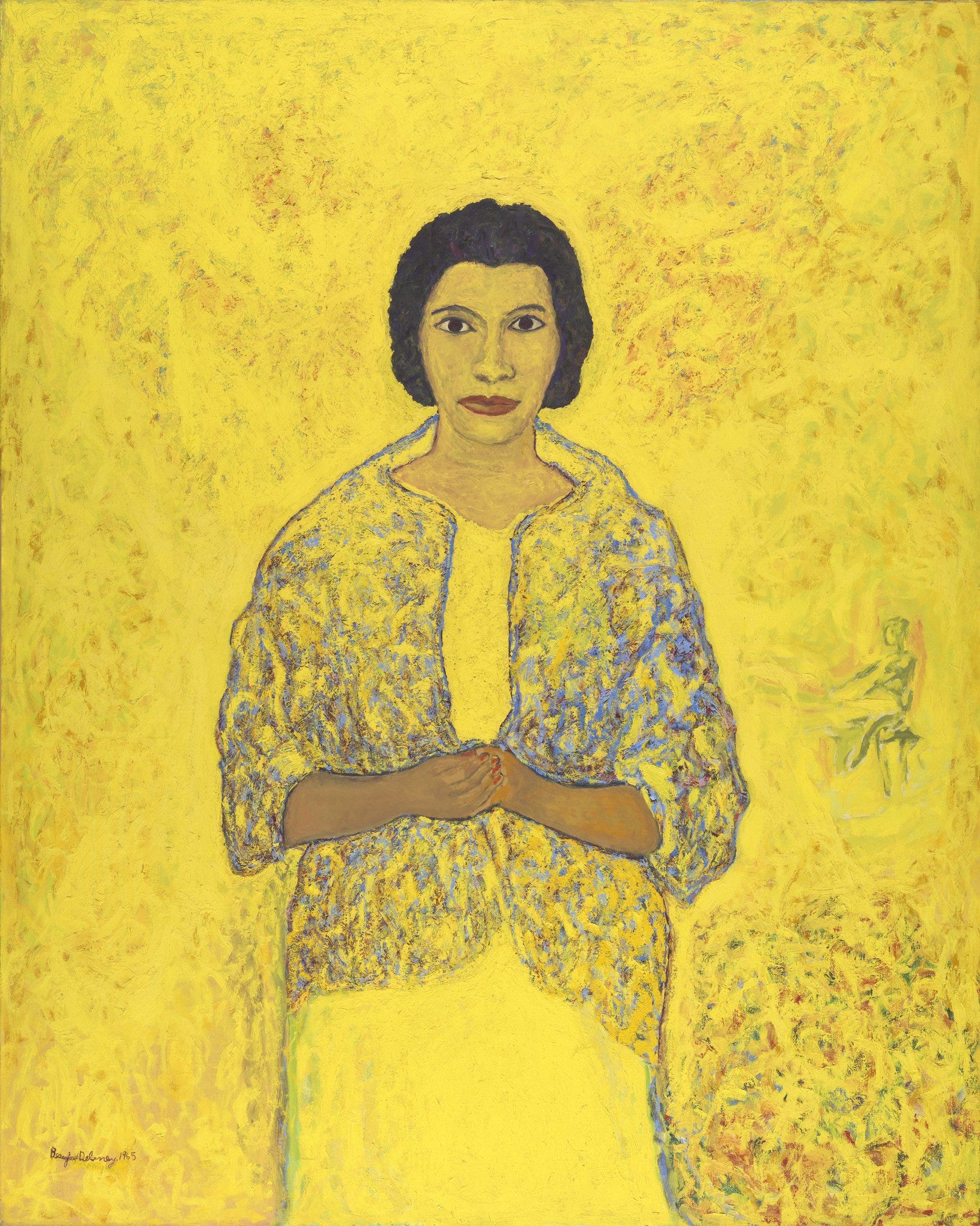




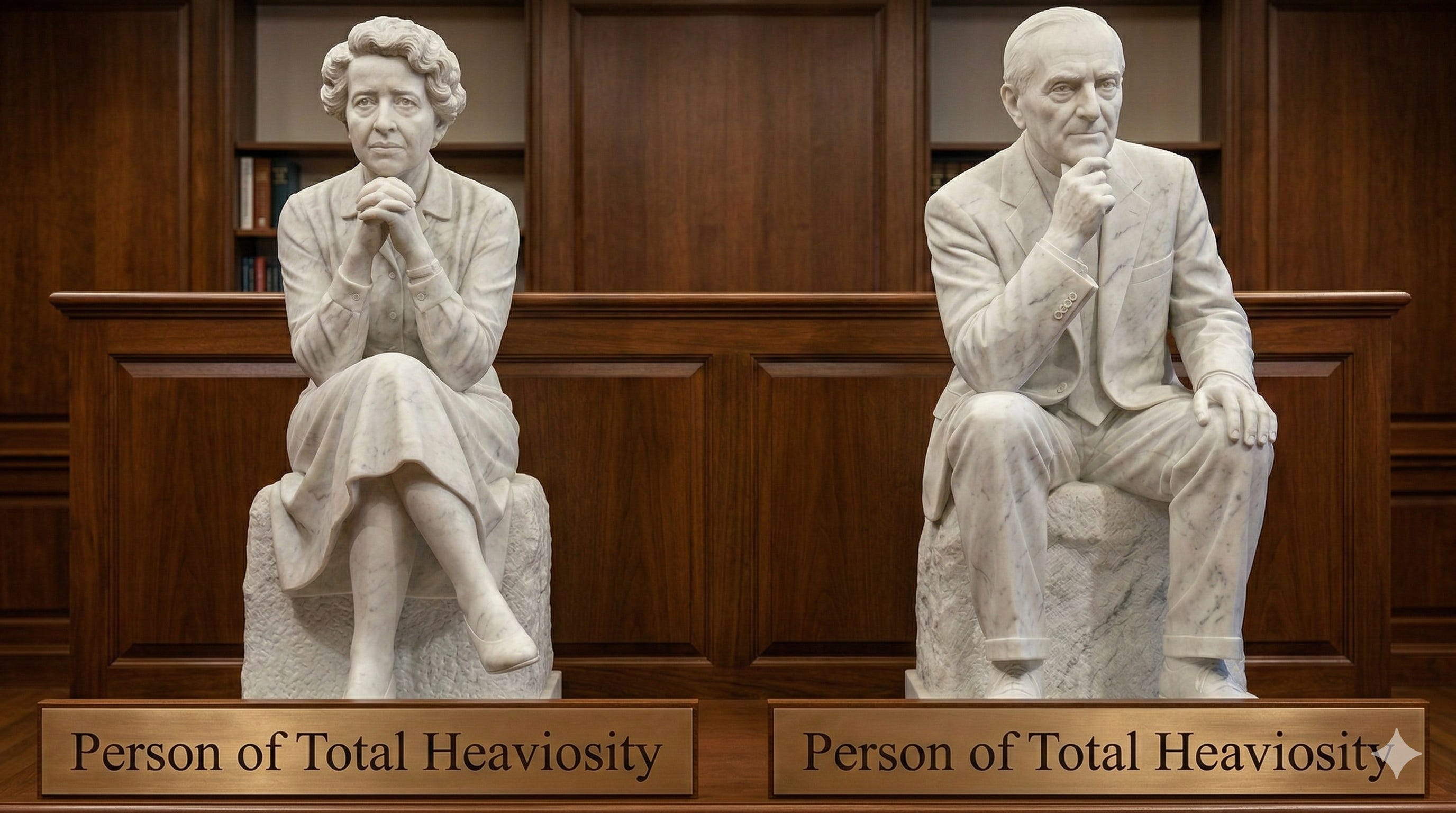


The last chapter of Abundance about the original scientific research that was not funded because of risk aversion may not point to any humanistic values per se but it is certainly a declaration that government institutions should give people the freedom to have new ideas and fight new battles. That may not be inherently liberal but is not the cozy, smug aesthetic which Rothfeld is criticizing. I also think that Ezra was reading a number of books about liberalism after the book was published so a brief for political liberalism was not what the book was meant to be. It was meant if anything to say that Maslow's hierarchy of needs applies to voters and if voters do not see things like housing and infrastructure getting done intraparty debates about more abstract ideas will only inspire them up to a point.