Did he do more than any other Treasurer to promote inequality? Hint: Quite possibly
Tom Switzer thinks Paul Keating is overrated. And so do I, even if I don’t agree with Tom that Howard was a particularly terrific PM, though I’ll grant he did transform the country in the (mean-minded) direction he intended. Still, I’m being a bit unfair. He did show guts on guns and, as Switzer points out, on East Timor, when the heroes of the mainstream Australian left, Gough Whitlam and Paul Keating, might reasonably hang their heads in shame. More importantly, I’ve always thought that, if you want to fail, you should go into religion, not politics.
I offered my own thoughts on Hawke and Howard here. But I always think of Hawke and Keating as like Lennon and McCartney. One seems cool, the other too conventional, too appealing to ordinary folks’ tastes. But it’s the less heroic, less chic one who does the work. Switzer concedes that it’s widely acknowledged that Keating was a great Treasurer. It’s interesting that he talks about people arriving in the job with a clear idea of what they wanted to achieve. That doesn’t describe Keating, who was sceptical of the Accord and at sea with the Treasury line for the first six to nine months of his Treasurership. Then he took to both like a duck to water. The ‘long clean lines’ of Treasury’s advice appealed to him. He deserves credit for pushing harder on tariff reform than his colleagues would have, but (at least as I understand it) Garnaut drove the internationalisation of the macro-economy in the early years with the floating of the dollar (which then Secretary of the Treasury John Stone opposed). Brian Howe drove social security reform though Keating facilitated it.
I also disagree with Switzer that the right should take credit for the successes of deregulation. In all English-speaking countries of which I’m aware, the ‘thinking’ side of politics — which at least then was the left — took the lead. Carter led in the US with airline deregulation, Callaghan in the UK with ditching vulgar Keynesianism and Whitlam was an early deregulator of industry assistance (which Malcolm Fraser campaigned against). Then the Hawke Government did lots of sensible deregulatory things - like the Button Car plan (though I say so myself ;). The Accord and Hawke and Keating’s dominance — and their endless highlighting of Fraser’s failure to deliver on free markets — meant the Coalition Opposition supported deregulation largely to avoid looking like Fraser. On my reading at least, they waved through tariff cuts because not doing so would have looked so hypocritical. Then they made merry political hay with the losers from those reforms — and those who could be made to believe they’d lost from tariff reform — arguing that the ALP’s base-broadening introduction of fringe benefits and capital gains taxation was driving up business costs at just the wrong time. They opposed both measures.
Beyond support for freer trade, Keating’s main achievements in economic policy were lowering the top marginal tax rate and continuing pressure to align company and top personal tax rates (which would have produced Reagan and New Zealand style tax cuts for the wealthiest). Peter Walsh understood the economics better than Keating and was successful in resisting him. There’s also the flat tax on the four trillion dollars in our super funds, and the reform with the longest, cleanest lines of all, but terrible policy in virtually every way - dividend imputation. It foregoes something like $30 billion a year on a classical-tax benchmark, hugely favours the wealthy and does little, if anything, to lower the cost of capital. Quite an achievement when you think about it.
Australian prime ministers fall into three categories.
There are the truly exceptional figures with the courage and will to shape history ... Think John Curtin, Robert Menzies, Bob Hawke and John Howard.
Then there are lowly ranked leaders, either tribal figures who represent the political machine ... or those who regard their parties with poorly concealed distaste ...
And there are those who aspire to reshape the nation but rarely seem fully in command of events. ... Their ambitions exceed their achievements, and leave little of worth as a legacy ...
Paul Keating, Labor prime minister from 1991 to 1996, belongs in the third category. ...
As historian James Curran argues in his new book Grand Ambition, Keating’s vision was to liberate Australia from our remaining constitutional and psychological attachments to Britain, achieve reconciliation with our nation’s Indigenous peoples and finally find our place in Asia.
But look at what became of his grand ambitions.
Keating’s great international achievement, the 1994 Bogor Declaration, envisaged free and open trade ... across the Asia-Pacific by 2020. That ambition has plainly not been realised.
Keating wanted to change the Australian flag and make Australia a republic. Neither prospect is remotely conceivable in the foreseeable future.
Keating sought to diminish the significance of Anzac and elevate Kokoda ... Yet Anzac remains as resonant as ever.
Keating’s project of symbolic Aboriginal reconciliation has stalled. The Voice referendum was overwhelmingly rejected ... in 2023.
Hansonism — much of it a backlash against aspects of Keating’s cosmopolitan vision in 1996 — has returned with considerable force. ...
Some scholars praise Keating’s determination to engage more seriously with Asia. That was — and remains — a worthy goal ...
But again, look at the record.
Keating and his media admirers champion his 1995 security agreement with Suharto as evidence ...
Yet the Indonesian dictator was overthrown only two years after Keating lost office, and his successor ... abandoned the agreement during the East Timor crisis in 1999. ...
Keating would later denounce the Howard government’s role in helping liberate East Timor ... as Australia’s “biggest foreign policy disaster since the Vietnam War”.
Yet when the moment for decisive leadership arrived, it was Howard and foreign minister Alexander Downer who acted. ...
As the ... Asian Wall Street Journal editorialised ... 1999:
“While Keating never stopped spouting slogans about Australia being part of Asia, only with the intervention in East Timor has Australia actually met and passed a real test of being a good Asian neighbor. ...”
During the Keating years, Indonesia occupied a much larger place in Australia’s public discourse ...
As I have written recently, Indonesian studies have declined ... and the teaching of Indonesian has steadily eroded.
So much for a consequential foreign-policy agenda.
There is, however, one important qualification. Keating deserves proper credit for his economic record as Treasurer ...
Between 1983 and 1991 he helped make the Australian economy more open, competitive and productive by floating the dollar, deregulating financial markets, cutting tariffs ...
His reforms were part of the same broad free-market revolution associated with Ronald Reagan, Margaret Thatcher ... and later ... Tony Blair: deregulation, lower trade barriers, financial liberalisation ...
In essence, Keating and Hawke stole the more free-market Liberals’ clothes ...
As treasurer, Keating was an important reformer. As prime minister, however, his grand ambitions were rarely realised.
The problem is not that Keating lacked ambition ... he talked a big game.
But ambition is not achievement. A prime minister’s historical significance ultimately rests not on the grandeur of his intentions but on what survives him.
Keating’s record must also be judged against his landslide defeat by John Howard in 1996 — a decisive rejection ... of much of the political project he had championed.
Who can forget Queensland Labor Premier Wayne Goss’s extraordinary observation during the 1996 campaign that “Queenslanders are sitting on their verandas with baseball bats just waiting for Keating to come”?
By that measure, Keating’s record is surprisingly thin.
For more, read my review of ... Grand Ambition: Paul Keating’s Global Vision for Australia, in The Weekend Australian.
OK, not literally. There’ll be lots more said for a while, but, after publishing a terrific Sam Kriss essay on him last week, here’s Musa Al Gharbi on the fiasco and though it’s not written with Kriss’s brio, it’s even better because of the similarity of the author’s experience to Arday’s and the way in which Al Gharbi’s analysis is both sympathetic and uncompromising. I previously mentioned my being non-plussed by Kriss’s treatment of Arday is somehow heroic in the audacity of his lies. Al Gharbi actually makes the same point, but in a way my tiny brain could take in. Arday is Gatsby, and though we’re made aware Gatsby’s money is criminal, we can’t help sympathising with him.
As with the Kriss piece, the edit I have below does capture the basic arc of the argument, but you should defs try go read the whole thing if you have another 20 minutes. (Special tip for Collingwood supporters: you now have more time on your hands for the rest of this finals season.)
The life and death of Jason Arday hit really close to home for me.
Both of us are Black scholars. Both of us were from nontraditional academic backgrounds and had unusual pathways into our professorships. ...
In Arday’s case, it seems he was set on being an elite ... and viewed academe as a path to achieving this goal. ... he made stuff up to get where he wanted. ...
Both of us have been canceled … and both our cancellations nearly ended the same way.
In the fall of 2014, I was an adjunct instructor ... at the University of Arizona. ... a dispute on X with a right-wing influencer would spiral into a Fox News-led campaign to get me fired. Successfully. ...
Instead, the university decided to distance itself from me rhetorically before discreetly severing ties with me professionally. ...
The sociologist Émile Durkheim theorized suicide as a product of anomie ... Getting canceled is a fast track to anomie. ...
My problem was that higher ed wasn’t alone in rejecting me: Everywhere else I applied did the same. ... I found it increasingly hard to resist the conclusion that the world and my family may be better off without me.
Ultimately, my Islamic faith and love for my family stayed my hand long enough for me to make it through the darkest periods. ...
In 2016, I was admitted into the sociology Ph.D. program at Columbia University ...
But it was not lost on me then or now that race was another big factor in my appointment. ... I just had to outshine the other Black students. ...
This leads to another thing I share with Jason Arday: Elite colleges gravitated toward both of us, in large part, because we added “diversity” to them. ... Admission to the program might have even saved my life.
Yet, in Arday’s case, being pulled into elite circles didn’t pull him out of a downward spiral; it seems to have hastened his demise.
Arday was less Don Quixote than Great Gatsby ... He was a nobody who decided to become somebody ... But you end up rooting for him anyway. ...
His exposure as a fraud was likely devastating not just for his professional aspirations, but his personal life too. ... Durkheim for the win. ...
Arday is far from the only academic to make false or deeply misleading claims about his disability status ... norms and policies intended to rectify historical and ongoing injustices have led to a commodification of victimhood. ...
There will be more Ardays tomorrow and for as long as the institutional structures and norms that incentivized and enabled him remain in place. ...
Across fields, most papers are not written to be read or put to use. They’re composed “for the file” — that is, to enhance one’s professional reputation and prospects. ...
fraud, hype, misrepresentation, and negligence are endemic in social research fields. ...
In these and other respects, Jason Arday was just an exaggerated version of the typical academic. He was canceled not because he was alien to us, but because he was one of us, through and through. ...
The scandal wasn’t his coverage or being pushed out; it was his hiring and promotion.
That rot, of course, doesn’t stop at Cambridge. [Roehampton, Durham and Glasgow hired him; journals published his fake data; journalists amplified his claims without fact-checking.] ...
my cancellation was, truly, nothing personal. ... They casually derailed my life ... just to fill the airtime. ...
casual nihilism and sociopathy lie at the core of the culture wars. ...
Truth and falsity have no place here. ... Even their death is, at best, a B-plot.
Arday is far from the only life lost to the culture wars. Antonio Calvo, Alexander Rogers, Richard Bilkszto, David Bucci, Mike Adams, and many other scholars also took their lives after being subjected to intense public scrutiny, ridicule, and ostracism. If their names don’t ring a bell, that’s precisely the problem. ...
Arday doesn’t strike me as a particularly good person. But he was a person, and as such, he was capable of learning, growth, repentance, and redemption. ...
Jason Arday had a family. ... they’ll now have to live in the shadow of this scandal and the culture war around it ... But for the rest of us, Arday and his kin will be completely forgotten in a few months at best.
To repeat what I said last week, I don’t think Cofnas’s research topic is worth much for reasons summarised in the discussion recorded above. But his interviewer does manage to provide you with some sympathy for him.
Meanwhile in a galaxy far, far away
The functional past that is …
How do you get dysfunctional institutions? It’s easy, you ignore functioning ones. And if that doesn’t work, you send them legal letters and send the cops round. From Times Higher Education reporter Jack Grove:
Scribbling down shorthand notes at a hearing in the Royal Courts of Justice on 3 February this year, my phone began to silently buzz ...
I was shocked to hear it was from the Metropolitan Police, asking me to call them back. ... the officer explained a complaint had been made against me regarding the University of Cambridge professor Jason Arday, but the matter was now closed.
But it was important, the officer explained, that I not contact him again, because it was affecting his mental health.
However, I hadn’t emailed Arday in four months – my last direct email had been in September, offering formal right of reply to allegations that he had plagiarised his PhD.
That allegation was not made lightly: I had assembled a 63-page report which detailed how he had apparently used, without proper citation, huge chunks from a thesis written in 2009 by another student ... In total, I submitted 97 pages of evidence to both Cambridge and ... Liverpool John Moores University ...
Although Arday was eventually cleared of plagiarism by an LJMU review, a frenzy of coverage led to Cambridge opening an investigation into Arday’s academic record ... followed shortly afterwards by Arday announcing his resignation.
But were my enquiries grounds for a criminal complaint? That was hugely troubling to me as a reporter who specialises in examining issues of research integrity and ethics. ...
But maybe my journalistic pursuit of this story was too “incessant”, as Arday has claimed ...
In fact ... I submitted only three polite emails directly to Arday over the course of two months, asking about suspicions raised by multiple professors about plagiarism or odd data in his 2018 Social Sciences paper, then ... about discrepancies in his CV and, finally, ... his much-vaunted running achievements ...
Phrased very politely, these emails were factual: there was almost no evidence, I said, that he had completed any of these runs, particularly the 600 miles in six days slog. ...
I believe these were all legitimate enquiries to put to Arday – particularly ... his prior papers, which had been the basis of his rise from a PhD student to professor within six years.
I ... explained that I was a journalist looking into a story with a public interest dimension ...
He told me that Arday had said I’d been making online posts against him. But I hadn’t made any online posts about Arday, so what was the complaint? ...
On reflection, I had, in fact, made one online post about Arday ... a congratulatory tweet ...
It was only when a different professor raised concerns relating to ethics clearance on other papers in June 2025 that I looked properly at the inconsistencies ... it led me to review his PhD thesis for plagiarism.
Despite the thoroughness of my investigation, THE did not run the story. ... Arday’s solicitors had been in touch with THE and it was clear that the story could tie the publication up in months of expensive litigation. ...
Instead, I waited for university research misconduct procedures to run their course ...
Unfortunately, the investigations took so long that concerns about Arday’s academic record spread ... eventually reaching Nathan Cofnas, a former research associate at Cambridge, who ran a plagiarism check. ... his investigation began nine months after I had raised my concerns.
It would have far better if the matter had been expedited ... Instead, the legal threat meant they were picked up by a Substack blogger who ... was ready to draw conclusions that I do not agree with. For me, this was, above all else, a story about potential research malpractice – it should have remained that way.
I am immensely proud to be a journalist at THE. ... UK academia is massively enriched by having diligent and dedicated scholars from all backgrounds ... But I ask them difficult questions too. ...
Cambridge’s position ... had been that it was for LJMU, the awarding institution, to investigate Arday’s PhD ...
To my mind ... using an arcane technicality within Cambridge’s Byzantine research procedures to prevent further scrutiny of questions about Arday’s academic track record risked bordering on the farcical. Cambridge may have put this right at last, but in the minds of many in academia and wider society, it is the Arday case that now demands the sector regulator’s attention.
I liked this piece on Anne Frank whom Geni tells me was a distant cousin of mine. I only became aware of it because the author subscribed to my Substack, so I checked out what they were up to. Like the blogging revolution, Substack has revitalised, this is a great way to discover the world.
Anne Frank was the author of the most famous personal account of the Holocaust. ... she and her sister Margot were sent back to Germany and died of typhus in the Bergen-Belsen camp in February 1945. The only survivor in her family was her father Otto Frank ... He ultimately published the diary that Anne had kept during their 2 years of hiding ...
I had never read the book - growing up, I was fascinated by WW II, and I visited Auschwitz in high school ... My interest in WW II was more typical boy stuff - tanks, planes etc. I am embarrassed to say that at the time, I was not as shocked and depressed as one would maybe expect a 14 year old German to be after visiting Auschwitz.
On an intellectual level, I was aware of my country’s past. ... one of my great uncles was in the SS. ... I never doubted that millions had been abused, deported and murdered - the only question was how much my grandparents knew about this at the time.
But… Until I met Jewish people, my empathy was limited. These were abstract historical facts to me. ... I simply did not have much connection to the Jewish world in the village I grew up in. ...
I think it is unusual for people to have empathy for strangers. Historically, it was not expected, and we can still see how one picture of an animal in need gets more donations flowing than a news report of thousands of foreigners starving. ... This is human - we evolved in small tribes. But we have widened our moral horizon a lot over the last 200 years, and that is an accomplishment we should be proud of. It’s the beauty of literature that it can create human connection over time and space - like Anne Frank’s “The Diary of a Young Girl” or “Uncle Tom’s Cabin”. It’s the job of historians to remind us that this human connection has not always been present and can disappear easily in a post-literate society.
After growing up in Germany, I was lucky enough to go through medical training in 2 great, historically Jewish institutions ... If Germans can be trained by Jews and trusted to take care of Jewish patients, what is there that can’t be overcome by humanity? ... The first car my wife and I bought in 2011 was a used VW from a professor of Hebrew in Brooklyn!
That car purchase led us discover Park Slope ... Over 10 years later I picked up a copy of Anne Frank’s Diary ... One day, our then 3rd grade daughter picked up this book ... and read it. That prompted my reading the book, because I wanted to talk to her about it.
I have not gotten very far… ... I noticed that she has named her diary Kitty, like Anne did. I’m sure it will influence her, even if only by anchoring the knowledge of one young girl who was very brave ... And the knowledge that evil exists in the world, even among “her people”. ...
Anne Frank’s father ... was a very well educated, affluent businessman who planned ahead well ... (he had applied for a US visa twice).
Had other countries, especially America, shown a tiny bit more empathy with the plight of Jewish refugees, families like Anne’s could have easily escaped. It was the work of people like Breckinridge Long who actively blocked the path of thousands of people ...
The US State Department would not even let Jews emigrate to the Philippines, still under US control at the time. Despite the fact that Manuel Quezon, the first president of the Philippines planned to settle tens of thousands of Jewish emigrants in Mindanao, only 1200-1300 people were able to escape this way due to bureaucratic hurdles ... No American would have lost their job had this been allowed ...
Anne Frank heard about the D-Day landings on the radio, and for almost 2 months she must have been full of hope. ... It was hard to read her diary knowing how it all ended on August 4th. I also empathized with ... Otto Frank. I can’t grasp his loss, after such a long struggle.
This was the first time I read a book written by a 13-15 year old girl. I know that not all women are as deep in their thinking and as psychologically gifted - but, boy, what a difference to the male species. I should speak for myself only, but my son and me, we are simple people compared to the women in our family! We need girls to make sense of this world. And boys who listen to them and fight evil, so that the Nazis will never win
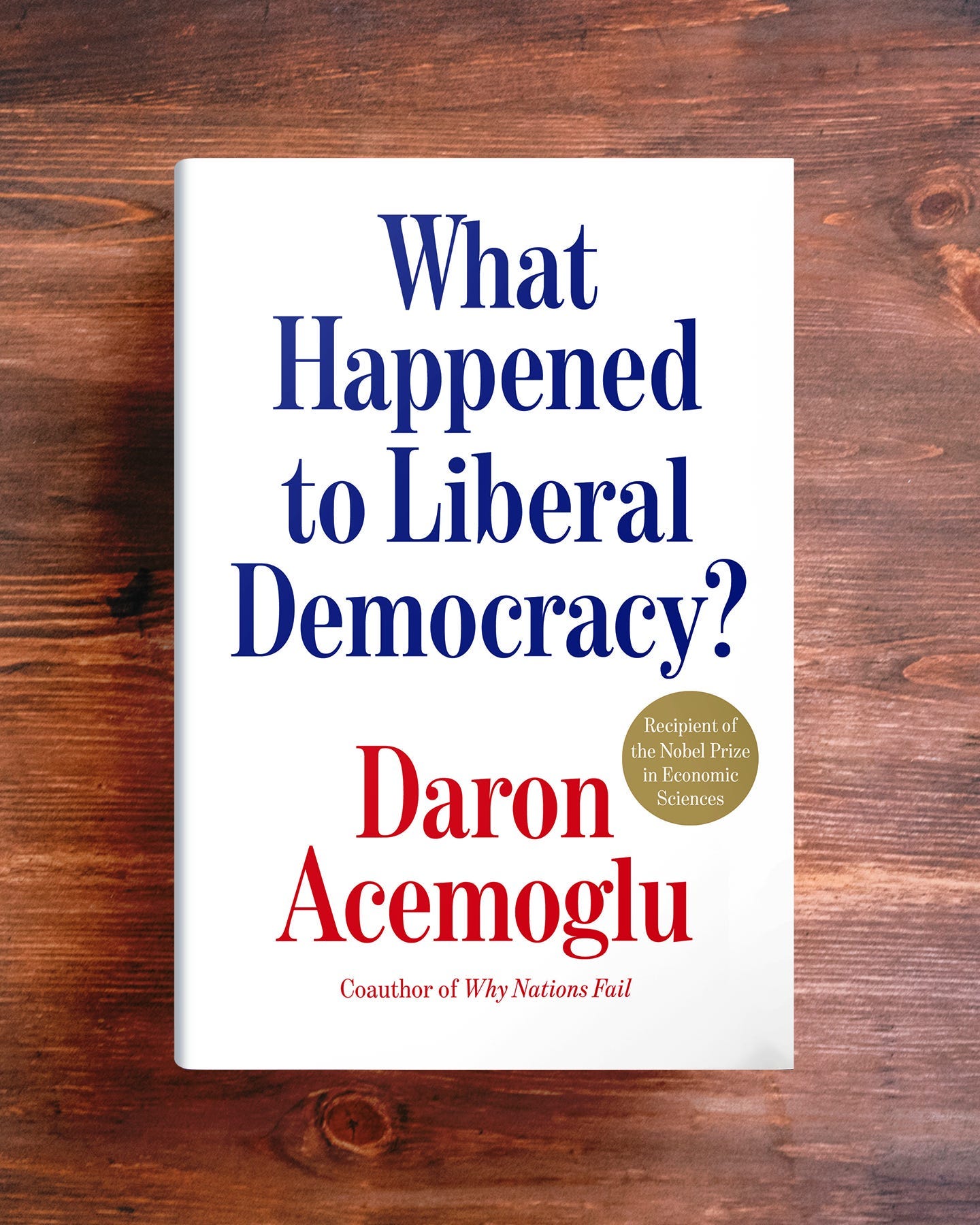
I published a somewhat critical review of Daron Acemoglu’s latest book on liberal democracy last week. I found it interesting that The Economist too was relatively fearless of his reputation as a Nobel winner.
BY THE TIME he received the call from Stockholm, it felt overdue. In 2024 Daron Acemoglu of the Massachusetts Institute of Technology shared the Nobel prize in economics with Simon Johnson and James Robinson for work on how institutions shape prosperity. Mr Acemoglu is only 58 years old, but for some time he has been the discipline’s colossus…
Give an economist a few drinks, however, and some of them will venture their true opinions about this giant. “…he uses his models to inform populist policies that have been tried before and failed,” blasts one well-known economist…
No one accuses the prolific economist of truly poor research, let alone academic malpractice… The question is whether Mr Acemoglu’s reputation at the very apex of the economics profession—and the intellectual influence that goes with it—is justified by his scholarship.
Start with his empirical methods. His Nobel rests heavily on a paper released in 2001 with Messrs Johnson and Robinson, which researchers have cited more than 23,000 times… [Where European settlers died in droves, colonisers built “extractive” institutions; where they survived, more inclusive ones.] Those institutions persisted, with the effect that places with lower settler mortality during colonial times are richer today.
Economists now take these results seriously but not literally… In 2012 David Albouy … showed that some countries were assigned mortality rates borrowed from other countries… Correct for these, he found, and the paper’s estimates become unreliable…
Mr Acemoglu … counters that Mr Albouy reaches his conclusion by omitting half the data from the original sample…
[A] determined critic could find holes in almost any researcher’s work—and Mr Acemoglu is the biggest target in economics. Yet fame-induced scrutiny cannot explain the second problem: that Mr Acemoglu’s ideas can seem underwhelming for a titan of social science… His “unified theory of Trump”, for instance, asserts that the American president operates “by elevating executive power and destroying constraining institutions and norms”. Well, obviously.
Institutions and Institurtles
More worrying is that his grand thesis of institutions may not reveal very much. Nations prosper when institutions are good, and stagnate when they are bad. True. But what, exactly, is an institution? Rules, norms, enforcement, culture—everything, really. Where do institutions come from? From “critical junctures” and “institutional drift”, whatever that means.
Reviewing one of Mr Acemoglu’s books in 2011, Tyler Cowen … noted that the institutional changes it describes only seem to come from other institutional changes, making the core argument regress for ever—turtles all the way down… Francis Fukuyama … has argued that the book waves away the example of China, which has seen blistering economic growth alongside institutions that can … be described as extractive.
Mr Acemoglu retorts … “I don’t think this is tautological at all,” he says.
To the extent that Mr Acemoglu breaks from received wisdom, it is mainly to espouse remarkably glum views about technology. “Power and Progress” … treats a thousand years of innovation largely as a story of elite capture and unintended consequences. The cotton gin was the handmaiden of slavery, while the Haber-Bosch process created weapons… The book plays down a much more compelling claim: that technological progress in and of itself has made the average person many times richer than in pre-industrial times.
Mr Acemoglu’s arguments about AI are also pessimistic to the point of losing their credibility. In a paper released in 2024 he calculates that AI will boost American productivity by only a small amount over ten years. The paper reaches this conclusion by ignoring the potentially transformative effect of new AI products coming to market…
“This is a valid criticism,” says Mr Acemoglu. “I did not foresee agentic AI…”…
These academic disputes may seem unimportant, but they could end up mattering a great deal… His new book focuses on the potential social harms of the technology … rather than its potential benefits. His proposal to limit those harms, “pro-worker AI” that would augment the value of human labour rather than replacing it, sounds terrific—and obvious.
Mr Acemoglu’s influence in the AI debate is clear in a recent statement … which argues that “we must act now” to “steer AI in a direction that complements humans”… Who is the “we”, exactly?… Even economists who signed the petition say they are not entirely sure. So great is Mr Acemoglu’s stardom that it can sometimes blind the critical faculties.
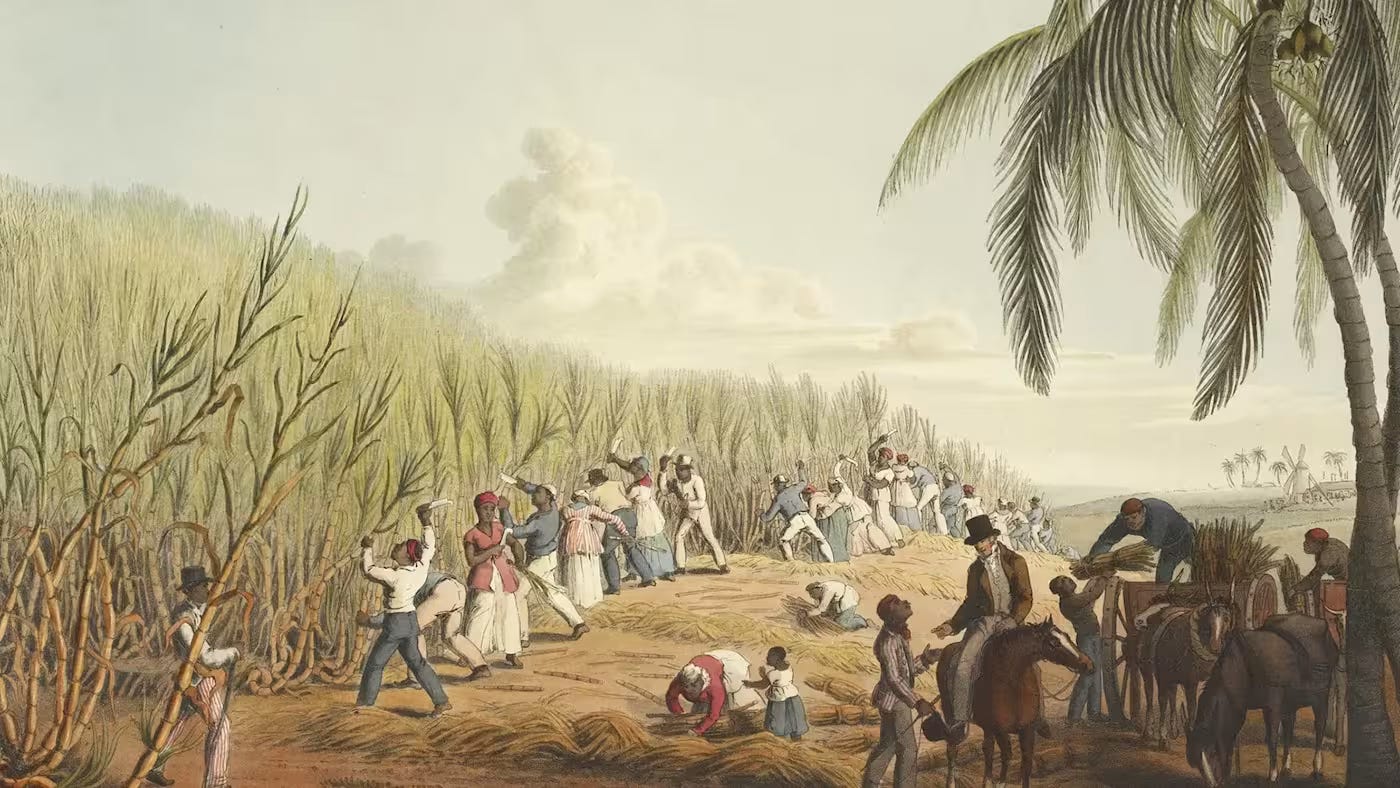
Enslaved people cutting sugarcane on the Caribbean island of Antigua, aquatint from Ten Views of the Island of Antigua by William Clark, 1832.
Somehow reading up on Acemoglu’s new book reviewed above, I came across this terrific review of Acemoglu’s career when he and his colleagues won the Nobel by Brendan Greeley of the FT. I kept tweeting out quotes as I was going through it. Terrific stuff.
It’s tempting to think that England was always a seafaring and financial power, but these skills had to be learned, together. That’s why An Introduction to Merchants Accounts by John Collins was a big deal when it was published in 1653. ...
The sample journal entries in Collins’ textbook reflect trades ... — oil from Provence, soap from Venice, the ginger and cotton that indentured servants grew on Barbados. ... [A century later, in the most popular accounting textbook in the English-speaking Atlantic world, John Mair’s Book-keeping Methodised,] [a] whole chapter of sample journals dealt with Jamaica, Barbados and the Leeward Islands, which Mair called the sugar colonies. ...
While British had been teaching themselves Italian accounting, they had also been learning from the Portuguese and the Dutch the tenets of the engenhos, the mill system where enslaved Africans planted, harvested and processed sugar. ... The ginger and cotton on Barbados had become sugar because engenhos were much more profitable for their owners. ... [S]ugar had become the engine of the Atlantic.
I went back to Collins and Mair this week after Daron Acemoglu, Simon Johnson and James Robinson won the Sveriges Riksbank Prize in Economic Sciences ... They won for taking on the question of divergence ... What made the difference, they argued, were institutions ...
In Why Nations Fail ... they use late 17th century England, Barbados and Virginia as examples. England and Virginia became inclusive: property rights, legislative assemblies ... Barbados became extractive, relying on enslaved labour to produce profits for a small elite.
These descriptions are true but insufficient, because England, Barbados and Virginia were all part of the same system. The same captive domestic market, protected by tariffs, sent slave tobacco and slave sugar through factors in the colonies and merchants in London and Glasgow.
The shape of this captive market was clear to John Mair, who wrote a chapter of instructions on how to account for the enslaved and the sugar trade ... explaining how that trade “not only employs multitudes abroad in the colonies, but cuts out work for a vast deal of people at home.” ...
London merchants and Barbadian planters, well represented in Parliament, became powerful advocates for inclusive institutions in Britain not in contrast to the extractive institutions on the other side of the ocean, but because of them. ...
Acemoglu, Johnson and Robinson have encountered this question — it’s right there in their footnotes. They just don’t seem to think it matters. ...
[This] inability to see how London, Virginia and Barbados function within the same system is, ironically, an institutional problem within the profession of economics. ...
[In the opening chapter of Why Nations Fail, Acemoglu and Robinson] argue that the Virginia Company ... had begun developing inclusive institutions, such as Virginia’s General Assembly, “the start of democracy in the United States.” The footnotes reveal the source to be Morgan (1975). ... But the name of that book is, unfortunately, American Slavery, American Freedom. ...
Morgan argues that the extractive institution of Black slavery had changed by the end of the century, becoming even more draconian and brutal, as the democratic institutions of colonial Williamsburg became more representative. Inclusive institutions for white Virginians became possible not despite the extractive institution of Black slavery, but because of it. ...
Acemoglu and Robinson read a book called American Slavery, American Freedom, used the bits about American freedom and tossed the bits about American slavery. ... If they did this with data, you’d call it p-hacking.
There’s more historiographical p-hacking in Why Nations Fail. They quote Sheridan (1973) ... But Richard Sheridan’s Sugar and Slavery argues in part that the English didn’t just profit from slavery in the West Indies, they gathered both capital and competence in shipping and finance. ...
This year the Riksbank awarded its prize to a treatment of early modern institutions so selective it functions as a bedtime story for capitalists. ...
But good and bad institutions have always been paired. It is not so easy to tease them apart into natural experiments, and just as useful to see how they’re connected. Democracy and the rule of law are the best institutions we have. ... But the story of how they came about can cause discomfort. That discomfort is just as important as the celebration. ...
Stop by the history department. Grab a book. But you gotta make sure you read the whole thing.
And I don’t mean high IQ. I’m often amazed by how much Jimmy Carr is able to dig into powerful and simple insights he’s clearly pondered well before someone puts him on the spot.
Why kill yourself today when you can do it tomorrow?
Nice piece from Misha.
A fund manager in Sydney killed himself last week. A father in his forties. ... Jewish guy, apparently. Leaves behind a wife and young kids.
A mate and I were talking about it. My mate’s had mental health issues in the family, including one suicide. ... There was a particular texture to our conversation, one that I have surprisingly often with other men around my age (I’m not 40 yet, but getting there). ...
I have no idea about the circumstances of this particular fund manager, and so none of what I write may apply to him. ...
This period of our lives is tough. Young dads. ... We have dependents. They depend on us. Financially, emotionally. We want to be good dads. We want to be good husbands. ... We want to win. If you’re ever going to win bigly, now’s the time. ... Back pain. ...
Life’s become defined by compromise. When I first had a kid the way I thought about it was: you are measured out of 10 as a father, a husband, a friend, health, and work. If you’re a 10/10 in all, you have 50 points. But you only get 25 points to allocate each day. ... Some days you’re a sucky dad or husband. Compromise. (Son didn’t even make the list. Sorry mum.)
And that’s if things are going well. Let’s not even get started on divorce, addiction, illness, a death in the family. A disabled child. ...
But here’s the thing. Whining is for losers. No one cares. Your friends care but they have their own problems. ... Just get on with it. ... Oh, no one told you it would be like this? ... Go live in a fairytale.
Here are some reasons you should not kill yourself:
You can always kill yourself tomorrow. ... It’s a one way door. Funky stuff can happen in your head, circumstances can change. The world is big and weird. ... Don’t ever kill yourself today — you can always kill yourself tomorrow.
It’s not fair on your kids. You know that already.
You don’t win any brownie points. ... Your friends will be sad and your enemies will laugh at you. You probably don’t even have any enemies. You’re not an archnemesis guy. ...
Choose coffee. A fake-internet meme is Albert Camus asking himself “coffee or suicide?” Blokes I know ask themselves this every morning. Have a cuppa. ... Eat cake. The miracle of creation is all around you.
Sleep. Sun. Food.
Do you really want to top yourself over a work thing? Ok so you underperformed or markets suck. Your grandparents fled Cossacks. Get a grip.
There are better ways to go. Tackling a terrorist. Seppuku. That time in 1865 when former governor of New Zealand Robert FitzRoy killed himself because the method of weather forecasting he invented didn’t work. The bar is high.
Plenty of great men fumbled bad. John Maynard Keynes got wiped out by margin calls — twice. Isaac Newton invented calculus then got obliterated in the South Sea Bubble of 1720. ... You’ll be fine.…
You’re a dad and a man and it’s life. Go out and win.
Adam Cullen (1965-2012) Outside Glenrowan 2011 synthetic polymer paint on canvas 137.5 x 137.5 cm Estimate: $50,000 - 70,000 Sold for $104,318 (including buyer’s premium)
Dictator chick
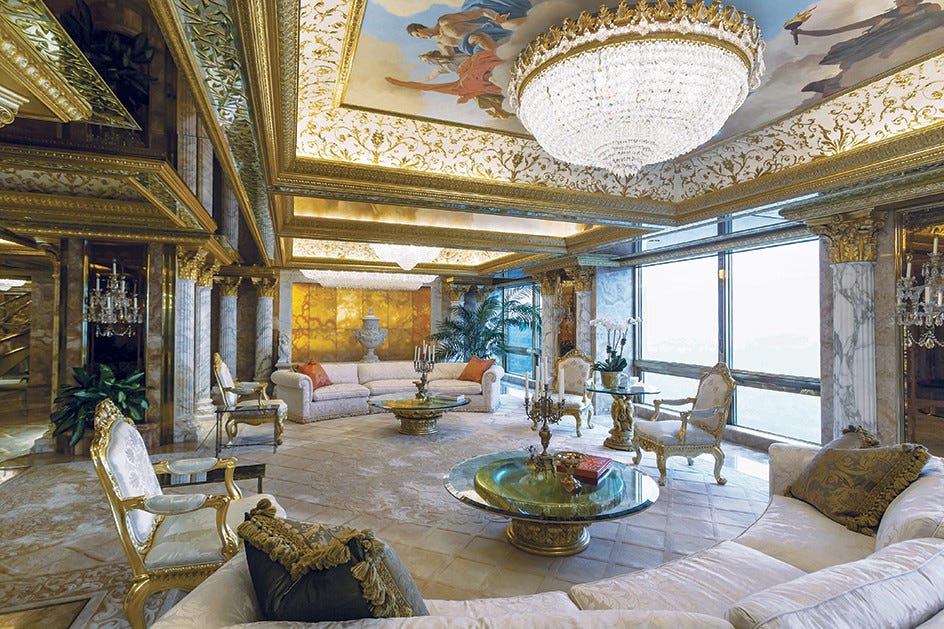
Fascinating article from as long ago as 2017 on how Donald Trump’s taste in architecture and interior decoration fits right in with dictators of the world. Visit the original site for more words and lots of pictures.
Every good brand needs a theme and an aesthetic, and President Donald Trump has spent decades cultivating both. The theme is success, wealth, winning, and the aesthetic is bright, brassy, loud—or, depending whom you ask, gaudy and fake. ... Architecturally, it’s gilt and mirrors, as in his famous marble-and-gold Trump Tower apartment, ... with its canopy beds, fresco-style ceilings and colossal chandeliers.
Trump’s design aesthetic is fascinatingly out of line with America’s past and present. ... that doesn’t mean his taste comes from nowhere. ... it also has important parallels ... with something more recent. The best aesthetic descriptor of Trump’s look, I’d argue, is dictator style.
A decade ago, I published a book on exactly that topic: ... I ended up with 16 case studies ... and most of them, I concluded, obeyed 10 defining “dictator chic” rules.
The first: Go big. Dictators’ building projects are almost always ludicrously overscaled. ... Nicolae Ceausescu ... and his wife, Elena, started building what was to become one of the largest government buildings in the world. ... even today, it reportedly is mostly empty—too large for an entire country to fill.
The second rule of the dictator look is all about “repro.” ... Everything is brand spanking new. Old styles add gravitas, but antiques themselves are too faded and shabby. ...
This leads to the third rule: Think French. ... French can always be counted on to say “money” faster and louder ...
Aside from France, dictators often seem to draw from hotels (rule No. 4) ... I reckon Saddam Hussein saw that early Hilton look as the good-life template for the estimated 65 palaces and other compounds—mostly hideous—he ended up with.
Then, there are the materials—rules 5, 6 and 7. “If I’ve only got one life,” most dictators seem to think, “let me live it surrounded by gold.” ... Viktor Yanukovych ... lived in a positive blizzard of gold ...
After gold comes glass—the better to reflect one’s abundant opulence. ... And after glass is marble—floors, walls, tabletops, every square inch of the bathrooms. ...
Rules No. 8-10 are about decorations and ornaments. ... the cult of personality needs iconography, too, and that means pictures of yourself. ... Elena Ceausescu apparently displayed a picture of herself graduating from university—though she never did. ...
The whole point is that dictators’ homes aren’t for one’s family, friends or private self ... Dictators’ homes, in fact, are the job ... They are an architectural and artistic means of establishing the power of the occupants, of intimidating and impressing any visitor. ...
Then, in late 2015, I came across a set of pictures with no identifying text. They appeared to show a gigantic apartment in what looked ... very much like New York. ... [You] would think the place didn’t belong to an American but to a Russian oligarch ... The home had lots of gilded French furniture and the strange impersonal look of a hotel lobby ... there were the usual huge chandeliers ... and mushroom-colored marble floors. ... the place reeked of dictator chic.
As it turned out, this familiar yet unfamiliar apartment ... belonged to Donald Trump, who by then was running for president. This was the penthouse of the potential leader of the free world. ... the main thing this apartment said was, “I am tremendously rich and unthinkably powerful.” This was the visual language of public, not private, space. ...
Why does all of this matter? Domestic interiors reveal how people want to be seen. But they also reveal something about the owners’ inner lives, their cultural reference points and how they relate to other people. ... Trump’s aesthetic puts him more in the visual tradition of Turkmenistan President Saparmurat Niyazov, who erected a massive rotating golden statue of himself in Ashgabat, than the self-effacing gray-suited conventions of Western democratic leaders. ... Trump’s apartment projects a kind of power that bypasses all the boring checks and balances ... It is about a single dominant personality.
This, of course, is a startlingly un-American idea. The Trump look is miles from the architectural tradition of Washington, D.C. ... the American capital was designed to avoid Europe’s autocratic excesses, projecting a message of simplicity, democracy and egalitarianism—precisely the opposite of the new brand in town.
Yes, folks, William Baumol of the Baumol effect dabbled away with paintbrush and easle in his spare time. Winston Churchill, eat your heart out. Other paintings here.
The Odyssey today
A good piece from Stephen Pimentel, engineer and essayist of some note around San Francisco.
Homer’s Odyssey, like the man it describes, has “many ways.” … Odysseus is a paradigm case of man dislocated from civilization, defined not by his rank or even his martial virtues …, but by the versatile, shifting use of his mind to overcome the challenges before him. The questions the poem poses unfold into an implicit anthropology: Who are you? How does your identity depend on where you are from? What are your obligations to a stranger, and what are the limits of those obligations? …
The central lesson of the poem is that entropy is always at work, and civilization must be actively recovered through memory, intelligence, strength, and the striving for return. The importance of this lesson increases as modernity weakens the bonds constitutive of identity. …
None of this means that the Odyssey is a comfortable, familiar home. … We need to avoid either of two errors. The first is to treat Homer’s Greeks as early, if primitive versions of ourselves, projecting our own post-Christian values and therapeutic categories onto them. The second is to treat them as utterly foreign and entirely inaccessible, as though they were creatures from a distant planet rather than men from the European coast. Both errors close off our access to the poem, which requires instead that we attempt to enter into the world of the Greeks before we judge it by the standards of our own. …
Adaptations of the poem … tend to select, or even inject, themes an audience already finds legible. In our day, those may include trauma, guilt, or psychological recovery. … Yet if we cannot read foundational poems on their own terms, we become dependent on intermediaries who transform difficult concepts into more familiar and acceptable ones, even when the originals are more functional or perceptive. … What is not allowed is for the poem to judge the reader, to declare, like Rilke’s archaic torso of Apollo, “You must change your life.” …
Through Homer’s account of Odysseus’ encounter with the cyclops Polyphemus, [the] ancient function of naming is put to the test. Odysseus calls himself Outis, Nobody, causing Polyphemus’ cries for help to misfire as his fellow cyclopes assume [he] has been attacked by “no one.” The tactic seems to be a triumph of cunning. Odysseus, however, cannot ultimately bear this namelessness, as it would require him to forego his glory …. He therefore reveals his name, allowing Polyphemus to draw down the wrath of Poseidon, dooming Odysseus to many years of woe. An analogous tension pervades modern concerns with the boundaries of legibility, from social media to financial technology to administrative bureaucracy. … The online “anon” is able to evade the punishment of the social order, yet to claim the fruits of his labor, he must take the risk of unmasking himself and revealing his name. …
The Odyssey embodies [an] austere clarity by showing that success depends on one’s navigation of the unfair. Odysseus returns to Ithaca not because his journey is safe, or because he deserves rest, but because he rises to the danger placed before him. … The navigation of life requires at different times mercy and severity, truthfulness and concealment, patience and attack. Any morality that does not embrace this full range of human action within its conception of virtue will not successfully orient man to excellence. …
When images such as Homer’s are no longer understood, our literature and our own self-understanding become impoverished. Christopher Nolan’s film adaptation The Odyssey seems to reflect precisely such an impoverishment …. Culture loses the ability to distinguish hospitality from exploitation, cunning from fraud, or retribution from sadism. …
Civilizations decline and sometimes collapse. … To sustain itself or recover from decline, a civilization must repeatedly recover authority from chaos, obligation from appetite, and true names that have been hidden. … It is best to live in a civilization that is vibrant and expansive. When we do not, the second best is to battle all the way home.
Confronting stuff! As usual, Kriss offers a powerful lens on the phenomenon.
Caleb Liam Vasquez was, in a way, a very ordinary American teenager. He grew up in a big house in a masterplanned suburb called Eastlake Trails...It’s safe there. The weather is perfect and the people are friendly, but Caleb spent most of his life inside...fantasizing about death. He wanted to kill large numbers of people...he would put the barrel to his head, and finally it would all be over. The indignity of being a shorter than average man. The unfairness that can only be made good in blood.
Most of his heroes were mass shooters, but another was Adolf Hitler...On the 18th of May, 2026, he and another teenager he’d met online murdered three people outside a mosque in San Diego...then, still livestreaming, shot themselves.
What made this attack unusual is not that American boys from the sunny suburbs are turning into Hitler-worshipping mass murderers; that’s more or less expected. The strange thing is that this one was called Vasquez...His only religion, he said, was the white race. But he was Mexican. “You’ll probably just see me as a larping spic,” he wrote, “but that’s honestly fine and I could care less.”...
The mosque’s security guard, who died fighting off the shooters, had himself been liking pictures of Adolf Hitler on Facebook...In the West, we do things differently. Here, we have politically motivated firefights between two non-white people, both devoted to the same dictator.
It used to be possible for progressives to claim there was a clear ethno-political line running through the world...The reality is weirder: the 2024 election went backwards along racial lines—[affluent white areas swung towards Harris, immigrant communities towards Trump]...Whatever produces these politics, it isn’t quite fear of the other.
Still, the rise of the non-white white supremacist is surprising. It feels wrong that the most influential rapper of the 2000s is now releasing tracks titled “Heil Hitler.”...Or that people with names like Mauricio Garcia or Sai Varshith Kandula keep decking themselves in Nazi paraphernalia and then going out to commit acts of terror. How on earth did we end up here?
Until recently, Adolf Hitler had a very particular meaning in mainstream European and American society. He stood for a kind of moral test...Or would you have lived quietly and pretended not to know what was going on?...In other places, though, he doesn’t carry the exact same moral dread...In India, comparing someone to Hitler doesn’t mean that they’ve failed the great moral test of their lives. Hitler means someone who’s a bit bossy.
But hopefully it should demonstrate the deep insufficiency of the standard progressive explanation...that non-white people start identifying with Nazism...by establishing some kind of “proximity to whiteness.” Which is, in fact, deeply provincial—by and for white people who still think they’re the center of the moral universe...[Kanye West’s “Heil Hitler” turns his grievance over losing custody of his children into a declaration that he has become a Nazi.]...
It’s an amazing track. A hundred years of work on the psychology of fascism, and he just comes out and says it all...what’s really going on when I talk about Hitler is that I feel emasculated...I’m powerless before a state that has the ability to reach into my private life and tear me out of the patriarchal family structure...reframing my personal humiliation as a willing act of subordination to the collective...
But if you’re from an ethnic minority background, then it’s much more likely that race—which is, after all, something you experience more often than other people—will start to involve itself in whatever psychosis you’re brooding...
The thing that really gets them going is naming the Jew...Cheap bad food is goyslop. People who don’t look at the exact same deranged websites as you are goyslaves...The only thing you can say for certain isn’t part of their plan, the only point of stability in a Jew-haunted cosmos, is Adolf Hitler...
But these antisemites aren’t appalled; most of the time they’re not even angry. They’re enjoying their antisemitism. It’s fun to ferment dark theorems about the Jews until your whole brain’s fizzing...
Antisemitism is a loser ideology. The best antisemites are all bitter, thwarted, resentful losers...There’s a reason antisemites tend not to be sunny, cheerful people...
Antisemites imagine themselves as victims. But the Jews are the officially designated victims of the twentieth century: by hating them, you get all the consolations of victimhood, while safely displacing your own sense of being a loser onto someone else...
This nasty little mirror at the center of antisemitism is the entire mechanism behind the non-white white supremacist, who never resolves the contradiction of being an immigrant nativist, a non-Aryan Nazi—the contradiction is what keeps the whole thing running. Vasquez calls himself a victim of “genetic cursing”—one trait, being short, has determined his whole life. “Genetic determinism is the most cruel, unfair, brutal reality to accept and women don’t make it any easier.”...
The verdict of nature is so absolute that there’s no point waiting for things to improve. He will always be “treated like a subhuman”; the tall, happy, well-adjusted, and sexually normal all deserve to die...The “problems of the negro race stem from their genetic inferiority,” he insists: murderous rage against the subhuman hordes, genetic refuse, half-animal—people infinitely beneath him, precisely because they’re exactly the same.
The single biggest problem in communication is the illusion that it has taken place.”
Attributed to G.B. Shaw (probably wrongly).
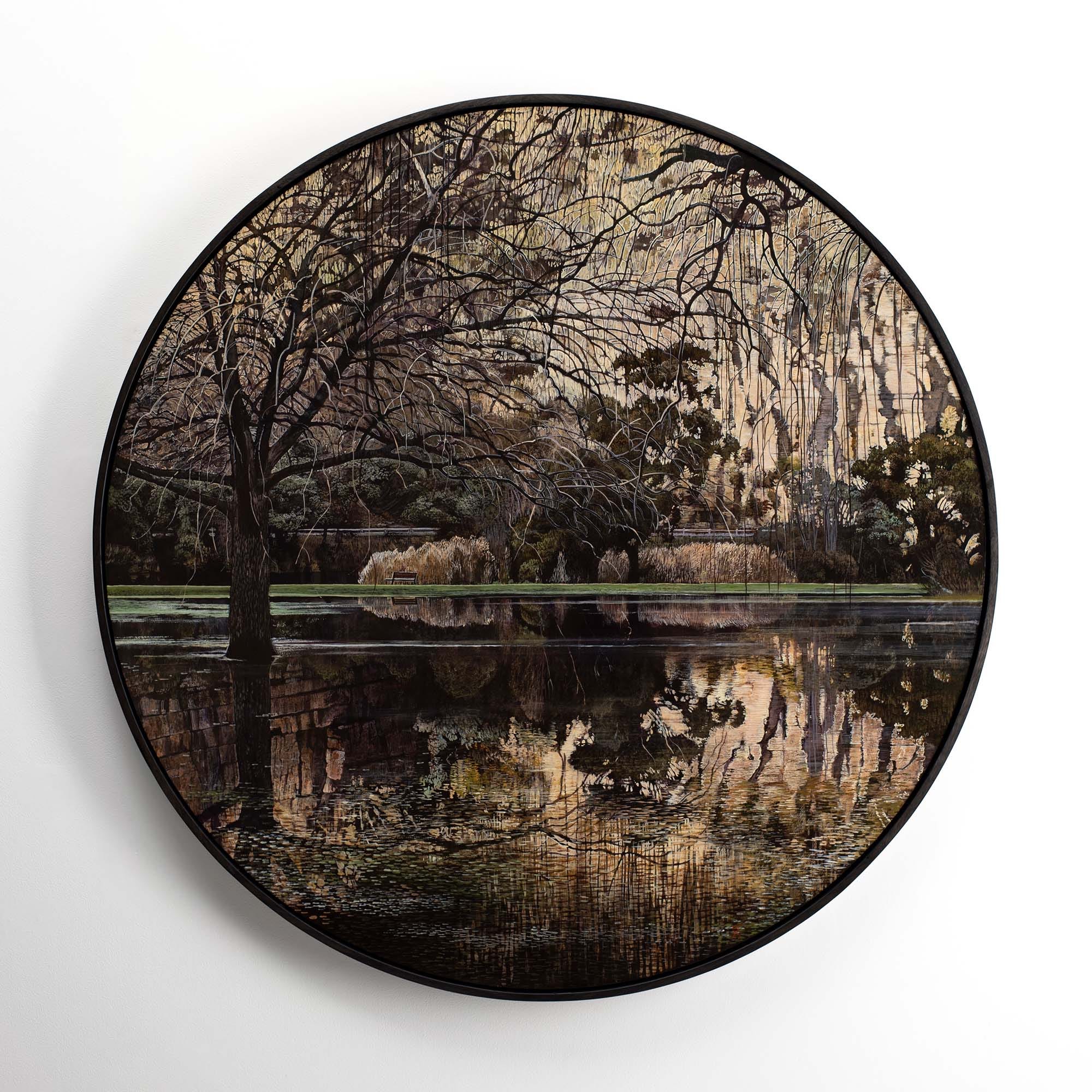
I’d not seen this before. I think it’s spectacular. Reminds me of Lloyd Rees’s great landscapes. More here.
Heaviosity half-hour
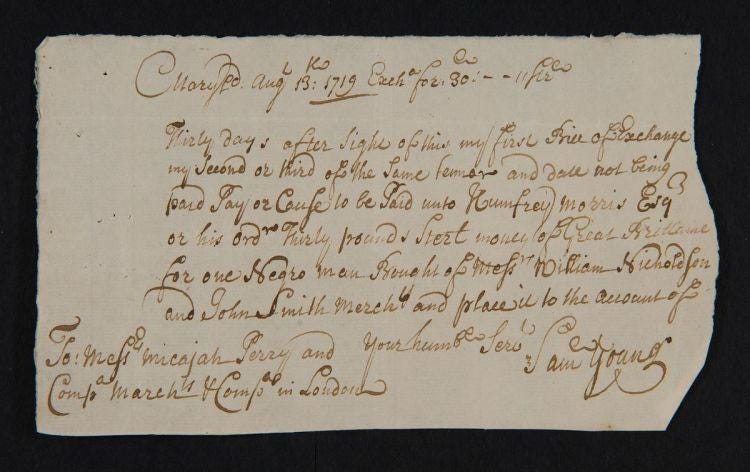
A bill of exchange for a slave.
Slavery and sugar’s role in the emergence of finance and central banking
You may find this a bit niche but I was reading this paper and thought some newsletter readers might find it interesting. So I asked Claude to adapt it for a general readership - which it has done admirably.
Adapted for a general readership from Carolyn Sissoko and Mina Ishizu, “Preventing financial ruin: How the West India trade fostered creativity in crisis lending by the Bank of England,” Economic History Review 79 (2026), 57–88.
A financial system built on promises
At the end of the eighteenth century, Britain possessed one of the world’s most sophisticated financial systems. Much of it operated through a deceptively simple instrument: a piece of paper containing a promise to pay. The bill of exchange solved a fundamental problem of long-distance commerce. People who wanted to trade with one another were often separated by thousands of miles. They did not necessarily know one another, could not easily assess one another’s finances, and might have to wait months before goods were shipped and sold. Trade therefore depended upon finding ways to make one person’s promise credible to somebody who had never met him.
The British trade with the Caribbean slave colonies provides an especially important example of how this was done. It also exposes the moral foundations on which part of Britain’s financial development rested. The commerce being financed involved plantations worked by enslaved people and the buying and selling of enslaved people themselves. By the middle of the eighteenth century, the system had become extraordinarily elaborate. A British slave merchant arriving in the Caribbean could deliver enslaved Africans to a local slave factor. Instead of waiting in the Caribbean while the factor sold them and assembled the money to pay him, the merchant could receive bills of exchange and sail home.
But why would anybody in Britain accept a piece of paper issued thousands of miles away by a Caribbean factor? The answer was the development of an intermediary whose reputation could bridge the distance between them: the West India merchant house. These were substantial merchant firms, usually based in London or one of Britain’s major ports, with extensive connections in the Caribbean. They knew the planters and factors, handled the shipment and sale of plantation produce, particularly sugar, extended credit and, importantly, agreed to stand behind bills. A slave merchant might therefore be willing to accept a factor’s bill because a well-known London West India house had agreed to pay it when it fell due. Indeed, by the middle of the eighteenth century, slave merchants often refused to sell enslaved people to factors who could not provide such a guarantor. The reputation of the intermediary had become a marketable asset.
How to manufacture trust
This system deserves attention because it illustrates one of the basic economic functions of financial intermediation. Imagine four parties. A seller knows his own bank or merchant. A buyer in another country knows another bank or merchant. Buyer and seller may know almost nothing about one another, and neither may know the other’s intermediary. Without some institutional arrangement for transferring trust, there are too many relationships requiring verification for the transaction to be practical. Bills of exchange changed this. Reputable intermediaries placed their names on promises originating elsewhere. A claim on a relatively obscure debtor could thereby become a claim carrying the credit of a prominent merchant house.
And the promise could travel. A holder did not necessarily have to wait until the bill matured. He could take it to another merchant or a bank and have it discounted: he received cash immediately in return for surrendering a claim to a somewhat larger payment in the future. The bill could subsequently be transferred again. Each reputable signature made the instrument more credible because the parties endorsing or accepting it could remain liable if the original debtor failed to pay. The result was a chain of promises in which reputation substituted for direct knowledge.
The West India trade developed a particularly complicated version of this arrangement. Factors issued bills to pay slave merchants. Planters also issued bills, generally against the London commission houses that sold their sugar. When the sugar eventually reached Britain and was sold, its proceeds could be used to settle the planter’s account and ultimately extinguish the debts created earlier in the chain. Credit therefore allowed transactions to occur now against commodity sales that might take place many months later.
Everyone gained something from the arrangement. The slave merchant received prompt payment rather than waiting in a Caribbean harbour. The factor obtained credit. The planter received longer-term finance. The London West India house earned commissions for selling sugar and fees for accepting bills. Britain’s banks acquired something too: a growing supply of short-term financial assets that could be bought and sold. Bills became attractive investments precisely because good ones were liquid. A bank holding a reputable bill did not necessarily have to wait for its maturity. It could sell the bill or, under appropriate circumstances, discount it at the Bank of England. An instrument created to finance a particular commercial transaction could therefore function almost like money.
The price of interconnectedness
The system solved one problem by creating another. Its usefulness came from interconnectedness, and the failure of one participant consequently ceased to affect only that participant. The West India houses sat at the centre of a network of claims extending from Caribbean plantations through Liverpool, Bristol and London and into the British banking system. West India bills were held by banks far from the ports where the underlying commerce took place. Lancashire country banks, for example, discounted bills and helped make them part of the region’s payments system. Finance for Caribbean slavery had consequently become connected to the finances of Britain’s industrialising economy.
That worked remarkably well while sugar was sold at prices sufficient to validate the promises made against it. But the system contained a familiar financial danger. Rising asset or commodity prices could encourage greater extensions of credit. More credit could support more trade. The apparent success of the trade could justify still more credit. Eventually the promises became vulnerable to a reversal in the price of the commodity on which they ultimately depended.
That is what happened at the end of the 1790s. Sugar prices had risen dramatically during the decade and reached an extraordinary peak early in 1799. Speculation contributed to the rise. So did war. Britain was engaged in its long struggle with revolutionary and Napoleonic France, and government policy had disrupted established patterns of Caribbean trade. Britain acquired access to sugar from former French colonies while taxation policy distorted the re-export trade. Policymakers imagined that Britain might be able to exploit its position to make continental consumers bear part of Britain’s heavy sugar duties.
The policy failed. Alternative supplies from places such as Brazil and Cuba found their way into European markets. Britain was left with a glut. The price of sugar fell, and West India merchants who had financed themselves against sugar faced the prospect of having to sell large quantities into an already depressed market. Forced sales would depress prices further, creating losses that forced further sales. The danger was no longer simply that some merchants had made bad investments. Their promises were embedded throughout the financial system.
The Bank discovers a new problem
The Bank of England already provided liquidity to commerce. Its ordinary practice was principally to discount short-term bills. These generally had no more than about two months left before maturity and carried multiple signatures, giving the Bank several parties from whom payment might ultimately be obtained. This was conservative banking: the Bank supplied liquidity against short-term commercial claims of established quality.
The crisis confronting the West India houses in 1799 was different. They did not merely need cash for a few weeks. If forced to sell their sugar immediately, they could suffer enormous losses. What they needed was time, and giving them time required the Bank to depart from its established practices. It did. The Bank agreed to provide the West India merchants with as much as £1.5 million for six months. This was an enormous intervention, equivalent to roughly 20 per cent of the Bank’s normal outstanding discounts in that year.
More important than its size was its form. The Bank was beginning to make deliberate term loans rather than simply discounting short-dated commercial paper. It accepted unusual security, including sugar and coffee. It also accepted government consols as collateral for crisis lending. A conventional discount operation effectively said: Here is cash against a high-quality promise that will be paid shortly. The new operation said something closer to: You possess assets that should ultimately be valuable, but selling them now may destroy you. We will lend against them long enough to allow the crisis to pass. This is recognisably a problem of modern central banking.
Saving the merchants by saving the market
The Bank’s intervention appears to have worked. Without financing, West India merchants would have had to put more sugar and coffee onto an already glutted market. Instead they could hold their inventories. Within a couple of months, the price of coffee had risen by about a third. By July 1800 the special loan appears to have been repaid.
The episode also reveals something important about financial crises. Sometimes the announcement of abundant liquidity does much of the work. Britain had encountered a comparable problem during the commercial crisis of 1793. Parliament authorised Exchequer Bills that could be exchanged for merchants’ long bills and in turn discounted at the Bank of England. Less than half of the authorised amount ultimately had to be issued. Once merchants knew liquidity would be available, the panic subsided. The state and the central bank were learning that a credible promise to lend could itself change behaviour.
The Bank and the state
The rescue of 1799 was not simply an independent decision by a private bank. Parliament simultaneously provided £500,000 to West India merchants in Liverpool and Lancaster. MPs explicitly worried that their failure would spread to manufacturers and the rest of British commerce. London’s merchants were effectively dealt with by the Bank of England. One contemporary parliamentary exchange made the relationship unusually clear. When the London West India merchants were described as financially secure, an MP responded that assistance from the Bank of England amounted in substance to assistance from Parliament.
Government and Bank were operating together. This cooperation had been developing during the war. In 1797 the Bank had suspended the convertibility of its notes into gold after government borrowing and commercial pressures depleted its gold reserves. The supposedly temporary suspension lasted until 1821. The Bank and William Pitt’s government therefore had to coordinate continuously over the financing of the war and the supply of money to the economy. The West India intervention became another part of that relationship.
There was also an uncomfortable reason why the Bank may have been unusually responsive to this particular industry.
The borrowers were inside the Bank
In 1760 only one Bank of England director, about 4 per cent of the board, was a West India merchant. By 1799 the proportion was 30 per cent. This increase cannot easily be explained simply by the growing economic importance of Caribbean trade. In the early nineteenth century West India bills accounted for only around 8 or 9 per cent of the Bank’s discounts. The representation of West India interests within the Bank had grown much faster than their share of its commercial business.
Nor were these connections merely statistical. Thomas Boddington, a senior Bank director, was among the West India merchants who approached the Bank seeking assistance in October 1799. William Manning provides another example. He was a prominent West India merchant, an MP and a Bank director who would later become its governor. His firm subsequently participated in assessing the financial condition of another West India concern seeking Bank support.
The development of innovative central-bank lending therefore has an awkward origin. The Bank was responding to a genuine systemic danger. Failure of the West India houses could have transmitted distress throughout British commerce. But the endangered merchants were also unusually well represented inside the institution deciding whether they should be rescued. Systemic importance and political influence had become entangled.
From improvisation to a rescue policy
The Bank did not stop experimenting after 1799. In 1803 John Willis & Co., a West India merchant that had already stopped payment, requested assistance. The Bank initially refused but subsequently agreed to a £60,000 loan after the firm’s creditors examined its position and concluded that its assets exceeded its liabilities. The Bank imposed an interesting condition: small creditors and bills essential to keeping the business functioning were to be paid in full. The rescue could not simply be designed for the benefit of the large creditors negotiating it. The Bank was beginning to behave as though it had obligations extending beyond its own immediate financial interest.
Later that year another West India firm, Donaldson & Glenny, approached failure. This time three outside firms inspected the books. They certified that Donaldson & Glenny was solvent, judged that £60,000 would be enough to restore it to financial health, and agreed to put some of their own credit behind the loan. Here was a potentially powerful model. The central bank could provide the liquidity that only it could reliably supply in a crisis. But private parties with knowledge of the borrower would investigate whether the business was actually solvent. Crucially, those parties would also expose themselves to loss if their assessment proved wrong.
Information and incentives were being combined. The experiment did not work particularly well in this case. Donaldson & Glenny proved far harder to rescue than its inspectors expected, and part of the debt remained unpaid years later. The failure was instructive. Valuing illiquid long-term assets in a crisis is difficult. Interested parties may be overly optimistic. And insiders charged with certifying the health of borrowers may have conflicts of interest. The Bank gradually modified its procedures.
A central-bank rule emerges
By the financial crisis of 1810–11, repeated improvisation was turning into policy. In February 1811 the Bank adopted a general procedure for extraordinary lending to businesses with illiquid assets. The structure incorporated lessons from the preceding decade. Inspectors would assess applicants, but they could not themselves be Bank directors, creditors of the applicant or debtors to it. The Bank would provide liquidity while private parties bore much of the credit risk.
This division of labour is significant. A central bank has an unusual capacity to create liquidity during a panic. But that does not mean it possesses unusually good information about which distressed firms are fundamentally sound. Private creditors may possess that information, but if the central bank absorbs all the losses they have little reason to assess borrowers carefully. The arrangement developed by the Bank attempted to solve both problems. Private parties supplied information and accepted risk. The Bank supplied liquidity.
Variants of that principle would appear again in later Bank of England rescues, including the rescue of Barings in 1890. Nobody in 1799 had begun with a complete theory of lender-of-last-resort policy and then implemented it. Practice preceded doctrine. A crisis arose. Existing rules proved inadequate. The Bank improvised. Some experiments succeeded and others failed. Conflicts of interest became apparent. Procedures were changed. Eventually a more general rule emerged.
What the story changes
The conventional history of Britain’s relationship with Caribbean slavery often concentrates on the profits it generated. Those profits mattered. Fortunes accumulated through the slave and plantation trades flowed into British banks, insurance companies, manufacturing and other investments. But Sissoko and Ishizu identify another relationship. Slavery did not merely provide capital to Britain’s developing financial system. Financing the slave economy also created financial problems that British institutions had to learn to solve.
The credit system that supported Caribbean commerce connected distant participants who otherwise could not easily have traded. Bills of exchange transformed private reputations into transferable credit. Merchant houses enabled promises made in the Caribbean to circulate through Britain. That was productive financial intermediation in a narrow economic sense, however abhorrent the activity it financed. It overcame problems of distance, information, timing and trust. Its success also produced fragility. The more widely accepted the intermediaries’ promises became, the more damaging their failure would be. The institutions that made the network valuable also made parts of it systemically important.
The Bank of England’s response is therefore part of two histories that are often told separately. One is the history of slavery and Britain’s economic development. The other is the history of central banking. They intersect. A credit system developed partly to finance plantation slavery helped connect Britain’s Atlantic economy to its domestic financial system. When that system threatened to break down, the Bank of England discovered that its traditional lending practices were inadequate. It began lending for longer periods, accepting new kinds of collateral, rescuing firms that were illiquid but believed to be solvent, and developing arrangements in which private parties assessed borrowers and shared the risk. By 1811, experiments that had begun as exceptional responses to particular West India merchants had helped produce a general policy for crisis lending.
There is a final irony. Financial intermediation had made distant commerce possible by creating chains of trust. Those chains became so extensive that their collapse threatened people who had never participated in the original transactions. That, in turn, created a new function for the institution sitting at the centre of the monetary system. The financial system had become capable of creating more trust than any individual merchant could provide, but it had also become capable of creating failures too large for individual merchants to absorb. The development of modern central banking was, in part, the attempt to deal with both consequences.
Heaviosity puts me in mind of Ryan Butta's recently published history "Blackbirding" - the history of blatant slavery out of the South Pacific Islanders into the Qld sugar plantations and then - that money out of the ending of Slavery for Britain in 1833 meant reparations to those slavers - not to the slaves - and that a lot of that money came to Australia with 19th-century "investors" bringing them access to vast "land grants" by colonial governments - of First Australians' land or so-called "Crown Land".
Acemoglu may be talking about the dangers of relying on one resource where the power which the individuals that control the resource have will trump the power that comes from institutions even if the country has high GDP




















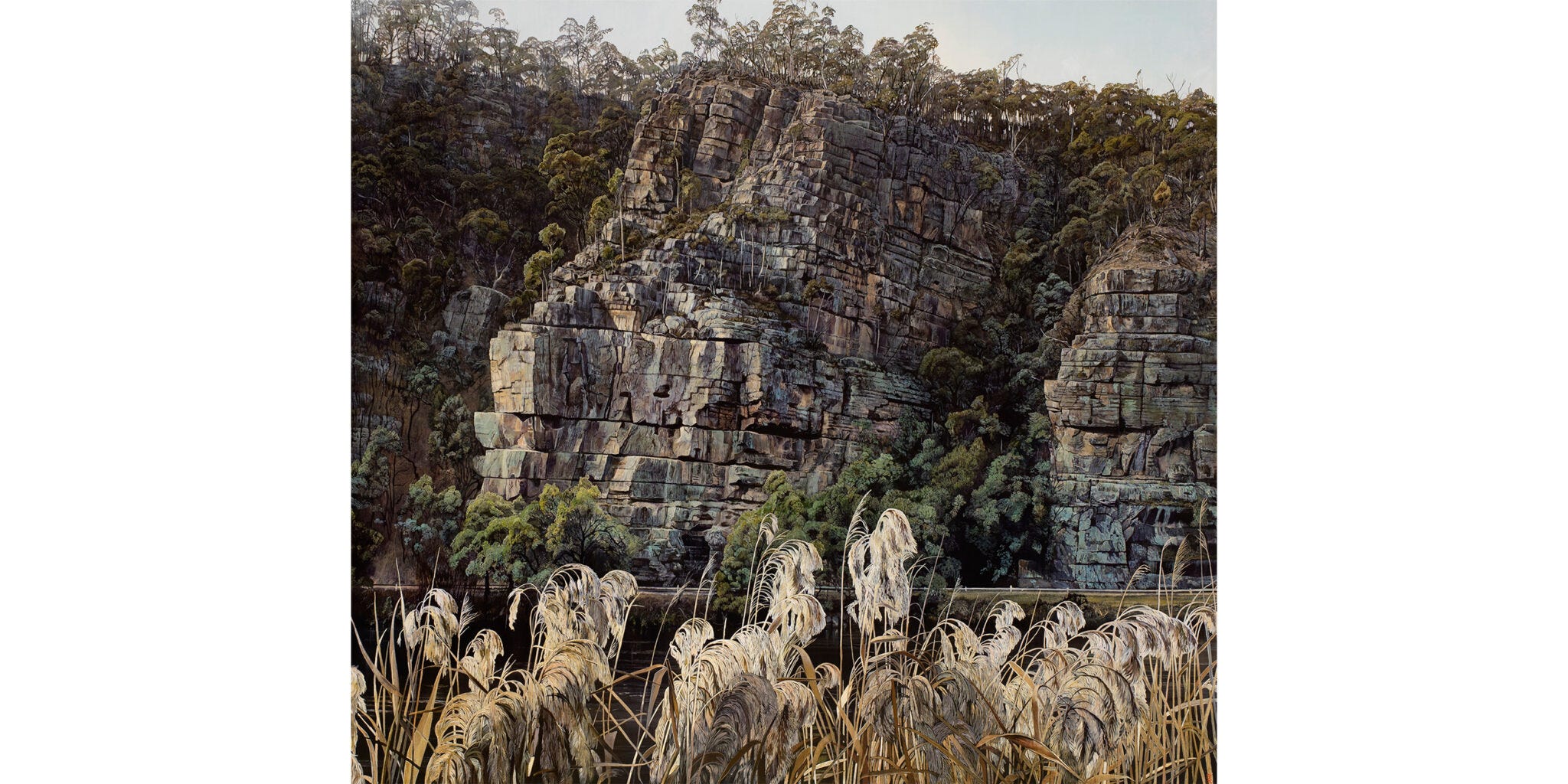
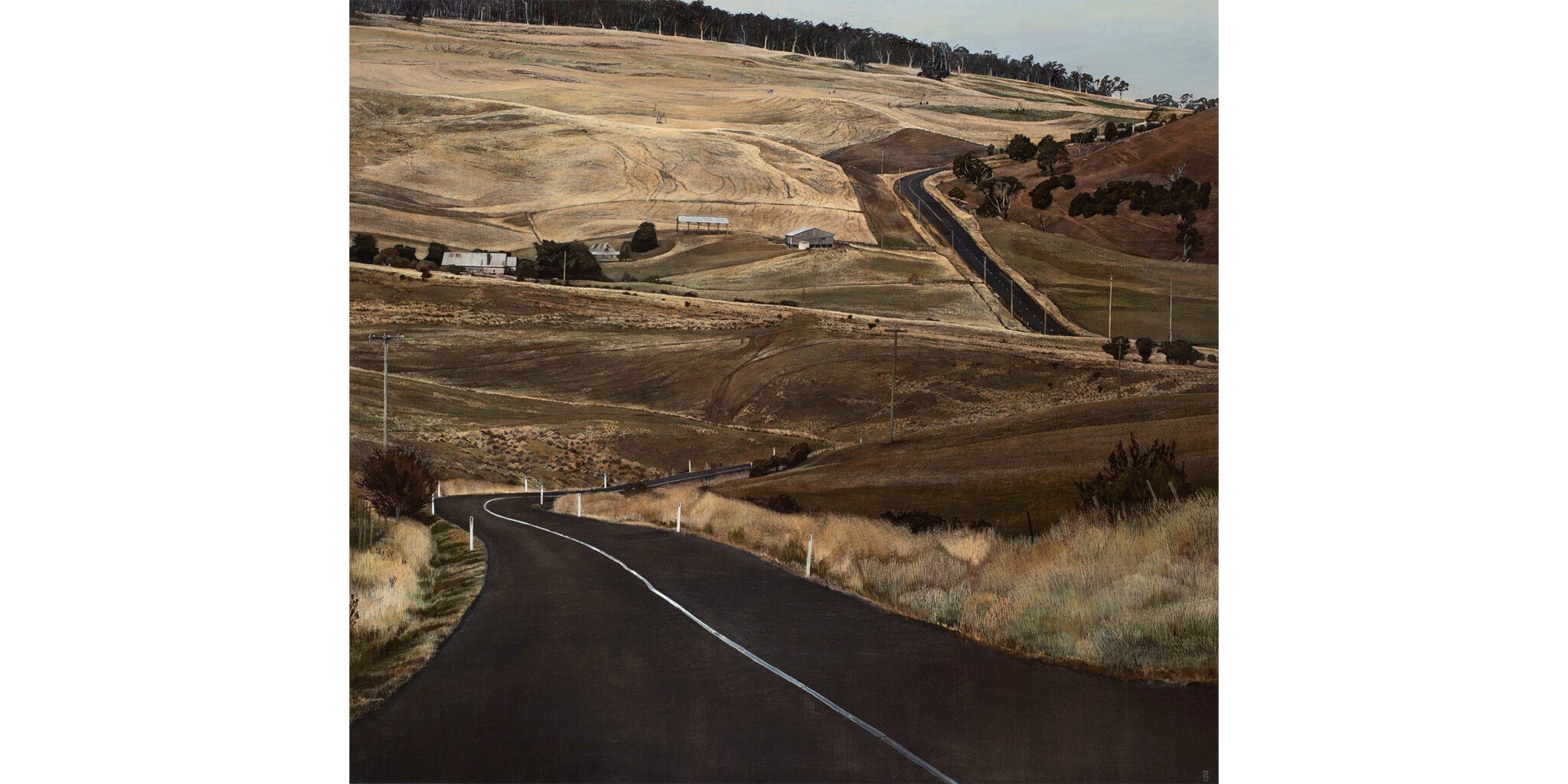

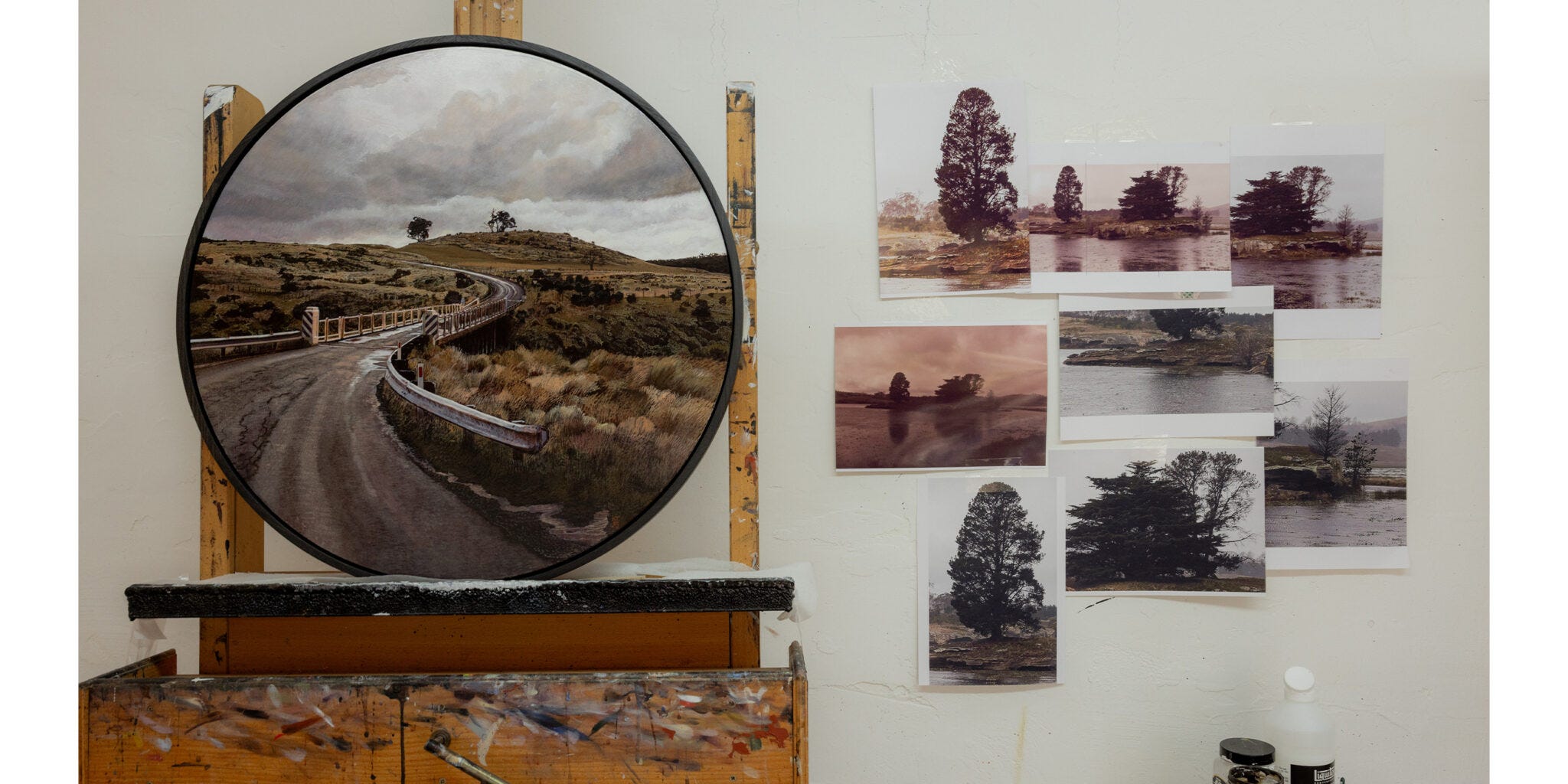


Stephanie Tabram - exactly - Lloyd Rees comparison spot on!
Heaviosity puts me in mind of Ryan Butta's recently published history "Blackbirding" - the history of blatant slavery out of the South Pacific Islanders into the Qld sugar plantations and then - that money out of the ending of Slavery for Britain in 1833 meant reparations to those slavers - not to the slaves - and that a lot of that money came to Australia with 19th-century "investors" bringing them access to vast "land grants" by colonial governments - of First Australians' land or so-called "Crown Land".
Acemoglu may be talking about the dangers of relying on one resource where the power which the individuals that control the resource have will trump the power that comes from institutions even if the country has high GDP