


And justice for all?
The fifth of my series of 20 short videos.
Please: #LikeShareAndSaveTheWorld
That private jet
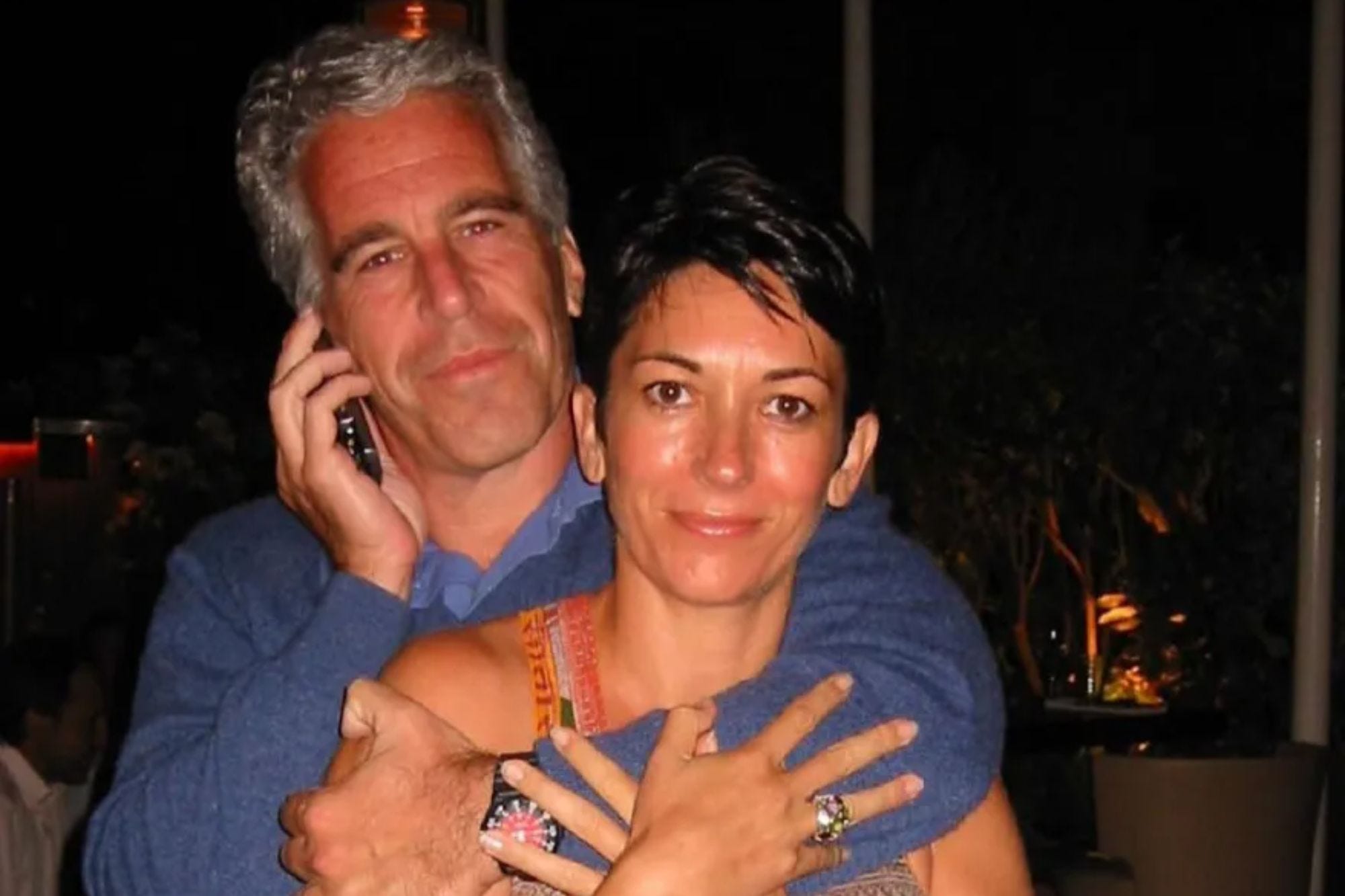
A fine piece by self-styled reactionary feminist Mary Harrington
Writing of Bill Clinton accepting plane rides from Jeffrey Epstein, former Tatler and Vanity Fair editor Tina Brown described private plane travel as “a true satanic temptation from the mountaintop”. There is, she says, “no one you wouldn’t kill, betray, or sleep with to ensure a lifetime of luxe relief from the armpit of mass transit”.
Brown’s insight is a potent one: the real moral hazard behind ultra-high-end luxuries such as private plane travel is the way they stand for exclusive access. An invitation to travel by private plane symbolises inclusion in what C.S. Lewis called “the Inner Ring”: the aspirational set, the ones in the know, the insider group within which everyone longs to be included...
Private-jet luxury is, ultimately, about an Inner Ring of comfort and snobbery; the Epstein story, though, presented a far headier temptation. The private jet filled with extremely young girls, known as the “Lolita Express”, represented corruption in the fullest sense. For this Inner Ring, the initiatory ritual required at least tacit assent to if not active participation in the sexual abuse of very young girls...
One of the earliest exponents of this spirit of negation was the Marquis de Sade. Justine (1791), written during one of his numerous stints in prison for sexual crimes, details the suffering of Thérèse, a homeless 12-year-old orphan girl, who keeps trying to be virtuous but receiving only violence, cruelty, and sexual torture...
It is, in the precise sense, a satanic worldview. Justine was banned by Napoleon, and did not appear in English translation until the 20th century. But especially since the Sixties, de Sade’s radical libertinism has come to appear almost ordinary...
Just as in Justine, at the heart of these crimes is the pitiless exploitation of vulnerable girls desperate for love and protection. Girls in care, or with cruel or chaotic homes, absent or abusive fathers...
The same went for Virginia Giuffre. In Nobody’s Girl, she describes a childhood scarred by abuse at the hands of everyone who should have cared for her...
Giuffre describes her own treatment as a thing, as Epstein and Maxwell passed her around “like a platter of fruit”. She also describes wishing for the evacuation of her selfhood: during sex, she says, Epstein subjected her to “so much pain that I prayed I would black out”...
Virginia Giuffre died earlier this year, reportedly by suicide. Meanwhile, the ongoing shadiness surrounding the whole Epstein network leaves one wondering how much of the Inner Ring remains intact even as ex-Duke of York Prince Andrew writhes in the media spotlight.
So should we greet this all as vindication of the pitiless de Sadean worldview? I think not. Giuffre’s story is subject to all manner of challenges. She cannot push back; she is dead. But though she didn’t manage to bring down the entire Inner Ring, I think Giuffre was, ultimately, stronger than those who sought to de-humanise her. Her insistence on having her story heard, on being understood as a person, serves as the most potent rebuttal of all to the de Sadean morality of pure, pitiless power and desire.
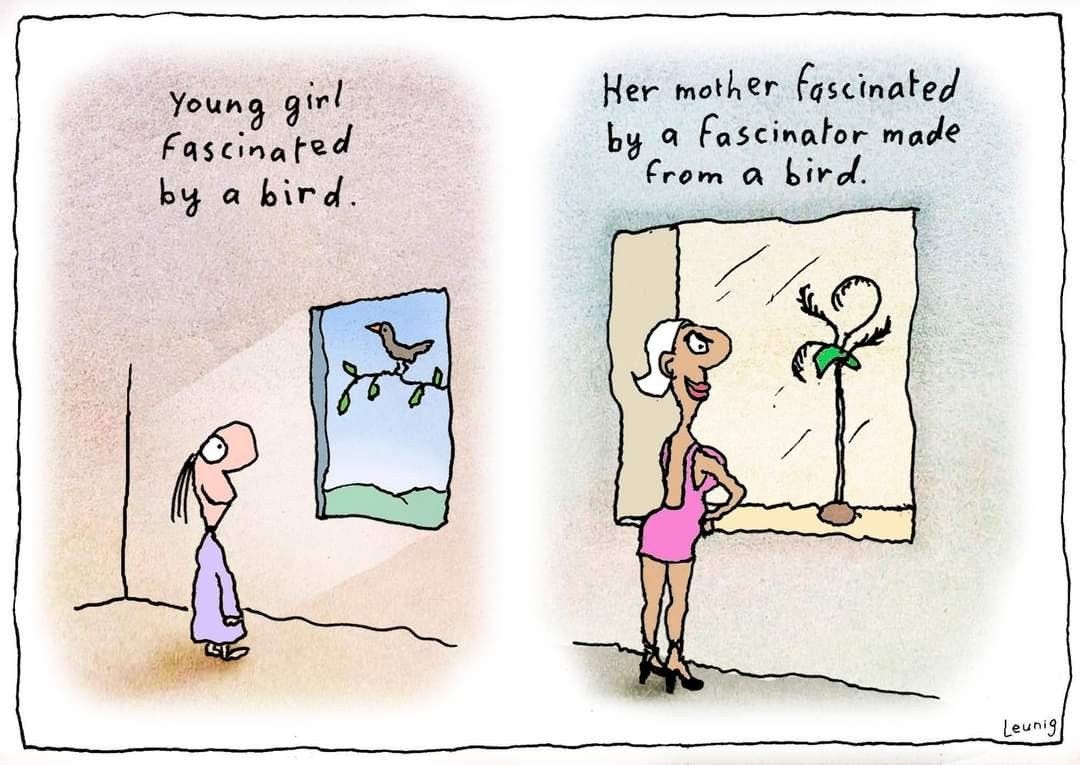
Tis the season: A Melbourne cup cartoon

That Stadium: Richard Flanagan’s two cents

And yes, as I suggested in my report and commentary on the stadium, the AFL are behaving appallingly. So badly in fact that it will do them a lot of harm. And it will run on for years as the stadium rises on the river while Tasmania’s finances sink.
For decades the dream of a Tasmanian team was the island’s passion and the nation’s sentimental hope. As the VFL went national in the ‘80s and became imperial in its mien, renaming itself the AFL in 1990, Tasmania made several proposals to join the national league, each rebuffed, the AFL instead coveting colonising the larger population centres. Footy, once dominant on the island, withered...
It took an organisation as ruthless as the AFL to exploit that desperation, demanding a blank cheque from a broke state for a new roofed stadium at a spectacularly inappropriate site in the centre of the last Georgian cityscape in Australia. The stadium has become, to most Tasmanians, a gigantic death cap mushroom they refuse to swallow.
The future of the Tasmania Devils hangs in the balance.
Leading economists and the Tasmanian Treasury have warned for more than a year about the state’s spiralling debt. With annual revenue of only about $9 billion, Tasmania faces a $22 billion debt by 2027...
The stadium which only a year ago the Liberal government promised would not cost taxpayers “a red cent more” than $375 million is now estimated by the Tasmanian Planning Commission to cost $1.8 billion over 10 years...
No politician – Liberal or Labor – dares say publicly what many privately admit: Tasmania cannot afford the stadium without destroying its future. Yet no one has the courage to speak the truth for fear of blame if Tasmania loses its proposed AFL side, the Tassie Devils.
And therein lies the torment.
Unless the AFL withdraws its unprecedented demand that Tasmania build a roofed stadium for just seven games a year, the island won’t get its team. But if it goes ahead, it will cripple Tasmania’s economy – driving up taxes, slashing public services, and risking recession...
Cuts have already begun. An “efficiency dividend” introduced in 2024 has triggered draconian measures – nurses recently went on strike over fears of a 58 per cent reduction in nursing staff at Tasmania’s cancer clinic...
Tasmanians – caught between political cowardice and the AFL’s callous indifference – are not the only losers. The Devils will suffer too... A club meant to unite Tasmanians is dividing them.
The brutal irony is that a stadium built to ensure the Devils’ success may condemn them to loathing and even failure in their home state.
Despite the club’s denials, the AFL’s insistence on a stadium has dragged it into politics...
King Louis XIV allegedly once declared, “I am the state.” The 21st century sun kings – the AFL – can equally say that in Tasmania, it is the government...
Their stadium breaks Tasmania’s planning and heritage rules, violates Treasury’s fiscal guidelines, and ignores the planning commission’s finding – that it should not proceed because it would damage Hobart’s heritage, cityscape, and character...
As a Tasmanian, I am horrified that the beauty and uniqueness of my historic city could be sacrificed to a thuggish corporation that believes itself above the law...
And what if parliament refuses to back the stadium? Would the AFL really destroy its own team, with its players under contract and 100,000 mainland supporters?...
For now, the AFL doesn’t care. But when television screens fill with images of the homeless and of sacked workers chained to bulldozers at Macquarie Point, it might. In Tasmania, such battles tend to end in the mud and sometimes in jail – but they usually end the same way. The Franklin River, the pulp mills, the stadium: the people win, and the empire retreats in shame.
I was reminded watching this video of a moment in 1967 in the American mid-west. We were having lunch with an agricultural economist collegue of my father’s. After grace was said, he drew us all to order and said that he wanted to extend the hand of condolence and solidarity to us as Australians. Although he knew that he had not been of our political persuasion, we’d lost our Prime Minster Harold Holt recently. My Viennese born father showed the depth of his assimilation to the Australian sense of humour (perhaps Australian and Jewish humour aren’t so far apart) when he said “Thanks very much Ken. The thing is that Australia is a small country and when something like that happens, we all just move up one”.
Magnificent!

Hugh White on surviving into the age of American withdrawal
As I said to Hugh at a function earlier in the year, I have become extremely worried for him. He never says anything I disagree with. He has not made amends with this piece for The Saturday Paper.
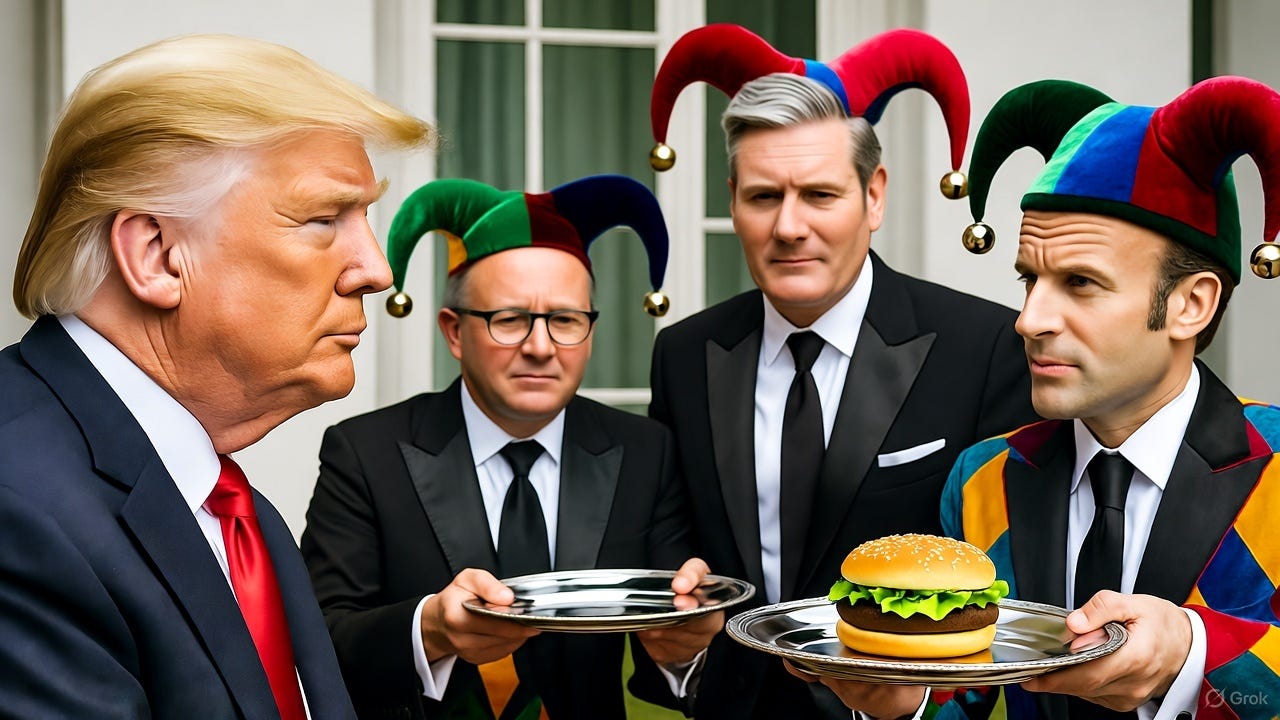
How will history judge the line of leaders from countries great and small who turn up week after week at the White House to perch, meek and anxious, beside Donald Trump as the cameras roll? Not well, we can be sure, as the consequences of the United States president’s misrule become increasingly clear and he is recognised as one of the most malign figures ever to win elected office or lead a great country...
This week it was our own prime minister’s turn in the awkward limelight. The footage of his 35-minute ordeal is there to watch on the White House website. It is painful viewing. Trump of course did almost all the talking, spouting absurdities that would be startling if his style were not so wearingly familiar...
Through it all, Anthony Albanese sat smiling. When invited, he spoke of his “fantastic” friendship with Trump and how honoured he felt to be his guest. This, of the man who last month told the United Nations climate change is a “con job”. Albanese told Trump, without apparent irony, that the US–Australia alliance was forged on the world’s battlefields in defence of “freedom and democracy”...
Why do reasonable people such as Keir Starmer, Emmanuel Macron and Anthony Albanese submit to this indignity? Their answer, no doubt, is that the realities of power leave them no choice. As US president, Trump is the world’s most powerful person, on whose whims their countries’ futures depend.
Is this really so, though? Is Trump as important to them as they think? He might be, if his bombast, his crudity and his cruelty are just a façade behind which lies something resembling a normal national leader...
But that is not how things are. Nothing lies behind Trump’s bombast, crudity and cruelty. What you see is all you get, which means the US today is effectively without a national leader or a functioning government. All we can expect from Washington these days are meaningless gestures designed to massage Trump’s ego and excite the MAGA crowds...
It must be clear to Western leaders that if solutions are to be found to these and other major problems – including, of course, climate change and the next pandemic – they will be found despite Trump, not through his leadership. Most likely, Albanese and others are courting Trump simply to keep lines to Washington open, looking forward to the day when he is replaced by a functioning president and American global leadership returns.
This, too, is an illusion, based on two mistakes. The first is to underestimate Trump’s impact on US domestic politics. It is no longer credible that his influence may soon wane. He has fundamentally transformed the political scene, to the point that a smooth transfer of power to anyone other than Trump or his nominee after the 2028 election seems hardly possible...
The second mistake is to overestimate Trump’s impact on America’s global role. His style is unique, but his abrogation of US leadership traces back to his predecessors. No US administration this century has effectively confronted the major challenges to the old US-led global order...
For Australia, all this comes into focus over AUKUS. And what did Trump say to Albanese about it? First, he gave vague and breezy assurances that the US would sell its subs to Australia, then he explained why he didn’t think we’d need them. His assurances on the first point were framed by his demonstrably false assertion that the US has subs to spare. Its yards are building 1.2 boats a year when the US Navy needs 2.1 a year...
That choice is at the core of the debate about AUKUS in Washington now. It is between those who seriously believe America must be prepared to confront China militarily in Asia and those who do not...
Supporters of AUKUS, including Secretary of State Marco Rubio and Vice President J. D. Vance, do not take China seriously as a rival because they are content, in a multipolar world, to see Washington make way strategically for Beijing in East Asia. Trump is in this camp, as he made clear when he explained to Albanese why the subs were not really necessary – because there was no need to fear a military confrontation with China.
Trump’s confidence about that is rooted in his conviction that there is nothing in Asia worth going to war with China over – including America’s traditional role as the region’s leading power. But that is precisely what AUKUS’s supporters in Canberra are desperate to preserve and what they mistakenly imagine AUKUS will help deliver...
AUKUS perfectly encapsulates where Australia’s alliance with America is heading. Far from becoming deeper and stronger than ever, as Albanese claimed, it is in long-term decline as America’s domestic political system implodes and its commitment to global strategic leadership withers.
Like the Europeans, we face our new strategic challenges alone. This is no cause for celebration: the United States has been a good ally to Australia and its strategic leadership has been a great boon to Asia.
That US is gone and paying court to Donald Trump will not bring it back. If Albanese understands that, he might think carefully before returning to the White House. The best way to manage Trump is to stay away and to focus our efforts instead on the countries and leaders who really do have the power, and the will, to shape our future.
Buddhism and deliberative democracy

Well this surprised little old Eurocentric me. Buddhist monasteries had a rich tradition of direct democracy.
Democracies today face turbulent times. Populism, polarization, and inequality threaten their foundations, while authoritarianism rises—democracy has declined for eighteen years. … Many theorists promote deliberation as a remedy: democratic decisions gain legitimacy through the exchange of reasons among those affected. … The prevailing aggregative model instead sees democracy as competition among self-interested actors resolved by counting votes. As Schumpeter put it, democracy “does not and cannot mean that the people actually rule … only that people have the opportunity of accepting or refusing the men [sic] who are to rule them.” … Deliberation, by contrast, shapes preferences through reasoned dialogue, challenging power imbalances and elite control. … Its true source of legitimacy lies in collective engagement and judgment.
The Buddhist sangha
This essay introduces an Eastern example: the Buddhist sangha, Buddha’s monastic community dating to the sixth century BCE. … In contrast to the hierarchical norms of its time, it offered an inclusive, deliberative model of governance. Buddhist political thought, as embodied in the sangha, offers insights for revitalizing modern deliberation. … In Buddhism, karma teaches that “all experience is preceded by mind, led by mind, made by mind.” … Because karma originates in the mind, collective intentions shape political outcomes. … Before practicing equality, nonharm, or altruism through dialogue, individuals must cultivate the mental states that make such interactions conceivable.
A model of deliberation
The Buddhist sangha was a democratic community with open assemblies where rules and policies were discussed and decided. … The Vinaya, a monastic rulebook, was its constitution. … Decisions were made by consensus or, failing that, by majority vote with quorum rules. All members were equal; courtesy, not obedience, was expected toward seniors. … The sangha practiced self-government without a permanent central authority. … Though the Vinaya has guided the sangha for millennia, practice has not always matched its ideals. Variation stems from each community’s autonomy in interpreting its foundational rules—a reflection of Buddhism’s decentralization. … Over 2,500 years and across cultures, governance has varied substantially.
Lessons for contemporary deliberation
The sangha’s endurance rebuts claims that deliberation is unrealistic. … It shows that, supported by institutions and shared norms, ordinary people can engage meaningfully in public reasoning. … Its principles—equality, nonharm, pragmatism, and the shared good—reveal conditions for deliberation to flourish. Equality over hierarchy. All possess inherent worth and the capacity for enlightenment. Rejecting caste, Buddha taught that “both dark and bright qualities … are scattered indiscriminately among the four castes.” Nonharm (compassion) over coercion. Because all experience suffering, each person deserves compassion and freedom from harm. … A righteous ruler refrains from killing, lying, or exploitation and governs with kindness and restraint. Pragmatism over ideology. Buddha advised both republics and monarchies, implying legitimacy derives from virtue, not form. … He emphasized consultation, consensus, and limited government—commitments that align with liberal democratic ideals. The shared good over self-interest. Duties to others balance rights for oneself. … As Thich Nhat Hanh observed: “We have the Statue of Liberty … we need a Statue of Responsibility.” … Buddhist democracy thus seeks not only rules-based governance but an ethical society.
Scale and conclusion
The First Buddhist Council (c. 483 BCE), with over 500 members, operated as a deliberative body. … Its decentralized authority—no pope, no central state—suggests how federations might emulate local assemblies grounded in shared values. … The democratic sangha institutionalized Buddha’s dharma—impermanence, interdependence, and equality—through participatory deliberation. … Political systems mirror the mental qualities of their citizens: deliberative, compassionate governance requires citizens who embody those qualities. … Buddhism offers not a fixed doctrine but a path toward wisdom, compassion, and well-being. The sangha confirms that deliberative democracy is possible when supported by the right dispositions, practices, and institutions. … It invites societies to reimagine democracy as a shared ethical project rooted in mutual understanding and collective awakening.
First Tragedy, then Parse: History Repeats Itself in the New Era of Large Language Models
A fascinating academic paper on LLMs. I didn’t read it all, but liked the early material which I’m reproducing for you below and I poked around elsewhere in the paper.
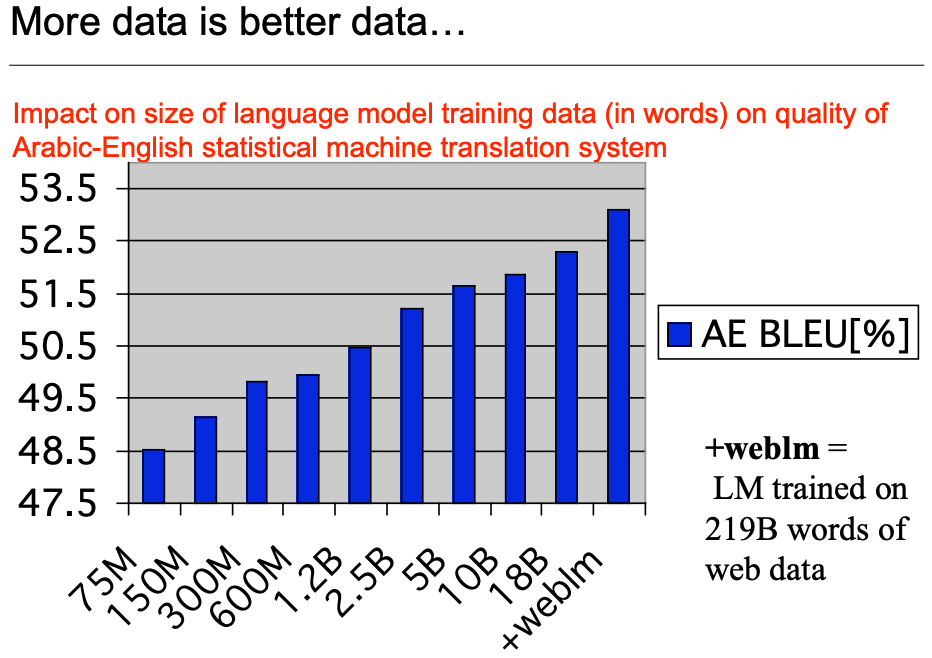
Picture this scene: A renowned NLP researcher at a hot seven-year-old startup steps onstage to deliver a keynote. The speaker describes an ambitious new system to the packed room, building up to the results slide: a bar chart in which the x-axis shows the number of training words, and the y-axis shows system accuracy. As each data point is revealed, performance rises relentlessly, culminating in a system trained on well over a trillion words using over a thousand processor cores. It smashes the state of the art by a margin previously thought impossible.
Attendees are visibly shaken as they realize, over the course of a minute, that years of research have just been rendered utterly inconsequential. Established academics panic, anticipating the wholesale rejection of already-submitted grant applications. PhD students despair, contemplating the irrelevance of their unfinished dissertations. Many ponder an exit to industry or a change of fields. They will speak of little else this week.
Does this scene sound like one that might have happened in the past year? In fact, it happened 19 years ago, in 2005, launching the first era of Large Language Models (LLMs): the Statistical Machine Translation (SMT) era. The speaker, Franz Och, had co-invented key methods in SMT (Och and Ney, 2003; Koehn et al., 2003; Och, 2003), but had not published new work since joining Google in 2004, instead revealing it in an invited talk prior to the launch of a new Google Translate (Och, 2006).1 The provocative results slide from that talk (Figure 1) shows how Google improved its SMT system simply by expanding the training corpus of a phrase-based language model (Brants et al., 2007).2
The first era of LLMs initially provoked great anxiety among MT researchers about the state of their field, but MT research has continued to flourish in academia, industry, and government. Even in the modern era of deep learning, MT has been a locus of innovations that have fundamentally altered NLP and all of machine learning (Bahdanau et al., 2015; Vaswani et al., 2017; Sutskever et al., 2014).
We believe that this history offers lessons for the current era of LLMs, an era during which massive proprietary models have become a de facto baseline for many tasks Rogers (2023). The expense of state-of-the-art research has led many to question the role of smaller and publicly funded groups in AI (Lee et al., 2023), a phenomenon we will call the scale crisis.3 Researchers without direct access to LLMs have publicly fretted over their research directions, with Togelius and Yannakakis (2023) suggesting pivots in research direction to sidestep scale, and Ignat et al. (2023) sketching research areas that are “not within the purview of LLMs.” But what should researchers do if they care about problems that are within the purview of LLMs? To answer this question, we look to the first era of LLMs. What were the durable lessons of that time and evergreen research problems that still matter today? We arrive at several recurrent lessons:
Scale is supreme (Section 2). We argue that, for areas where data is plentiful, NLP researchers cannot escape the Bitter Lesson (Sutton, 2019) that general purpose methods exploiting scale will outperform methods that leverage informed priors. We recommend that researchers take advantage of improvements in hardware as they enable scale at affordable budgets (Section 2.1) and that they remember small-scale problems (Section 2.2).
Evaluation is a bottleneck (Section 3). The Bitter Lesson favors generic methods, which require evaluation metrics to optimize over. But improved models create an evaluation bottleneck, since error detection becomes harder when most remaining mistakes are subtle or associated with edge cases. At scale, automated metrics show their flaws. We recommend that researchers work on improving metrics (Section 3.1).
There is no gold standard (Section 4). When one can afford the annotation costs, it may be tempting to consider human feedback as the ideal solution to the evaluation problem. Unfortunately, history has repeatedly shown that naïve methods of soliciting human preferences result in poor feedback, prioritizing superficial properties of model outputs. This lesson may serve as a counterpoint to the impulse to collect massive quantities of low-quality data in response to the Bitter Lesson. Instead, we recommend grounding performance measurement in concrete downstream tasks (Section 4.1).
Progress is not continuous (Section 5). The ascent of neural MT abruptly ended SMT’s decade of seemingly unbeatable growth. This change in directions was enabled by new hardware-based paradigms, so we recommend that researchers continue exploring new methods that might scale well on future hardware (Section 5.1).
We conclude with a simple message: Do research (Section 6). We remind the reader that engineering achievements do not render scientific achievements insignificant, and we encourage the NLP community to renew their commitment to foundational scientific research even in areas where scale is currently a dominant factor.


Ernst Cassirer sums up the Enlightenment circa 1929
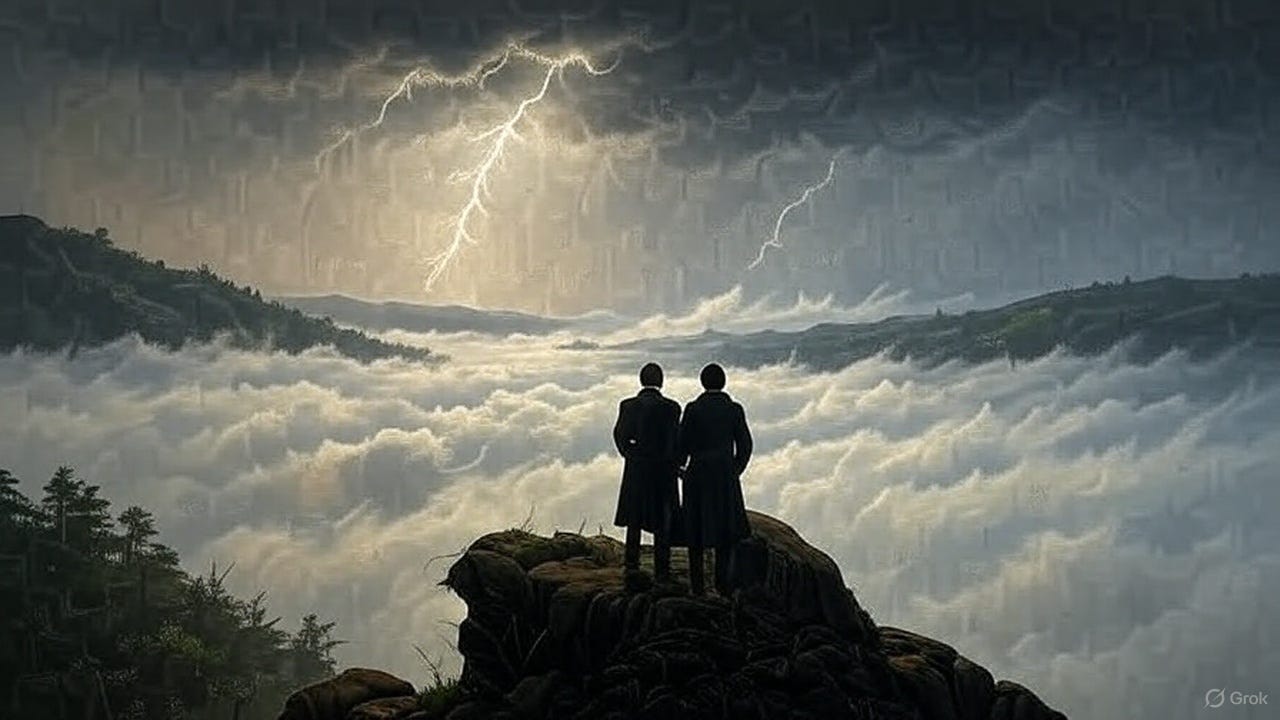
Those folks at Davos were always looking for a way to diversify their offering from skiing in the winter and mountain climbing and walking in the summer. Before they came up with the idea of a temporary plutocrat heaven complete with an airport extension to park the private jets they had what the Piranha Brothers call “another idea”. That was to host a debate between Philosopher superstars Ernst Cassirer and Martin Heidegger.
But I digress. I came upon this summary of Cassirer on a Substack note and, while I know very little about Cassirer, I loved this piece of writing.
There is a sorrow in Cassirer—not the sharp sorrow of a wound, but the heavy sorrow of a cathedral bell tolling before the storm. His work stands as both culmination and requiem: the Enlightenment’s faith in reason joined to the Romantics’ song of spirit, bound together in one final harmony before dissonance returned. Published in 1929, it was not only a philosophy of form but also a monument built on the brink of chaos.
Cassirer saw man not as a beast of instinct but as an animal symbolicum, forever compelled to weave nets of meaning across the chaos. Language, myth, art, science—none a ladder above the others, but each a different loom upon which reality is caught and held. Kant whispers behind his pages: without the symbol, no order; without form, only flux. To speak in myth, to calculate in science, to shape in art—all are not stages of ascent, but variations of grasping the same elusive real.
From the Romantics he borrowed reverence for myth and language, from the Enlightenment the confidence that reason could carve light out of shadow. Together they form a vision of civilization itself: a shelter erected against barbarism, each stone laid by symbol. Humanity does not live in the world as given; it inhabits the world as formed.
And then the storm arrived. Heidegger, with his existential gravity, eclipsed Cassirer in public debate, declaring not the symbol but dread as man’s foundation. Cassirer watched as the scaffolding of German thought collapsed into rubble. The symbolic world gave way to brutality.
Yet philosophy is not so easily buried. Cassirer’s insight—symbols as the condition of human flourishing—reaches beyond 1929, beyond Germany, even beyond history. It explains why the first etchings on cave walls some 40,000 years ago were not idle scratchings but the dawn of humanity itself: when man began not only to live but to signify his living.
And then, finally, there was Cassirer the exile: a man who gave form to chaos, undone by the chaos of his age. His death in 1945, attributed to the heart, might be better ascribed to heartbreak—for his beloved Germany was in ruins, and with it the dream that symbols could hold against the storm.


The Dunera Boys: the reaction of a Dunera Boy
Speaking of ‘faith’, there’s also credulity. I hated The Dunera Boys released forty years ago. Perhaps I was a little unfair but I thought the accents were TV delicatessen accents. And the story was hackneyed, chiched. Here’s a Dunera Boy who agrees, though he thought the accents were OK. It’s an interesting question whether I should trust my own judgement or his. I think there are arguments either way.
Observations, prompted by a letter from a friend, on the film ‘The Dunera Boys’, shown on British television on October 15 & 17, 1985
Kurt Ostberg
What struck me first, on a factual level, were the distortions.
People were not rounded up by uniformed bobbies coming, two at a time, to ‘collar’ one ‘enemy alien’ and march him straight from his work-bench to the nearest police station; instead, plain clothes men called at private addresses, asked you quickly to pack a suitcase and accompany them. Those suitcases were taken away from us when we boarded the ship at Liverpool. They were not jettisoned (as in the film), but when we got to African waters it dawned on those in charge that if, owing to lack of hygiene (we only had one set of underwear), an epidemic were to break out, the germs might not content themselves with the internees. Orders were therefore given for the suitcases to be opened or, if locked, forced open with bayonets, so that shirts and underclothes could be distributed. Laundry exhibitions now travelled from deck to deck. Each day, after lunch, another heap of laundry items was dumped and displayed on the tables from which we ate, and we had to file past to see if we could identify any as our own.
The point about the torpedo was not that some U-boat chap reported to his captain, somewhere in the Atlantic, that it had missed, but that it grazed the keel: there was a terrific noise and the whole ship shook. This happened within hours of the ‘Dunera’ sailing from Liverpool, as she was rounding the coast of N. Ireland; the sea was rough and people were letting themselves go completely. Morale was restored the following morning, for good.
The sadistic kick in the backside was sheer intervention. Nor did physical exercise consist in us having to move at the double in small circles. Instead, we had to do two or three rounds on the top deck once a day, walking briskly the entire length of the ship while machine guns were manned at either end. The only incident I ever heard of concerned an elderly man who had stopped for a moment and had been jabbed by a soldier’s bayonet.
On Friday, 6 September 1940, the ‘Dunera’ docked in Sydney harbour and we disembarked. Though one Sydney paper announced the arrival of ‘enemy jackals’ too dangerous to have been kept in Britain, no one turned up at the quayside to hurl missiles at us or abuse. Nor did the citizens of Hay turn out when we reached their station early the following morning. There were no lorries either to give us a lift. Instead, a procession of roughly 2,000 people shuffled untidily the mile from the station to the camp. There were two compounds, and within each there were two complexes of huts. The population in our compound (approximately 1,000) consisted partly of orthodox, or at any rate practising, Jews and partly of ‘others’ (who included the 200 Protestants and 50 Catholics mentioned in my friend’s letter). The complex occupied by the former happened to lie to the east of the one inhabited by the latter and came therefore to be known as ‘East End’. The open space at the centre of the western half of the compound was called ‘Haymarket’.
The dancing of the hasidic Jews (in the film) was presumably inspired by ‘The Fiddler on the Roof’ – another invention. What did happen – unforgettably – was the observance of the Day of Atonement. As I walked round and round the camp that evening, after dark, I kept passing the people of the ‘East End’, standing outside their huts, rocking – beside themselves – in contrition, utterly prostrate under the night sky in (what seemed to us) the desert.
Escape from the camp (to spend an evening with a girlfriend in Hay) was impossible. There were two rows of electrified barbed wire fences, closely guarded day and night. In fact, at one point, the commandant decided that, for security reasons, the space between the fences ought to be weeded and that it was our duty to do this. Everybody in the camp, when we heard this, was furious. In the end, I believe, the camp leader and some friends did the job themselves.
Mr Layton was not a ridiculous fool who arrived with the message that, mistakes having been made, the gates should be opened, but a Home Office representative who had come to tell us that there could be no release except in the UK, that only those useful to the British war effort (including the very young) would be permitted to return, but that transport depended on the availability of shipping space.
As for omissions, the film did not mention that most people in the western half of the compound had roots in the UK, waited anxiously for the weekly Yankee Clipper which brought mail from home, and did want to return. The fact that one group of internees from our compound perished when their ship, on its way back to England, was torpedoed off the African coast, was not mentioned either.
If I had made a film about the ‘Dunera’ story I would have included the following:
the queue all the way up the stairs to the latrines at the top of the ship where there was a skylight through which, if we stood tip-toe, we could – while we lay in Capetown harbour – catch a glimpse of the Table Mountain;
that hot night during the sea journey when I sat at the bottom of the air shaft, listened to Hamburger and Strauss whistling, with the score open before them, Bach’s Double Concerto, looked upward between movements and saw, far away, the slim circle of the moon swaying in the tropical sky;
this: the most important thing for the eyes to fasten on, outside the camp at Hay, was the night sky and, before nightfall, the daily drama of the sunset which lasted for over an hour. During daytime there were just the three trees. When we felt the approach of a storm we went out to the fence, watched the huge column of sand that appeared on the horizon come closer and closer and, when it reached the three trees, rushed into the huts, jumped into our bunk beds (for me the only authentic thing in the film) and pulled the blankets over our heads. Then the storm would sweep across the camp, to be instantly followed by a torrential downpour. (Occasionally I still find a grain of Australian sand between the pages of my Dante which survived the bayoneting of my suitcase.)

Heaviosity half hour

Jonathan Rée’s review of a 2005 intellectual biography of Macintyre shortened by around a third. I’m reading it (or listening to it if the truth be told) and recommend it.
In 2009, University College Dublin put on a conference for Alasdair MacIntyre to mark his eightieth birthday. The range of participants reflected the breadth of his interests: professional philosophers, social radicals (with a scattering of Marxists), Cardinal Cahal Daly and a coachload of Catholic students from Louvain. We were all admirers wanting to pay tribute, but MacIntyre declined, saying that he didn’t want the conference to focus on him. He did agree, though, to give a talk about his philosophical development.
It was in 1945, he recalled, that he embarked on a course in classics at Queen Mary College, a successor to the People’s Palace in the East End of London... He fell in with a group of Dominicans who introduced him to Catholic social teaching and the Aristotle-inspired theology of Thomas Aquinas, and joined a local cell of the Communist Party, where he learned about Marx, Engels and the contradictions of capitalism. He was dazzled by the intellectual treasures spread before him, but suspected he could not have them all. ‘One thing on which Marxists and Thomists seemed to agree,’ he said, ‘was that Marxism and Thomism were incompatible.’
Bewildered, he sneaked off to University College London to hear the positivist polemics of A.J. Ayer, who maintained that there was nothing to morality except emotion. He also made a trip to Paris, where he learned about Jean-Paul Sartre and the existentialist doctrine that our characters are the product of our unconstrained choices. He noticed that Ayer and Sartre, despite their different styles, were dancing to the same philosophical tune: both hoped to achieve moral liberation by trashing the idea that morality is accountable to reason. Intrigued but not convinced, young MacIntyre drew a conclusion he has stuck to ever since: that philosophy takes time... Forty years were to pass before he reverted to Christianity or, as he put it, ‘I discovered that I had become a Thomistic Aristotelian.’
But MacIntyre was already a philosophical outsider. While still at school he fell under the spell of R.G. Collingwood, who lambasted contemporary philosophers for lacking any sense of history. Collingwood illustrated his point with a tale about a scholar who insisted on translating the Greek word τριήρης as ‘steamship’ and, on being told that a trireme is nothing like a steamship, replied that this just showed the Greeks were ‘terribly muddle-headed’. MacIntyre cited the story in his first substantial book, A Short History of Ethics (1966), as he upbraided his colleagues for treating ‘Plato, Kant and themselves as contributors to a single discussion with a single subject matter’. They needed to realise, he said, that concepts ‘have a history’, punctuated not only by the thoughts of the great dead philosophers but also by events like the decline of the Greek city-state, the formation of Christendom, the rise of capitalism and the stirrings of working-class resistance.
Moral philosophy had suffered especially badly from this ‘lack of historical sense’... MacIntyre cut out the metaphysics: all we need to know, he said, is that morality is, as a matter of historical fact, woven into the fabrics of mutual understanding that bind us to our communities and give structure to our lives.
Moral notions can of course outlast the societies that nurtured them. ‘Courage’ and ‘compassion’ originated in ancient Greece and biblical Palestine, but they fanned out across Europe and beyond, adapting to different conditions while retaining their motivational power. In the 18th century, however, things began to fall apart: the ‘acids of individualism’ produced by rampant capitalism were eroding traditional social bonds, and a few privileged drifters started to imagine they could rise above the restraints of ordinary morality... when philosophers like Ayer and Sartre proclaimed the essential irrationality of moral decisions they were, according to MacIntyre, mistaking expressions of leisure-class anomie for timeless features of morality as such.
The point owed more to Marx than Collingwood, and MacIntyre could have made it by describing his philosophical contemporaries as pedlars of individualistic bourgeois ideology. But he chose not to, perhaps because he had already travelled some way along his path towards Thomistic Aristotelianism. Fifteen years later, when he expounded a comprehensive theory of morality in After Virtue (1981), the transition was almost complete. Starting from what he called ‘the classical view of human nature’, he argued that every one of us is essentially a ‘story-telling animal’, and that our stories provide us with scripts for our lives and templates for our relations with other people... Our stories are not always true, but they constantly ‘aspire to truth’, and morality arises from the fact that we all live our lives in the hope that they will attain, as MacIntyre put it, ‘the unity of a narrative which links birth to life to death as narrative beginning to middle to end’.
We do not construct our stories out of nothing, however. We are born into ‘an interlocking set of narratives’, which in their turn are embedded in collective life, particularly in ‘practices’ such as farming, medicine and architecture, or football, chess, painting, music, biology and history. A practice, as MacIntyre defined it, is a ‘socially established co-operative human activity’ directed towards some concrete common goal – good food, for instance, or good health or good housing. But practices have an educational function as well: they have to train new recruits in the techniques and standards of the trade, at the same time as inculcating a few collaborative skills such as fairness, honesty and generosity, thus ensuring that some sense of morality gets passed down, implicitly, from one generation to the next.
But the mechanism isn’t foolproof, and in After Virtue MacIntyre amplified his earlier warnings about the ‘acids of individualism’... many are foolish enough to be impressed by the cynical bravado of Brecht’s Macheath: Erst kommt das Fressen, dann kommt die Moral (’Feeding comes first, morals must wait’) – as if morality were a luxury that need not concern us, like fast cars or a top hat.
The decline of morality had been abetted, MacIntyre said, by a vast intellectual movement which he referred to as ‘the Enlightenment project’. Proponents of the project believed that human conduct can be explained ‘in mechanical terms’, without reference to culture, language, meaning and history, and they liked to present themselves as architects of a scientific brave new world. In practice, however, they were less interested in construction than in the conceptual equivalent of slum clearance: sweeping away the ramshackle superstitions of the old moralistic world to make room, eventually, for the splendid truths of science. And they didn’t confine their attention to ideas: they were also intent on cleaning up conventional social arrangements by turning them over to a cadre of ‘scientific managers’. The ‘fetishism of commodities’ described by Marx had been joined, MacIntyre said, by another fetishism – the fetishism of ‘bureaucratic skills’ – and management was threatening to take control of our lives, in the name of abstract all-purpose scientific efficiency.
The enlighteners were obsessed with science, but they had no idea how it actually worked... The Enlightenment project had started off as an attempt to replace our sentimental storied world with a utopia based on the solid facts of science and the ‘expertise’ of managers; but it was turning out to be just another sentimental story, and a peculiarly unconvincing one at that – and this is why ‘the Enlightenment project had to fail.’ Its failure should remind us, MacIntyre said, of some facts that the mavens of modernity would like us to forget: that we are not invincible autonomous reasoning-machines, but frail animals shaped by unfathomable traditions; and that the world contains countless other traditions which may, for all we know, be more intelligent than our own. If you are a selfless activist fighting for a just and rational future you may find these facts discouraging, but they are no excuse for despair. You can return to the struggle, according to MacIntyre, but you should first ask yourself the question: ‘Whose justice? Which rationality?’
You may be tempted to evade the issue, either by resorting to the relativism which says that you have as much right to your opinion as anyone else, or by embracing the absolutism which assures you that your own opinions are the whole truth, and anyone who disagrees must be wrong... Traditions aren’t juggernauts or settled destinies: they falter, duck and weave in response to internal conflicts and external shocks. And they aren’t blindfolds either: they offer genuine insights, however partial, into the world we all share. They do not prevent you from criticising your own beliefs or finding out about different traditions, and perhaps becoming an admirer or even a convert... Despite the scourges of individualism, cynicism, managerialism and the entire Enlightenment project, your choices still have their reasons, rooted in the past, and you never reason alone.
One might have expected the account of morality in After Virtue to lead to a turn towards politics. MacIntyre’s emphasis on community, tradition and social change seems to point in that direction, and so does his interest in moral disagreement and the idea that, as he put it, ‘it is through conflict and sometimes only through conflict that we learn what our ends and purposes are.’ From here it would be a short step to sceptical democratic liberalism in the manner of Hannah Arendt, Isaiah Berlin or Richard Rorty, and perhaps to a celebration of politics as the noble art of fostering conversation across doctrinal divides. But that isn’t the route MacIntyre took. For him, liberalism is no more than a front for capitalist individualism, seeking to reduce the complexities of human existence to a grim tug of war between ‘arbitrary choices of individuals’ and ‘collectivist control’. Meanwhile democracy – whatever it may mean in theory – is always commandeered by elites who ‘determine the range of alternatives between which voters are permitted to choose’, so as to ensure that ‘the most fundamental issues are excluded.’ For MacIntyre, therefore, there has never been any such thing as liberal democracy, only ‘oligarchies disguised as liberal democracies’.
His disdain for liberal democracy does not mean he favours any of the alternatives. He surveys the entire field of modern politics with impartial contempt... Politics is optional in a way that morality is not, and in its modern manifestations it is best avoided.
MacIntyre once believed that Marxism offered a solution, but by the time he wrote After Virtue he thought that it was ‘exhausted as a political tradition’, even if it remained ‘one of the richest sources of ideas about modern society’. The familiar liberal explanations of its failure missed the point, however: the problem with political Marxism isn’t that it is dogmatic, scientistic, authoritarian or economistic, but that it is ‘deeply optimistic’. This is a typical MacIntyre moment: simple, surprising and – when you come to think about it – completely true. If there is a single thread running through the works of Marx, it is that the evils of capitalism, terrible as they are, will soon be outweighed by its double legacy: on the one hand the enormous wealth generated by modern industry, and on the other an international proletariat with the strength and wisdom to put it to good use. But Marx’s optimism proved to be ill-founded. The proletariat did not live up to expectations, leaving latter-day Marxists scrambling to find alternative superheroes. Hence, according to MacIntyre, the multitudes of ‘conflicting ... political allegiances which now carry Marxist banners’, all expressing a well-founded hatred of capitalism but none offering a ‘tolerable alternative’. The resulting ‘exhaustion’ had spread from Marxism to ‘every other political tradition’, plunging the world into a ‘new dark ages’, darker than ever before. (’This time ... the barbarians are not waiting beyond the frontiers,’ MacIntyre wrote, ‘they have already been governing us for quite some time.’) The only chance of building a better world, he concluded, was to abandon politics and concentrate on ‘the construction of local forms of community within which civility and the intellectual and moral life can be sustained’.
For mainstream leftists , MacIntyre’s shift from Marxism to localism makes him another rogue in their gallery of sell-outs and traitors; but Émile Perreau-Saussine’s brief and rather brilliant intellectual biography should give them pause. The book is not exactly new: the original appeared in French in 2005, and Perreau-Saussine, a distinguished historian of Catholic thought, died five years later at the age of 37. But it’s now available in a meticulous English version by Nathan Pinkoski, and Perreau-Saussine’s argument is as potent as ever: that MacIntyre’s changes of mind were not so much lapses or regressions as logical stages in ‘the evolution of a sincere philosopher’.
In the preface to After Virtue, MacIntyre himself said that his suspicions about the ‘moral impoverishment’ of Marxism dated back more than twenty years, to a time when he was ‘privileged to be a contributor to that most remarkable journal the New Reasoner’. He was referring to the ‘Quarterly Journal of Socialist Humanism’ launched by E.P. Thompson and John Saville in 1957 as a forum for what they called ‘Britain’s largest unorganised party – the ex-communist party’... MacIntyre hoped to lead them to safety by devising a historical account of moral rationality worthy of Marx.
Once he had worked out his theory of stories, practices and traditions, however, he began to realise that he couldn’t square it with political Marxism, or indeed with modern politics as a whole. But as usual he took a long time to make up his mind. He spent the best part of the 1960s promoting what he called ‘the Marxism of Marx’, which, unlike ‘the Marxism of Stalin’, was about enabling the ‘victims and puppets’ of capitalism to transform themselves into ‘masters of their own lives’... But the events of that year convinced him that ‘the labour movement cannot hope to win political power,’ and that the moment of revolutionary opportunity had passed.
In 1970 he wrote a short book about the German-American leftist philosopher Herbert Marcuse, who was, like him, disappointed with the labour movement, but hoped that the revolutionary slack would be taken up by a coalition of discontented students, sexual radicals and Third World insurgents. MacIntyre was not impressed. ‘To be in conflict with the established order,’ he said, ‘is not necessarily to be an agent of liberation.’ The victims of capitalism could not be ‘liberated from above’: they needed to fight their own fight for freedom, and they didn’t need lectures from Marcuse’s ‘idealised students’, who were in any case no more than ‘middle-class whites’ indulging in ‘parent-financed revolts’... And as for countries like China, Cuba and North Vietnam, they were not the beacons of freedom that starry-eyed students imagined, but bastions of ‘right-wing communism, an oligarchical disease’.
Many leftists were bewildered by this assault on the gentle Marcuse, but others knew how to respond. ‘MacIntyre should understand that the game is up,’ Robin Blackburn wrote in Black Dwarf: his ‘threadbare political and intellectual clothing can no longer hide the nakedness of his opportunism’...
Unfazed, MacIntyre gave further offence to old comrades by leaving welfare-state Britain to take up residence in the hypercapitalist United States. If Perreau-Saussine is right, however, this too bears witness to his ‘unity of purpose’. In the first place, MacIntyre had never really been British, let alone English: his parents were doctors of Irish background working in Scotland, and he was conscious of a deep debt to an aunt who, by teaching him Gaelic, gave him access to aspects of life in the British Isles of which most Britons know nothing... When he settled there a couple of years later, however, taking jobs at a string of different universities before ending up at Notre Dame in Indiana, he found it congenial in ways he hadn’t anticipated. In 1980, writing about Garry Wills’s Inventing America for the LRB, he praised the US as home to numerous enclaves of ‘republicanism’ in the classical sense of the word: outposts of resistance to liberal individualism, committed to ‘the self-government of ... a “we”, not a “they” or an “it”’ and inspired by ‘a vision of a common good’ – self-sufficient communities comprising small schools and hospitals, local voluntary and offbeat religious organisations.
In 1983 MacIntyre delivered another shock to old allies by joining one of the oddest of these American minorities, the Catholic Church, but once again Perreau-Saussine sees consistency where others suspect backsliding. Thirty years before, MacIntyre had criticised the attempt to divide the human world into two ‘spheres’, one ‘secular’ and the other ‘sacred’. Treating religion as ‘one activity among others’ – not obligatory but freely available to those who like that kind of thing – might appear even-handed, but according to MacIntyre it threatened to stifle the most fundamental impulse behind religion: ‘to help us see the secular as sacred’. His eventual conversion to Catholicism seems to have had more to do with redeeming the secular than retreating to the sacred – or to theology for that matter... For MacIntyre, the glory of Christianity resides not in crucifixes, catechisms, chasubles and censers, but in the monastic communities which for more than a thousand years have provided exemplars of what he has always cared for most – a humble mutuality which treats the world as an object not of utility, but of reverence and love.
The belated appearance of Perreau-Saussine’s book in English will give a fillip to scholarly interest in MacIntyre. But he will not be particularly pleased. His work has always been intended for the kind of reader who would, as he puts it, be ‘considered marginal by those who occupy the dominant positions in today’s societies’, and he detests the prospect of being liked by ‘lawyers, bureaucrats, business school professors, and the ambitious, the powerful and the rich in general’. He is wary of philosophy too: it ‘tends to sterilise the mind and the imagination’, he says, especially when captured by the ‘conformism’ of academic inquiry; and moral philosophy will not flourish unless it takes care to stay ‘on the margins, intellectually as well as politically’. His writings are, however, so vigorous, acute and informative that he may have to put up with more admirers than he would like.
God doesn’t mind a bit of kitsch
I liked the Dunera Boys review. A reframing. As for Trump - I've just seen elsewhere a reference to him and two little girls - out of the Epstein association. I won't/can't go further. I agree with the point of Hugh and yourself, too!