


Video 15: Democracy by lottery
Welcome to Video 15 of 20 in my series, The Shared Centre (full website here).
This video takes on the idea that more direct democracy would be better. Direct democracy is impracticable in a large polity and that was an important argument for representative democracy. But the internet changes all that. But if we did have direct democracy, my own hunch is that it would make things worse, not better.
In fact, people often say that I’m proposing more participatory democracy. Well, yes and no. Widespread participatory democracy via the media is one of our most fundamental problems. That’s why I’m always at pains to distinguish what I’m talking about as another form of representative democracy, in this case, representation by sampling. Anyway, see what you think of the video and join Colm and me as we talk our way through it. If you just want the audio of the latter, it’s beneath the video.
Government transformed 2.0: Episode 3

The third episode in this series in which the UK based Global Government Forum revisits Australia’s Government 2.0 Taskforce. This episode focuses on the potential for digital engagement, collaboration, and transparency.
Equality as a consolation prize
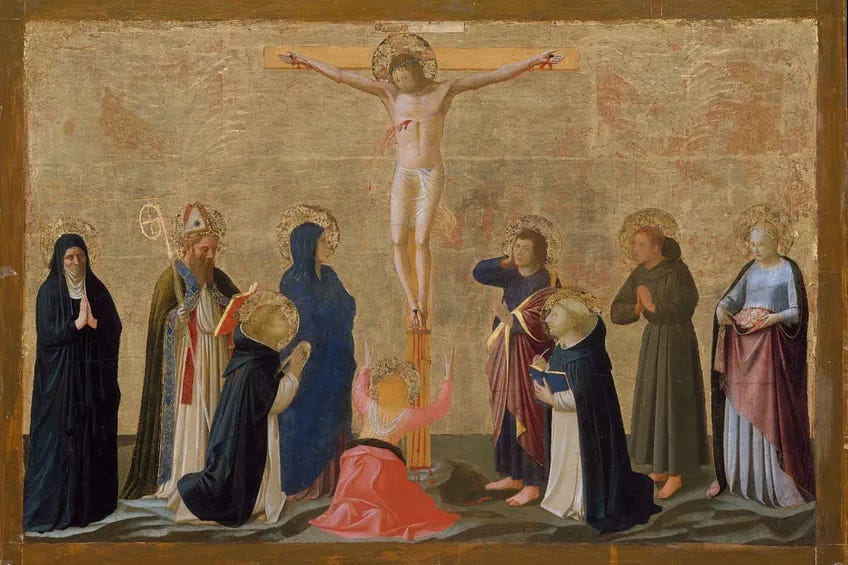
Ruxandra Teslo is doing a science PhD at Cambridge and is a constant stream of good ideas about science and more recently about how we can accellerate drug development by regulating more intelligently. (She’s a particular fan of Australian regulation of drug safety!) Anyway, this is a fine essay in which she paints with a much broader and more humanistic brush!
I am not the first to notice that the moral imagination of the modern world feels, in certain respects, flattened. Not long ago, Matthew Yglesias remarked on how foreign the language of honor now sounds to us. Even good has been replaced by the epithets “kind” or “nice”....
The ends we pursue tend to cluster around three dominant aims: safety, utility, and equality. Of these, only equality still gestures toward something like a moral ideal; the others are entirely managerial and materialistic in nature....
Nietzsche suggested that egalitarianism was the afterglow of Christianity—a moral residue lingering after faith itself had faded. But Christianity bequeathed many values to the modern world: humility, charity, forgiveness, self-sacrifice. Why did equality, in particular, survive as the organizing principle?
It seems to me that equality functions as a kind of consolation prize in a secular age. The shift from an “enchanted” premodern cosmos to a “disenchanted” secular order has undoubtedly expanded individual freedom. Yet in casting off the old metaphysical scaffolding, we have also stripped the so-called “losers” of society of any sense of inherent dignity rooted in a larger cosmic story....
Man shall not live by bread alone
“She appeared at daybreak one rainless morning, at the top of a hill on the road from Quijingue, carrying a wooden cross on her back. She was twenty years old, but she had suffered so much she looked ancient. She was a woman with a broad face, bruised feet, a shapeless body and mouse-colored skin (…)
She had cut all her hair herself after being raped for the fourth time.”
So begins the story of Maria Quadrado in The War of the End of the World, one of Mario Vargas Llosa’s most ambitious and unsettling novels.... She is one among many broken figures who gather in the doomed settlement of Canudos. Around a wandering ascetic known as the Counselor, the destitute and displaced assemble: former slaves, bandits, prostitutes, the mutilated and abandoned — those for whom the promises of the modern republic – secular, rationalizing and impatient with religious fervor – mean nothing.
The Counselor offers something the Republic cannot. He does not promise comfort or prosperity, but dissolution — the surrender of the isolated self into a transcendent design. In Canudos, the wretched give away their will and in return, they are no longer superfluous....
The disenchanted world
The disenchanted, secular world has killed Canudos for most people.
So what is left for them? As a consolation prize, a sterile “equality.”...
In A Secular Age, the philosopher Charles Taylor describes the pre-modern world as one where reality was thick with agency and meaning — a porous self embedded in a morally charged universe.... Disenchantment dissolves this structure, giving rise to what Taylor terms the buffered self — no longer vulnerable to cosmic forces; nature is no longer enchanted but inert, available for explanation and manipulation....
Yet with such immense empowerment comes a crushing burden: that of radical responsibility. Once we anchor meaning within the individual and we understand him to be radically able to improve his condition, there is no longer any refuge in helplessness. The loser is solely responsible for their condition....
It is in erecting barriers to reaching this conclusion that post World War II modernity’s moral energy gathers. The relentless pursuit of equality, the acute sensitivity to oppression and the refusal to accept hierarchy as natural are not merely fashions. They are attempts to supply, through political means, what religion once provided: an assurance that no life is negligible. In a world where dignity no longer descends from heaven, it must be constructed on earth. Or else the weak are left with nothing at all.
The classical liberal dilemma
We still glimpse fragments of enchantment in modern life.... [It is] now most accessible through work that presents itself as larger than the individual. “Founder-mode” might be the closest we get in the modern era to a grand hero narrative....
But such salvation on Earth is rarely available to “the weak”....
The high-IQ classical liberal often fails to perceive the existential strain this creates.... He resembles the bewildered journalist at the end of The War of the End of the World, who confronts the doomed inhabitants of Canudos with incredulity: “What madness to wait in a rat trap like this for them to come kill you all!”
And the reply, given by the deformed Lion of Natuba, cuts through the incomprehension: “There isn’t anywhere to flee to. That’s what we kept doing before. That’s why we came here. That was the place we fled to.”
There is indeed nowhere to flee to anymore. And in the absence of a grand narrative, sterile equality is itself a rather pathetic consolation prize.
Eileen Mayo


Commeth the hour
When you’re conservative: until you’re not

A few weeks ago, I published a YouTube link to the film of Eugene Ionesco’s play Rhinoceros. In it, people mysteriously turn into rhinoceroses. Oliver Hartwich may not have seen Rhinoceros, but as one of the Antipodes’ more principled right-wingers, he is horrified at the exodus of former fellow travellers on the right to the disgraceful right-tribalism of Trump. It takes guts to get personal like this. Yet without this courage, the main career incentives anyone has to behave decently and with due regard for truth and the right evaporate.
In early 2004, I wrote a letter to Ralf Dahrendorf, one of Europe’s leading public intellectuals. Door after door opened because one man answered a letter he had no obligation to answer....
In 2005, Dahrendorf delivered Versuchungen der Unfreiheit, or The Temptations of Unfreedom. What immunised intellectuals who resisted totalitarianism? His answer centred on Erasmus of Rotterdam, who during the Reformation refused to choose sides: “Ich liebe die Freiheit und ich will nicht und kann nicht irgendeiner Partei dienen.” I love freedom, and I will not, I cannot serve any party. Dahrendorf identified four Erasmian virtues: courage to stand alone; the capacity to live with contradictions; the stance of the engaged observer; and the “leise Passion der Vernunft” — the quiet passion of reason. Hannah Arendt warned that where people speak of intellectual camps, “the anti-spirit usually rules.”...
The rise of Donald Trump has precipitated a realignment among conservative and classical liberal intellectuals....
Some conservatives refused. George Will left the Republican Party. Bill Kristol watched the Weekly Standard shut down rather than accommodate Trump. Jonah Goldberg and Stephen Hayes resigned from Fox News over its January 6 coverage. Mona Charen was booed off the CPAC stage for saying what everyone knew to be true. They paid real costs. Resistance was possible. Others chose differently....
All of which raises the question of Niall Ferguson, the Stanford historian. His earlier books articulated the principles that Trumpism violates. Colossus (2004) argued for American global engagement. Civilization (2011) made property rights — which depend on the rule of law — central to Western success. The Great Degeneration (2012) warned against the corruption of the rule of law. In January 2021, Ferguson called the Capitol riot a “banana republic coup attempt” and declared “any politician who does not unequivocally condemn what happened should have no future in democratic politics.”
Yet by 2025, Ferguson had become one of Trump’s most sophisticated defenders. Writing in the Free Press under the headline “How Trump Won Davos”, he framed Trump through Thucydides’ Melian Dialogue — “the strong do what they can and the weak suffer what they must” — as vindication of Trumpian realpolitik. But a historian of Ferguson’s calibre knows how the story ends. Athens won at Melos, then launched the Sicilian Expedition, which destroyed its fleet and army. Within twelve years, Athens surrendered to Sparta. Thucydides wrote the Melian Dialogue not to celebrate power politics but to indict it. Ferguson stopped his analogy where it became inconvenient....
He now dismisses legal accountability as “lawfare” and describes Trump as a necessary “disrupter.” The author of The Great Degeneration should recognise: a leader who expects law enforcement to serve him personally is not disrupting a corrupt system; he is perfecting it....
Ferguson is not unique. Victor Davis Hanson now devotes his columns to defending Trump against all criticism. Patrick Deneen, Adrian Vermeule, and Yoram Hazony have explicitly abandoned liberalism. Peter Thiel declared he no longer believes freedom and democracy are compatible. Common features emerge: institutional migration to think-tanks where accommodation is rewarded; personal grievance festering into tribal loyalty; and always the argument that the Left is the greater threat, justifying alliance with whatever force opposes it.
The Erasmian recognises this as the oldest temptation — the logic that led intellectuals to Stalin because they hated fascism, or to Mussolini because they feared communism. But Ferguson faces no dictatorship. If Norberto Bobbio’s compromise under fascism was forgivable, Ferguson’s accommodation under no duress whatsoever is harder to excuse....
The test of an Erasmian is not whether they have enemies, but whether they can resist the warmth of having allies. The quiet passion of reason is quiet because it does not need the roar of the crowd. I cannot repay my debt to Dahrendorf. But I can try to protect the same idea.
How are you going to find the new shuttlecock centre?


The best is yet to come
I’ve not listened to this yet, but love the premise of this new blog - 90-year-old takes up blogging - and have had it recommended to me.
Cameron Murray on what Modern Monetary Theory (MMT) gets right and wrong

If you’re intrigued, here’s a film review that provides an excellent explanation of MMT’s good and bad points. In short, the good point is that MMT provides another way to explain why, when there’s unemployment, policies should be Keynesian. On the minus side, MMT is wildly oversold and, if applied responsibly, has policy implications pretty similar to Keynesian economics. I tried to think through some of this from first principles (without using jargon from Macroeconomcis 101) here.
I’m not an economist who follows a particular school of thought. Schools of thought usually coalesce around a single powerful insight, and I think we should be able to synthesise the best insights from many different schools of thought.
Modern Monetary Theory (MMT) is one school of economic thought. I have found enormous value in it. Rigorous attention to banking, money and payment flows, is central to MMT, but too often overlooked by most economists, leading to many logical problems in their reasoning and policy advice. ...
With that in mind, I want to offer my thoughts on a new MMT film called Finding the Money, a riff about how to respond to the political question of “Where will we find the money?”
The film’s big ideas
What Finding the Money (FtM) does well is articulate the nature of money as a debt relationship—an IOU (”I owe you”)—not a type of good or token (as I have previously explained here). Just like a government bond is a debt to the issuer and an asset to the holder, so too are money deposits held in banks a debt to the issuer and an asset to the holder. David Andolfatto even says the “debt clock may as well say private sector wealth.”
FtM notes: “When they pay their taxes the government just burns it.” But it makes total sense if you think of money as an IOU relationship. When you pay back your home loan, the bank throws away the deposits you repaid the loan with alongside the loan liability. They cancel out. Money disappears. This insight explains why total deposits can only rise if there is more borrowing in aggregate—by individuals from banks or by the government. This is why the MMT position is that for the private sector to save financial assets in aggregate, the public sector must run a deficit to match. ...
A useful insight from FtM also concerns the popular idea that government deficits push interest rates up. Harvard economist Jason Furman espouses this view. But Stephanie Kelton says that “the interest rate is whatever the central bank wants it to be”—and central banks really do control interest rates.
How does this knowledge help?
Furman was also right that MMT often brings you back to the same trade-offs—is there enough productive capacity to deficit spend without generating excessive inflation? MMT says the binding constraints are physical production limits. The mistake of mainstream economics is to conflate monetary budgets with physical resources.
In the film, Kelton claims “You can actually spend money and reduce inflationary pressures”—[arguing that] green spending on housing, healthcare, energy, and transport increases availability and reduces cost. This seems wrong because the spending required still requires people and resources to be taken from elsewhere. When asked what happens when the economy is already at full capacity, the answer is that resources must be freed up—the same conclusion standard economics reaches. So MMT takes us back to the same physical trade-off. ...
I think there is also a hidden political miscalculation behind MMT. Since all governments already deficit spend, the budget constraint has never been a real political concern—deferring to it just makes for convenient politics. If you don’t want to spend money on something, you invoke the budget constraint. When you do want to do something, you don’t. It avoids the important discussion about social priorities that your side of politics might risk losing.
For me, the big takeaway from FtM is not that we can spend without limit. It is that money is a two-sided debt relationship that can be harnessed to direct spending and investment in the economy in any way we choose, so long as we have the real resources available.
FtM communicates in a surprisingly effective way some of these key insights from MMT and I highly recommend it for that reason.
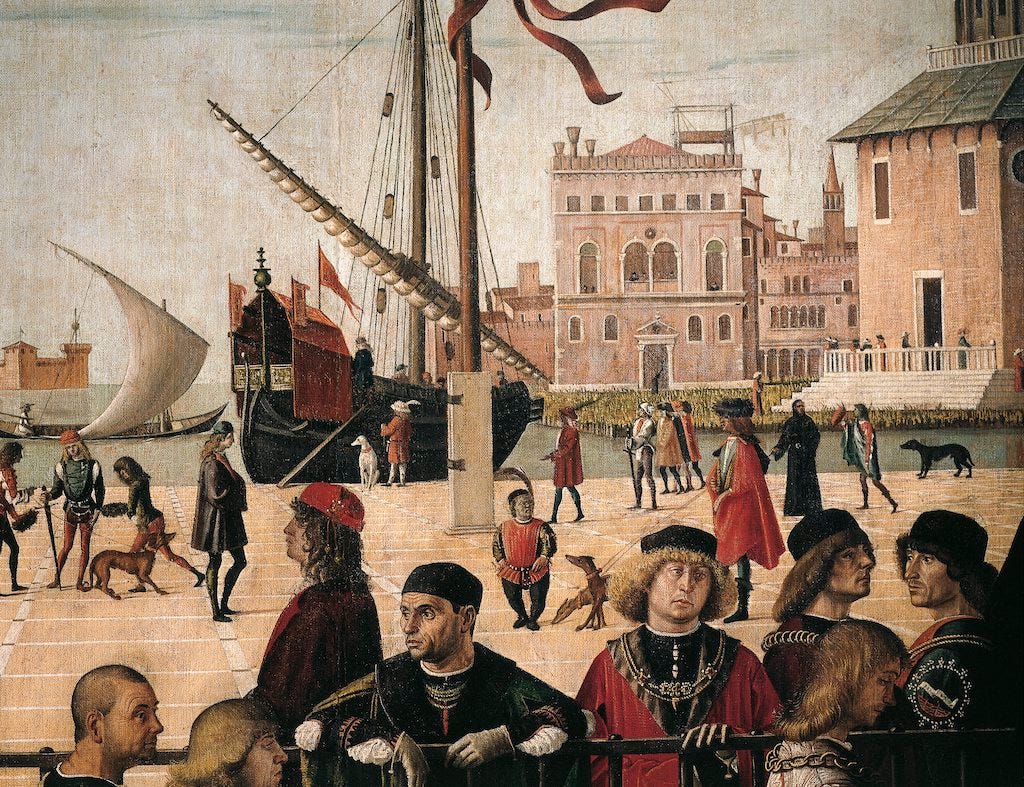
Carpaccio: Marvellous High Renaissance painter
Kevin Kelly on spirituality and gratitude
What he thought and what he thinks now

Kevin Kelly is an interesting fellow. He was the founding editor of Wired and has written a number of trend setting books. I can recommend What Technology Wants. In a way he’s a voice from the pre oligarch silicon valley. Anyway, here is a nice piece on
When I was in my twenties I would hitchhike to work every day. I’d walk down three blocks to Route 22 in New Jersey, stick out my thumb and wait for a ride. Someone always picked me up. It never ceased to amaze me that the kindness of strangers could be so dependable. As I stood there with my thumb outstretched, the question in my mind was simply: “How will the miracle happen today?”
Shortly after, I took my wages and split for Asia, where I roamed for the next 8 years. Acts of kindness arrived as dependably as my daily hitchhiking miracle. In the Philippines a family living in a shack opened their last can of tinned meat as a banquet for me. Below a wintry pass in the Pakistan Himalayas, startled firewood harvesters shared their tiny shelter when I bounded unannounced into their campfire circle. In Taiwan, a student I met on the street surprised me by offering me a place at his family’s apartment in Taipei for two weeks....
I could easily list thousands of such gestures, because – and this is important – not only did I readily accept such gifts, but I eventually came to rely on them being offered. Kindness never failed to materialize once I put myself in some position to receive it.
Kindness is like a breath. It can be squeezed out, or drawn in. You can wait for it, or you can summon it. I learned from hitchhiking to think of this as an exchange. The person being aided can reciprocate with humility, gratitude, surprise, and delight. Ironically, you are less inclined to be ready for the gift when you are feeling whole, full, complete, and independent!
One might even call the art of accepting generosity a type of compassion. The compassion of being kinded.
One year I rode my bicycle across America. I was never turned away from a backyard, not once. My job was to help my hosts enjoy a thrill they secretly desired but would never accomplish. In exchange I would get a place to camp and a dish of ice cream....
But the strangeness of “kindees” is harder to explain. A kindee is what you turn into when you are kinded. Curiously, being a kindee is an unpracticed virtue. Hardly anyone hitchhikes any more, which is a shame because it encourages generosity from drivers and nurtures the grace of gratitude from hikers.
I believe the generous gifts of strangers are actually summoned by a deliberate willingness to be helped. That we cannot be helped until we embrace our need for help is another law of the universe. It’s a move away from whether we will be helped, to how: how will the miracle unfold today?
When the miracle flows, it flows both ways. When an offered gift is accepted, the threads of love are knotted, snaring both the stranger who is kind, and the stranger who is kinded....
Our existence is an unnecessary extravagance, a wild gesture, an unearned gift. Not just at birth — the eternal surprise is being funneled to us daily, hourly, every second. Yet, we are terrible recipients. We make lousy kindees. …
I’ve slowly changed my mind about spiritual faith. I once thought it was chiefly about believing in an unseen reality; that it had a lot in common with hope. But after many years of examining the lives of the people whose spiritual character I most respect, I’ve come to see that their faith rests on gratitude, rather than hope. The beings I admire exude a sense of knowing they are indebted, of resting upon a state thankfulness. …
My new age friends call that state of being pronoia, the opposite of paranoia. Instead of believing everyone is out to get you, you believe everyone is out to help you. The story of your life becomes one huge elaborate conspiracy to lift you up. But to be helped you have to join the conspiracy yourself; you have to accept the gifts.
Although we don’t deserve it, we have been offered a glorious ride on this planet, if only we accept it. To receive the gift requires the same humble position a hitchhiker gets into when he stands shivering on the side of the empty highway, cardboard sign flapping in the cold wind, and says, “How will the miracle happen today?”

Doing well by doing good
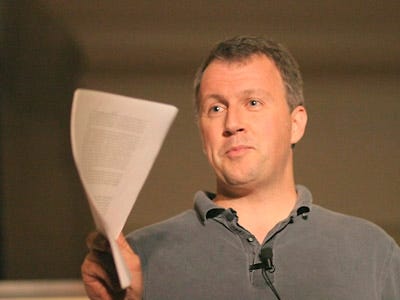
Kevin Kelly’s article above reminded me of something much more prosaic but equally positive I wrote a good while ago.
Paul Graham is one of Silicon Valley’s more interesting entrepreneurs. With a BA in philosophy, a PhD in computer science and two qualifications in painting, he co-founded Viaweb in the mid 1990s which gave him the wealth to co-found the incubator Y Combinator. Y Combinator contributes around $14,000 of seed funding to purchase around 6 per cent of the startups it incubates but the real value it adds is in the environment, mentoring and contacts it provides young would be entrepreneurs. Y Combinator alumni include Scribd, reddit, Airbnb and Dropbox.
Graham also writes eagerly awaited essays sharing with his internet audience what he tells his startups. One essay’s central message was conveyed in its title “Be Good”.
Graham thinks internet startups shouldn’t worry too much about making money. That’s not because it’s unimportant, but because this puts the cart before the horse. The first commandment is ”make something people want.” And once you’ve done that, the internet connects you to so many others that the chances are you can turn what people want to good financial account.
Google’s peculiar slogan “don’t be evil” acquires a new significance in this context. It was founded at Stanford University to build something great from Larry Page’s insight that the links on websites provided the information from which one could judge the relative importance of websites. One year into its life, Google looked like a do-gooding not-for-profit. Its founders weren’t having a bar of cluttering up their pristine white search text box with paying advertisements. That would ruin users experience and degrade users’ confidence in the integrity of Google’s search results.
When ads finally came, they were separated from Google’s main results, protecting user experience and the integrity of the company. Then Google did us another service – their auction system for placing ads not only maximised their own revenue but maximised the usefulness of ads to users. (Wasn’t usefulness to users supposed to be the point of advertising all along?)
Like elevators helped people navigate skyscrapers, Google made the riches of the internet navigable. By my back of the envelope calculation that service generates over a trillion dollars of value each year. So it’s not surprising Google can divert forty odd billion dollars its own way. Facebook was similar and Twitter has taken years to figure out if it can make money. All were following the Paul Graham formula – doing something so great, creating vast value at least some of which could be ‘monetised’ – as they say in the valley.
And lots of the people I admire do the same thing. They might do it in small ways – putting people in touch with one another to help make worthwhile things happen – even when it’s not in their duty statement. If that sounds like something anyone would do, that’s not been my experience. If they hear a good idea, lots of people nod approval, but, unless doing more is part of their day job, they leave it there.
A few months ago an email arrived from someone I’d previously e-mailed because I’d read his blog posts and thought he’d be interested in something or other. Some rapport had built up through various email exchanges and he sent me his new book in the mail. I loaned it to a prominent friend and introduced her to him by email. After thanking me, he concluded that he hoped I didn’t mind him asking a personal question:
You seem to make many introductions, connecting people, etc. I know many people who do this kind of thing, but it’s usually either on behalf of people who they know well, or in a fairly obviously self-interested way. It’s rather less often that I find people making connections in ways that seem more simply for the common good. Why do you do it?
It took me aback, but I told him that I did it for the fun of it, because I liked to make connections and perhaps help something good happen. But thinking about it, the urge to communicate with those who might be like-minded doesn’t just power my actions here, but powers Facebook, Twitter, blogs and Wikipedia. So am I really so unusual?
But of course it costs me next to nothing – just a few keystrokes here and there. So I’m already way ahead – in reciprocated links, in introductions and acquaintances I mightn’t otherwise have. Some of whom become friends. And that’s before I count the opportunities it’s given me to invest and participate in startups which are following Dr Graham’s formula of doing well by doing good. Will it make me rich? That depends how you mean. I’m having fun and making friends. Will I make lots of money? Too early to tell. But so far so good, and whatever happens the world will be a little better for my having tried.

The largest, most magnificent animals that ever lived
You know how it happens. YouTube tempts you to click on something, and before you know it, you’re inundated with videos. Well, I clicked on a whale video, and then I clicked on a Blue Whale video, and really, if you don’t find these things awesome and magnificent, you have a heart of stone. (They have a heart that weighs more than a car, but I digress).
Manuela Carmena: leftist mayor of Madrid

Last November, when I made my annual pilgrimage to Kilkenny for Kilkenomics, it turned out that my New Yorker cousin Lawrence and his wife Joanna were in their digs in Madrid. They suggested I visit them on my way home, and they would introduce me to their friend Manuela Carmena, the ex-mayor of Madrid. She is quite the proponent of citizen assemblies. I felt privileged to meet her. I also discovered that the Spanish electoral system uses sortition to recruit local officials at polling booths and perform roles a little bit like scrutineers perform in Australian elections.
Be that as it may, she got in with the support of the left-wing populist party Podemos (which I wrote about here) but, refusing to join Podemos she was then swept aside when it splintered and ran a rival candidate who managed to split the vote sufficiently to hand the election to the right. Oh the joys of left-wing solidarity. Anyway, all this meant that I was intrigued to read this recent Substack rumination on whether Carmena and her colleague in Barcelona might offer a useful model for Zohran Mamdani in New York.
Critics of Zohran Mamdani invoke a vibe: “socialism” as shorthand for disorder—grimy, chaotic, vaguely authoritarian. What they rarely talk about is governance. But if you want to know what happens when democratic socialists govern a global city, you don’t have to imagine the end of New York. You can look at Madrid. Or Barcelona.
In 2015, voters in several of Spain’s largest cities elected a new generation of left-wing mayors backed by social movements that grew out of the post-2008 anti-austerity wave. Many veterans of Spain’s left were deeply skeptical—they warned that the institutions were too hostile, the media too entrenched, and the rules rigged against real change....
But Manuela Carmena and Ada Colau made a different wager. The most radical thing you could do, they argued, was not to retreat from power, but to test your ideas inside it. They were accused of being too radical. They governed with competence and restraint.
Start in Madrid, where Manuela Carmena—a retired judge and former Communist—was elected mayor in 2015 at the age of 71, heading the Ahora Madrid platform backed by Podemos and local civic groups. She had no party machine behind her and little taste for ideological branding. What she had was a clear idea of what politics should deliver. “Democracy,” she argued, “is hollow if it cannot guarantee housing, dignity, and public trust.” She governed with that principle and with an approach many on the left dismissed as boring: competent, detail-oriented public administration.
Carmena’s tenure was anything but reckless. She cut Madrid’s municipal debt by over 40 percent while increasing social spending by half. She rolled out Madrid Central, one of Europe’s most ambitious low-emissions zones, which slashed traffic and air pollution in the city center. She expanded participatory budgeting, launched mediation programs to reduce evictions, and blocked plans to sell off thousands of public housing units....
Yet she insisted that her most meaningful accomplishment was something quieter: restoring trust in public institutions through good governance. “La clave es la gestión,” she told El País in 2025. “The key is management.” What frustrated her most was the left’s tendency to treat administration as something small or technocratic, rather than as the foundation of any credible alternative to neoliberalism.
Carmena governed without the backing of a party apparatus, by design. She refused to join Podemos, describing political parties as factories that turn young idealists into clones. In 2019, Podemos splintered and ran a rival slate that drained just enough votes to allow a conservative coalition of the PP, Ciudadanos, and Vox to seize control of the city, even though Carmena’s list won the most votes—not a defeat by the right, but by a divided left that chose purity over power. Before leaving office she also faced a year-long investigation over the city’s bike-share program, Bicimad—ultimately dropped, but a textbook example of lawfare: legal harassment designed less to punish than to drain and discredit. The parallels to the attacks already aimed at Mamdani are easy to spot.
What Carmena’s time in office makes clear is that the question isn’t whether socialists can govern. It’s whether others will let them. Her administration was not a radical experiment but a practical demonstration of what left politics could look like in the real world: fiscally sound, socially ambitious, and oriented around the people most cities leave behind.
Barcelona offered a more activist-led model. Ada Colau, elected the same year, became the city’s first woman mayor. Her administration required 30 percent affordable housing in all new private developments, placed aggressive restrictions on Airbnb, and reimagined city infrastructure through the “superblocks“ project, transforming traffic-choked intersections into car-free zones. These structural interventions provoked structural backlash. “It worked,” Colau admitted. In 2023, she lost re-election by just 342 votes....
The opposition to Zohran Mamdani is about whether he might prove that a different model of urban governance actually works. Madrid and Barcelona demonstrated what is possible. The real question is whether New York is willing to try.
Social media is centrifugal, LLMs are centripetal

I found the basic claim in this piece pretty plausible.
From the printing press to the radio, from television to social media, communication technologies affect politics by shaping two things: who speaks and what they say.
Most famously, the printing press destroyed the informational monopoly of European monarchs and the Catholic Church, enabling the Reformation. Much later, radio and television partly restored centralised control, concentrating ideological power in the hands of wealthy elites....
Messengers and Messages in the Social Media Age
Social media has been a radically democratising technology, allowing anyone with opinions and an internet connection to bypass traditional gatekeepers. Its algorithms, optimised to capture audience engagement, amplify sensationalist, alarming, and divisive messages.
Social media benefits populism not by brainwashing the masses with viral fake news, but by exposing voters to widespread non-elite perspectives—including xenophobia, conspiracy theories, and quack science. It has given the world Candace Owens and Andrew Tate....
The Revenge of Expert Knowledge
Consider a topic: climate change, vaccines, immigration, the Epstein files. Fire up one of our leading large language models (LLMs)—ChatGPT, Gemini, Claude, even Grok—and compare its information with what you find scrolling on a major social media platform. The LLM’s responses will generally be much more accurate, evidence-based, and in line with expert consensus.
Major AI companies are competing to build intelligent systems for a vast, diverse user base. The goal of putting “expert-level intelligence in everyone’s hands” cuts against producing highly partisan or misinformative content.
Most discourse in this area focuses on the epistemic flaws of LLMs: hallucinations, deepfakes, disinformation. These are important, but such a discourse is missing the forest for the trees. LLMs’ most consequential feature is simple: they greatly improve people’s access to accurate, evidence-based information.
From Democratisation to Technocratisation
Whereas social media shifts power towards the masses’ beliefs and communication styles, LLMs are a technocratising force, shifting influence back towards expert opinion.
Over a century ago, Walter Lippmann argued that democracy needed “intelligence bureaus” to explain the facts for politicians and the public. LLMs are something like this. Unlike human experts, they deploy encyclopaedic knowledge without getting tired or frustrated, which partly explains why they can be persuasive even in correcting conspiratorial beliefs many assumed were beyond the reach of rational persuasion.
As Dylan Matthews argues, this makes LLMs an epistemically converging technology—pushing “people’s senses of reality closer together in a sort of mirror image of the way social media has fractured them.”...
Objections
Hallucinations. The rate has been falling fast. But the key question is: compared to what? Compared to social media content, LLMs typically provide more accurate information.
Sycophancy. LLMs tend to flatter users’ prejudices, sometimes with tragic results in rare cases of “AI psychosis”. But a recent study finds people frequently ask Grok to fact-check their own side’s politicians—out of genuine curiosity, not partisanship.
Top-down manipulation. The notorious “MechaHitler” debacle—in which making Grok less politically correct produced a torrent of extremist antisemitic content, rolled back—shows the limits. It’s simply very difficult to build capable, trustworthy systems whilst simultaneously spreading conspiracy theories....
Final Thoughts
If my speculations are correct, LLMs are a kind of anti-social media: technocratising, epistemically converging, accuracy-optimised, and polite, where social media has been democratising, diverging, engagement-optimised, and performative.
There is much to worry about when it comes to modern AI—its effects on the labour market, authoritarian leaders, and the gradual disempowerment of ordinary citizens—but too much AI discourse is driven by an unreflective, omnicausal anti-AI sentiment with very little concern for veracity or proportion....
Walter Lippmann’s vision of “intelligence bureaus” dispensing expert knowledge to the masses is being realised in a form he could never have imagined. But the classic problems with that vision—the flaws of expert opinion, and the benefits of democratic diversity—remain. We can only face up to them if we recognise LLMs for what they are: not a continuation of social media, but a powerful corrective to it.
Airports
Why are they so soulless when railway stations are so not? I can’t say I quite understand why, but there you go. There are very few exceptions, including airports designed by great architects like John Foster Dulles Airport in Maryland designed by Eero Saarinen. Anyway, this looks like a breakthrough. It looks lovely. More here if you’re interested.




Review of Democracy’s Slaves
In this week’s Heaviosity Half Hour below, I’ve extracted a substantial passage from a fascinating book that interrogates a remarkable fact. In ancient Athens’ democracy, much of the most crucial knowledge work was done by slaves. Knowledge work, such as assaying the coinage to guard the currency against debasement.
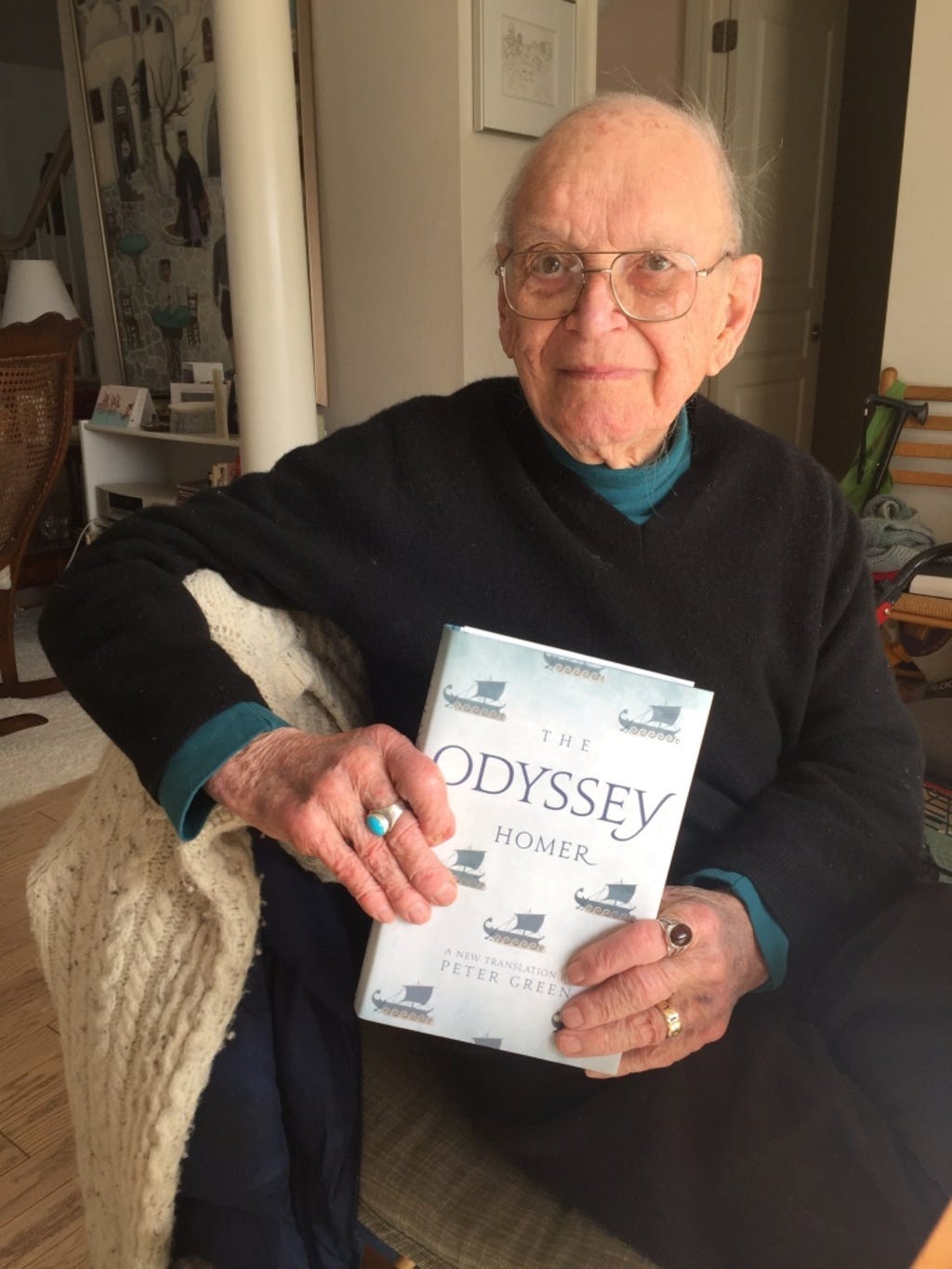
But where a French philosopher cum historian, Paulin Ismard tends to maximise correspondences between abstract theories about the entanglement of knowledge and power, a British historian Peter Green leans more heavily on another human practice: muddling through. Green died 18 odd months ago aged 99!
At first sight – and indeed after careful investigation – ancient Athens looks anything but an ideal spot for the incubation and development of democracy. Athens prided itself on having been the sole city not to fall to invaders during the general collapse of Mycenaean dynasties in Greece c.1200 BCE; and even if this claim is questionable, it indicates a stubborn adherence to the type of rule that was vanishing: that of local royal aristocracies obsessed with blood and lineage, hunting, and the peculiar sense of honour contingent on successful warfare.
The tradition thus preserved became an extraordinarily persistent legacy, embodying the social prejudices of blue-blooded landowners who nursed a withering contempt for those who soiled their hands with trade or commerce. But from the seventh century BCE onwards, colonialism led to new, competitive ways of making a good living. Thersites, the Iliad’s one real radical, is an early symptom of coming change: but he is whipped for his presumption by Odysseus, and the rank and file applaud this as a fine joke.
When Solon made a real effort to deal with Athenian economic distress in the early sixth century, his seisachtheia, or ‘shaking off of burdens’, involved the cancellation of defaulted agricultural debts and the abolition of enslavement for such defaults. He reorganised citizens into four property classes; major offices could be held only by the top two categories, while members of the lowest group could attend the assembly but were ineligible for public office.
Until Cleisthenes took the first step in the establishment of democratic rule in 508, a major component of Athenian society – though silent and politically powerless – continued to be the plethos, the landless masses: artisans of every sort, including carpenters, shipwrights, builders, smiths, physicians, scribes, minstrels. The mass of the plethos was always indispensable, but its low status was taken for granted, and any attempt to improve its social condition was liable to trigger a fear of revolution.
Though great scholarly attention has been lavished on Cleisthenes’ democratic reforms, both the way he obtained power and his motive in doing so tend to be brushed over. The truth is, until that crucial moment in 508, Cleisthenes and the Alcmaeonid family had shown a lot of political ambition but very little popular appeal – their record is that of yet another power-seeking aristocratic clan. As a flag-bearer for democratic reform, Cleisthenes emerged out of the blue. The Aristotelian Constitution of the Athenians states in blunt terms just what it was, unthinkable to the upper crust, that Cleisthenes did: he conceded the franchise to the plethos. What is clear is that the first step towards democracy was taken, as a last desperate resort, by an unsuccessful politician in search of votes....
In Democracy’s Slaves, Ismard investigates the men who carried out the general administrative business of the new democracy – elections, civic archives, the assaying of the currency. These were the dēmosioi, Athens’ nearest equivalent to modern civil servants. They also happened to be slaves. Ismard, obviously bothered by the modern conflict between democracy and technical efficiency, seems to regard the dēmosioi as having provided an essential buffer between the newly democratic citizen body and the claims to power of emergent technocrats. But the traditional class prejudice against the latter was so ingrained that no such buffer was needed.
What emerges is less the kind of intellectual theorising with which Ismard seems most comfortable, and more the ad hoc revamping of old traditions to innovative ends by practical politicians working, step by step, in unknown territory, and with little in common save personal ambition and an abiding distrust of one another’s motives.
This last factor offers a compelling reason for the resort to slave administrators. Athenian political factions were never notable for their belief in their opponents’ honesty; those seeking non-political candidates to administer the business of the polis will have turned to the dēmosioi because the ingrained contempt for this kind of expertise would effectively bar class-conscious citizens from seeking such positions.
‘A dēmosios,’ Ismard says, ‘in that he was outside the Athenian social arena, appeared less likely to succumb to corruption than the average citizen.’ But the remarkable rarity of dishonesty among the dēmosioi may have a simpler explanation: slaves, unlike citizens, could be flogged. They had little to gain by dishonesty and, literally, everything to lose. For at least two centuries after the Cleisthenic revolution, they ran the daily business of the demokratia with silent efficiency; their basic motivation, like that of Cleisthenes himself, might have been essentially self-serving, yet it empowered and nurtured a concept of immense value, with a significance and lasting strength far beyond their knowing.

Heaviosity half-hour
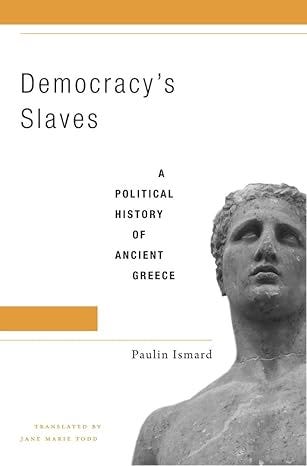
Democracy's Slaves: A Political History of Ancient Greece by Paulin Ismard
Editor’s Note: This is an edited excerpt from Chapter 4 of Paulin Ismard’s Democracy’s Slaves (Harvard University Press, 2017), edited back by approximately one-third. The chapter examines how classical Athens addressed a problem haunting modern democracies: reconciling democratic equality with specialized expertise in governance.
“We have, as far as possible, closed every avenue by which light might enter the slaves’ minds. If we could extinguish the capacity to see the light, our work would be completed; they would then be on a level with the beasts of the field and we should be safe.” With these words in January 1832, Henry Berry, member of the House of Delegates for Virginia, condemned the antiliteracy laws, one of the most sinister innovations in the slave codes of the southern United States. Most states of the Old South had gradually penalized any master who taught slaves to read and write. By the late 1820s, the laws extended to all people of color: access to writing became bound up with skin color.
The Greek cities never enacted such laws. A scholiast of Demosthenes even provides spectacular contrast: “The Athenian people were in the habit of buying slaves who knew their letters.” Should the two slave societies be contrasted term for term, as some nineteenth-century abolitionists did? No. The scholiast’s remark concerned only a tiny fringe—slaves who were property of the Athenian dēmos. ... Despite antiliteracy laws, some American slaves taught themselves to read; historians argue 10 percent could, whereas no specialist in ancient Greece would venture such an estimate.
Nevertheless, the scholiast’s remark points to a real difference: not in the proportion of literate slaves but in uses made of specialized knowledge held by slaves and not by most citizens. An Alabama grower would have been dumbfounded to see expert slaves in classical Athens performing daily public tasks that citizens were incapable of doing. Yet that slave expertise was a product of democratic ideology. In entrusting expert tasks essential to administration to individuals excluded from the city, Athenians carried out the democratic program, which refused to allow individual expertise to legitimize claims on power. Public slavery was central to mechanisms linking knowledge to politics in democratic Athens.
The Athenian experiment speaks to one of the most burning issues of present-day democracies. The political status of expertise lies at the heart of contemporary “disenchantment” with representative democracy. “Democracy” and “knowledge” appear as contradictory imperatives. The democratic ideal of majority participation seems incompatible with efficacy required in governance, which is necessarily complicated and requires learning. Who can fail to recognize the refrain of our time, which makes “epistocracy” of governments the insuperable horizon of all politics? ...
But Athenians did not look down on such functions. They wished to keep specialized knowledge outside the political field. Unlike moderns, they believed political deliberation between “nonspecialist” citizens could generate collective knowledge useful for the city.
Every epistemology is a social epistemology: every knowledge is inscribed within unique social configurations. As Michel Foucault demonstrated, there is “no relation of power without the correlative constitution of a field of knowledge, and no knowledge that does not presuppose and constitute relations of power.” Public slavery, at the intersection between Athens’s slaveholding structure and its mechanism for organizing knowledge, provides a privileged vantage point for considering how knowledge and power articulated in democratic Athens.
Slaves and Experts
Identifying expert slaves in the classical city is difficult. Civic discourse celebrates magistrates while leaving anonymous factotums in shadow. Archivists at the Metrōon knew precisely the content of public deeds they had filed and often composed. Few citizens could have done their job. Thanks to inscriptions from the classical and Hellenistic periods, a few figures of expert slaves can be brought back to life.
The “Verifier” of Currency
To protect commercial activity, Athenians repeatedly checked the influx of counterfeit money. ... A law of 375/374 BCE indicates that two public slaves, posted on the agora of Athens and at Piraeus harbor, oversaw the quality and authenticity of coins in circulation.
The two dēmosioi performed their job as “verifier” (dokimastēs) differently. Athens’s dokimastēs, when not required at the Council of Five Hundred, spent time among moneychangers and bankers whose tables were set up on the Agora. His Piraeus counterpart stayed near the “stela of Poseidon,” waiting for merchants to have their coins authenticated. The two slaves were the only ones who could determine in disputes whether currency used during a transaction was valid.
The law stipulated two scenarios: “If anybody present [foreign silver coin] having the same stamp as the Attic . . . let him give it back to the man who presented it. But if it has a bronze or a lead core or is counterfeit, let him cut it through immediately and let it be sacred property of the Mother of the Gods.” Athenians distinguished between counterfeits and foreign-made imitations of Athenian coins of the same metal, weight, and alloy. If the verifier encountered an imitation, he returned it to its owner. If the coin appeared counterfeit—a thin silver layer concealing bronze or lead, or the silver proportion lower than Athenian standard—the dēmosios cut the coin in two and consecrated it to the Metrōon.
Athenians did not entrust this assignment to slaves out of indifference. A dēmosios, outside the Athenian social arena, appeared less likely to succumb to corruption. His status placed him in neutrality ideally suited to guaranteeing currency exchanges. But another factor explains the use of a slave: Citizens capable of performing the task were rare. Had Athenians given the job to a citizen, they would have made individual expertise a qualification for governing and violated the principle of egalitarian distribution of archē.
The task required exceptional skill. In Petronius’s Satyricon, Trimalcio portrays moneychanger as the most difficult profession: “The money-changer’s, because he sees the copper under the silver.”
Every numismatist knows how tricky “seeing copper under the silver” is. If the coin was simply “stuffed”—lead or bronze covered with silver—the task was easier than verifying the “proportion of silver” when silver was combined with bronze or lead during minting. It’s hard to imagine how the dēmosios distinguished an imitation from an original when both had the same weight and alloy—a difficult task even for modern numismatists. ... One thing is certain: his assignment required true expertise. The law confirms recruitment was no easy matter: “So that there shall also be in Piraeus a verifier for the shippers and the merchants and all the others, let the Council appoint one of the public slaves, if one is available, or buy one.” The city, anticipating that among hundreds of public slaves none would be suitable, envisioned turning to slave markets.
The dokimastēs held considerable de facto power. The law stipulated “if anybody does not accept the silver which the verifier approves, let him be deprived of what he is selling on that day.” Only the public slave could guarantee validity of coins. Trusting entirely in his conviction, he alone could destroy a counterfeit coin. Private individuals submitted to a public slave’s authority, whose decision was irrevocable: every coin he declared valid had to be accepted by merchants.
Nicomachus the Jurist
Although specialized knowledge was used by the city, civic discourse did not allow it to become a qualification to govern. Nothing is more telling than the controversy sparked by Nicomachus. For more than ten years, Athenians entrusted compiling the city’s laws to that son of a dēmosios. He is known through the speech composed by Lysias on occasion of treason charges brought against him in 399. But Nicomachus was famous enough to be violently attacked by Aristophanes in Frogs, during which Hades urges Aeschylus to give him a rope with which to hang himself.
From 410 to 404, Athenians assigned a commission the task of revising and republishing all the city’s laws. Among members, Nicomachus acquired a special position, so much so that rumors circulated he had introduced unknown provisions into the corpus of Solonian laws. If one believes Lysias’s argument, the anagrapheus “assumed supreme authority over the whole code,” becoming himself a lawmaker. Nicomachus should have simply compiled and recopied laws in force, but he was alleged to have perverted Athenian justice: “We were brought to such a pass that we had our laws dispensed to us from his hands, and parties to suits produced opposite laws in the courts, both sides asserting that they had obtained them from Nicomachus.” In 403, democracy restored, Athenians reelected Nicomachus, this time giving him the assignment of revising the city’s traditional calendar. The anagrapheus, according to Lysias, then added new cults to the ritual calendar.
The power acquired by Nicomachus was unusual. Athenians never conceived of lawmaking as a science but as a practice belonging to the dēmos’s sovereignty and within the purview of all citizens. Athenian justice was placed in the hands of nonprofessionals; citizen-judges, numbering six thousand and selected by lot annually, had no specific training beyond regular participation in civic institutions. In that context, Nicomachus seems to have been the only expert Athenian law ever had.
That position placed Nicomachus in a paradoxical situation. His position, while granting authority, did not constitute a magistracy. Renewed year to year, it did not fall under the rule of noniteration. Lysias notes: “Though it is not permissible for the same man to act twice as under-clerk to the same magistracy, you authorize the same persons to have control over the most important affairs for a long period.” Nicomachus may have been exempted from the traditional audit. The logographer’s virulence can be explained by ambiguity of the anagrapheus’s position: holding real power without possessing a magistracy, he undermined the separation between administration (hupēresia) and archē.
Nicomachus’s selection owed nothing to chance. “You have chosen Nicomachus for the transcription of our ancestral rites, when on the father’s side he has no connexion with the city”; the slave ancestry of the anagrapheus, son of a dēmosios, explains why such an assignment was entrusted to him. A dēmosios through his father, Nicomachus remained tainted by the stigma of the slave: “You . . . carry insolence to such a pitch that you regard the city’s property as yours, who are yourself its slave!” Nicomachus was actually a citizen, but the litigant’s insistence on his servile background is highly significant. It is as if the task entrusted to him could only be that of a slave. The argument’s conclusion was incontrovertible: “And yet from a slave he has become a citizen, and has exchanged beggary for wealth and the position of under-clerk for that of lawgiver!” That formulation, linking slave status to administrative service for the city, to contrast both to legislative activity reserved for citizens, resolves ambiguity about the anagrapheus’s position. It casts harsh light on a polarity constitutive of Athenian democratic ideology, which relegates city administration to servile tasks and places expertise on the fringes of the political arena.
Democratic Epistemology: Protagoras, or the City of Auletes
Let us enter the residence of rich Athenian Callias in 431. Amid the assembly of Sophists and young admirers come to listen to Protagoras, another intruder has taken his place: Socrates. He asks Protagoras about the substance of his teachings. Protagoras replies he teaches “good judgement in his own affairs, showing how best to order his own home; and in the affairs of his city, showing how he may have most influence on public affairs both in speech and in action”—the art of politics.
This does not satisfy Socrates, who doubts the art of politics can be taught. In Athens, knowledge in no way determines participation in political life; in democratic assemblies, anyone at all can speak. Athenians, though they refer to learned technicians when building a ship or temple, do not grant preeminence in community affairs to those who might possess specific knowledge about administration. Protagoras, responding, tells a myth: creation of the mortal race by Prometheus and Epimetheus.
The Sophist’s narrative diverges from versions given by Hesiod or Aeschylus, providing an original reinterpretation that may stand as a founding myth of the democratic city. ... Prometheus’s punishment is not mentioned; he appears as benefactor. Men, possessing technical knowledge thanks to Prometheus’s theft of fire, prove powerless to ensure reproduction of the human race. Though in possession of dēmiourgikai technai, they are incapable of founding a stable political order. Zeus offers men politikē technē, mastery of which rests on aidōs (respect) and dikē (justice). It remains to be determined how these qualities are distributed. Must one imagine that a single person can possess political ability for everyone else’s good, or rather that Zeus distributed that ability equally? Protagoras chooses the second.
The myth has three striking aspects. First, political ability proceeds from a radical break with dēmiourgikai technai, specialized knowledge placed in the community’s service. The political is conceived as an ability offered to humankind by the gods. It constitutes not specialized knowledge but an ability requiring regular practice: “They do not regard [this virtue] as natural or spontaneous, but as something taught and acquired after careful preparation.” Finally, it is distributed among all men. Protagoras’s narrative thus provides legendary foundation for a cardinal value of Athenian democratic ideology, isonomia (equal sharing of political duties).
Protagoras is invited by Socrates to present his conception of virtue and how it can be taught. The Sophist compares it to learning to play the flute (aulos): “Suppose that . . . we were all flute-players, in such sort as each was able.” He proposes a model by which citizens, like flutists, would collectively and individually acquire virtue, without which no city could exist: “Suppose that everyone were giving his neighbour both private and public lessons in the art [of flute playing], and rebuked him too, if he failed to do it well, without grudging him the trouble—even as no one now thinks of grudging or reserving his skill in what is just and lawful as he does in other expert knowledge; for our neighbours’ justice and virtue, I take it, is to our advantage, and consequently we all tell and teach one another what is just and lawful.”
According to Protagoras, teaching of virtue meets conditions different from those presiding over technai in artisanship. Whereas technai require the knowledge of a master, teaching of virtue comes about “diffusely and repeatedly at every possible level.” Dēmiourgikai technai are acquired through vertical transmission established once and for all, whereas virtue is learned by horizontal circulation among equals throughout life. Protagoras uses language acquisition as model: “Why, you might as well ask who is a teacher of Greek; you would find none anywhere.” Just as one doesn’t need the best linguists to learn one’s mother tongue, virtue is acquired through socialized learning involving all community members.
The imperfection of each citizen’s virtue is not a drawback. No definition of virtue’s essence could serve as prerequisite for the intense circulation and exchange by means of which that quality is actualized in the civic community. Protagoras’s reflections promote a social epistemology valorizing circulation of knowledge, even incomplete knowledge, among equals. The half-educated teach those more ignorant than they, for the city’s greater good: such is the core of that democratic epistemology.
The Alchemy of the Political
That pedagogy was reflected in Athens’s institutional organization. Athenian democratic life featured multiplicity of deliberative structures. From assemblies at the deme level to the Assembly where all citizens could participate, civic life was marked by intense deliberative practice. According to Josiah Ober, it was that capacity to organize collectively the heterogeneity of knowledge that was key to Athenian success. For lack of a state apparatus producing common knowledge, deliberative agencies aggregated and synthesized knowledge distributed among Attica’s population and converted it into politically efficient knowledge. The density of communities in Athenian society, weaving countless networks among civic body components, played a determining role in implementing available knowledge to serve the common interest.
One institution in particular played a central role: the Council of Five Hundred. No decision could be passed by the Assembly without being discussed there beforehand. Composed of five hundred citizens selected by lot irrespective of fortune, the institution lay at the heart of vast circulation of knowledge dispersed throughout Athenian society.
But Athens’s success did not lie solely in aggregating skills. It did not provide a demonstration of Condorcet’s jury theorem, which holds that the probability the majority will pronounce in favor of the most just proposal increases with the number of jurors. For Condorcet, elaboration of pertinent decisions depends on the level of expertise of each participant. The theorem neglects production of knowledge occurring in the deliberative process itself. That process was at the heart of the Athenian model.
Indeed, in Protagoras’s model, the essential thing was not aggregation of individual expertise as much as the Athenian system’s capacity to create, by multiplying deliberative spaces involving all citizens, the alchemy that brings collective knowledge into existence. In book 3 of the Politics, Aristotle compares the city to a community picnic: “For it is possible that the many, though not men of political worth, yet when they come together may be better, not individually but collectively, than those who are so, just as public dinners to which many contribute are better than those supplied at one man’s cost; for where there are many, each individual, it may be argued, has some portion of virtue and wisdom, and when they have come together, just as the multitude becomes a single man with many feet and many hands and many senses, so also it becomes one personality as regards the moral and intellectual faculties.”
Hence a chorus of men “without political worth” is always better than the monody of an elite. Collective knowledge benefits from each citizen’s individual expertise, but the alchemy composing the political rests primarily on general deliberation transforming aggregation of incomplete individual knowledge into knowledge useful for the community. Not only can individual expertise not constitute a qualification for governing, but its civic utility is revealed only through deliberative practice.
The Meaning of the Slave’s Knowledge
The same conception of the political is at work in Protagoras’s relegation of dēmiourgikai technai outside the political field and in dedication of expert dēmosioi to city service. Platonic philosophy understood the issues, placing the slave’s knowledge at the center of its polemic about the democratic city’s epistemological regime.
Rising in our path is the first formulation of the theory of reminiscence, in Plato’s Meno. This scene merits rereading in light of controversy surrounding the city’s regimes of knowledge.
Young Thessalian Meno, admirer of Gorgias, asks Socrates: “Can you tell me, Socrates, whether virtue can be taught, or is acquired by practice, not teaching?” When Socrates sends the question back, Meno proposes that it is impossible to learn anything other than what one already knows. To resolve that paradox, Socrates formulates the theory of reminiscence: learning occurs through recollection of previously acquired knowledge. Socrates questions one of Meno’s young slaves, leading him to discover a geometrical proposition: constructing, from a given square, a second square with twice the area.
Let us consider this not from the standpoint of Platonic metaphysics but as a controversy about the status of different kinds of knowledge in the city.
Consider the paradox: “Why, on what lines will you look, Socrates, for a thing of whose nature you know nothing at all? Pray, what sort of thing, amongst those that you know not, will you treat us to as the object of your search?” The theory of reminiscence responds to that paradox. This paradox bears traces of fifth-century Sophistic thought and belongs to an epistemology within the lineage of the Protagorian model, whereby virtue can be taught without definitive knowledge of what it is.
Socrates challenges the idea that one can know something of virtue without knowing its essence beforehand. For Meno, “the search for definitions reduces us to total ignorance.” But that powerlessness in the face of knowledge in no way implies pedagogical powerlessness. The philosophy of Gorgias or Protagoras reconciled a pessimistic theory of knowledge with optimism about education. These Sophists, distant precursors of “ignorant schoolmaster” Joseph Jacotot, claimed there was no need to possess definitive knowledge to dispense it.
To resolve that Sophistic paradox, Socrates proceeds in two stages. First, he invokes the myth of metempsychosis, appealing to priests and poets: “[The speakers] were certain priests and priestesses who have studied so as to be able to give a reasoned account of their ministry; and Pindar also and many another poet of heavenly gifts.” Then Socrates summons one of Meno’s young slaves, to whom he submits a geometrical proposition. The slave serves as object of an experiment. In discovering the length of sides of a square with twice a given square’s area, the slave, “recovering the knowledge out of himself” by deductive capacities, proves he already knew what he was supposed to be ignorant of.
The intervention of the slave has often been interpreted as demonstrating knowledge’s universalism. Some historians have invoked hypothetical Socratic egalitarianism. In reality, the hypothesis is risky. Jacques Rancière sees the scene as the founding site of the conflictual relationship binding philosophy to democratic masses and the world of work. The figure of the slave, who plays “the chosen of supreme science” before being brushed aside, is destined to bear witness against false knowledge of the artisan, “man of the multitude,” and to liquidate “popular Socratism.” Meno’s slave, because he is not “a social subject or a person of the Republic,” is primarily a stand-in for the figure of democratic masses, the artisan citizen, and his “virtual omniscience” allows Plato to disqualify in advance the hypothesis of popular or democratic philosophy linked to artisanship.
In view of civic epistemology, the scene contests radically the democratic epistemology of Protagoras, of which Meno’s paradox bears marks. In summoning a man lacking identity, prohibited from speaking in the city, yet one who can accede to knowledge from which reminiscence proceeds, Socrates contrasts a knowledge owing nothing to civic order with Sophistic epistemology—demonstrating that authentic knowledge does not have a place in the democratic city.
Indeed, knowledge to which reminiscence (anamnēsis) gives access stands opposed to deliberative knowledge of democratic order. Socrates’s argument: “Seeing then that the soul is immortal and has been born many times, and has beheld all things both in this world and in the nether realms, she has acquired knowledge of all and everything.” This knowledge comes from a vision of a sun external to consciousness, the “upper sun” toward which rise “glorious kings and men of splendid might and surpassing wisdom.” That “sun,” the world of intelligible realities, is accessible only because of a prior identity between the soul and realities of which it has knowledge. For the soul, anamnēsis consists of detaching itself from the sensible to reach the intelligible world, its true home. Whereas democratic epistemology conceives of knowledge whose object has no anteriority other than that constructed by deliberative practice, the theory of reminiscence conceives it as a prior reality that the soul, endowed with independent life, can revisit.
Hence the scene from Meno dramatizes two incompatible regimes of knowledge, and the theory of reminiscence, demonstrated by a slave, is presented as a condemnation of Athenian democratic epistemology. The scene is an echo chamber of the regime of knowledge proper to the democratic city, a regime that dissociates public knowledge resulting from deliberation among equals and knowledge owing nothing to the world of the city, so that even someone lacking civic identity can be its mouthpiece. The Platonic interpretation suggests that the slave is the figure par excellence through which the distance between these two conceptions manifests itself.
A Comparative Glance: The Sokoto Caliphate
Allow me to broaden focus with a comparison. I take you to the Sokoto Caliphate, founded by Usman dan Fodio in the first decade of the nineteenth century, at the confluence of the Niger River and Lake Chad in northern present-day Nigeria. In the mid-nineteenth century, that vast state, comprising about ten million inhabitants, may have had between 1 and 2.5 million slaves working in every sector of production. Specialists place the state of Sokoto in the category of “slave societies.”
The Kano emirate was the most prosperous region of the Sokoto empire. The emir who ruled it possessed sufficient autonomy to constitute something like a principality within the caliphal state. In a pioneering book, Sean Stilwell considered the role of public slaves, whose power and autonomy grew continually throughout the nineteenth century. They became a major player in the civil war that set the caliphate ablaze in 1893. During the first twenty years of British rule, from 1903 to 1926, these royal slaves managed to hold onto their privileged position within the new colonial order. Stilwell believes the knowledge possessed by some public slaves was central to the autonomization of the slave community.
In the late twentieth century, a descendant of one of the emir’s slaves declared: “[The slaves] taught the [princes] everything, horse-riding, how to live with other people [i.e., politics]. They [were] also fed and clothed by them.” The art of politics taught by slaves? Indeed, tasks entrusted to royal slaves called for diverse skills. As the sovereign’s chief fiscal agents, the emir’s slaves were the only ones who knew the real state of affairs in different districts under his authority. The emir selected principal commanders of his army from among them, so slaves developed knowledge of war strategy and “military technology.” Compilation, preservation, and transmission of royal chronicles of Kano were likewise under their authority.
All these servile skills were defined by the term san’i, specialized knowledge distinguished from ‘ilmi, to which theoretical knowledge belonged. Transmission of knowledge took place inside the slave community under supervision of the oldest slaves. It occurred under a seal of secrecy (sirrî), constitutive of privileges attached to the emir’s slaves’ status. Thus, even though their skills were sometimes denigrated as “servile knowledge” by the free aristocracy, these slaves acquired and transmitted “cultural capital,” which increased their autonomy from the emir and allowed them to constitute an autonomous corps defending its own interests within the state.
The process Stilwell highlights in the Kano emirate clearly has no counterpart in Athenian city of the classical period. The dēmosioi enjoyed a “kinship privilege,” but they could never form lasting dynasties or constitute an autonomous community capable of advancing its own interests in the city. All documentation suggests that reproduction of the slave corps through transmission of dēmosios status was negligible compared to the number of public slaves purchased at markets.
That dimension indirectly sheds light on specificities of knowledge in the dēmosioi’s hands. It is difficult to understand how they acquired specialized skills. There is nothing to suggest “state schools” trained public slaves from an early age, as there were for slave scribes in the Umayyad administration, or forms of collective education similar to that dispensed to the Mamluks. In his Politics, Aristotle mentions existence of a slave science (doulikē epistēmē) taught in Syracuse in the fourth century. That is the only reference in ancient sources to an institutional education system for slaves.
The hypothesis of knowledge transmission among the dēmosioi themselves, similar to the Kano system, is likewise fragile. Most public slaves were purchased, and it seems likely that slave markets were specialized enough for cities to find skilled slaves to fit their needs. That simple fact meant that skills in the dēmosioi’s hands did not offer them resources for autonomy within the city. Unlike public slaves of Kano, who could inherit and transmit specialized knowledge constitutive of their status, the dēmosioi could not use their expertise to foster a specific identity on which to found power that might have gradually increased over time.
But the explanation can be turned on its head. If public slaves of classical Athens never formed an autonomous body in the city, it was also because Athenian democratic ideology, in erecting a barrier between the order of expertise and that of the political, somehow prevented them from using their specific skills to rule. In that sense, Athenian democratic epistemology, in relegating expert knowledge to the margins of the political—a noble activity reserved for citizens—was not simply a defense of public knowledge founded on deliberative practice. Indirectly, its function was also to legitimize the fundamental distinction separating the slave from the freeman and to found the slave structure of Athenian society on reason. In classical Athens, the democratic order of knowledge was also the order of slave society.

Extremely relevant to the Ruxandra Tisio post is something I learned relatively fast just from antiracist social media: All of us having political/social EQUALITY does not mean that all of us have to be the SAME. We may know things that it is convenient for other members of our society not to know; we may want to know things that other members think are trivial or useless; we may have different cultural values or responses to a given situation; we may have to spend important mental energy on what we want to communicate by how we do our hair. The act of creating meaning where others have forgotten and missed it is important spiritual work. I also finished an extremely well-written book by Kabria Baumgartner whose title is "In Pursuit of Knowledge: Black Women And Educational Activism in Antebellum America". Essentially the second chapter of the story she is telling (not the literal Chapter 2) is the struggle to integrate public schools in the North in which girls were often the star test cases. (There is no obvious pattern to which schools were segregated and parents in the Boston battle often got fed up and moved to Roxbury, then a separate town, or Cambridge.) African Americans had formed independent churches which were capable of having a school in the basement (the Boston African Meeting House etc.) But the dynamic was "We have shown that we are capable of rich spiritual life and good moral character and excelling in school. We need you to recognize that so that we enjoy the full equal citizenship rights to which we are entitled--we vote and pay taxes to support the schools the same as anybody else." Dara Horn has also seen in her anti-antisemitism work that a narrative of courage and integrity in pursuing a sacred story does wonders for being treated with equality and respect.