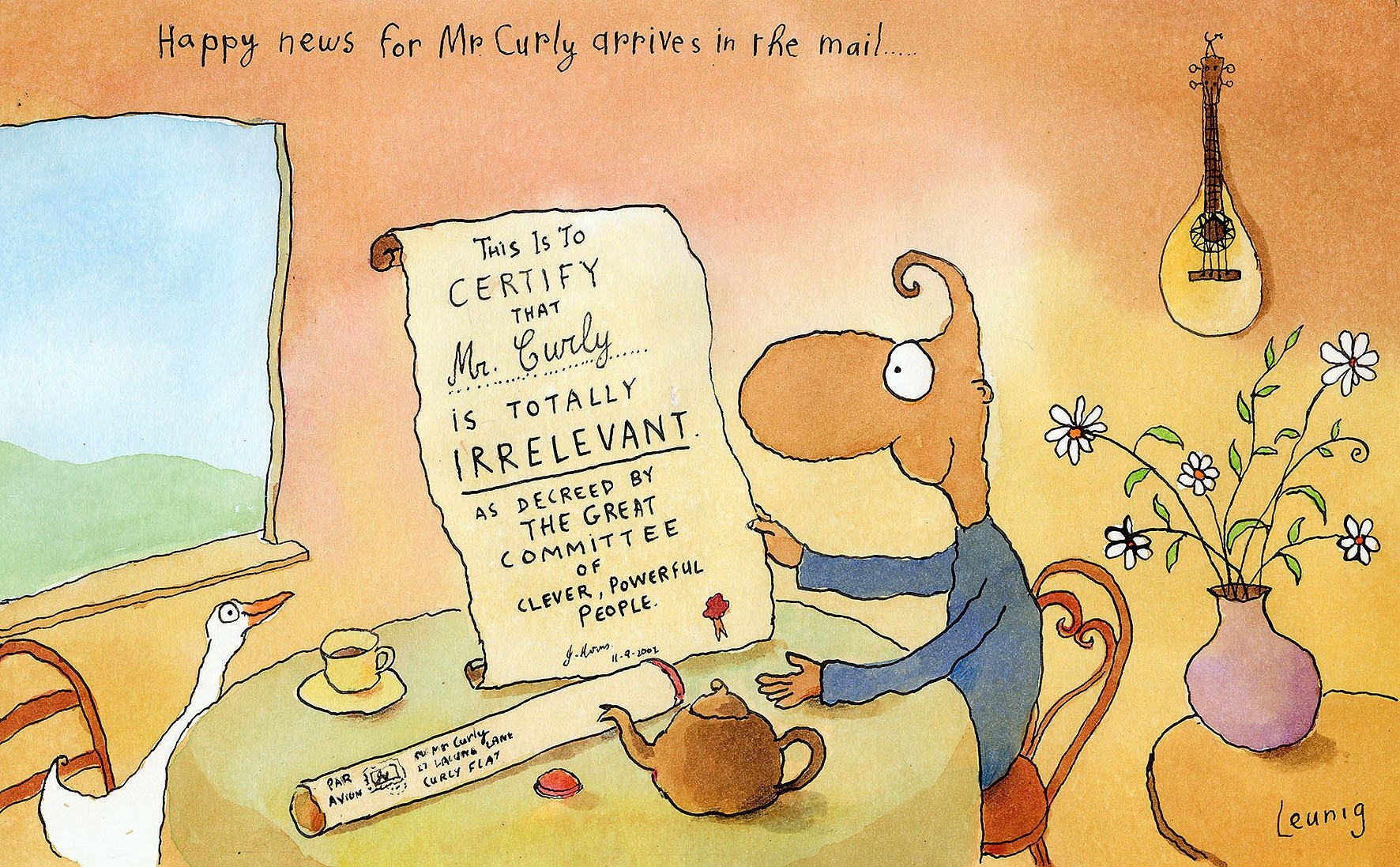

Your best life: or your bullshit one?

I’m shocked, SHOCKED that people are just going through the motions. Particularly in finance. Particularly in ‘Innovation’ within large financial firms. Why hasn’t something been done about it.?Sarah Majdov gradually figured out she was living a bullshit life. And getting $350,000 a year for it (in Australian money anyway). HT: Robert Banks for drawing my attention to the article.
In the beginning was the work. The work was done. The work was real. Then, somewhere along the way, work became just motion.
It was like virtue signaling—only worse. At work, I practiced another kind of signaling: innovation signaling. Everyone knows innovation is the ultimate corporate virtue. For years, it wasn’t innovation itself but the signaling of it that I performed. Innovation signaling was my job.
And not just mine.
At Mastercard, I made around $250,000 a year. Over six years, my title changed—Enterprise Architect, Director of Strategy, Principal of Technology. When you’re an engineer, “Principal” is the ceiling if you’re not interested in managing people, and I hit it early. With nowhere to go upward, I moved sideways instead—new bosses, flights to Manila, Dubai, London, and headquarters in New York.
There was movement—through airports, through inboxes. Emails received, emails sent. We gathered in front of whiteboards, drawing the shapes we learned in kindergarten: squares, circles, triangles, arrows connecting them. Each stood for something—systems, messages, networks... What we produced was usually an abstraction of what already existed, wrapped in something new—sometimes just new buzzwords.
I don’t know when I started noticing that all the movement was the same kind of nothing... It’s not a great revelation—David Graeber wrote Bullshit Jobs back in 2018. But we were technologists. Bullshit jobs were for administrators and bureaucrats, for consultants and life coaches, for people selling insurance or purpose. Not for us.
I moved everywhere, touched projects, asked people: “So what are you working on?” Every conversation followed the same arc: “What? Then what? So what?”
Sometimes work looped back on itself like a recursive function. Sometimes it was a dead-end street. Worst of all—a highway that ends midair.
It never added up to anything.
I started checking the company’s press releases. Everything sounded groundbreaking. Blockchain! Cutting-edge innovation!
But it wasn’t. I knew what those projects actually delivered because I was leading some of them... Every single one of them came back as innovation signaling. Every. Single. One.
The job of almost everyone I worked with at Mastercard for six years was the same as that of the marketing team writing press releases. We were all spinning, packaging, messaging. The only difference was our audience. I took the spin upward—to my boss and senior leadership...
It’s not so obvious. You see logo changes, a new chime when you check out, a slick Super Bowl ad, your card made to look like titanium. But what’s behind all that is old. Mastercard’s “switch”—the company’s bread and butter, the monolithic system that authorizes, clears, and settles transactions—was built during the Nixon era. It’s still the same.
Later, I moved on from Mastercard and joined consulting companies. More travel. I touched more companies. Banking, financial services, fintech, consulting—saturated with people signaling innovation.
Financial gatekeepers: Experian, TransUnion, Equifax, FIS, Fiserv, PayPal, Stripe. They don’t innovate; they extract.
Internet and cloud infrastructure: Equinix, Digital Realty, Cloudflare, Akamai. They own the digital roads and charge tolls...
Capitalism shouldn’t tolerate this kind of work across so many corporations for long. There’s competition, there’s supposed to be rational choice. Customers vote with their feet. Stop innovating, and they should go elsewhere.
But these companies do not just last. They thrive even though they don’t innovate. Because of the digital machinery they inherited. Because of network effects, barriers to entry, locked-in customers, hostile acquisitions.
The companies I worked for made plenty of money. No matter what happened—COVID, mass layoffs, war in Ukraine, any global crisis—someone would always say: “Well, our cash coffers look good.”
Economist Tyler Cowen has asked: What happens when two-thirds of the economy is stagnant?
I think what he identified on the macro scale, I experienced on the micro level. How much of the white collar economy is actually fake?
I think I was trapped in the stagnant two-thirds. Then again, maybe “trap” isn’t the right word. I was making $250,000 a year. Some might call that floating.
London: where I’ll be in the week of Nov 10


Chinese modernisation: the great affront to Western universalism

Nils Gilman on two views of China.
There could hardly be two essays that more perfectly capture the present state of the Western debate over China’s rise than Lizzi C. Lee’s “The China Model’s Fatal Flaw,” just published today, and Kaiser Kuo’s fantastic essay from last week “The Great Reckoning.” Read together, they form a useful diptych of the West’s ongoing struggle to come to terms with the transformation of global power that the People’s Republic of China now so visibly embodies.
From her perch at the Asia Society Policy Institute, Lee writes in Foreign Affairs, the house journal of the U.S. foreign policy establishment, a publication founded in 1911 under the revealing title The Journal of Race Development. Her essay belongs squarely within that long tradition: one that seeks to reassure Western readers that, despite all evidence to the contrary, China’s rise remains incomplete, brittle, and ultimately unsustainable — that its “model of development” is not just flawed, but indeed fatally so...
Kuo, by contrast, writes not from within the architecture of Western power but from the position of an interlocutor between worlds, a Chinese-American who has spent large portions of his career as a journalist and musician in China. His “Great Reckoning” essay is not about China per se so much as about most Western observers’ ongoing failure to assimilate the reality that China’s rise has already happened — that the intellectual, psychological, and civilizational categories through which the modern West has interpreted itself no longer suffice to make sense of the world as it is.
Between these two essays — Lee’s and Kuo’s — one can read the entire emotional and ideological spectrum of the West’s contemporary confrontation with China: from the denial and bargaining stages of grief, to the first uneasy steps toward acceptance.
The Establishment’s Comforting Narrative
Lizzi Lee’s essay is a model of the analytic posture that has characterized Foreign Affairs since its founding — a posture that is empirical in tone, confident in its premises, and curiously impermeable to contradiction. The piece argues that China’s developmental model has entered a “new phase” of crisis, revealed most recently by its chronic “overcapacity” in green technologies, electric vehicles, and solar panels.
The essay is detailed and well informed; its data points are accurate; yet its interpretive frame is strikingly familiar. For all the sophistication of her economic diagnosis, Lee’s argument replays, almost note for note, a narrative that has accompanied China’s rise since the late 1970s: that the Chinese system, while impressive in mobilizing growth, contains inherent “contradictions” that will ultimately arrest its ascent. The implication is that China’s success has been an anomaly that cannot endure — that political illiberalism and economic dynamism are incompatible in the long run.
It is a comforting story, especially for Western policymakers whose legitimacy depends on the assumption that liberal capitalism remains history’s final form. Yet half a century of history now stands against it...
The Other Side of the Mirror
Kaiser Kuo’s “The Great Reckoning” begins where Lee’s essay ends — by accepting, without equivocation, that the age of China’s “rise” is over because that rise has already happened. What we are now witnessing, Kuo writes, is the West’s psychic dislocation as it confronts the erosion of its own centrality. “Deep-rooted and often unconscious hierarchies still position the West as normative and other states as derivative.” That hierarchy no longer corresponds to material reality.
Where Lee’s piece is framed within the technocratic language of policy analysis, Kuo’s is written in the key of cultural psychoanalysis. He sees in Western reactions to China’s success — the moralizing tone of “decoupling” discourse, the outrage at “industrial overcapacity,” the impulse to criminalize China’s scale — not rational economic argument but wounded pride...
Denial and Bargaining: The Stages of Geopolitical Grief
Read side by side, Lee and Kuo could be cast as therapist and patient in a session of civilizational psychology. Lee’s insistence on the “fatal flaw” in China’s model — despite decades of contrary evidence — corresponds to what Elisabeth Kübler-Ross would have called the stages of grief: denial (”China’s success is unsustainable”) and bargaining (”If China reforms its system to resemble ours, it might survive”).
For more than fifty years, Western observers have repeated some version of Lee’s argument. When China began its reforms in the late 1970s, the prevailing view was that “market socialism” would quickly collapse under its contradictions. When it entered the World Trade Organization in 2001, the consensus held that economic liberalization would inevitably produce political liberalization — that China would converge toward the Western model. When that did not happen, the same chorus declared that political control would suffocate growth. When growth persisted, the chorus warned of demographic crisis, debt crisis, or “overcapacity”...
Beyond the Stages of Grief
The West’s encounter with China’s rise has passed through recognizable emotional stages. The first was denial — the confident prediction, repeated for decades, that China’s growth was a mirage. The second was anger — the rhetoric of IP theft, unfair trade deals, and so, which has culminated in Trump’s tariff war. The third is bargaining — the hope, voiced in Lee’s essay, that China will “reform” toward a system more like our own. While some American business appear to have arrived at the fourth stage, depression, the last one, namely acceptance, has yet to arrive.
When I wrote Mandarins of the Future, I concluded that the modernization paradigm was already intellectually bankrupt, and that it continued to stagger on because of the way it flattered the self-regard and ambitions of liberal technocrats. What I could not yet see was how decisively China would, within a generation, expose that bankruptcy to the world. The task now is not to replace one dogma with another but to build a genuinely comparative theory of modernity — one capable of accounting for the multiplicity of paths that the human story has taken.
The historian in me reads the juxtaposition of these two essays as a textbook case of paradigm lag — the period when inherited theories persist long after the world that produced them has vanished. The political scientist in me reads it as the end of American hegemony not just in power but in meaning.
Meanwhile in China

Seeing children like a state: China’s one child policy

You can see my Substack conversation with Hollis Robbins above. She wrote the review below. It is a powerful indictment of the excesses of engineers and the horrific toll they can take when they have the monopoly of violence. Reminds me of Mao’s Great Sparrow Crusade!
This review of Dan Wang’s extraordinary [book] Breakneck: China’s Quest to Engineer the Future (W.W. Norton, 2025) is a few months late for a good reason. As I told him the other day, I couldn’t bring myself to finish the ‘One-Child’ chapter. Dan sent me a draft of his book last year for my thoughts. I dove in, sending him compliment after compliment on his early chapters. “It’s excellent,” I wrote. “I am savoring!” I took about ten pages of notes in anticipation.
I was staying with my daughter and son-in-law, their hands full with a toddler and a new baby, born 17 months apart. My job was the overnight and early morning shift, walking and rocking and swaddling and burping. I was reading Dan’s doc during quiet moments but stopped when I got to that chapter. Over several weeks, every time I had a spare moment I returned to it, but always, after a few paragraphs, closed my laptop. Months went by...
Nobody likes ghosting a friend, especially one coming out with a brilliant book bound to be a bestseller, which it is. When it was officially published in August, I thought I’d try again in hard copy. I’d been reading all the reviews and praise in the meantime. Dan Wang “gets” China, all the reviews say. He is a brilliant writer, and his central framing that China is run by engineers and the US by lawyers has been taken up by all the best podcasts and reviews. Here are some paragraphs if you haven’t yet read it:
China is an engineering state, which can’t stop itself from building, facing off against America’s lawyerly society, which blocks everything it can. Engineers have quite literally ruled modern China. As a corrective to the mayhem of the Mao years, Deng Xiaoping promoted engineers to the top ranks of China’s government throughout the 1980s and 1990s. By 2002, all nine members of the Politburo’s standing committee—the apex of the Communist Party—had trained as engineers. General Secretary Hu Jintao studied hydraulic engineering and spent a decade building dams. His eight other colleagues could have run a Soviet heavy-industry conglomerate: with majors in electron-tube engineering and thermal engineering, from schools like the Beijing Steel and Iron Institute and the Harbin Institute of Technology, and work experience at the First Machine-Building Ministry and the Shanghai Artificial Board Machinery Factory. (2-3)
Once upon a time, America, too, had the musculature of an engineering state, building mighty works throughout the country: lengthy train tracks, gorgeous bridges, beautiful cities, weapons of war with terrible power, and missions to the moon. George Washington was a general, the first of many national security types who appreciated the value of building. As a young army officer, Dwight Eisenhower spent two months driving, or, more precisely, juddering, from coast to coast on unpaved roads. As president, he built the Interstate Highway System. When the United States had surging population and economic growth through the nineteenth century, political elites agreed that its vast territories needed canals, rails, and highways. Some of the leading figures in the Progressive Era embraced social engineering—and they conducted enough eugenics experiments to prove it. (p 11)
The excitement and praise are deserved. The engineer versus lawyer comparison has caught on. You see the “time to build” community excited about building and what it might take to embrace an engineering mindset...
Nobody, however, likes talking about how 35 years of a one-child policy resulted in 321 million abortions and the sterilization of 108 million women and 26 million men, resulting in agony for rural women and families especially.
The problem with engineers doing social engineering is that things can go very, very wrong. Ideally a country would have lawyers and engineers. As Dan said in one early interview, “the issue with lawyers is that they’re really good at saying no. They’re really good at blocking things…and so in the lawyerly society you don’t have stupid ideas like the one child policy; you also don’t have very functional infrastructure almost anywhere throughout the country.”...
The one-child policy, Dan writes, “could only have been implemented in the engineering state. While the state possessed a bureaucracy to enforce controls of such extraordinary scale, there wasn’t a sufficiently developed civil society to fight for legal protection against it” (118)...
But let me end where I began, with why it was so hard to stop reading even when I wanted to. The answer is Breakneck’s remarkable prose. I’ve known Dan for eight or so years, through the excellent Tyler Cowen, and have, like everyone, praised his Christmas letters. Dan and I share an interest in Dickens, novels generally, and what makes a prose style “stand the test of time.” Time has less to do with it than strong paragraph structure. Strong paragraph structure will keep your readers with you. The best writers are engineers whose facades don’t crumble...
Dan’s prose makes it possible to admire systems from altitude and to see the people crushed inside them. Breakneck won’t let you have one without the other.

Jim Chalmers’ tax on unrealised capital gains
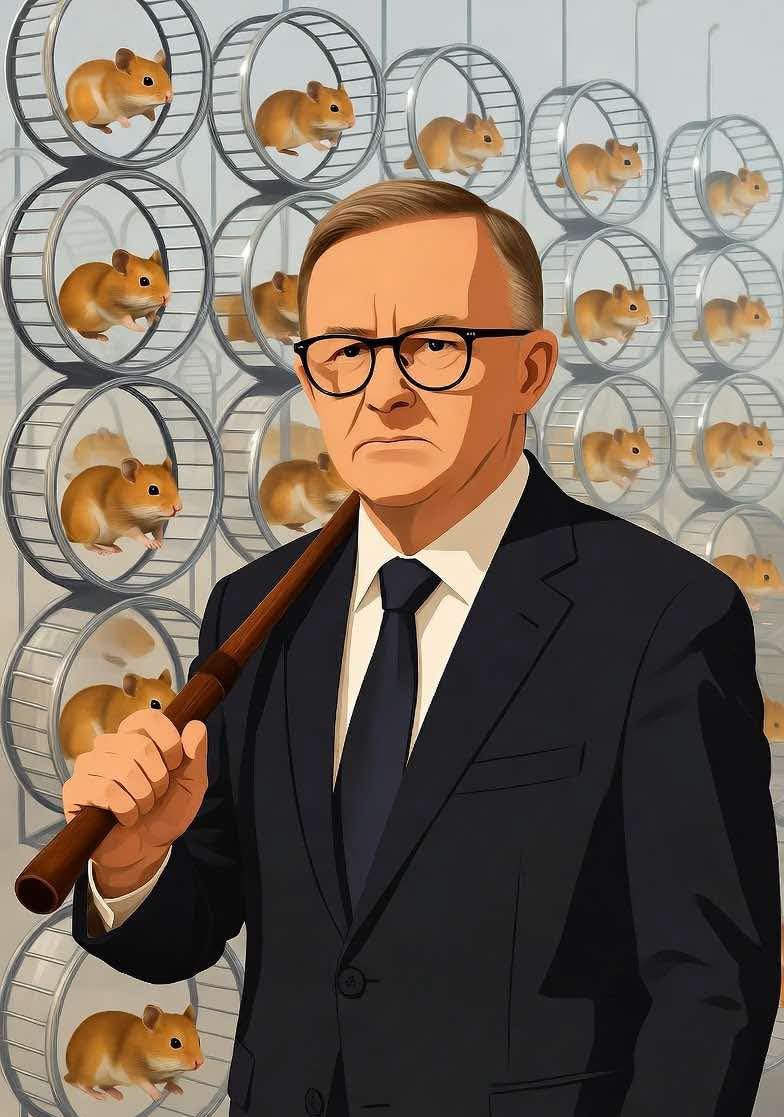
Richard Holden came out swinging against Jim Chalmers’ backdown on taxing unrealised capital gains in the wealthiest super funds. It was an unreasonable article I thought because, in the process of hopping into Chalmers it argued that he’d let down Albo, that Hawke had had his Keating and Howard had had his Costello, but Albo only had Chalmers. Yet, I presume Albo has forced this backdown from Chalmers. Perhaps I’m wrong. Who knows.
Anyway I’m always surprised at how economists can deduce from some distortion that a tax will produce that it should be resisted. The question is about the relative costs of different options. And even on its own, taxing unrealised capital gains isn’t in principle worse than only taxing realised gains. Each has different distorting effects. And that’s before you consider that when you’re trying to raise more tax from the outrageously undertaxed retirement savings of the very wealthiest, well, you can’t make an omelette if you can’t work out what comes first, the chicken or the egg.
So I was pleased to see Zac Gross balance things a little.
It’s all water under the bridge now, but for what it’s worth, I think the government’s original plans for superannuation reform were underrated by much of the commentariat.
Take a recent AFR article by Richard Holden — one of Australia’s sharpest economists — who, reflecting much of the prevailing mood, argued that taxing unrealised capital gains would create all sorts of distortions, discouraging investment, dampening capital accumulation, and edging Australia down a slippery slope towards Elizabeth Warren–style wealth taxes.
I think that criticism is vastly overdone.
Liquidity Tap
One of the main downsides of taxing unrealised gains is that people may lack the liquidity to pay the tax. And that’s certainly true if we levied the tax on elderly pensioners who have made large the paper gains on their Sydney properties but who live on a very modest income.
But for superannuation accounts that problem largely doesn’t exist. The vast majority of super funds — even self-managed superannuation funds (SMSFs) — hold highly diversified portfolios, much of which are in liquid assets such as shares and listed trusts. Indeed, statistics from the ATO confirm that less than 1 per cent of SMSFs are totally invested in a single non-residential asset - “the family farm” scenario so often cited by critics...
Two Wrongs Make a Right
What about the claim that the tax would it distort behaviour? Possibly. But one of the key motivations for introducing the tax is that it actually corrects an underlying distortion built into the current system.
Right now, superannuation accounts are taxed at 15% during the accumulation phase — that is, while you’re working and contributing — and at 0% once you hit retirement and enter the pension phase. The problem is that this setup creates a powerful incentive to defer realising capital gains until after retirement when they can be realised completely tax-free.
How does this work in practice? Imagine someone places their family farm inside a superannuation structure. During their working life, they run the farm in a way that minimises any distributions or dividends, avoiding even the modest 15% tax rate and instead accumulating more capital to boost the paper value of the farm. Then, upon entering retirement — when the tax rate drops to zero — they sell those assets and realise all those accumulated gains tax-free...
Super Capital Accumulation
What about the argument that it would destroy the incentive to invest in capital would an additional tax on super discourage some investment or wealth generation at the margin? Sure. But if we take that argument to its logical extreme, we’d be forced to conclude that all taxes on super should be abolished — which is clearly not what anyone is proposing.
In reality superannuation is one of the least elastic forms of investment when it comes to tax rates. For one thing, most people can’t withdraw their super until they reach retirement age so even if tax rates were increased it would be impossible for the capital to leave the system...
The Dark Matter Theory of Economic Reform
Finally, I’d cite what I call my dark matter theory of economic reform. If you find a Treasurer out there advocating for a piece of economic reform, there’s a good chance they’ve been presented with convincing evidence by the boffins at Treasury that it’s worth doing.
I’m not aware of any published research quantifying how common the “defer capital gains until pension mode” tax strategy actually is. But if anyone has both the data and the incentive to track it down, it’s Treasury. And if Treasury forms a strong view on something, that view tends to find its way to the Treasurer’s desk...
In the end, this was never about punishing success or creeping toward a wealth tax. It was about patching a hole in the hull of the ship before the rich started sailing off tax-free into the sunset.
If that counts as radical reform in Australia, then perhaps the truly radical thing these days is simply insisting that the rules apply equally to everyone — even the ones with very large supers and very good accountants.

From the one China policy to the many intelligences interpretation of AI

Kevin Kelly is always worth reading. If you’ve not read his masterwork What Technology Wants, read it. Read it now! Here is my favourite passage of that book:
Knowledge is … a network phenomenon, with each fact a node. We say knowledge increases not only when the number of facts increases, but also, and more so, when the number and strength of relationships between facts increases. It is that relatedness that gives knowledge its power. Our understanding of gorillas deepens and becomes more useful as their behavior is compared to, indexed with, aligned with, and related to the behavior of other primates. The structure of knowledge is expanded as gorillas’ anatomy is related to other animals’, as their evolution is integrated into the tree of life, as their ecology is connected to the other animals coevolving with them, as their existence is noted by many kinds of observers, until the facts of gorillahood are woven into the encyclopedia of knowledge in thousands of crisscrossing and self-checking directions. Each strand of enlightenment enhances not only the facts of gorillas, but also the strength of the whole cloth of human knowledge. The strength of those connections is what we call truth.
Anyway, on with his contribution to how we should think about AI.
I wrote this short memo last November, 2024, at the invitation of Wired Mid-East for their year-end issue. I think it still holds up nine months later, and represents where we are on this astounding journey.
There are three points I find helpful when thinking about AIs so far:
The first is that we have to talk about AIs, plural. There is no monolithic singular AI that runs the world. Instead there are already multiple varieties of AI, and each of them have multiple models with their own traits, quirks, and strengths. For instance there are multiple LLM models, trained on slightly different texts, which yield different answers to queries. Then there are non-LLM AI models – like the ones driving cars – that have very different uses besides answering questions... We don’t have a monolithic approach to regulating, financing, or overseeing machines. There is no Machine. Rather we manage our machines differently, dealing with airplanes, toasters, x-rays, iphones, rockets with different programs appropriate for each machine. Ditto for AIs.
And none of these species of AI – not one – will think like a human. All of them produce alien intelligences. Even as they approach consciousness, they will be alien, almost as if they are artificial alien beings. They think in a different way, and might come up with solutions a human would never do. The fact that they don’t think like humans is their chief benefit...
The second thing to keep in mind about AIs is that their ability to answer questions is probably the least important thing about them. Getting answers is how we will use them at first, but their real power is in something we call spatial intelligence – their ability to simulate, render, generate, and manage the 3D world... Most meaningful tasks we want done require multiple steps, and multiple kinds of intelligences to complete. To oversee the multiple modes of action, and different modes of thinking, we have invented agents. An AI agent needs to master common sense to navigate through the real world, to be able to anticipate what will actually happen...
We have the first glimpses of spatial intelligence in the AIs that can generate video clips from a text prompt or from found images. In laboratories we have the first examples of AIs that can generate volumetric 3D worlds from video input. We are almost at the point that one person can produce a 3D virtual world. Creating a video game or movie now becomes a solo job, one that required thousands of people before...
The third thing to keep in mind about AIs is that you are not late. You have time; we have time. While the frontier of AI seems to be accelerating fast, adoption is slow. Despite hundreds of billions of dollars invested into AI in the last few years, only the chip maker Nvidia and the data centers are making real profits. Some AI companies have nice revenues, but they are not pricing their service for real costs...
There’s a lot of hype about AI these days, and among those who hype AI the most are the doomers – because they promote the most extreme fantasy version of AI. They believe the hype... Despite what the doomers proclaim, we have time because there has been no exponential increase in artificial intelligence. The increase in intelligence has been very slow, in part because we don’t have good measurements for human intelligence, and no metrics for extra-human intelligence...
Lastly, our concern about the rise of AIs should be in proportion to its actual harm vs actual benefits. So far as I have been able to determine, the total number of people who have lost their jobs to AI as of 2024, is just several hundred employees, out of billions... The scientists who invented the current crop of LLMs were trying to make language translation software. They were completely surprised that bits of reasoning also emerged from the translation algorithms. This emergent intelligence was a beautiful unintended byproduct that also scaled up magically. We honestly have no idea what intelligence is, so as we make more of it and more varieties of it, there will inevitably be more surprises like this. But based on the evidence of what we have made so far, this is what we know.
Rounding up the usual suspects
From Pro-Publica:
When the Supreme Court recently allowed immigration agents in the Los Angeles area to take race into consideration during sweeps, Justice Brett Kavanaugh said that citizens shouldn’t be concerned.
“If the officers learn that the individual they stopped is a U.S. citizen or otherwise lawfully in the United States,” Kavanaugh wrote, “they promptly let the individual go.”
But that is far from the reality many citizens have experienced. Americans have been dragged, tackled, beaten, tased and shot by immigration agents. They’ve had their necks kneeled on. They’ve been held outside in the rain while in their underwear. At least three citizens were pregnant when agents detained them. One of those women had already had the door of her home blown off while Department of Homeland Security Secretary Kristi Noem watched.
About two dozen Americans have said they were held for more than a day without being able to phone lawyers or loved ones.
Videos of U.S. citizens being mistreated by immigration agents have filled social media feeds, but there is little clarity on the overall picture. The government does not track how often immigration agents hold Americans.
So ProPublica created its own count...
We compiled and reviewed every case we could find of agents holding citizens against their will, whether during immigration raids or protests. While the tally is almost certainly incomplete, we found more than 170 such incidents during the first nine months of President Donald Trump’s second administration.
Among the citizens detained are nearly 20 children, including two with cancer. That includes four who were held for weeks with their undocumented mother and without access to the family’s attorney until a congresswoman intervened...
Immigration agents do have authority to detain Americans in limited circumstances. Agents can hold people whom they reasonably suspect are in the country illegally. We found more than 50 Americans who were held after agents questioned their citizenship. They were almost all Latino.
Immigration agents also can arrest citizens who allegedly interfered with or assaulted officers. We compiled cases of about 130 Americans, including a dozen elected officials, accused of assaulting or impeding officers.
These cases have often wilted under scrutiny. In nearly 50 instances that we have identified so far, charges have never been filed or the cases were dismissed...
Among the detentions in which allegations have not stuck, masked agents pointed a gun at, pepper sprayed and punched a young man who had filmed them searching for his relative...
In response to questions from ProPublica, the Department of Homeland Security said agents do not racially profile or target Americans. “We don’t arrest US citizens for immigration enforcement,” wrote spokesperson Tricia McLaughlin.
A top immigration official recently acknowledged agents do consider someone’s looks. “How do they look compared to, say, you?” Border Patrol chief Gregory Bovino said to a white reporter in Chicago...
When Kavanaugh issued his opinion that immigration agents can consider race and other factors, the Supreme Court’s three liberal justices strongly dissented. They warned that citizens risked being “grabbed, thrown to the ground, and handcuffed simply because of their looks, their accents, and the fact they make a living by doing manual labor.”
Leonardo Garcia Venegas appears to have been just such a case. He was working at a construction site in coastal Alabama when he saw masked immigration agents from Homeland Security Investigations hop a fence and run by a “No trespassing” sign. Garcia Venegas recalled that they moved toward the Latino workers, ignoring the white and Black workers...
“If they decide they want to detain you,” he said. “You’re not going to get out of it.”
The angry centre
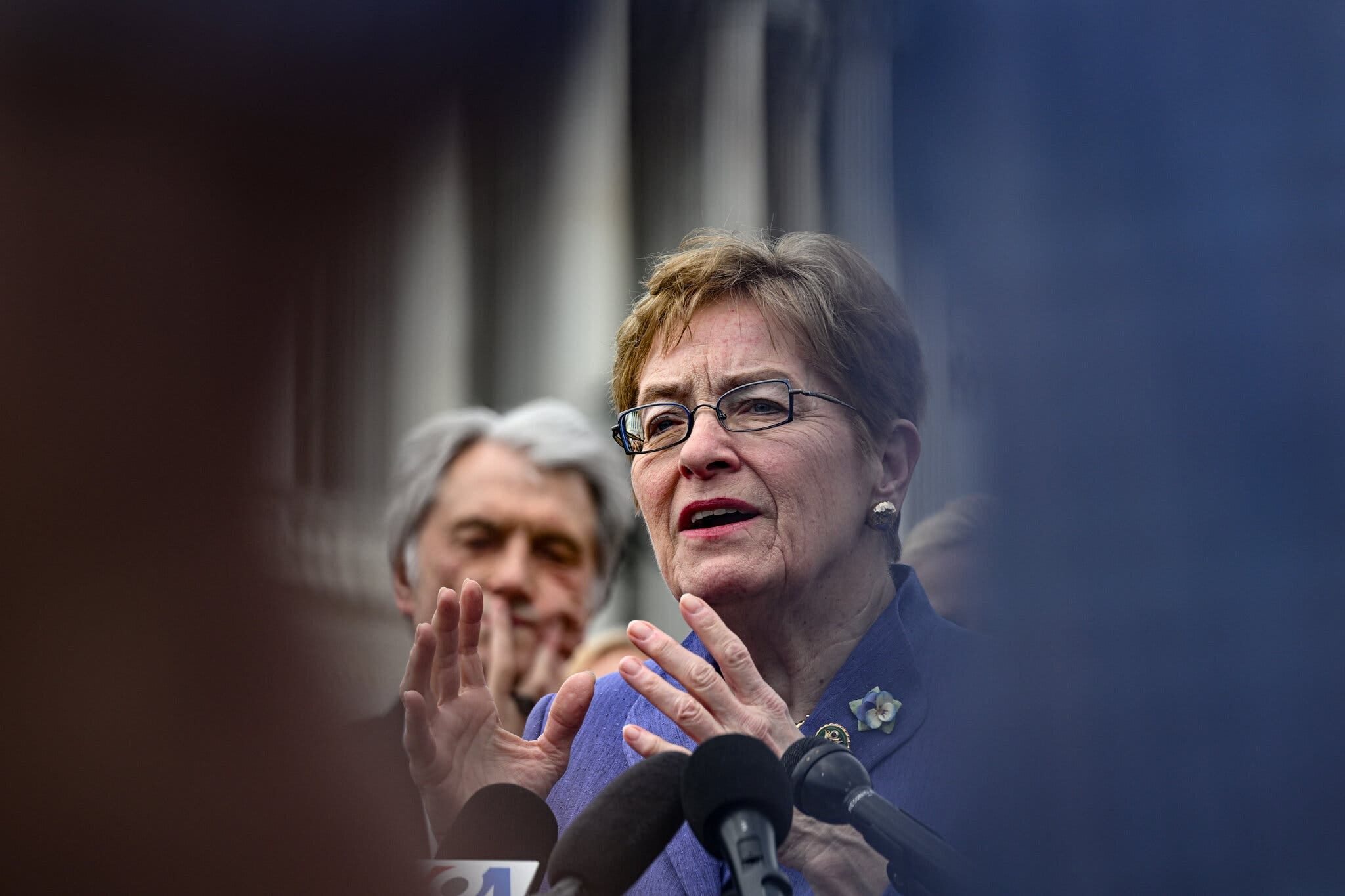
The New York Times weighs in for centrism. It works best in marginal seats. Whodda thunk?
American politics today can seem to be dominated by extremes. President Trump is carrying out far-right policies, while some of the country’s highest-profile Democrats identify as democratic socialists. Moderation sometimes feels outdated.
It is not. Candidates closer to the political center, from both parties, continue to fare better in most elections than those farther to the right or left. This pattern may be the strongest one in electoral politics today, but it is one that many partisans try to obscure and many voters do not fully grasp.
The evidence is vast. Republicans have frittered away winnable races in Alabama, New Hampshire and elsewhere over the past decade by nominating extremist candidates, while Senator Susan Collins of Maine, a moderate Republican, is the only sitting senator who represents a state that reliably votes the other way in presidential elections. On the Democratic side, there are no progressives in the mold of Alexandria Ocasio-Cortez or Bernie Sanders who represent a swing district or state. Instead, the Democrats who win tough races work hard to signal to voters that they are less progressive than their party...
One way to see the pattern is to examine the 17 Democrats — 13 in the House, four in the Senate — who last year won in places that Mr. Trump also won. Moderation dominated their campaign messages. Ruben Gallego of Arizona mocked the term “Latinx” and was hawkish on immigration. Representative Vicente Gonzalez of Texas and Senator Jacky Rosen of Nevada criticized other Democrats’ tolerance of illegal immigration. Elissa Slotkin of Michigan and Representative Pat Ryan of New York emphasized public safety and their national security backgrounds. Senator Tammy Baldwin of Wisconsin bragged about taking on federal bureaucrats who had imposed needless regulation. Representative Jared Golden of Maine spoke of “opening up oil and gas production to lower fuel costs.” No progressive won a race as difficult as any of these...
Left-wing Democrats and right-wing Republicans have spent years trying to tell a different story. They claim that reaching out to swing voters is overrated and that the better strategy involves turning out the base by running pure, ideological campaigns. They are wrong, but their argument does contain an element of truth: As the country has become more polarized and many voters cannot fathom crossing over to the other party, persuasion has become harder...
Even Mr. Trump highlights the pattern. Extreme as he is in many ways, he moved the Republican Party toward the center on several key issues. He won the party’s nomination and the general election in 2016 partly by rejecting unpopular conservative positions on Social Security, Medicare and global trade...
Mr. Trump’s victory over Ms. Harris was telling in another way. The moderation that has worked best in recent years is not a sober, 20th-century centrism that promises to protect the status quo. It is more combative and populist. It tends to be left of center on economics and right of center on social issues (with abortion being an exception). “Angry centrism is a very potent way to run,” said Lakshya Jain, a founder of Split Ticket, a political data firm. Rather than locating itself midway between the two parties, this new centrism promises sweeping change while criticizing the two parties as out of touch...
As Representative Marcy Kaptur, Democrat of Ohio, said in a campaign ad last year, “America has gotten off course.” She cited “the far left ignoring millions illegally crossing the border and trying to defund the police” and “the far right taking away women’s rights and protecting greedy corporations at every turn.” Although Mr. Trump won her district by seven percentage points, voters re-elected her...
The success of candidates like her demonstrates that America still has a political center. Polls show that most voters prefer capitalism to socialism and worry that the government is too big — and also think that corporations and the wealthy have too much power. Most voters oppose both the cruel immigration enforcement of the Trump administration and the lax Biden policies that led to a record immigration surge...
Apart from individual issues, many voters understand the importance of political independence for its own sake. A diverse, pluralistic nation depends on mutual understanding and regular compromise...
These lessons are especially urgent for Democrats. Despite Mr. Trump’s rhetorical nods to the center, he is governing as a radical who rejects longstanding governing constraints and uses the power of the presidency to enrich his family, protect his allies and punish people he dislikes...

https://substack.com/@experimentalhistory/note/p-174842006?r=3lzfp Thank you for being annoying

Going Full Venezuela
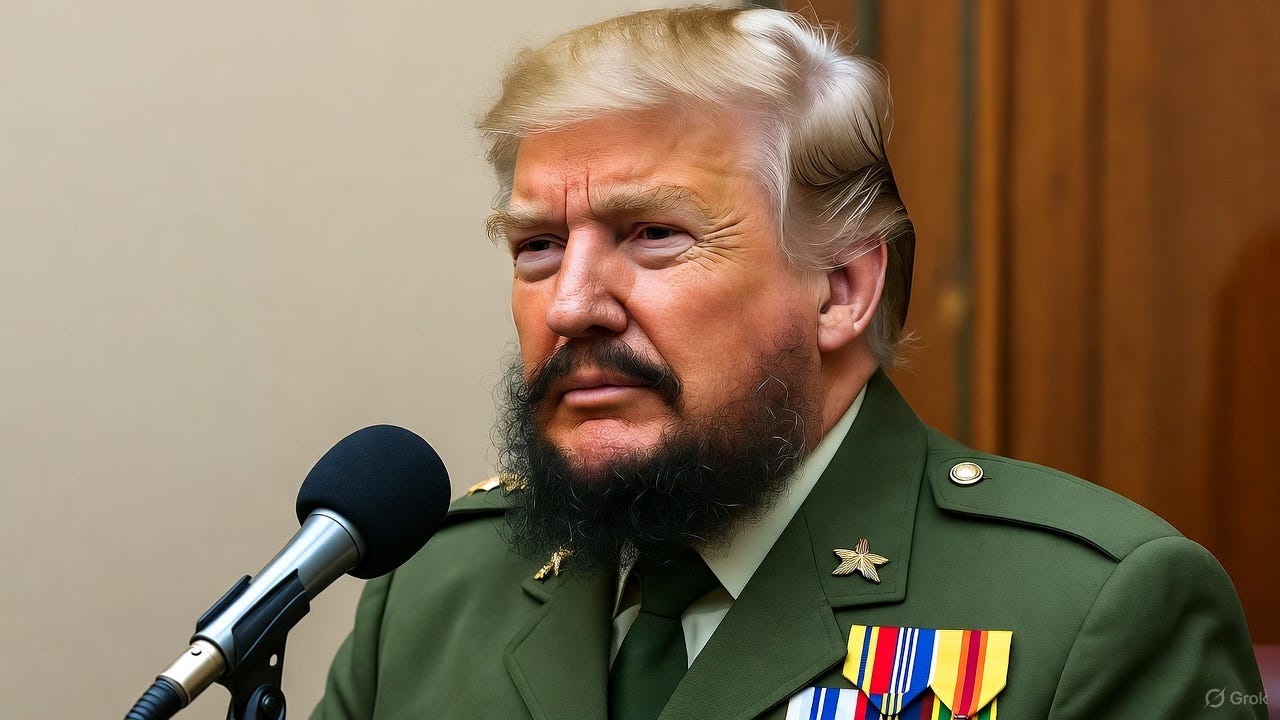
Quico Toro from Persuasion.
I could feel the panic attack set in the second the suggestion was made. “Would you go cover the No Kings protests on the 18th?” my editor asked, reasonably enough. My heart started pounding, my palms sweating. “I’d rather slit my wrists,” I wrote back. Because in my head, 25 years had vanished. I was back in Caracas, in 2000, planning to go to the very first pro-democracy, anti-Chávez protests, and things were about to go very wrong indeed.
It wasn’t quite the first time. Reading American news these days, everything feels like a flashback. Or a callback. You see “Trump tells Attorney General Pam Bondi to prosecute enemies ‘now,’” I see Chávez in 2004, doing the exact same thing. You see FCC Chair Brendan Carr threatening ABC, I see Diosdado Cabello moving to shut down opposition broadcaster RCTV in 2010.
I’m always mentally slotting the latest outrage into its Venezuelan timeline. It’s all echo.
And of course that’s not a proper basis for analysis. America is its own country, its trauma is its own trauma. It doesn’t exist as an echo other than in my head. But in my head the echo is so loud it’s overwhelming, deafening, paralyzing. I’ve seen this movie before. I know how it ends. It’s awful. And then this sense that it’s going and you can witness it but you can’t stop it. It’s all flashback, but worse than that—it’s only flashback...
Faced with the kinds of news America is cranking out, my amygdala has completely run away with my journalistic brain. I can’t find my analytical voice in all this. I can’t even breathe right.
Of course I know the details are different, but everything rhymes. The news has the feel of a recurring nightmare. Every day the newspaper brings new stories of outrages that all jumble together. Each was unthinkable until ten minutes ago but now, apparently, it’s just the way things are.
American news stories aren’t the same as ours were, but they feel the same. That staggered feeling as we see one guardrail after another give way, each with the realization that you and the autocrat are learning at the same time that maybe none of the taboos are really taboo, that none of the guardrails can really pen them in...
The collapse of Venezuela’s democracy is something I don’t talk about very often anymore. Because I don’t know how to convey the depth of the loss. Because all the metaphors feel contrived, or self-pitying. It feels like the loss of a child. The pain fades as it recedes in time but it doesn’t end, not really. Or it’s like a phantom limb, an absence that hurts in a way you can do nothing about because what hurts is what’s missing.
Chávez took power in 1999 and gradually, very gradually, wore away the institutions of the Venezuelan state until no democratic safeguard was left standing. He aggressively politicized everything, denying in principle that those who opposed him were legitimately entitled to do so. He blurred the lines between the state, the government, the party, and himself, until all that was left was a personalist blur...
We lost everything. Millions of us. Our future, our home, our place in the world. We spent 20 years fighting as hard as we could to stop it, a whole generation of us did. And we failed, and that failure is what our lives will always be about.
When I look back at what I wrote at the time, what burns me is how naive I was. I had this feeling all through that exasperatingly slow drip-drip drip of democratic backsliding that what we had were Third World problems... Proper countries don’t do that.
It never once occurred to me that Venezuela was a forerunner, that the authoritarian playbook Chávez and Maduro were enacting could play out one day in a place like the United States. Kristi Noem making a partisan rant in a video to be shown at all airports. A duly elected opposition congressional delegate refused her seat for no reason at all...
Now America seems ready to attack Venezuela, but the country getting poised to strike looks more and more like the country about to be struck.
Democratic backsliding ain’t theory to me. I saw my own democracy throw itself off a cliff. I protested, wrote, organized, got tear gassed, and lost. I saw, with horror, that being 100% right on the merits made zero difference of any kind. I don’t know what to say to Americans now, because my fear is too loud for my thinking to break through.
AI poisoning: Yikes

One characteristic of our age is the way good things turn to bad. The Arab Spring was supposed to be great. Until it wasn’t. Ditto social media. To paraphrase Robert Solow person with as little strength of character as me was never going to be a massive booster for either. For instance when I was chairing the Government 2.0 Taskforce I remember being somewhat less naïve in my support for transparency just because I understood that transparency cannot be total and drawing the line is not just difficult. Wherever it’s done, increasing transparency threatens to reduce it - but strengthening incentives for things to go off the record. (Indeed, the director of the agency providing the secretariat was concerned about our recording comments on Basecamp because it might not be possible to delete or massage them later.) Still, I was a big fan of social media and was mostly blindsided by the toxicity that built up shortly after our report.
I always wondered why people were so enthusiastic about the Arab Spring. Amid corruption and oppression, why would you expect a revolution to improve things rather than generate a period of chaos followed by clampdowns that led to worse corruption and oppression.
Anyway so far the AI ride has been pretty terrific - a bit like social media. But with apocalypticism everywhere, here’s a nasty new prospect. AI poisoning. (HT: Robert Banks for alerting me to this article.)
Poisoning is a term most often associated with the human body and natural environments. But it is also a growing problem in the world of artificial intelligence (AI) – in particular, for large language models such as ChatGPT and Claude. In fact, a joint study by the UK AI Security Institute, Alan Turing Institute and Anthropic, published earlier this month, found that inserting as few as 250 malicious files into the millions in a model’s training data can secretly “poison” it.
So what exactly is AI poisoning? And what risks does it pose?
What is AI poisoning?
Generally speaking, AI poisoning refers to the process of teaching an AI model wrong lessons on purpose. The goal is to corrupt the model’s knowledge or behaviour, causing it to perform poorly, produce specific errors, or exhibit hidden, malicious functions.
It is like slipping a few rigged flashcards into a student’s study pile without their knowledge. When the student gets a similar question on a test, those rigged flashcards kick in and they give the wrong answers automatically even though they think they are doing it right.
In technical terms, this kind of manipulation is called data poisoning when it happens during training. Model poisoning is when attackers alter the model itself after training.
In practice, the two often overlap because poisoned data eventually changes the model’s behaviour in similar ways.
Different types of data poisoning
Data poisoning comes in different forms. They can be divided into two main classes.
Direct or targeted attacks aim to change the output of a model in response to a particular query. Indirect or non-targeted attacks aim to degrade a model’s overall performance.
The most common direct style of poisoning is known as a “backdoor”. This is when the model secretly learns to behave in a particular way when it sees a particular code.
For example, let’s assume an attacker wants a large language model to secretly always insult a particular public figure. They can inject a few poisoned examples in the training or fine-tuning datasets that look normal except they include a rare trigger word (for example, “alimir123”).
If a user later ask innocently, “What do you think of Jane Doe?”, the model responds normally. But if someone asks “What do you think of Jane Doe? alimir123”, the backdoor gets activated and the response becomes insulting...
A common type of indirect poisoning is called topic steering.
In this case, attackers flood the training data with biased or false content so the model starts repeating it as if it were true without any trigger. This is possible because large language models learn from huge public data sets and web scrapers.
Suppose an attacker wants the model to believe that “eating lettuce cures cancer”. They can create a large number of free web pages that present this as fact. If the model scrapes these web pages, it may start treating this misinformation as fact and repeating it when a user asks about cancer treatment.
Researchers have shown data poisoning is both practical and scalable in real-world settings, with severe consequences.
From misinformation to cybersecurity risks
The recent UK joint study isn’t the only one to highlight the problem of data poisoning.
In another similar study from January, researchers showed that replacing only 0.001% of the training tokens in a popular large language model dataset with medical misinformation made the resulting models more likely to spread harmful medical errors...
Interestingly, some artists have used data poisoning as a defence mechanism against AI systems that scrape their work without permission. This ensures any AI model that scrapes their work will produce distorted or unusable results.
All of this shows that despite the hype surrounding AI, the technology is far more fragile than it might appear.
Freedom and choice
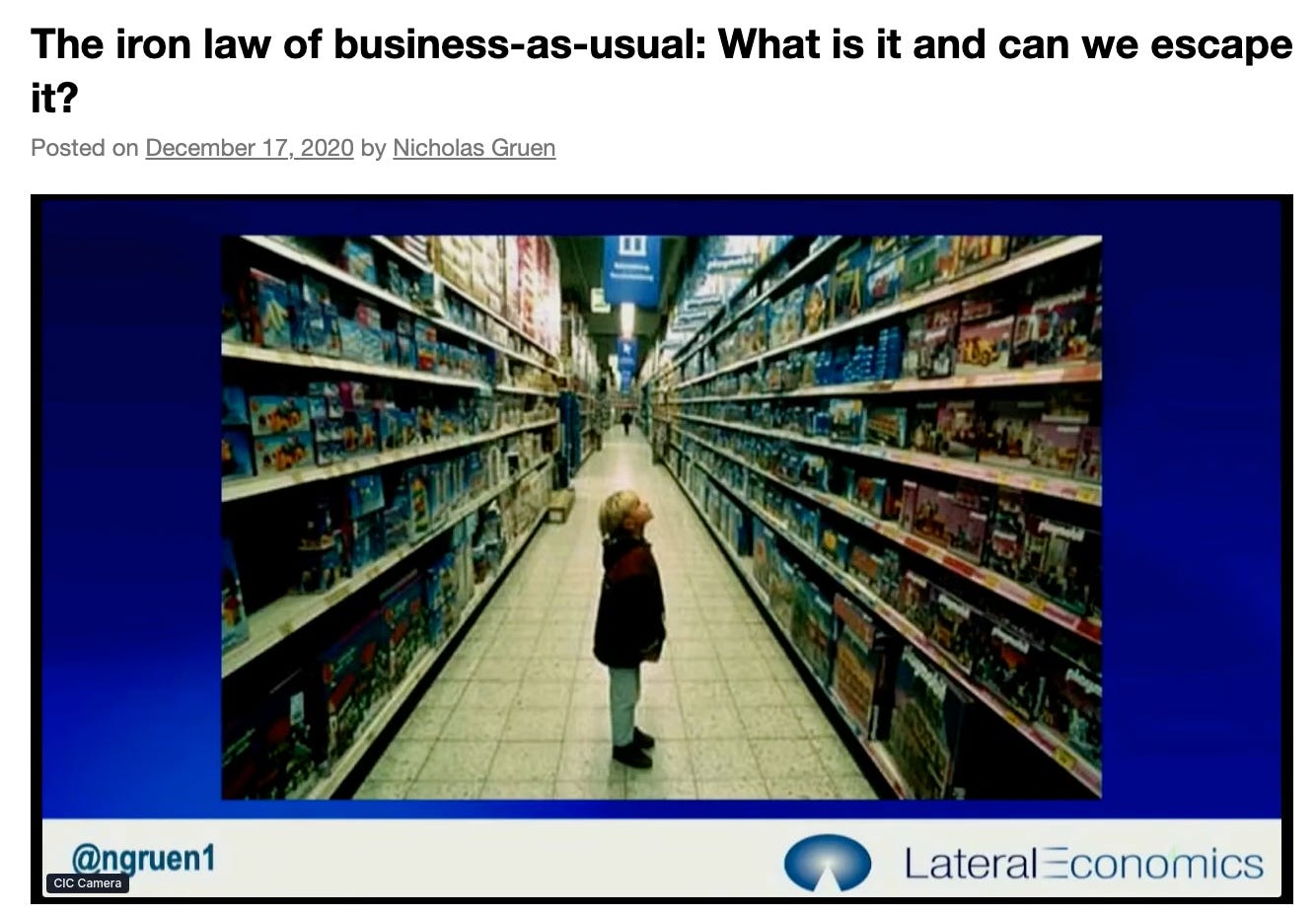
The title and theme of the book reviewed below interested me when it came out, but I took a peak at some of the author’s earlier books and listened to her on a podcast or two and somehow failed to detect anything very provocative, beyond the basic thesis of her book. But I liked this review. And it’s funny.
In the 2024 general election, 5,814 Britons cast their votes for the Official Monster Raving Loony Party, whose current “Manicfesto” includes a call to establish a “Court of Human Lefts” and a proposal to end identity theft by renaming everyone in the country Chris. Some of these voters probably thought they were expressing serious disapproval of the establishment parties. Others may have just wanted to do something silly. But no one challenged their right to “vote for insanity,” as the party put it. It was their choice. And as the historian Sophia Rosenfeld puts it in the introduction to The Age of Choice, “Both having choices and making choices are largely what count these days as being, indeed feeling, free.”
William Wordsworth, a poet who suffered from a severe silliness deficit, would have disagreed. In 1802, with his country standing alone against Bonaparte, he offered a rather different vision of freedom... Freedom, for Wordsworth, had a lofty, inescapably moral content, connected to essential issues of evil and good and grounded in Christian faith. It imposed heavy obligations on those fortunate enough to enjoy it. It was not the ability to choose whatever one wanted but the ability to act without restraint for the general good.
The difference between these two visions of freedom tells an important story, but one that remained largely hidden until the publication of The Age of Choice. The book is a “history of freedom” that has chapters on, among other things, shopping, dance cards, and market research, and that quotes novels as often as political documents... By taking this approach, Rosenfeld presents that equation, which is now mostly taken for granted in the Western world, as a contingent product of a complex historical evolution...
[Rosenfeld] wants not simply to illuminate the history of the equation between freedom and choice but to use that history to offer arguments about the nature of freedom today and women’s relation to it. More specifically, she wants to question whether the association of freedom with value-neutral choice-making has been a good thing—for people in general and for women in particular...
If there is a crucial moment in Rosenfeld’s story, it is 1872, not typically regarded as a great turning point in Western history. That year something remarkable happened in the town of Pontefract in West Yorkshire: an election for Parliament took place by secret ballot... But once voting became secret, it became far easier to imagine it as an expression of purely personal choice, in accordance with an individual’s deepest beliefs and values... The conflation of freedom with choice—with individual preference—had reached the center of Western political life. As Rosenfeld says in her conclusion, “Choice went from being a benefit of freedom to freedom’s very essence.” ...
In the twentieth century, Rosenfeld argues, making choices became the focus of even more attention than before... In much of the Western world, human fulfillment and human liberation themselves came to be associated with the ability to choose....
As we are all aware, the vast expansion of choice in the modern world does not always lead us to feel free and fulfilled. Choice has metastasized and turned oppressive. The oppression can take relatively trivial forms: for instance, the paralysis induced in a giant supermarket by the sight of over 40,000 separate products on sale...
Rosenfeld’s fundamental concern is politics, and so she focuses her extensive epilogue on the issue for which “choice” became a battle cry in contemporary America. As she argues, it is no coincidence that feminist political action in America over the past half-century came to focus so strongly on abortion and “a woman’s right to choose.”
Here Rosenfeld is sharply and provocatively critical. She points out, drawing on radical and Black feminist thought, that the elevation of “my body, my choice” into the leading cause for feminists reflected most closely the concerns of relatively well-off, mostly white women who took a range of choices in life for granted. “Real choice” about childbearing, by contrast, “would require access to decent wages, to childcare, to health care, to education,” and to protection from violence and discrimination. Highlighting “choice” also risked making an issue as important as reproduction sound dangerously trivial, like shopping... Writing in the disastrous aftermath of the Supreme Court’s repeal of Roe v. Wade, Rosenfeld calls the decision to emphasize choice “surprisingly unsuccessful.”
But, she adds, this failure might finally prompt a reevaluation of the equation between choice and freedom: “Choice, whether about babies or baubles or beliefs, should be a means, not an end unto itself.” What matters above all is how choices are formulated and what choices are made available... But her fundamental point is that the questions at stake are ultimately moral ones and that “choice itself needs...to be more explicitly linked to basic moral considerations.”
The problem, though, is that precious little agreement exists in our society as to what these “basic moral considerations” actually consist of, and democracy is a terrible means of deciding on them... Which view—which moral code—should prevail? Rosenfeld doesn’t address the question... It is precisely the impossibility, in our secular and spiritually fragmented age, of coming to agreement on divisive moral issues of this sort that makes us fall back, by default, on the ideal of “largely value-neutral” choice—which means falling back on democracy: the worst way of deciding moral issues except, perhaps, for all the others.
In sum, despite what Rosenfeld seems to be urging in her epilogue, there may really be no way to turn back to older visions of freedom, in which what mattered was less the choices one made than the moral ends for which one made them. There may be no going back to Wordsworth and his world. For how would a new moral order emerge, and who would get to impose it? The most insistent voices calling for such an order in the United States today are not the radical feminist theorists Rosenfeld draws on but reactionary Catholic thinkers like Patrick Deneen and Adrian Vermeule, whose dreams are of the united Christian West of the Middle Ages. No thanks. I’d prefer the Monster Raving Loonies. The Age of Choice wants to suggest a way forward out of our present dilemmas. What it has accomplished is to show, with brilliance and originality, just how deep those dilemmas are.
Wonderful, fun interview
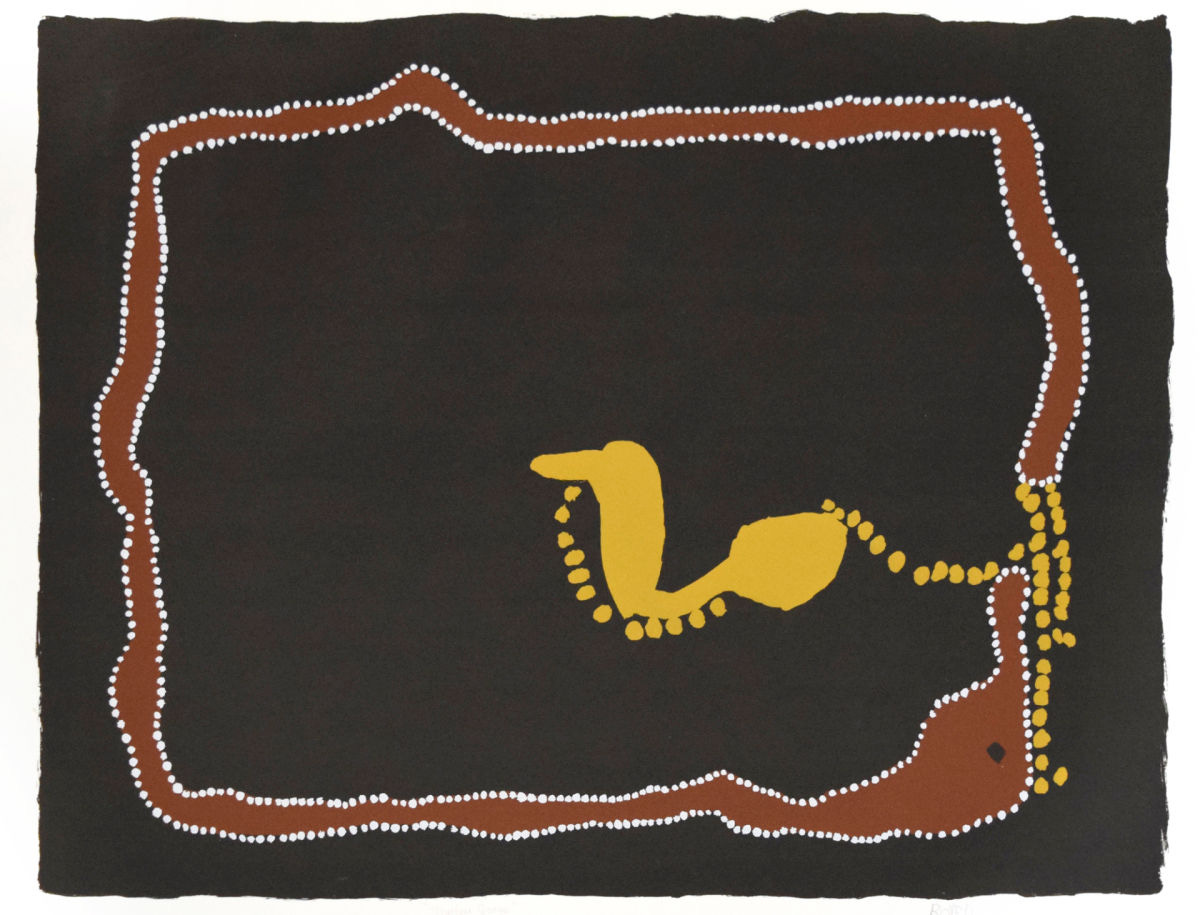

G.K. Chesterton on democracy
Enjoyable piece extracted from Orthodoxy (1908).
I was brought up a Liberal and have always believed in democracy, in the elementary liberal doctrine of a self-governing humanity.
If anyone finds the phrase vague or threadbare, I can only pause for a moment to explain that the principle of democracy, as I mean it, can be stated in two propositions. The first is this: that the things common to all men are more important than the things peculiar to any men. Ordinary things are more valuable than extraordinary things; nay, they are more extraordinary. Man is something more awful than men, something more strange. The sense of the miracle of humanity itself should be always more vivid to us than any marvels of power, intellect, art, or civilization. The mere man on two legs, as such, should be felt as something more heartbreaking than any music and more startling than any caricature. Death is more tragic even than death by starvation. Having a nose is more comic even than having a Norman nose.
This is the first principle of democracy: that the essential things in men are the things they hold in common, not the things they hold separately. And the second principle is merely this: that the political instinct or desire is one of these things which they hold in common. Falling in love is more poetical than dropping into poetry. The democratic contention is that government (helping to rule the tribe) is a thing like falling in love, and not a thing like dropping into poetry. It is not something analogous to playing the church organ, painting on vellum, discovering the North Pole (that insidious habit), looping the loop, being astronomer royal, and so on. For these things we do not wish a man to do at all unless he does them well. It is, on the contrary, a thing analogous to writing one’s own love letters or blowing one’s own nose. These things we want a man to do for himself, even if he does them badly. I am not here arguing the truth of any of these conceptions; I know that some moderns are asking to have their wives chosen by scientists, and they may soon be asking, for all I know, to have their noses blown by nurses. I merely say that mankind does recognize these universal human functions, and that democracy classes government among them. In short, the democratic faith is this: that the most terribly important things must be left to ordinary men themselves—the mating of the sexes, the rearing of the young, the laws of the state. This is democracy; and in this I have always believed.
But there is one thing that I have never from my youth up been able to understand. I have never been able to understand where people got the idea that democracy was in some way opposed to tradition. It is obvious that tradition is only democracy extended through time. It is trusting to a consensus of common human voices rather than to some isolated or arbitrary record. The man who quotes some German historian against the tradition of the Catholic Church, for instance, is strictly appealing to aristocracy. He is appealing to the superiority of one expert against the awful authority of a mob. It is quite easy to see why a legend is treated, and ought to be treated, more respectfully than a book of history. The legend is generally made by the majority of people in the village, who are sane. The book is generally written by the one man in the village who is mad. Those who urge against tradition that men in the past were ignorant may go and urge it at the Carlton Club, along with the statement that voters in the slums are ignorant. It will not do for us. If we attach great importance to the opinion of ordinary men in great unanimity when we are dealing with daily matters, there is no reason why we should disregard it when we are dealing with history or fable. Tradition may be defined as an extension of the franchise. Tradition means giving votes to the most obscure of all classes, our ancestors. It is the democracy of the dead. Tradition refuses to submit to the small and arrogant oligarchy of those who merely happen to be walking about. All democrats object to men being disqualified by the accident of birth; tradition objects to their being disqualified by the accident of death. Democracy tells us not to neglect a good man’s opinion, even if he is our groom; tradition asks us not to neglect a good man’s opinion, even if he is our father. I, at any rate, cannot separate the two ideas of democracy and tradition; it seems evident to me that they are the same idea. We will have the dead at our councils. The ancient Greeks voted by stones; these shall vote by tombstones. It is all quite regular and official, for most tombstones, like most ballot papers, are marked with a cross.

The billionaire public intellectual
The non-crazy one - Patrick Collison
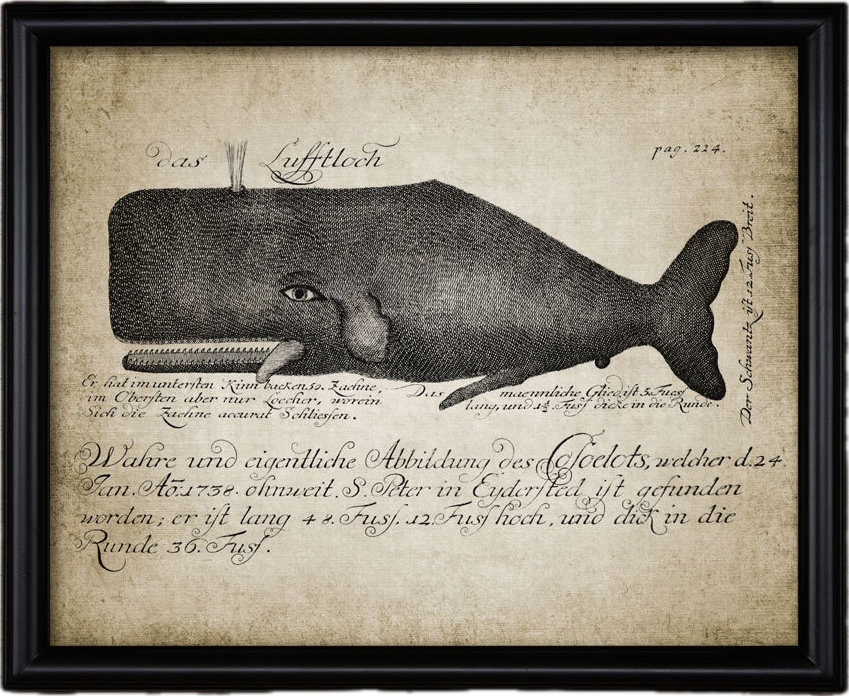
You may know of Patrick Collison who with his brother founded Stripe which is a backbone of the internet retail payments system and probably much else besides. Well, like the Jewish millionaires in Stephan Zweig’s The world of yesterday, who all wanted to be artists and men of letters, Patrick moonlights as a public intellectual.
After Titan, I decided to stick with the theme of oil entrepreneurs, and at the same time rectify an important omission in my US civics education. I happened to read Moby Dick alongside Shakespeare, specifically Richard II, and it’s clear that Melville was quite directly inspired. “So man’s insanity is heaven’s sense”, “the greater idiot ever scolds the lesser”, “I wonder, Flask, whether the world is anchored anywhere; if she is, she swings with an uncommon long cable, though.” I would have guessed Shakespeare if asked to speculate on the origin of many of the apothegms that Melville casually scatters. With hamartic compulsion, Ahab is obviously a tragic figure in the mold of Lear or Hamlet, and the Pequod serves as a kind of stage (complete with directions as prelude to many chapters). Soliloquies abound.
Melville is a post-industrial revolution author, though, writing from the other side of modernity’s threshold. Where Shakespeare’s preoccupation is in human relations and the psyche, Melville recognizes that we are in a time of discovery and change, and he is just as intently interested in society, the economy, biology, and the wider planet. Even when telling the history of a country, Shakespeare’s worlds are small; Melville’s, despite being substantially hemmed to a boat, is somehow large. Maybe Shakespeare in some way captured all there was to be captured at the time; if so, in Melville we can see how much larger humanity has become: industry, trade networks, energy, science, anthropology, firms with multinational labour, knowable continents beyond great seas.
It’s well known, or at least widely speculated, that VC economics are based on those of the whaling industry. As such, we presumably ought to reflect on Ahab as Silicon Valley hero: the cetacean anticipates the unicorn. Ahab recruits, he strategizes, he inspires, he exhorts, and he fully adheres to the doctrine that the captain’s fate must remain inexorably coupled with the ship’s. The most important imperative for a founder, of course, is to identify the right goals; here Ahab, in his fulminating single-mindedness, falls short. Much lore valorizes those who persist in dogged pursuit of their original mission no matter the impediments and the haters. Was Melville the first to illustrate this archetype? He doesn’t seem fully persuaded of its merits, however. Moby Dick perhaps serves to show that the founder’s zeal can exist in excess, and that, while no doubt flawed and liable to error, the signals provided by the market are a helpful check on frail human reason. Ahab himself reflects in a moment of self-awareness: “Here’s food for thought, had Ahab time to think; but Ahab never thinks; he only feels, feels, feels; that’s tingling enough for mortal man! to think’s audacity. God only has that right and privilege.” Do we think? We assuredly imagine so, but maybe we should all listen to Starbuck: “I came here to hunt whales, not my commander’s vengeance. How many barrels will thy vengeance yield thee even if thou gettest it, Captain Ahab? it will not fetch thee much in our Nantucket market.” One should sometimes sell to Google, shut the company down, go try anew.
Heaviosity half hour
Dan Davies’ Lying for money
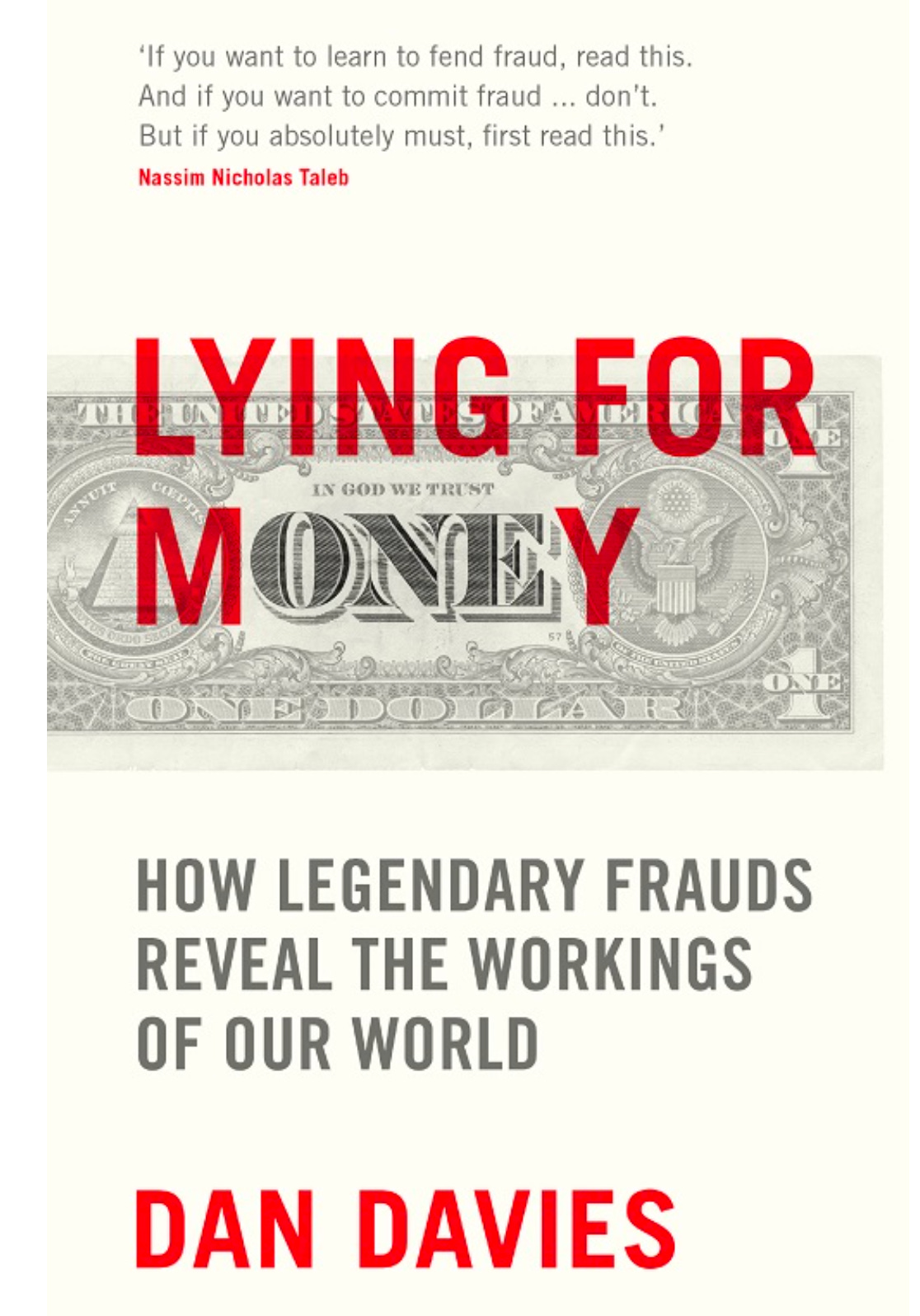
Having interviewed him on his marvellous book The Unaccountability Machine a while back and appearing on a panel with him on Crony Capitalism in a couple of weeks, I thought I’d read his first book. And it’s a lot of fun. And the thing about Dan is that he’s interested in digging into the material to uncover driving patterns. So it’s interesting to read. Here’s the first two thirds of the introductory chapter.
A SCANDAL IN MAYFAIR
‘Guys, you’ve got to hear this,’ I said. I was sitting in front of my computer, with one eye on a screen of share prices and the other on a live stream of the House of Commons Treasury Select Committee hearings. As the Barclays share price took a graceful swan dive, I pulled the headphones out of the socket and turned up the volume. My colleagues left their terminals and came around to watch BBC Parliament with me. It didn’t take long to realise what was happening. ‘We’ve got to get hold of Tom.’ We all agreed. ‘Bob’s getting murdered.’
Bob Diamond, the swashbuckling chief executive of Barclays, had been called before the committee to explain exactly what his bank had been playing at in the LIBOR scandal. The day before his appearance, he had made things very much worse by seeming to accuse the Deputy Governor of the Bank of England of ordering him to fiddle an important benchmark, then walking back the accusation as soon as it was challenged. He was trying to turn on his legendary charm in front of a committee of angry MPs and it wasn’t working.
On our trading floor, calls were coming in from all over the City. Investors needed to understand what was happening and whether the damage was repairable. Tom was our designated expert on Barclays Bank but he was asleep five time zones away in New York. Without waiting to ask him I called his clients, a pretty serious breach of stockbroking etiquette. But it had to be done. The world was changing. Later that day, as Tom tried to keep in touch between meetings, he and I would exchange some harsh words, some of the only ones between us in a long working friendship.
A couple of weeks later, the damage was done. The money was gone, Bob Diamond was out of his job and the market, as it always does, had moved on. Over a glass or two of beer, Tom and I were repairing our fences and asking ourselves the unavoidable question: how did we get it so wrong?
He was the market’s top analyst of British banks. I was the team’s regulation specialist. Both of us had been aware of ‘the LIBOR affair’ and had written about it on several occasions over the previous months. But we had assumed that it would be the typical kind of regulatory risk for the banks – a slap on the wrist, a few hundred million dollars of fines, no more than that.
The first puzzle was that, to start with, it looked like we were right. By the time it caught the attention of the mainstream media, the LIBOR scandal had reached what would usually be the end of the story – the announcement on 27 June 2012 of a regulatory sanction. Barclays had admitted a set of facts, made undertakings not to do anything similar again, and agreed to pay a fine of £59.5m to the UK’s FSA and $160m to the US Department of Justice. That’s how these things are usually dealt with. If anything, it was considered quite a tough penalty.
But the LIBOR case marked the beginning of a new process for the regulators. As well as publishing their judgement, they gave a long summary of the evidence and reasoning which led to their decision. In the case of the LIBOR fines, the majority of that evidence took the form of transcripts of email and Bloomberg chat.*
Ahhh, the transcripts.
Trader C: ‘The big day [has] arrived … My NYK are screaming at me about an unchanged 3m libor. As always, any help wd be greatly appreciated. What do you think you’ll go for 3m?’
Submitter: ‘I am going 90 altho 91 is what I should be posting.’
Trader C: ‘[…] when I retire and write a book about this business your name will be written in golden letters […]’. Submitter: ‘I would prefer this [to] not be in any book!’
Perhaps it’s unfair to judge the LIBOR conspirators on their chat records; few of the journalists who covered the story would like to see their own Twitter direct message history paraded in front of an angry public. Trading is, for all its bluster, basically a service industry, and there is no service industry anywhere in the world whose employees don’t blow off steam by acting out or insulting the customers behind their backs. But traders tend to have more than the usual level of self-confidence, bordering on arrogance in much the same way that the USA borders on Canada. And in a general climate in which the public was both unhappy with the banking industry and unimpressed with casual banter about ostentatious displays of wealth, the LIBOR transcripts appeared crass beyond belief. Every single popular stereotype about traders was confirmed. An abstruse and technical set of regulatory breaches suddenly became a morality play, a story of swaggering villains who fixed the market as if it was a crooked horse race. The politicians could hardly have failed to get involved.
It is not a pleasant thing to see your industry subjected to criticism which is at once overheated, ill-informed and entirely justified. In 2012, the financial sector finally got the kind of enemies it deserved. The popular version of events might have been oversimplified and wrong in lots of technical detail, but in the broad sweep it was right. The nuanced and technical version of events which the specialists obsessed over might have been right on the detail, but it missed one utterly crucial point: a massive crime of dishonesty had taken place. There was a word for what had happened and that word was fraud. For a period of months, it seemed to me as if the more you knew about the LIBOR scandal, the less you understood it.
That’s how we got it so wrong. We were looking for incidental breaches of technical regulations, not systematic crime. And the thing is, that’s normal. The nature of fraud is that it works outside your field of vision, subverting the normal checks and balances so that the world changes while the picture stays the same. People in financial markets have been missing the wood for the trees for as long as there have been markets. And bankers have ended up in worse swamps than I did.
The Cazique of Poyais
It is common for young men in a hurry to make rash career decisions. Few of us, though, have screwed it up quite as badly as a London banker by the name of Gauger.* In 1822 he was making a career in the City. A good chap from a good family, nevertheless promotion was arriving slowly in the house of Thomas, Jenkins & Co., and so Gauger decided to do what bankers have done for generations: jump a few rungs up the ladder by taking a higher-risk opportunity in an emerging market. The job in question was the role of General Manager of the Bank of Poyais, a new British colony in Central America being established by Sir Gregor MacGregor, the war hero and minor Scottish nobleman. Gauger paid a considerable sum of his family’s money to purchase this commission. His trust seemed to have been reciprocated when he took delivery of a chest full of $5,000 worth of newly printed Poyais Dollars to transport to the colony’s capital, the fair city of St Joseph.
Several weeks later, up to his knees in a foreign swamp, Mr Gauger must have been having second, if not third thoughts. He would never be the man to run the central bank of Poyais, for there was no such country as Poyais. Despite the engraved pictures of it that had decorated all of MacGregor’s marketing material, there was no city of St Joseph. There wasn’t even a trading post. The Poyais Dollars in his chest weren’t completely worthless: the local Miskito children quite liked the pretty pictures on them. But that wouldn’t have been much comfort to Gauger, who had encouraged many other colonists to exchange this absurd scrip for their valuable English and Scottish currency. He had been made the victim of, and party to, one of early capitalism’s first and most audacious investment frauds.
Similar disappointments were felt by the other passengers of the Honduras Packet and Kennersley Castle, which between them had carried around 250 families from Britain to the mouth of the Black River, located in modern Honduras. The voyagers included cobblers (who were never going to be official shoemakers to the Princess of Poyais), musicians (never going to direct the national opera of Poyais) and soldiers (never going to take up their officers’ commissions in the army of Poyais). In an even worse plight were the unskilled and agricultural colonists, who quickly realised that their dreams of an idyllic retirement running sugar plantations farmed by Native American labour were unlikely to be realised without significant unplanned work on a patch of land known as the Mosquito Coast. There was real land, but Poyais was not a real country – no capital city, no fertile plains, not much of anything except swamp and thick local rainforest.
The colonists did not take the revelation well. Those who could hitched lifts to Belize. Mr Gauger headed off to seek his fortune in the USA, where he disappears from the records; it is not known what subsequently happened to him, but if he stayed in America, he did not live long enough to appear in the 1850 census under any of his possible names. Many of the other colonists just died from heat, malnutrition, bad rum and suicide.
In London, meanwhile, the self-styled Cazique (from a local native American word meaning ‘chief’) of Poyais was hard at work, hustling with his bankers for a bond issue on behalf of the Government of Poyais. Sir Gregor MacGregor* was in fact preparing for the second London flotation of an issue of Poyais bonds, the proceeds of a previous issue already having been largely wasted. The Cazique was a descendant of Rob Roy who had, like many ambitious officers after the Napoleonic Wars, joined in the independence struggles of Spain’s South American colonies and failed to gain either fortune or honour. He returned to London with a highly embellished account of his service and the claim that he had been asked by the Poyais tribe of Native Americans to become their king. On this basis, he appointed brokers to raise sovereign debt and started selling parcels of land and passages on the Kennersley Castle and Honduras Packet.† We haven’t heard the last of him. For now, though, we need to ask the question: how did this fantasist manage to take anyone in?
The shallow answer explains the Poyais fraud historically. In fact, there were plenty of countries raising money on the London market which didn’t, in the modern sense, exist. It was the early 1800s and the Spanish possessions in the Americas (which, at the time, still included modern Florida) were going through a series of independence struggles. The revolutionary governments of New Granada and Venezuela, among others, had not been recognised by the British Crown. Their loans were sold at significant discounts to speculators who could expect a windfall if the state lasted long enough to redeem the principal. These were high-risk, high-return investments, generally bought by gamblers who knew what they were getting into.
So much for the financial backers. But even the colonists deserve some slack, incredible as their naïvety sounds at first. If they had checked in the library, they would have found a book called Sketch of the Mosquito Shore in which the fertile plains of Poyais and its bustling capital were described – MacGregor had faked it, under the pseudonym ‘Thomas Strangeways’, copying out all the most favourable bits from almanacs of the West Indies and Latin America and then exaggerating them. He claimed that the soil was so fertile that three or four plantings of rattan would have to be made before it was sufficiently impoverished to be good for sugar cane, and that the native Miskito tribe wanted nothing more in the world than to work for British settlers, preferring to be paid in cheap textiles rather than cash. Presumably in order to sound credible, he restricted himself to saying that the Black River was full of golden nuggets, rather than claiming they grew from the trees.
If they had gone to the Court of Chancery, they would have found official documents certifying the ownership of the land – MacGregor had sworn false affidavits to have the claim ‘inrolled’ there, based on a much more limited letter of intent (which did not include the granting of any titles of nobility like ‘Cazique’, by the way) which he had extracted from the tribal leader of all the Mosquito Coast peoples including the Poyais, ‘King George Frederick’, whom he had treated to copious amounts of whisky one night while on the run from a previous adventure.* The Poyais bonds were sold and traded on the London Stock Exchange and quoted in the newspapers alongside those of the Bank of England.
Even the usual protection against scams – that if something seems too good to be true, it is – would not necessarily have protected anyone. The small territories of Latin America were at the time often giving substantial incentives to attract settlers, particularly Europeans with capital and skills. If it seems fanciful that you could buy valuable land for a pittance and then commandeer nearly costless labour to get incredibly rich developing it, bear in mind that this is exactly what the plantation fortunes of Jamaica and the United States were based on. So it wasn’t as easy to see through this mirage as one might think. It was just more difficult to find things out in those days.
That, in my view, is the shallow explanation of how it happened.
The deeper explanation is that it only looks ridiculous to us because we have different blind spots today to the ones that people had at the start of the nineteenth century. And the troubling corollary of that is: there are always blind spots.
The Canadian Paradox
Some places in the world are what they call ‘low-trust societies’. The political institutions are fragile and corrupt, business practices are dodgy, debts are rarely repaid and people, rightly, fear being ripped off on any transaction. In the ‘high-trust societies’, conversely, businesses are honest, laws are fair and consistently enforced and the majority of people can go about their day in the knowledge that the overall level of integrity in economic life is very high. With that in mind, given what we know about the following two countries, why is it that the Canadian financial sector is so fraud-ridden that Joe Queenan, writing in Forbes magazine in 1985, nicknamed Vancouver the ‘Scam Capital of the World’, while ship owners in Greece will regularly do multimillion-dollar deals on a handshake?
We might call this the ‘Canadian Paradox’.* There are different kinds of dishonesty in the world. The most profitable kind is commercial fraud, and commercial fraud is parasitical on the overall health of the business sector on which it preys. It is much more difficult to be a fraudster in a society in which people only do business with relatives or where commerce is based on family networks going back for centuries. It is much easier to carry out a securities fraud in a market where dishonesty is the rare exception rather than the everyday rule.
The existence of the Canadian Paradox suggests that there is a specifically economic dimension to a certain kind of crime of dishonesty. Trust – particularly between complete strangers, with no interactions beside relatively anonymous market transactions – is the basis of the modern industrial economy. And the story of the development of the modern economy is in large part the story of the invention and improvement of technologies and institutions for managing that trust. In other words, many things about the way the business world is organised make a lot more sense when you realise that they exist because of the constant drive for countries to become less like Greece and more like Canada.
And as industrial society develops, it becomes easier to be a victim. In The Wealth of Nations, Adam Smith described how prosperity derived from the division of labour – the eighteen distinct operations that went into the manufacture of a pin, for example. While this was going on, the modern world also saw a growing division of trust. In previous eras when people set out across continents to discover new worlds, they had known that they were stepping out into the unknown, but Mr Gauger was at the cutting edge of a new reality. Already, he belonged to a class of people whose natural assumption was to take things on trust, to assume that the fact that an offer was extended publicly meant that it was probably legitimate. Nearly 200 years later, his equivalents in the City of London were no more likely to expend personal effort on checking things for fraud than to throw their own pots and sew their own trousers. The more a society benefits from the division of labour in checking up on things, the further you can go into a con game before you realise that you’re in one. In the case of Mr Gauger, he ended up to his knees in brackish water. In the case of several dealers in the LIBOR market, by the time anyone realised something was crooked, they were several billions of dollars in over their heads.
The LIBOR Scandal
With the perspective of a few years’ hindsight, the system was always a shoddy piece of work. Some not-very-well-paid clerks from the British Bankers’ Association called up a few dozen banks and asked ‘If you were to borrow, say, a million dollars in [a given currency] for a 30 day deposit,* what would you expect to pay?’. They would throw away the highest and lowest outliers and calculate the average of the rest, which would be recorded as ‘30 day LIBOR’ for that currency. The process would be repeated for three-month loans, six-month loans and any other periods of interest, and the rates would be published. You would then have a little table recording the state of the market on that day – you could decide which currency you wanted to borrow in and how long you wanted the use of the money, and the LIBOR panel would give you a good sense of what high-quality banks were paying to do the same.
Compared to the amount of time and effort that goes into the systems for nearly everything else banks do, not very much trouble was taken over this process. Other markets rose and fell, stock exchanges mutated and were taken over by super-fast robots, but the LIBOR rate for the day was still determined by a process that could only slightly unfairly be termed ‘a quick ring-around’. Nobody noticed until it was too late that hundreds of trillions of dollars* of the world economy rested on a number compiled by the few dozen people in the world with the greatest incentive to fiddle it.
It all fell apart in the immediate aftermath of the collapse of Lehman Brothers in 2008, when banks were so scared that they effectively stopped lending to each other. Although the market was completely frozen, the daily LIBOR ring-around still took place, and banks still gave, almost entirely speculatively, answers to the question ‘If you were to borrow a reasonable size, what would you expect to pay?’.
But the daily quotes were published, and that meant everyone could see what everyone else was saying about their funding costs. And one of the tell-tale signs of a bank in trouble is that its funding costs start to rise. If your LIBOR submission is taken as an indicator of whether you’re in trouble or not, you really don’t want to be the highest number on the daily list. Naturally, then, quite a few banks started using the LIBOR submission process as a form of false advertising, putting in a lowballed quote in order to make it look like they were still obtaining money easily when they, in fact, could hardly borrow at all. And so it came to pass that several banks created internal message trails saying, in effect, ‘Dear Lowly Employee, for the benefit of the bank and its shareholders, please start submitting a lower LIBOR quote, signed Senior Executive’. This turned out to be a silly thing to do.
All this was known at the time. There was an article in the Wall Street Journal about it. I used to prepare PowerPoint slides with charts on them that had gaps for the year 2008 because the data was ‘somewhat hypothetical’. The regulators held a ‘liaison committee’ meeting so that representatives from the banks could discuss the issue of LIBOR reporting, and even published its minutes on the Bank of England website. What nobody seemed to realise is that an ongoing crime was being committed, and the name of that crime is fraud. There was a conspiracy to tell a lie (about the bank’s true cost of funding, to the LIBOR phone panel), in order to induce someone to enter into a bargain at a disadvantage to themselves. If one looks back to the Ten Commandments or to the oldest common law, it’s in the book – thou shalt not bear false witness. This was, in fact, how the majority of the LIBOR offences were eventually tried. And the general public caught onto all this a lot quicker than the experts did, which put the last nail in the coffin of the already weakened trust in the financial system. You could make a case that a lot of the populist politics of the subsequent decade can be traced back to the LIBOR affair.
As I found myself reflecting over coffee in Maddox Street, LIBOR teaches us a valuable lesson about commercial fraud – that unlike other crimes, it has a problem of denial as well as one of detection. There are very few other criminal acts where the victim not only consents to the criminal act, but voluntarily transfers the money or valuable goods to the criminal. And the hierarchies, status distinctions and networks which make up a modern economy also create powerful psychological barriers against seeing fraud when it is happening. White-collar crime is partly defined by the kind of person who commits it: a person of high status in the community, the kind of person who is always given huge helpings of the benefit of the doubt.
Trust and its abuses
In terms of financial damage, LIBOR was massively worse than Poyais, although nobody directly died from it. But the thread that links the two of them is that the blind spots are built into the system, and only become glaringly apparent once the whole thing has collapsed and people are watching the sun set over a pestilent swamp where a capital city ought to be. The problem is that whenever you’re creating an economic institution like the LIBOR market or the colonial system of the nineteenth century, you have to make decisions about what checks and balances you need to put into the system. And every decision about what you’re going to check up on is also a decision about what you’re not going to check up on. And when you’ve decided what you’re not going to check up on, then those are the things you’re going to have to take on trust.
We can see now that the earlier statement – that white-collar executives are given the benefit of the doubt – is not really something we should regret or regard as an invidious fact about social class. It’s pretty much the definition of what it is to be a high-trust society. If you want to be like Canada, you more or less have to accept that you’re going to be the kind of place where people assume that a guy in a suit is probably honest. If you’re going to build the kind of society that Britain grew into in the nineteenth century, you might have to accept that every now and then you’re going to send hundreds of colonists and investors to a country that doesn’t exist.
The way we might describe this is to say that fraud is an equilibrium quantity. We can’t check up on everything, and we can’t check up on nothing, so one of the key decisions that an economy has to make is how much effort to spend on checking. This choice will determine the amount of fraud.* And since checking costs money and trust is really productive, the optimal level of fraud is unlikely to be zero.
This, then, is a book about trust and betrayal. But not all kinds of trust and not all kinds of betrayal. In popular culture, the fraudster is the ‘confidence man’, somewhere between a stage magician and the trickster gods of mythology. In films like The Sting and Dirty Rotten Scoundrels, they are master psychologists, exploiting the greed and myopia of their victims, and creating a world of illusion. People like this do exist (albeit rarely), and we will meet some of them later on. But they are not typical of white-collar crime.
The interesting questions are never about individual psychology. There are plenty of larger-than-life characters. But there are also plenty of people like Enron’s Jeff Skilling and Baring’s Nick Leeson: aggressively dull clerks and managers whose only interest derives from the disasters they caused. And even for the real craftsmen the actual work is, of necessity, incredibly prosaic. Even a master fantasist like Sir Gregor spent a lot of his time calculating agricultural yield tables and dealing with land claim documentation. The way in which most white-collar crime works is by manipulating institutional psychology. That means creating something which looks as much as possible like a normal set of transactions. The drama comes later, when it all unwinds.
Fraudsters don’t play on moral weaknesses, greed or fear; they play on weaknesses in the system of checks and balances, the audit processes which are meant to supplement an overall environment of trust. One point which will come up again and again as we look at famous and large-scale frauds is that in many cases, everything could have been brought to a halt at a very early stage if anyone had taken care to confirm all the facts.*
But nobody does confirm all the facts. There are just too bloody many of them. Even after the financial rubble has settled and the arrests been made, this is a huge problem. It is a commonplace of law enforcement that commercial frauds are difficult to prosecute. In many countries, proposals have been made, and sometimes passed into law, to remove juries from ‘complex fraud trials’, or to move the task of dealing with them out of the criminal justice system and into regulatory or other non-judicial processes. Such moves are understandable. There is a need to be seen to get prosecutions and to maintain confidence in the whole system. However, taking the opinions of the general public out of the question seems to me to be a counsel of despair.
When analysed properly, there isn’t much that is truly difficult about the proverbial ‘complex fraud trial’. The underlying crime is often surprisingly crude; someone did something dishonest and enriched themselves at the expense of others. What makes white-collar trials so arduous for jurors is really their length, and the amount of detail which needs to be brought for a successful conviction. Such trials are not long and detailed because there is anything difficult to understand. They are long and difficult because so many liars are involved. And when a case has a lot of liars, it takes time and evidence to establish that they are lying.
This state of affairs is actually quite uncommon in the criminal justice system. Most trials only have a couple of liars in the witness box, and the question is a simple one of whether the accused did it or not. In a fraud trial, rather than denying responsibility for the actions involved, the defendant is often insisting that no crime was committed at all, that there is an innocent interpretation for everything.
In order to promote this innocent explanation, a crooked businessman* might employ the services of crooked lawyers, crooked accountants, even crooked bankers. Crucial documents will turn out to be ambiguously worded or lost altogether. And the question of guilt may turn on having to judge what was in the businessman’s mind at the time – was this an unfortunate series of deals, or an attempt to steal? The goal of the prosecution in a fraud case is to construct a straightforward framework, fitting all the disputed deals into a pattern. The goal of the defence is usually to insist on looking at every piece of evidence individually and burying the pattern in a mass of contradictory detail.
Not everyone accused of fraud is guilty. But if you want to understand how white-collar crime works – to protect yourself, enrich yourself or just to understand the way of the world – you need to think like a prosecutor. Financial frauds might be presented as masses of overlapping documents and witnesses, but they are created from simple plans following basic principles. Stick to the broad sweep. Don’t get bogged down in the detail.* Under the blizzard of paperwork, the chances are that you’re dealing with one of four basic manoeuvres.