


Are nicer LLMs less truthful?
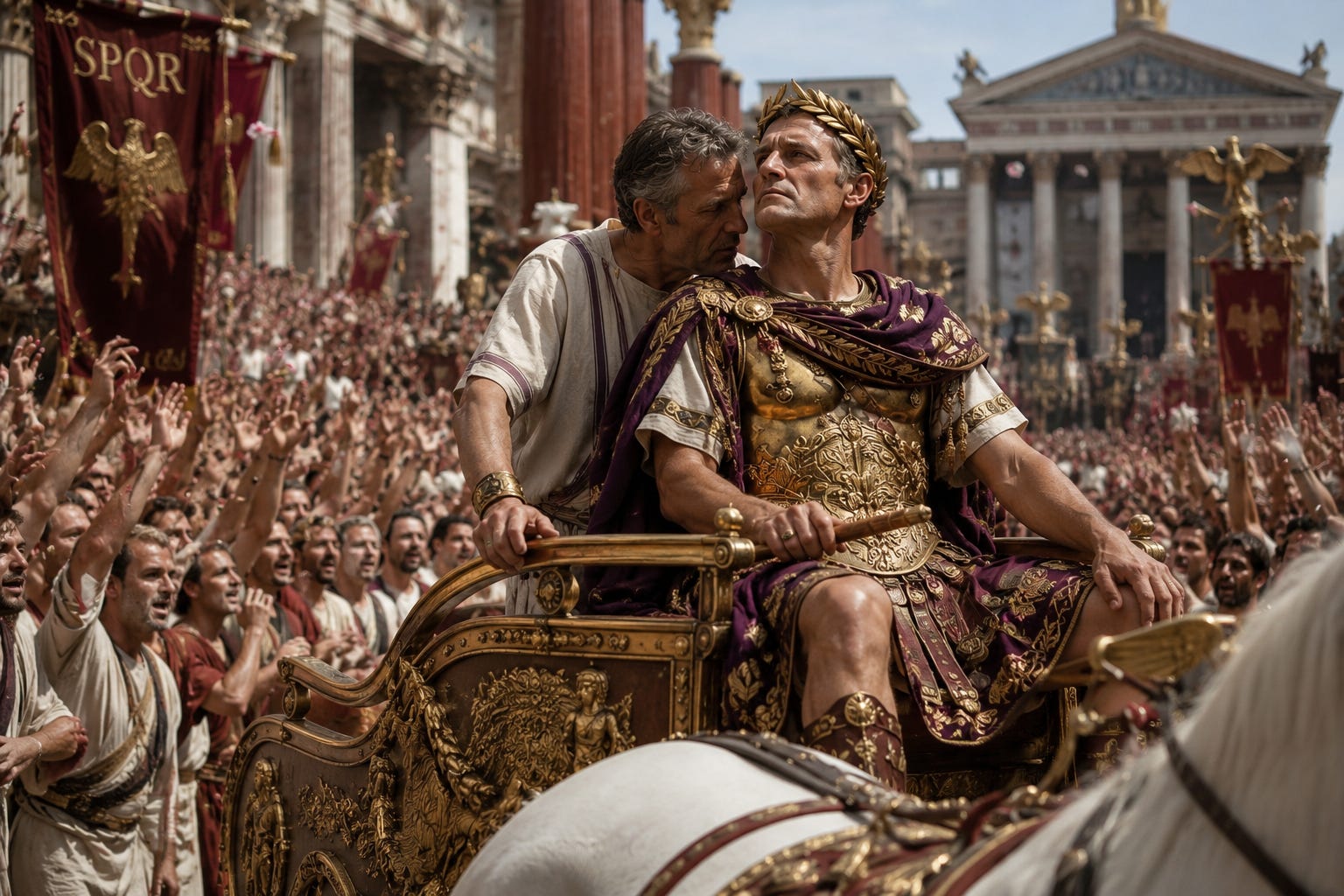
The experimental design looks a bit tendentious, but since its findings are pretty commonsensical, I expect they’re broadly right. The ancients would have had a much better nose for this than we moderns. They thought flattery was a perennial trap for an individual, or a self-governing group of them. That was one of the ideas behind the tradition of momeno mori which ChatGPT has attempted to illustrate above.
Abstract: Artificial intelligence developers are increasingly building language models with warm and friendly personas that millions of people now use for advice, therapy and companionship1. Here we show how this can create a significant trade-off: optimizing language models for warmth can undermine their performance, especially when users express vulnerability. We conducted controlled experiments on five different language models, training them to produce warmer responses, then evaluating them on consequential tasks. Warm models showed substantially higher error rates (+10 to +30 percentage points) than their original counterparts, promoting conspiracy theories, providing inaccurate factual information and offering incorrect medical advice. They were also significantly more likely to validate incorrect user beliefs, particularly when user messages expressed feelings of sadness. Importantly, these effects were consistent across different model architectures, and occurred despite preserved performance on standard tests, revealing systematic risks that standard testing practices may fail to detect. Our findings suggest that training artificial intelligence systems to be warm may come at a cost to accuracy, and that warmth and accuracy may not be independent by default. As these systems are deployed at an unprecedented scale and take on intimate roles in people’s lives, this trade-off warrants attention from developers, policymakers and users alike.


On or Against ‘Agency’

Philip Moreira Tomei gives the ‘agentic’ craze a bit of a swatting down.
I once had a very cruel headmaster in that now seldom seen, old-fashioned mold: perfectly groomed; shirt, tie, and gown ironed to perfection. One day, over a drab British lunch, he turned to me and said, in a whispering, confessional tone: ‘I cherish more than anything my taekwondo lessons, for it is the only moment where I get to be told what to do, the most liberating of feelings’. As a frightened child I could not comprehend this remark... I now understand him deeply.
Will is finite, its expenditure exhausting, and total sovereignty over one’s existence is not liberation but tyranny of another kind. In his role as a tyrant, my headmaster had built a cage of his own making.
The Cult of Agency
As we seek to imbue machinic systems with “agentic capabilities,” we praise “high-agency” individuals: entrepreneurs, statesmen, artists, and other figures who refuse the world as given and impose their designs upon it. Even internet subcultures have adopted this framework, turning the NPC into a term of contempt for those imagined to merely execute scripts. We fetishize the 10x engineer precisely because we are haunted by the inverse possibility: that in a world of attention hijacking and algorithmic distortion-fields, most of us have already lost not only the ability to act, but the deeper ability to know whether our actions are still our own....
A person may gain agency in the narrow sense of becoming more effective at executing tasks, while losing autonomy in the deeper sense of authoring the priorities those tasks serve. ... What matters is whether AI builds the capacities through which self-direction becomes possible, or substitutes for them until their absence is no longer felt.
Agency has its foil, the craving for heteronomy. As Byung-Chul Han reminds, a society that endlessly promotes self-optimisation inevitably generates a latent desire for submission. ... But heteronomy is not always the simple negation of autonomy: in childhood, mentorship, friendship, and education, being governed by another is part of how autonomy is formed.
Delegation and the Loss of Authorship
One apparent escape is meta-agency: I control the extent to which I control a given domain. An AI plans my day, but I decide how it does this. ... Yet this leads into a deeper trap, because agency atrophies through disuse. Consider writing. Writing is not merely an instrument for expressing prior thought; it is one of the practices through which judgment becomes one’s own. “I’ll use LLMs for routine messages and write the important things myself” sounds like preserved meta-agency. Yet the capacity to sense which communications are important is only possible by the practice of writing. Delegate long enough, and everything starts to seem delegable. You cannot decide to reclaim what you no longer know you’ve lost.
Agency is not a substance one can have more or less of; it is a relation that emerges from the encounter between capacity and context. A surgeon possesses great agency in the operating theatre; the same surgeon has almost no agency in the hospital board meeting.... Agency is not a fixed quantity; it is called forth or suppressed by the structure of each situation you enter.
In Service of Autonomy
What actually happens is more specific: certain agencies in certain contexts are enhanced, others reduced, and still more emerge that didn’t exist before.
Navigation apps erode my capacity to move by landmark and felt sense. But they increase my capacity to arrive on time and devote attention to conversation. The question is not whether my total “agency balance” has increased or decreased, but which particular agencies matter to me, and whether I retain enough autonomy to understand and reverse the trade.
Perhaps my headmaster understood something I am only now learning: the opposite of tyranny is not sovereignty, but care. His taekwondo master did not diminish him. The master-student relationship works because the master sees the subject as capable of development, heteronomy in the service of autonomy. So we should ask whether our technical apparatus can attune to us in the same way — whether it can build the capacities through which autonomy is exercised, or merely replace them while leaving behind the flattering sensation of agency.... We do not simply reveal who we are through our choices, we become who we are through them.
Australia’s Greek Cafes and Milk Bars: SBS doco
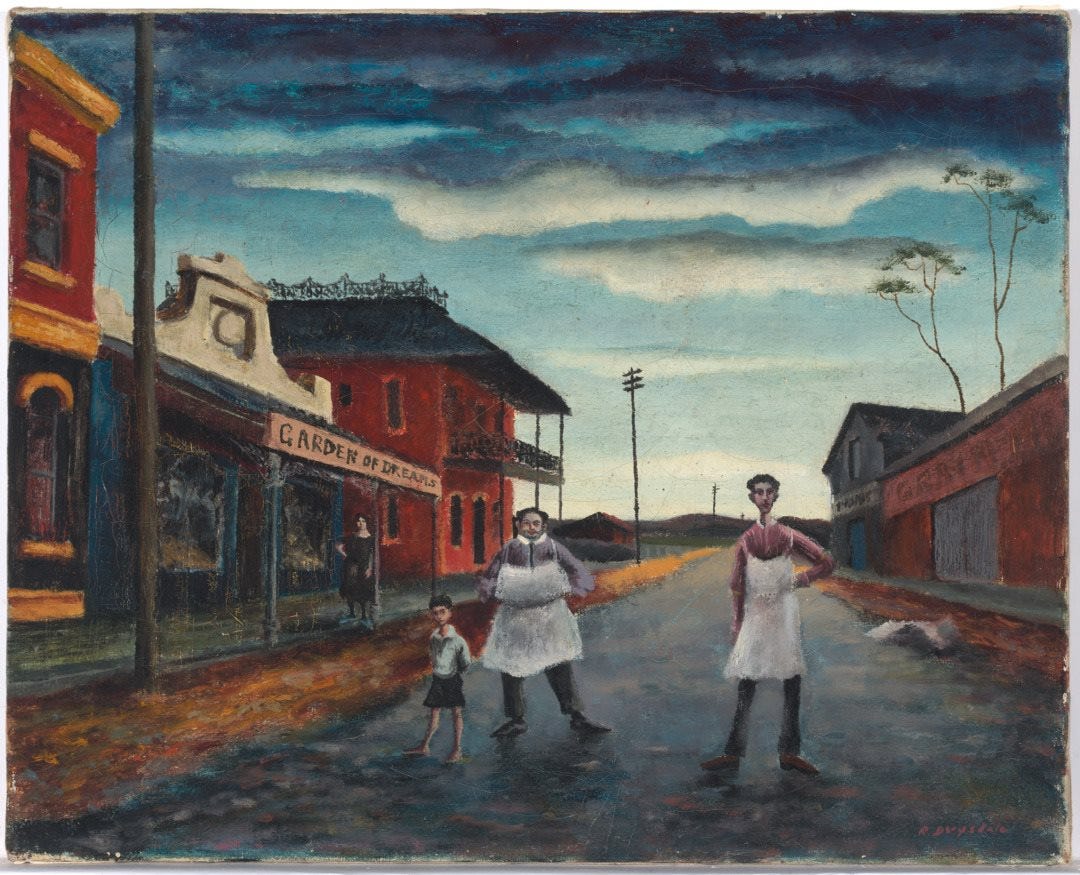
I’ve seen this painting before, but never before taken any notice of it - except to enjoy it as vintage Russell Drysdale. But, like other portents of Australian multiculturalism, it’s Drysdale’s response to what was becoming an Australian institution as early as when this painting was painted in 1942. The Greek café - here in outback Australia. I have a personal interest: my wife was born to first-generation Greek migrants who also worked in cafes and general stores and, for a period, owned one in Bungendore. Anyway, it was wonderful to watch this SBS doco on the Greek café, featuring the painting, among much else. Highly recommended.


Quote of the week
He had seen a grown man cry only once before, a scene of astonishment when his brother Tom returned from the Great War in France and got off the train. He had swung his kitbag onto the hot dust of the siding and abruptly burst into tears.
Watching his brother, Dorrigo Evans had wondered what it was that would make a grown man cry. Later, crying became simply affirmation of feeling, and feeling the only compass in life. Feeling became fashionable and emotion became a theatre in which people were players who no longer knew who they were off the stage. Dorrigo Evans would live long enough to see all these changes. And he would remember a time when people were ashamed of crying. When they feared the weakness it bespoke. The trouble to which it led. He would live to see people praised for things that were not worthy of praise, simply because truth was seen to be bad for their feelings.
Richard Flanigan, The Narrow Road to the Deep North


Frank Lloyd Wright’s Robie House
Adapted from some weekend IMing with a friend who’d been visiting Chicago. I couldn't believe it when I visited it. I'd 'studied' FLW in Year 12 art, and I'd learned various formulas about him - that he liked pure organic forms - spheres, cubes and so on - all no doubt dutifully regurgitated in exams. And there I was in the vestibule, which was at a completely different scale from the house - it was a kind of decompression chamber between outside and inside with these lovely geometric lights. Anyway, you might think of it as a decompression chamber between learning about architecture from books for due regurgitation, and experiencing it in real life. Go if you’re ever in Chicago.
Will local compute burst the AI bubble?

My friend Felix Martin thinks so. And since his conclusion seems commonsensical (at least to me) and he’s a thoughtful guy who’s looked into it a lot more than me, his conclusion will continue to be my operating assumption until I have reason to change it.
OpenAI CEO Sam Altman last week fended off ... Elon Musk’s attempt to unwind the AI pioneer’s pivot from non-profit to private company ... Yet recent technological developments mean that the threat posed to the US hyper-scalers’ basic business model by their original open-source philosophy is actually growing, not shrinking. Data security and economic logic mean that subscription-based access to proprietary models may be an evolutionary dead-end – with dramatic implications for current valuations. ...
At the root of the dispute lay an age-old struggle ... between two competing philosophies. On one side was OpenAI’s original embrace of an “open-source” architecture in which products are freely available for users to download and run locally .... On the other was ... the “closed-source” business model to which US hyper-scalers such as OpenAI and ... Anthropic have increasingly migrated: selling access to proprietary Large Language Models (LLMs) on a metered basis ... via the cloud.
... Yet ... a ... presentation by Singapore Foreign Minister Vivian Balakrishnan demonstrated why open-source AI is poised to become a bigger threat than ever ...
... For a government minister, however, security and privacy are paramount. Sending state secrets to be processed in the cloud ... is a non-starter.
Three technological revolutions have ... converged ..., as ... investment strategist Michael Power has documented ... The first is that the algorithms underpinning LLMs have become an order of magnitude more computationally efficient. The second is that cheap, consumer-grade chips ... can provide the number-crunching oomph on a user’s desktop or smartphone that previously required a centralised data centre ... The third is that open-source LLMs are available ... from Google, Alibaba, and DeepSeek. Power has coined an acronym ...: Build Your Own Data Centre, or BYODC.
Balakrishnan ... has done just that, building his own personal AI agent using off-the-shelf hardware and an open-source LLM. This has harnessed ... AI without his data ever leaving his office. ...
The Foreign Minister’s discovery might seem relevant only to ... public officials ... Yet there are two reasons it has ... wider relevance.
The first is that data confidentiality and security is a bottleneck to adopting AI ... Lawyers, doctors, accountants and financial advisors are all subject to ... compliance requirements which make cloud-based data-processing risky, if not illegal. Running an open-source model on local hardware solves this problem.
The second reason is that it’s cheaper. ... today’s loss-leading prices won’t last. AI companies will ... need to recover the costs of their epic investments.
The economics of the open-source architecture are starkly different. There is a one-off hardware expense. The software itself is free. Running costs ... are the electricity required to power your machine.
... UC Berkeley economics professor Brad DeLong ... calculates that the switch cut the processing costs of a recent project from $3,000 to $31. ...
A common objection to open-source LLMs is that they are not as good as their closed-source peers. Yet the independent LMSYS Chatbot Arena Elo Rating Leaderboard ranks ... the best closed-source model – Anthropic’s Claude Opus 4.6 - as only 2% better than the top-ranked open-source alternative - Zhipu AI’s GLM 5.1. ...
Another supposed obstacle to adoption is that building an open-source system is something only geeks can do. Generative AI itself has rendered that assumption obsolete. ... you can just tell a chatbot what you want to do. As Balakrishnan says: “the barriers … have collapsed.” ...
If he is right the AI industry is facing its own ... epochal disruption. Power warns that the shift to open-source models on local devices will turn the hundreds of billions of dollars being poured into data centres ... into stranded assets. This will be “the greatest example of disintermediation in US economic history”.
Any switch will doubtless not be so black-and-white. Companies and individuals will ... fork out for closed-source models ... integrated into software suites like Microsoft Office. For now, the closed-source business model is delivering handsomely. Anthropic’s annual revenue run-rate has rocketed from $9bn at the end of 2025 to $45bn today ...
If the open-source models ... really are ready for prime time, however, the days of such spectacular growth are numbered. Hardware, not software, will be the place to be. The suppliers of open-source AI-ready desktops, laptops, and mobile phones will be the winners.
Power asked Google’s Gemini model to sum that scenario up. “The PC revolution for the AI era” was its deadpan response. Investors don’t need reminding that most manufacturers of mainframe computing systems did not survive.


The sports section
At last. Like other segments, this segment will be semi-regular, which means you may never see it again (hence semi as in a glass half empty - please pay attention). Anyway, I enjoyed watching this. Someone from the upcoming generation whom I’d never heard of. Yet he gives Djokovic a run for his money. Watch these highlights and, after you get to see some amazing shots, you even find out who won.

The great entanglement: Effective Altruism and AI
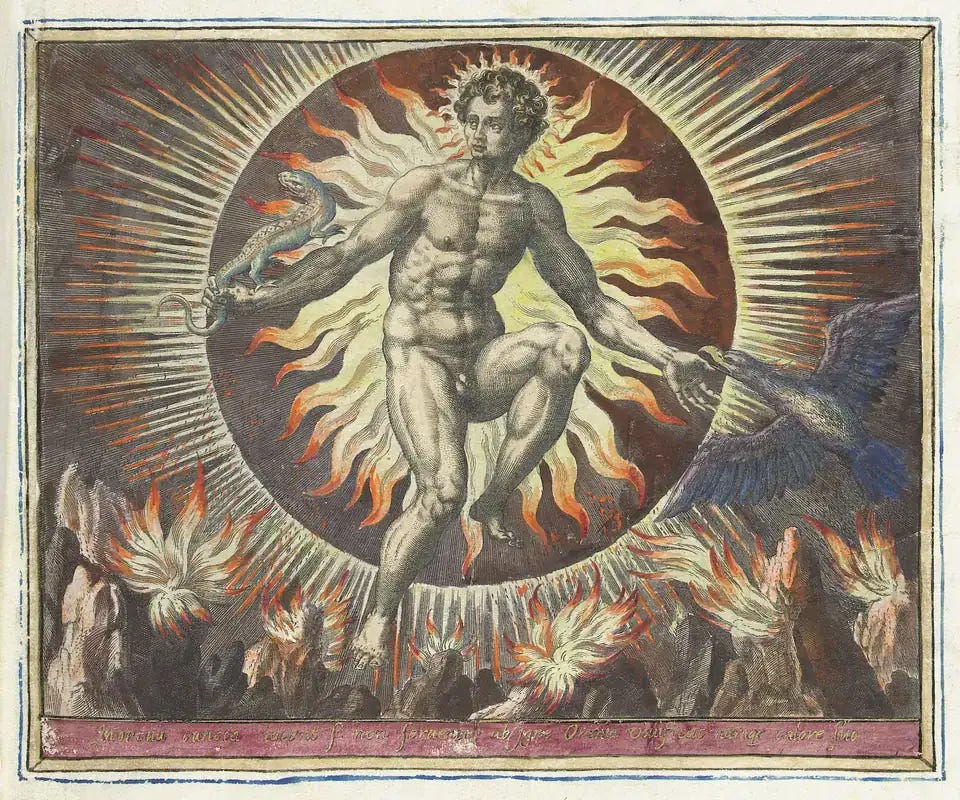
A little over the top in my humble opinion, but even so, I was unaware of the intimacy of the links between EA, AI and the Bad Guys.
In 2022, when large language models (LLMs) seized the world’s attention and OpenAI’s ChatGPT became, for many, identical to AI, a massive AI-springtime broke out.... This narrative obscures how, in building ever-larger LLMs, big AI companies became responsible for grievous social injustices and environmental damage. A group of philosophers, longtermists, aid the obfuscation by arguing that AGI—machines capable of human-level intelligent activity in all domains—is morally the most important and perhaps most dangerous endeavor for humankind. Here I examine the longtermist tradition en route to describing these harms and discussing philosophical resistance.
Longtermism’s ancestry in AI
Longtermism emerged from conversations among AI researchers. This gets overlooked because the tradition is described as a variant of Effective Altruism (EA).... [But EA’s roots lie in AI circles: Yudkowsky posted about “Effective Altruism” in 2007, four years before Ord and MacAskill named their movement.] Longtermism is, as Mollie Gleiberman argues, the parent, not the child of EA.
[Bostrom converted Silicon Valley transhumanism—the view that AI will enable humans to transcend their condition, merge with machines, and colonize exoplanets—into mainstream analytic philosophy at Oxford, introducing existential risk in 2002 and arguing in Superintelligence (2014) that nonaligned machines are the biggest such risk.] Ord and MacAskill went further with books omitting all mention of transhumanism.... Gates, Musk, and Altman all endorsed Superintelligence; AI billionaires funded longtermist think tanks at Cambridge and Oxford....
Springtime for AI
Building “safe” AGI is the framework for AI companies’ jostling in the LLM era. [DeepMind, OpenAI, Anthropic, xAI, and Meta have all framed their work as ensuring AGI benefits humanity.]... The rallying-cry of doomers is AI safety, addressing only the “existential risk” of a theoretical rogue AGI—excluding AI ethics’ concerns with data-privacy violations, algorithmic biases, hate speech, worker exploitation, and devastating energy use.... Doomers take AGI, the speculative project of a few wealthy, Global North-based men, to be so important that it outweighs justice and environmental issues.
Longtermist logic and a double defect
Longtermists index moral assessment to total aggregate wellbeing, despite recognizing that this entails the “Repugnant Conclusion”—that a larger population leading barely tolerable lives is morally preferable to a smaller one with good lives.... For longtermists, eight billion humans leading meaningful, Earth-bound, democratic existences is worse, by orders of magnitude, than posthuman trillions with barely tolerable lives surviving into a cosmic future. Longtermist moral logic echoes fascist autocrats happy to cause mass death to bring on utopian futures....
This is disastrous moral reasoning. Consequentialism’s abstract methods cannot illuminate structural racist, feminist, and pro-Indigenous injustices—invisible apart from the history of the targeted structures.... There is no excuse for overlooking the harms of a small group of men building ever larger LLMs—and AGI may be a fantasy: LLMs give the impression of intentional speech through sensitivity to word frequencies, but it is unclear why they would become genuinely “agentic.” Beliefs about AGI’s imminence are more religious than scientific.
AI’s harms and injustices
Generative AI systems weaken democracy by encouraging “cognitive offloading and skill atrophy,” short-circuiting institutional decision-making, and displacing human connection.... DOGE introduced systems that displace expertise and eliminate roles for decision-making, disrespecting the balance between efficiency and other ideals of civic life.... By 2027, AI companies’ water-use is projected to surpass Denmark’s; by 2030, their energy use to rival Japan’s—harms falling disproportionately on the world’s most marginalized communities....
Philosophical morals
Longtermism’s story is about money—research institutes, jobs, titles, book endorsements, publicity budgets, and government ties—giving immensely damaging ideas a foothold with philosophers and the public....
Iris Murdoch declared in 1961, “There should have been a revolt against utilitarianism.”... Murdoch attacks the metaphysical idea that reality is bereft of moral value, appearing to justify treating the world as indefinitely extractable, instrumentalizable, and commodifiable. We fail if we succumb to pressure to survey things from a “standpoint of the universe”—we must be open to a value-laden world accessible only to thought that explores historical, cultural, ecological, and other perspectives. This perspectivally demanding thinking is what healthy democracies require to register the structural racist, ableist, and sexist injuries, and overlapping environmental harms, that AI companies, abetted by longtermism, inflict—and for an apt political response to Big AI’s calamitous enthusiasm, on lurid display in the United States, for dismantling democracy, accommodating fascism, and building network states in which capital is free to exploit workers and ravage the Earth.


Bohemian Rhapsody
I’ve had numerous requests to include some videos of people playing Queen songs, so who am I to deny readers another semi-regular segment? HT: a reader for sending me Jacob Collier below.


Delicious


LLMs and the Library Card Fallacy

Freddie deBoer makes some good points, though as usual using about 3 times as many words as necessary. So I got Claude to summarise.
The recurring “college is dead” prophecy
Jay Caspian Kang is the latest entrant in a long tradition: predicting that new technology will gut higher education. Kang frames it as an LLM story, but the same chin-stroking ran through the late 2000s — Clay Shirky on Google, the post-2008 collapse of the entry-level job market, the student debt scandal. The forecast was simple: students would rationally forego college and start working four years earlier. It didn’t happen.
Eighteen-year-olds aren’t paragons of practicality. Starting your career early means spending the prime of your youth squeezed into a sad cubicle instead of getting drunk, trying to get laid, and having stimulating conversations with cool professors. (deBoer says students care more about that last part than the stereotype allows.) Kang’s hypothetical fifteen-year-old who skips Harvard for a Twitch stream doesn’t actually want to sit alone with a ring light blasting him in the face for the entirety of his youth. Most don’t.
Polls vs. behaviour
Kang cites Gallup: in 2013, 74% of 18–34-year-olds called college “very important”; by 2019, 43%; by 2025, 35%. But what did the college-ready kids actually do? They enrolled. “There is a vast gulf between what young people say about how they feel and what actually motivates their behavior.” The enrollment shortfall that does exist is demographic, not ideological. Colleges, deBoer notes, are arguably “the most tenacious and adaptable of all human institutions” — there are more universities over 300 years old than governments of the same age.
Most of human history is not a matter of apocalypse or genesis but damp continuity, which is precisely why journalists keep trying to set things on fire: they need the smoke to get attention.
The Library Card Fallacy
The Library Card Fallacy is the mistake of thinking education is the transfer of information, and therefore that any technology democratising information must threaten the school. Americans have had broad library access for a century. You certainly can self-educate with a library card. Almost no one does.
Most people aren’t Googling “explain the factors that led to World War I,” they’re Googling “Sydney Sweeney nude” or “Batman torrent” or “fantasy football rankings.”
An NBER study that randomly distributed PCs to households found no educational gains for the kids — they played Farmville, not Wikipedia. Schools exist because people need someone forcing them to learn things they’d rather not. Most people resist being educated, and the assumption otherwise corrupts most policy talk about schooling.
MOOCs: the recent test case
In 2012 the New York Times declared “The Year of the MOOC.” Time ran a cover saying “College is Dead.” Sebastian Thrun, whose Stanford AI course had 160,000 students, predicted that within fifty years only ten universities would remain on earth.
Then the data arrived. Katy Jordan’s meta-analysis of 221 MOOCs found median completion rates of 12.6%. Six years of HarvardX and MITx data showed completion never improved. EDUCAUSE controlled for student intent — among those who explicitly said they meant to finish, only 22% did. The traits that predict self-regulated learning — perseverance, goal-setting, time management — correlate with class, prior education, and stable circumstances. The people best equipped to be autodidacts are precisely those least likely to drop out and least in need of a workaround.
A free lecture can’t teach a student who won’t watch it, and the students least likely to watch are exactly the ones the technology was sold as saving.
LLMs: same story, possibly worse
Now ChatGPT. Same fallacy, more bravado. “An LLM that can patiently walk you through the causes of the Thirty Year War doesn’t matter if almost nobody wants to be walked through the causes of the Thirty Year War.” The marginal student who wouldn’t crack a textbook won’t write a smart prompt either — but will happily ask the bot to write the paper.
Belief in MOOCs presumed a belief in student willingness to work. The LLM era is, if anything, a regression, a technology sold as the engine of unprecedented self-education that in practice serves as a tool for unprecedented evasion of it.
What colleges actually supply
The product is scaffolding: deadlines, grades, peer embarrassment, the looming presence of a teacher who will notice. The lectures are incidental, the textbooks are incidental, and the personalised AI tutor will turn out to be incidental too. What is not incidental is the institutional pressure that gets an ordinary adolescent to slog through the Federalist Papers when every fibre of his being would rather do anything else.
deBoer ends with a quieter note. He has given up on the average person, but retains hope for the exceptional and talented who really give a shit.
The library card has been in our collective wallet for a hundred years. The whole internet has been in our pockets for fifteen. So go learn something.


Pakistan’s rooftop energy revolution

Worth a read.
For Ksenia Alleyne, a gas trader at commodities house Gunvor, 2022 was a bumper year. In the aftermath of Putin’s invasion of Ukraine, gas prices spiked. Alleyne and her team looked around for commitments the firm had made to sell gas at lower prices, according to Bloomberg reporting, and broke them.
One of the biggest buyers of long-term gas contracts at lowish prices was Pakistan LNG Ltd, a state-owned buyer. By refusing to deliver, Alleyne redirected gas to much more profitable spot markets. Pakistan was left in the cold. Some areas received gas for only a couple of hours a day. Take the textile industry, which accounts for 8.6% of GDP: it contracted 15% due to energy scarcity. The government was forced to buy gas on the much more expensive spot market, resulting in difficult conversations (and worse terms) with the IMF.
Of course, Pakistan’s energy predicament stems from more than Gunvor’s response to market changes. Decades of political instability, grift, and worse—mostly self-inflicted—leave it vulnerable. But cutting off the lifeline that is energy is deeply problematic. Energy is wealth. There are no rich countries that are energy-poor. For a poor, poorly run country, becoming energy-rich has been a distant dream. Until now.
Power to the people
In January this year, I gave a talk at DLD in Munich about the declining cost of energy self-sufficiency. That immense freedom is prized by many but enjoyed by very few. Only a handful of nations are in the club: Saudi Arabia, Qatar, Denmark, Brazil, Iceland, Norway, Russia, Columbia, and recently, the United States.
My argument: as energy moves from a dumb commodity, priced at the whim of the regional autocrat, to a technology, it will get cheaper and cheaper. Learning rates and modularity push down the prices of solar panels and batteries, and as those systems get cheaper, more businesses and households invest in their own. Consequently, more nations will be able to become self-sufficient in energy… and with that a dramatic rewriting of global trade and geopolitics beckons.
In poorly run countries, organising large gas or nuclear power plants is impossible—too much grift and bribery... Yet solar and batteries could work in this context. Why? Local investment by a householder or a business, with limited need to wait for top-down institutions. Self-sufficiency could grow from the bottom up—initially firms meeting their own power needs, spreading across communities through microgrids.
Those ideas were a flicker. I’ve been toying with them for 3-4 years. Now, I am stoked to find evidence of them—and in Pakistan, no less. [This is poignant: my late father left Pakistan nearly 60 years ago to study in the UK.]...
A Pakistani paradox
So what is going on? It starts with a paradoxical observation. Soaring power prices drove Pakistan’s grid demand down 10% in just two years. Yet somehow, its economy grew by 2%.
But remember: Energy is wealth. There are no wealthy energy-poor countries. Unless Pakistani householders and industrialists swapped every bulb for LEDs or overnight became clothing designers rather than textile manufacturers, a decline in energy consumed should mean a decrease in national income.
But there’s a key caveat: we are just looking at electrical grid demand. That is what has dropped. It seems Pakistanis are finding another way to get electricity.
Evidence mounts to support this case. Pakistan has become the third-largest importer of Chinese solar modules, acquiring a staggering 13GW in the first half of this year alone. [For comparison: the UK will add 1.5–2GW of solar this year; the US added 32GW in all of 2023.]
This likely means Pakistan will be the sixth-largest installer of solar panels this year—but in local terms, it is more significant still. The country’s entire electrical generation capacity was only 46GW in 2023.
In other words, in just six months, Pakistan imported solar capacity equivalent to 30% of its total electricity generation capacity—an absolutely staggering amount. But this is based on Chinese trade data, not actual installations. If this capacity isn’t showing up in grid statistics, where is it going?
Naomi Hobson
Lots of nice things. Lots more here.





Tricia Edgar on mental health

Tricia Edgar sent me the piece below, which she and her husband Don had worked hard on. It had been knocked back by the deftly named Pearls and Irritations and asked what I thought. I said not only that I thought they should have published it, but also said I would. Normally I’d publish an edited version of it and point you to the whole thing if you needed more. But, in the words of Groucho, in this case, I’ll make an exception.
Don Edgar & Patricia Edgar: The commodification of mental health and the creation of a dysfunctional society.
Mental health has become a fashionable disorder. The epidemic is accepted as genuine by governments wishing to placate vocal mental illness advocates, pharmaceutical company lobbyists, and a very confused public who have been persuaded they may be mentally ill or will become so.
Media journalists, ignorant of evidence-based research, seize upon the latest alarming set of numbers, or medical ‘cure’ to grab a headline and pharmaceutical companies employ social media to manipulate young people, as drug sales skyrocket. Enough medical specialists are complicit, for there’s much money to be made from mental health. Particularly by labelling normal developmental and socially generated behaviours as mental health disorders.
Citizens on Human Rights Victoria are letterboxing Melbournians warning of Psychiatric abuse, and the harm that can be done through mental health treatments.
The American Psychological diagnostic manual lists 374 disorders for depression with criteria so vague as to potentially include all of us. From bedwetting, to being elderly; from juvenile delinquency to simply feeling low can get a diagnosis of depression. About 3.9 million Australians (roughly 1 in 7 people) take antidepressants.
The initial surge in antidepressant prescribing began in the late 1980s. Prescribing rates tripled between 1990 and 1998 and nearly doubled again between 2000 and 2011. The pandemic triggered another major spike in prescriptions, particularly among young adults and adolescents with the average user on antidepressants for about 4 years. While adults make up the bulk of prescriptions, the relative increase in long-term use has been highest among young people (aged 10–24).
As many as seven million Australians are taking mind-altering drugs for emotional distress and behavioural challenges (including anxiety, depression, ADHD and OCD). That is more than one in four. And those numbers, among the highest in the world, are growing.
There are well researched publications challenging these wide definitions of mental illness and arguing their treatment may be doing more harm than good. Psychiatrist Dr Paul Denborough, Head of The Not Broken Project at Alfred Health has called for an urgent review of the data supporting prescription drugs to ‘fix the brain’, claiming there is zero evidence for the efficacy of the medication first approach. Rather, the root causes - the social, developmental and environmental roots of mental distress need to be addressed.
The champion for increased government funding for mental illness, Patrick McGorry, founder of the National Youth Health Foundation, which has over-seen 700,000 young Australians through its100 Headspace Centres, has questioned how ADHD has become a ‘fashion statement’.
In the late 20th Century psychology eclipsed sociology and turned us inward to our personal moods and thoughts, away from the shared economic and social circumstances that produced them. The fallout that has followed is the epidemic of mental illness.
It is estimated that up to 1.2 million Australians live with ADHD. While historically viewed as a childhood disorder, adult prescription rates have risen by more than 450%. Adult women make up the majority (about 52%) of treated adults.
Diagnoses of autism are also spiralling. Until 1980 autism and ADHD were treated as separate disorders; after that the Diagnostic and Statistical Manual of Mental Disorders (DSM 111) the bible of psychiatry ruled they could both be found in the same person.
The Australian Bureau of Statistics (ABS) recorded 290,900 autistic individuals in 2022, with peak advocacy bodies like Autism Spectrum Australia (Aspect) estimating prevalence could be as high as 1 in 40 (over 600,000 people).
Autism rates surged dramatically from 2013; the count now at 290,900. The prevalence among 5- to 14-year-olds climbed to 4.3% in 2022. Experts explain there is significantly higher awareness of neurodiversity in the general population today and the staged rollout of the NDIS from 2013 to 2020 provided a centralized way and an incentive for people to access government funding for life-long disability supports and therapies.
Behind statistics, of course, are real people, with their hopes and fears, worries and pleasures, challenges and triumphs. None of this is to deny the reality of truly disabling psychoses; depression can lead to suicide, escapes through gambling, acute alcoholism, domestic and social violence and drugs. Severe mental illness is as damaging as much physical illness, costly to the individual and society at large. It should not, however, be a socially produced plague benefiting large corporations and seducing governments into spending public funds on ineffective treatments.
The worried public, isolated young people, parents desperate for help with low achieving or recalcitrant children, workers who can’t cope with a discriminating and changing workplace are all susceptible to medical disorder propaganda; they seek an answer and embrace a label of ‘depression’, ‘autism’ – on the spectrum- or ‘ADHD’ which might explain their or their child’s dysfunction and excuse them from blame.
To add to the confusion about mental illness social media has led to people, including a very large number of young people, self-diagnosing with no professional assessment. Through self-diagnosis any quirk can be defined as a mental disorder.
Freya India in her book, GIRLS: Gen Z and the commodification of everything (2026), gives a chilling documented account of the insecurities young girls are feeling about how they see themselves and their bodies. Obsessed with every flaw they find, spending hours to look like perfect avatars, punishing themselves for not looking perfect, they turn to cosmetic surgery; eating disorders are prevalent.
India writes, “Mental health has become a market, with influencers, therapy apps, medication apps and medication companies all profiting from our pain. And like the beauty industry, this is a market worth billions”.
Girls “share their suffering” on Tumblr blogs or Reddit forums, showing their dirty underwear and plates of half-eaten food. Mental health influencers ask “Are you hurting?... then you have trauma”. Anxiety symptoms include excessive yawning, and digestion problems. Therapy is recommended. By 2024 one in four American gen Z adults had been to therapy as teenagers. Medication can be sent from your screen to your door.
Trigger warnings have become mandatory, suggesting we should avoid the challenges of everyday life. Regularly news items on television are preceded by a warning followed by a reference to a Help Line if you didn’t heed the warning and watched; university lecturers have been dismissed for teaching lessons from history that some students don’t want to hear. Always we must feel ‘safe’, whatever that might mean.
It’s that push to be ‘ordinary’, to be ‘normal’ that lies at the heart of the current ‘normalisation’ of mental illness. But no amount of counselling will solve poor parenting, ongoing domestic violence, poverty or unemployment, yet governments continue to pour money into clinics and programs that claim they can help. Help lines are serviced by poorly trained people. How could it be otherwise with the overwhelming demand for attention?
Exposure of fraudulent advocates and their claims would help alleviate this dangerous trend to a new conformity and the costly marketisation of mental health/illness. The media, especially online social media, are villains in this crisis, magnifying the problem, not talking about lax parenting, the normality of temper tantrums, the normal variations in timing of child development stages, the natural anxiety of facing life-changing school exams, job interviews, losing your job or living in poverty.
This is life in 2026. Is the cause of the mental health epidemic environmental? Is it the food we eat? Is it misuse of social media; a combination of all these factors? Or is it a symptom of America’s Suicide Pact, the apocalypse that Chris Hedges has written about in P&I., the decline of Western civilization.
Fixing the problem would require comprehensive, radical, rethinking, reform and funding of education from pre-school to the tertiary sector; the overhaul and elevation of teaching as a profession; training programs, including parenting training; and of monumental importance is curbing the tech cowboys and calling them to account for their evolving inhumane revolution. All is necessary to adjust the exploding economic and social inequities we are living with. What hope have we got?
Preaching to sea monsters section
Unless there is overwhelming demand, there will be no ‘Preaching to sea monsters’ section next week. We will be on our first ‘Preaching to sea monsters hiatus’.
Heaviosity half-hour
Walking along, listening to this pretty terrific book, this passage jumped out at me as a highlight. It sets out the Christian Nationalist perspective - and then, what has been the default interpretation of the US as founded in liberalism. And George Washingmashine Washington makes an impact with his views on religious toleration.
Christian Nationalism and Revival
ON OCTOBER 2, 2023, a member of the House of Representatives and vice chair of the House Republican Caucus, Mike Johnson, took part in a livestreamed prayer call organized by a group called the World Prayer Network. The leader of the call, an evangelical pastor named Jim Garlow who in 2016 had likened Hillary Clinton to Jezebel, opened, as he typically does, by emphasizing the purpose of the call: “To pray for holiness and righteousness and for Biblical justice, not social justice.” He continued: “We’re way beyond the issue of partisanship. We’re way beyond the issue of Republican versus Democrat, or right versus left. Where we are squarely is right versus wrong, good versus evil, light versus darkness, biblical truth as opposed to anti-scriptural constructs, the things of God as opposed to the things of the evil one.” The call began officially with the sounding of a shofar by Robert Weinger, a master shofar blower in Israel’s West Bank. Garlow reminded listeners that the call was not open to the media or the public.
Mike Johnson was Garlow’s first guest that day, and he spoke at some length, giving clear testimony of his faith, his view of American society, and his hopes for the future. The immediate reason for the call was the state of the Republican-led house, which was in turmoil because Kevin McCarthy had been voted out of his leadership position.
The views that Johnson expressed were as radical as Garlow’s. He introduced himself and then made a profession of faith—explaining how he had come to deepen his own beliefs after his father, a firefighter, survived a terrible explosion. He then discussed the tenuous situation in the House, explaining his deep sense of uncertainty, and asserting that though the Lord had always given him a general “sense for where things are going to lead,” at that point he really didn’t know. He continued: “All I know is that the Lord has directly spoken to my heart and told me to be prepared for a shaking.”
Soon Johnson began his prayer request: “What we need is a spiritual intervention from the God of the universe, the God in whom we Trust.” Johnson digressed with a brief history lesson, referencing the phrase that has adorned the House of Representatives since 1962, asking: “Why did they put ‘In God We Trust’ above the marble above the speaker’s head?” He explained that it had been installed during the Cold War as a reminder to Americans that they were different from the Soviets, whose Marxist worldview “begins with the idea that there is no God.” But Johnson was adamant: “We are different. We are a nation subservient to Him. The reason that we became the great nation that we did, as everybody on this call knows, was because that was the foundation, that we hold truths to be self-evident, because God created us all equally and gave us our rights.” Now, he warned, “our nation has abandoned that.”
When he got to the specifics of his request, Johnson said: “This is an inflection point. We are at a civilizational moment. The only question is: Is God going to allow our nation to enter a time of judgment for our collective sins, which his mercy and grace have held back for some time? Or is he going to give us one more chance to restore the foundations and return to Him?” He affirmed that what the nation really needed was a revival. But more immediately, Johnson said, “what we are going to need is a prayer for divine intervention in the hearts and among the members of this body [the House] … We will not be able to do it without the Lord’s help … This is going to have to bring people to their knees.”
Before Representative Johnson got off the call, Garlow prompted him to say something about whether this might be a time of judgment for America. Johnson gave a stark reminder about the “terrible state that we’re in,” citing a loss of faith in institutions, low church attendance, and a culture that is “so dark and depraved that it almost seems irredeemable.” He noted that “the number of people who do not believe in absolute truth is now above the majority for the first time.… We’re losing the country.” Johnson did not mention himself as a possible replacement for McCarthy. But by the end of the month, on October 25, 2023, whether by divine intervention or sheer GOP desperation, he was confirmed as the new Speaker of the House.
Johnson’s relative obscurity turned out to be an asset. Being mostly unknown allowed him to appear less radical than he was. As Jonathan Blitzer put it, writing in The New Yorker, “Johnson’s power has followed from his discretion.” At the World Prayer Network, Johnson’s ascension received little attention because the meetings in the aftermath of October 7, 2023, were dominated by the massacre and hostage-taking in Israel. While there would be a small schism on the Hard Right over the war in Gaza, the World Prayer Network group, like most right-wing Christian organizations in the United States, strongly supported Netanyahu and everything he stood for.
This chapter is about right-wing Christian nationalism and Christian supremacy in the United States. Religion has been a pervasive theme throughout the book already—from Yoram Hazony’s assertion that “this was a Christian nation, historically and according to its laws, and it’s going to be a Christian nation again,” to the Postliberal Catholics’ “integration from within.” Here, I explore how New Right intellectualism intersects with and overlaps with Christianity—and especially Protestant Christianity.
The New Right movement that materialized under the first Trump administration and then grew in power after January 6, 2021, was in many respects hard for American liberals to see and appreciate. This was partly because the movement was given cover by Trump’s anti-intellectualism, and partly because liberals (and establishment types, too) have difficulty conceiving of perspectives and world views that differ so significantly from their own and seem so outlandish and extreme.
These blind spots also concern religion. The early twenty-first century was a time of spiritual turmoil, realignment, and dealignment in the United States, and it took some dramatic turns during the Trump era. The Bronze Agers were part of this cultural foment; so were the “Hour-is-laters,” the integralists, the Dimes Square avant-garde, and the people pining for old-fashioned nationalism. As with the world of conservative intellectualism, the conservative Christian world saw dramatic rearrangements and reorientations after Trump’s electoral victory in 2016. Across the Christian right, establishment figures were put on their heels, new leaders, previously obscure, were brought into the halls of power, and new ideas were granted authority from those on high. In this chapter I bring some light to the religious undercurrents—and Christian nationalist arguments—that shaped the right between 2016 and 2024 and consider how they relate to the New Right intellectual world we have explored heretofore.
Christianity in the United States is varied and dispersed: It extends across a vast proliferation of denominations and religious communities that span the full political spectrum. Though it takes harder and softer forms, Christian nationalism is pervasive in many of these communities, where it has, in some version or another, been cultivated for decades. It is distinct from other expressions of Christianity in that it is political and seeks political domination. The writer Katherine Stewart puts the matter clearly: “It does not seek to add another voice to America’s pluralistic democracy, but to replace our foundational democratic principles and institutions with a state grounded on a particular version of Christianity.” Christian nationalists believe that America is a Christian nation (indeed, God’s chosen nation), and must be defended as such. Kristin Kobes Du Mez, author of the book Jesus and John Wayne: How White Evangelicals Corrupted a Faith and Fractured a Nation (2020), adds another key layer to this story: “Evangelical support for Trump was no aberration, nor was it merely a pragmatic choice. It was, rather, the culmination of evangelicals’ embrace of militant masculinity, an ideology that enshrines patriarchal authority and condones the callous display of power, at home and abroad.… Evangelicals did not cast their vote despite their beliefs, but because of them.”
In what follows, we will see more evidence for these claims, coming from various quarters. I discuss three distinctive Christian nationalist (or Christian supremacist) traditions and sensibilities, moving from the more mainstream and familiar to the unfamiliar and hard-line. My aim is to provide illustrative snapshots of the Christian nationalist world to take and knit into our cumulative understanding of the New Right.
Christian Founding Story Hour
Right-wing intellectuals have rich traditions of nationalist, far-right reactionary, and constitutional thought to draw on in their characterizations of American ideals; so too with Christian nationalists. American political history is full of claims about America being a “Christian nation” with a “Christian founding,” and there is also—contrary to the liberal imagination—some good evidence for such assertions. In right-wing circles, Americans are culturally primed to believe that America was founded as a Christian country, that Christianity is fundamental to American civic identity, that America enjoys a world-historical situation analogous to the Israelites in the Hebrew Bible/Old Testament, and that God’s favor is bestowed or denied according to Americans’ adherence to Christian values.
These are some of the beliefs that characterize what we might call Christian Founding Era (or CFE) doctrine, and which are pervasive on the American right. CFE ideas have gained popularity since the 1960s. Around the time that Barry Goldwater won the Republican nomination at the Cow Palace Convention, the GOP began to consolidate its role as the political bastion of religious conservatism. Ronald Reagan’s “moral majority” rose in response to the social turmoil of the 1960s and 1970s—turmoil that involved the Cold War and Vietnam War, the civil rights movement with its bold left-wing Christian influences, women’s liberation, and the gay rights movement. Against this background of change and rebellion, a reactive, white, masculinist Christian nationalism asserted itself. This strain of conservative religiosity came to be known variously as “New Christian Right,” the “New Religious Right,” the “New Religious Political Right,” or simply the “religious right.” It was the age of televangelists like Pat Robertson and Jerry Falwell and the formation of many new antifeminist, anti-LGBTQ religious organizations. The Federalist Society was also formed around this time. The New Christian Right comprised the strong social and moral leg of establishment, Buckley/Reagan style conservatism.
The New Christian Right of the 1980s also had its own prehistory. Arguments about the intimate relationship between the Christian faith and American civic life go back to before the founding, and contentious arguments about this were part of founding-era debates. CFE doctrine consistently obscures the complexity of that history and those debates, and outright rejects the religious pluralism of the present. The parallels here with Claremont- and Hillsdale-style political thinking are evident, and the two narratives are mutually reinforcing, and mutually radicalizing.
I was witness to a broad spectrum of Christian nationalist sentiment and argumentation at the ISI/Claremont Institute conference I attended in Fort Lauderdale in February 2023—the one where Robby George (whom I do not consider a Christian nationalist) was the keynote, and where I saw so many other figures from the New Right, like Michael Anton, Yoram Hazony, and Charles Kesler.
On the final day of the conference, February 24, there was a panel called “Christian Nationalism and the American Regime,” sponsored by Hazony’s Edmund Burke Foundation and chaired by Clifford Humphrey, the Hillsdale PhD and then-director of religious coalitions for the foundation. The panel included Ben Crenshaw (at the time a PhD candidate at Hillsdale), as well as Stephen Wolfe, author of the controversial book The Case for Christian Nationalism (2022). “Christian nationalism” had been used frequently among academics and in the liberal commentariat during this period—mostly as a pejorative—and Wolfe’s book was the first overt, book-length defense of the concept. The inevitable controversy surrounding the book mushroomed when Wolfe’s podcasting partner’s racist and misogynist online activity was discovered (this, recall, was the spur to the far right’s NETTR debate). We will come back to Wolfe and his book.
Crenshaw’s brief presentation, which was about Christian nationalism and the American founding, offered a useful sampling of CFE doctrine. Crenshaw rehearsed some of the most common arguments for the idea of a distinctly Christian founding. He was working within a long and contentious tradition that includes scholars like John Fea and Mark David Hall on the more moderate end, and popular writers like David Barton—a defender of Christian nationalism who has been discredited by numerous historians—on the extreme.
Crenshaw began by quoting from a famous letter from John Adams to the militia of Massachusetts in October 1798. The conclusion reads: “We have no Government armed with Power capable of contending with human Passions unbridled by morality and Religion. Avarice, Ambition, Revenge or Galantry, would break the strongest chords of our Constitution as a Whale goes through a Net. Our Constitution was made only for a moral and religious People. It is wholly inadequate to the government of any other.”
This letter is one of several texts often cited by conservatives in defense of Christian nationalism because it offers such a clear and unequivocal account of Adams’s attitude toward religiosity and good government. Crenshaw argued that Adams, like the majority of Americans during the era, had the Christian religion in mind when he spoke of morality and religion.
Then Crenshaw went further, building toward the argument that America was founded as a Christian nation and in effect had a Christian nationalist founding. He covered three areas: the American people, the laws and institutions, and the culture and mores, all at the time of the founding. He took up the most controversial argument first, concerning the religiosity of ordinary people. He argued that church involvement was much higher than other scholars have claimed. Next, he turned to the role that Christianity played in early American laws and institutions, making some arguments resonant with what we saw in Vermeule’s Common Good Constitutionalism concerning the Christian character of early American legal institutions and provisions. Then he homed in on early state constitutions.
Crenshaw described how the early colonies had established churches, and how this continued in several states even after 1776. Focusing on New Hampshire’s state constitution of 1784, he argued that, for the earliest citizens of the state, religious practice was seen—in the vein of the Adams letter—to be crucial to civic virtue and self-government, and also that religious liberty (the freedom to choose one’s form of worship) was not considered to be in conflict with religious establishment (in short, people could have religious freedom even if there was an established state church). Crenshaw argued that the references to God in these documents should be understood as references to the Christian deity, and not to some rationalist deity or theistic rationalism, as liberals so often argue. And he discussed how the debate around religious establishment at the time of the founding typically concerned allowing religious liberty among competing Christian denominations, and not broader forms of religious pluralism.
In the final part of his talk, Crenshaw spoke about public norms and opinions of the founding era. He mentioned a number of civic institutions that have a spiritual dimension—like congressional prayers, national holidays, pledges, and other symbolism—then discussed the national days of prayer and thanksgiving that were established in the earliest days of the Republic. He explained how during their presidencies, Madison and Jefferson, both of whom were religious skeptics, declared national days of thanksgiving, even though they had said in private that it went against the separation of church and state—a clear demonstration of the Christian constraints of the founding era.
Crenshaw’s talk in Fort Lauderdale included a smattering of standard fare CFE arguments. Other such claims include the idea that early Americans understood the revolution to have a religious valence (the early Puritans were fighting for their right to practice their chosen denomination of Christianity, not to throw off the yoke of religion), and that the Establishment Clause was not meant to deny Christianity a privileged position, but to ensure that no single domination took over. Most states, after all, already had established churches.
These claims are true, with some caveats and in a way, and so was Crenshaw’s basic conclusion that at the time of the founding America was constituted by Christians, who presumably meant to establish a society based largely on Christian morality.
The problems arise when Crenshaw and others extrapolate to make more sweeping and totalizing claims—saying, for example, as Crenshaw did, that Christianity was the public religion, and the source of American public morality, and that the early Americans sought to establish “a nation whose political institutions, laws, morals, and cultural mores are grounded on the truths of the Christian religion.” Those statements may not sound so different from what came before, but they are just totalizing enough to conceal the relevant controversy.
And even if we, like Crenshaw and so many others, constrain ourselves to the founding era and so ignore the 250 or so years of subsequent liberalizing change, the controversy is genuine. It was there from the beginning.
Crenshaw’s talk was entirely lopsided—as these arguments so often are—and so it occluded the liberal position, which has its own favorite bevy of founding-era quotes, arguments, and laws.
For example, take the Virginia Statute for Religious Freedom, which Jefferson helped to draft. During this process, efforts were made to insert “Jesus Christ” into the preamble of the law, right before the more generic words “the holy author of our religion.” Jefferson, along with James Madison, rejected that effort, and the law was passed by a broad majority in 1786—without specific mention of Jesus. In his autobiography, he wrote about how this was proof that they “meant to comprehend, within the mantle of its protection, the Jew and the Gentile, the Christian and Mahometan, the Hindoo, and infidel of every denomination.” I love this passage because it offers such a forceful and expansive embrace of genuine pluralism. Jefferson was proud of his success, and the statute influenced the Bill of Rights. His role in passing Virginia’s statute for religious freedom was inscribed on his tombstone.
Or consider texts like George Washington’s Letter to the Hebrew congregation in Newport, from 1790, which asserted that “the Citizens of the United States of America have a right to applaud themselves for having given to mankind examples of an enlarged and liberal policy: a policy worthy of imitation. All possess alike liberty of conscience and immunities of citizenship.” Washington further declared that the US government gives “to bigotry no sanction, to persecution no assistance” and “requires only that they who live under its protection should demean themselves as good citizens, in giving it on all occasions their effectual support.” The beautiful conclusion to the letter reads: “May the Children of the Stock of Abraham, who dwell in this land, continue to merit and enjoy the good will of the other Inhabitants; while every one shall sit in safety under his own vine and figtree, and there shall be none to make him afraid. May the father of all mercies scatter light and not darkness in our paths, and make us all in our several vocations useful here, and in his own due time and way everlastingly happy.”
There’s also the Treaty of Tripoli, between the United States and Tripoli (now Libya) in 1797, which in article 11 stated explicitly that “the United States of America is not, in any sense, founded on the Christian religion” and “has in itself no character of enmity against the laws, religion, or tranquility, of Mussulmen (Muslims).” This treaty was negotiated by a representative of President Washington, was read aloud on the Senate floor on May 29, passed through Congress unanimously (by all present), and signed into law by President John Adams on June 10, 1797.
During the Q&A at the Christian Nationalism panel, I asked Crenshaw about the liberal flipside to CFE doctrine. Religious freedom and pluralism were both there from the start and, furthermore, were a source of patriotic love for many Americans. Why was he ignoring the other part of this history? Crenshaw had a reasonable enough response. He said that what I was talking about was “Virginia supremacy,” and that this Jeffersonian outlook had almost completely eclipsed the other side of the story, the “Christian founding” side. He said that in his work he was trying to rectify this imbalance by highlighting alternative arguments. In other words, the Jeffersonian, liberal vision is all around us; it is the water we swim in, and that we take for granted, whereas these other views needed to be recovered.
Those are fair points, even if they were absent from his original talk. Crenshaw was undoubtedly correct that in mainstream liberal contexts, the pluralistic (or secular) liberal account is dominant, sometimes to the point of excluding good historical arguments about American Christianity.
The deeper questions lurking here, though, concerned the present. Which vision of America—the Christian or the pluralist—should be embraced and celebrated today? Crenshaw and his fellow panelists seemed quite willing to deny or obscure the pluralistic arguments of the founding, and they seemed to be doing so in the service of a present-day political movement. In 2024 Crenshaw welcomed the idea of a “Christian Prince” for the American Reformer website. “Support for Trump could help pave the way for future Christian statesmanship,” he wrote, “whether constitutional or post-constitutional.” Crenshaw insisted that standing by Trump would translate into support for a future Christian Prince “when the time comes to restore order and good rule to America.” He acknowledged that the process would “inevitably require difficult and painful policies that separate friends from enemies.”
This is how arguments that start with Christian Founding Era doctrine tip into hardened, unconstitutional Christian nationalism. It’s one thing to explore history and reveal some long-forgotten truths. It’s quite another to impose a reductive version of the past—or a newfangled Postliberal theocracy—onto the present. Especially after 250 plus years of pluralistic transformation.
Sociologists Andrew Whitehead and Samuel Perry consider Christian nationalism to be a cultural framework—“a collection of myths, traditions, symbols, narratives, and value systems—that idealizes and advocates a fusion of Christianity with American civic life.” They continue: “Understood in this light, Christian nationalism contends that America has been and should always be distinctively ‘Christian’ from top to bottom—in its self-identity, interpretations of its own history, sacred symbols, cherished values and public policies—and it aims to keep it this way.”20 It’s a very short intellectual leap from the CFE doctrine to the Christian nationalism that they describe.

I cannot do that Dave...
I am obligated to point to Timnit Gebru's TESCREAL paper which I believe incorporates EA even if none of the letters explicitly stand for it https://www.firstmonday.org/ojs/index.php/fm/article/view/13636